The American Cinematheque’s "Bleak Week: Cinema of Despair," a series initially conceived in 2022 as a provocative counter-programming initiative, has surged from a niche Los Angeles event into a significant global film festival, now expanding to 73 cities and nearly 100 theaters worldwide. This remarkable growth underscores a profound, perhaps surprising, international appetite for cinema that delves into "unpleasant truths and raw empathy," challenging conventional notions of audience preference and the very definition of a film festival.
The Genesis of a Counter-Programming Phenomenon
The concept for Bleak Week emerged from the American Cinematheque’s programming team, spearheaded by Director of Programming Chris LeMaire and Artistic Director Grant Moninger. In 2022, amidst a cinematic landscape often leaning towards escapism, they launched the inaugural season as a "cheeky stab at some summertime counter-programming." The initial aim, as articulated on the Cinematheque’s website, was to spotlight "filmmakers who wholly embrace a cinema of despair in pursuit of unpleasant truths and raw empathy." This mission was evident in its formidable 33-film debut slate, which featured repertory classics renowned for their challenging themes and uncompromising aesthetics.
Chris LeMaire, known for his dedication to challenging cinema, had a history of championing films often labeled as "heavy" or "depressing." Prior to the pandemic, his efforts included programming rare prints of Andrei Tarkovsky’s works and facilitating Lav Diaz’s first visit to the United States. Both Tarkovsky and Diaz are celebrated for their austere, often durational films that explore national history, political atrocity, and existential concerns, albeit through distinct aesthetic lenses. This philosophical grounding in grappling with profound human dilemmas became the intellectual bedrock of Bleak Week.
Grant Moninger recounted that the initial idea for Bleak Week stemmed from a desire to "take Chris’s brilliant programming and present it in a way to really bring some recognition to art house films and great auteurs throughout the history of cinema." This ambition led to a pivotal decision that defied the American Cinematheque’s customary programming rules. Instead of integrating Bleak Week as one thematic program among many, LeMaire and Moninger opted to saturate the schedules of all three of their LA-based venues with "wall-to-wall despair." This bold move forced audiences to confront the series head-on, creating an immersive, if daunting, cinematic experience.
Evolution and Global Expansion: A Chronology
The journey from a local Los Angeles series to an international event is a testament to the festival’s resonant curatorial vision.
-
2022: Inaugural Season (Los Angeles)
- Scope: Launched in Los Angeles across the American Cinematheque’s three venues.
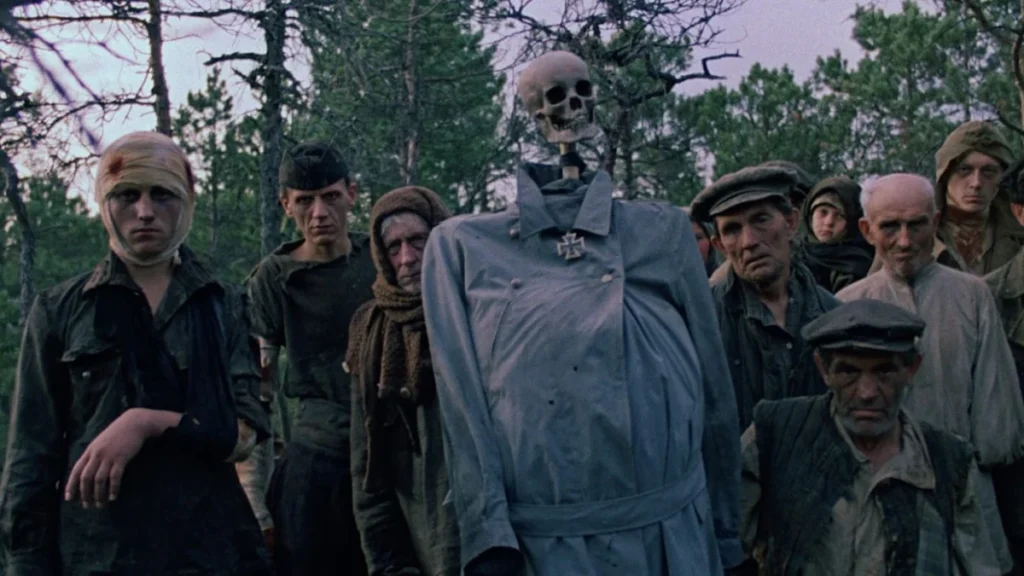
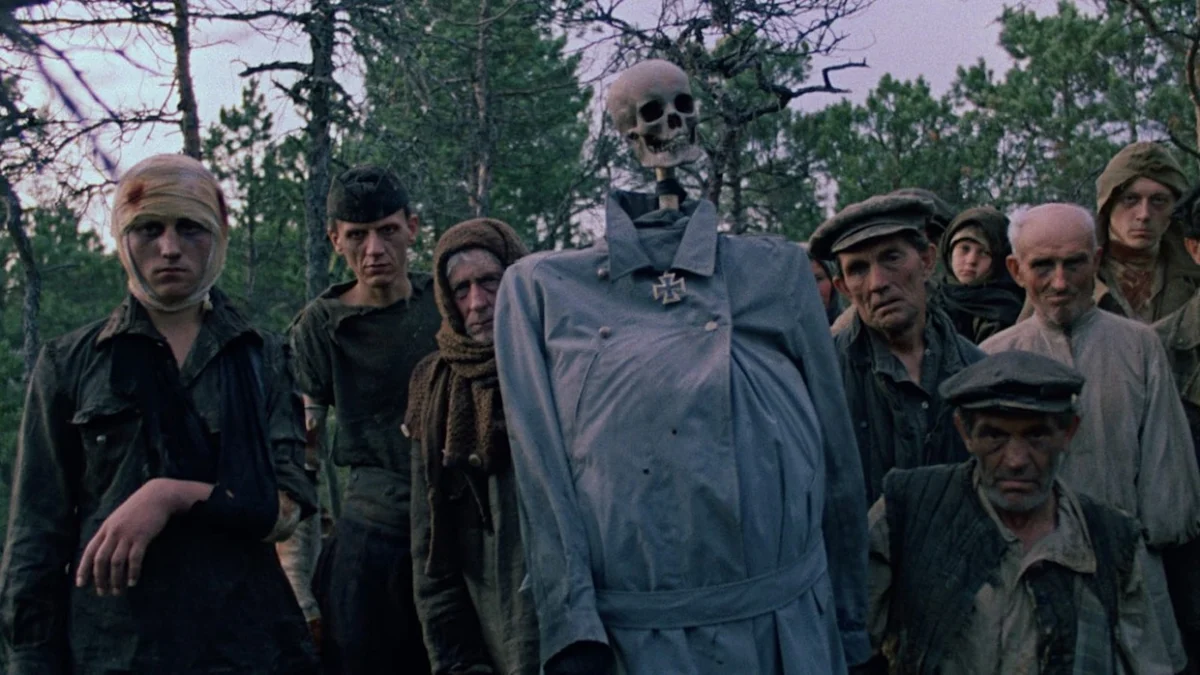
- Lineup: A 33-film slate featuring canonical "cinema of despair" titles such as Pier Paolo Pasolini’s Salò, or the 120 Days of Sodom (1975), Elem Klimov’s Come and See (1985), Ingmar Bergman’s Winter Light (1963), Michael Haneke’s Funny Games (1997), Lars von Trier’s Breaking the Waves (1996), and Béla Tarr’s Sátántangó (1994). These films, while diverse in origin and style, were united by their visceral quality, profound bleakness, and arthouse pedigree.
- Innovation: The "wall-to-wall despair" programming strategy, challenging audience choice and engagement.
-
2023-2024: Gradual Expansion
- Growth: Following strong local reception, the series began a cautious expansion into other major cinematic hubs within the United States, including New York City, Chicago, and Dallas. It also made its first international foray into London, testing the global appeal of its distinct brand.
- Programming Refinement: The curatorial team began exploring the nuances of "bleakness," moving beyond immediate classics to include more eclectic choices, such as Arthur Penn’s black comedy Penn & Teller Get Killed (1989), signaling a broader interpretation of the theme.
-
Current Iteration (Fifth Season, June 2026)
- Scale: The most ambitious expansion yet, reaching 73 cities and nearly 100 theaters worldwide. This marks a significant logistical and curatorial achievement.
- Lineup Diversity: The current iteration boasts an even more diverse lineup, integrating established arthouse and repertory favorites like Béla Tarr’s works, Jane Campion’s The Piano (1993), and Ingmar Bergman’s war apologia Shame (1968), alongside genre films such as Richard Kelly’s Southland Tales (2006) and Mick Jackson’s post-apocalyptic nightmare Threads (1984). This expansion of genre demonstrates a flexible and inclusive understanding of "despair."
- Special Guests: Central to this year’s lineup are retrospective strands and Q&As with acclaimed figures like Isabelle Huppert, Warwick Thornton, and Ari Aster, further elevating the festival’s profile.
Defining "Bleakness": A Curatorial Canvas
LeMaire’s initial inquiry, "What if there are different types of bleaks?", became a guiding principle for the festival’s evolution. This question allowed the programming to transcend a narrow definition of "depressing" and embrace a spectrum of cinematic expressions that evoke despair, existential angst, or profound disillusionment. The inclusion of films spanning different genres and eras, from the stark realism of Come and See to the dystopian satire of Southland Tales, illustrates this expansive approach.
The deliberate decision to program films like The Piano or Shame alongside Threads — a harrowing BBC television film known for its unflinching portrayal of nuclear apocalypse — highlights the curatorial ambition to find common thematic threads in disparate cinematic forms. This approach caters to a wide array of cinephiles, offering both familiar masterpieces and challenging discoveries, all unified by an underlying commitment to exploring the darker facets of the human experience.
The Lure of Luminaries and Collaborative Programming
A significant factor in Bleak Week’s escalating stature has been its ability to attract renowned filmmakers and actors. Moninger noted a pivotal moment when "Chris convinced Béla Tarr, who said he would never come back to the United States, to come back for Bleak Week." Tarr’s participation, as one of the "heroes" of bleak cinema, imparted an undeniable sense of prestige and occasion to the series.
In subsequent years, other cinematic giants have joined the fold. 2025 saw a rare retrospective for independent maverick Jon Jost, while 2024 featured tributes to Kenneth Lonergan, Lynne Ramsay, and Charlie Kaufman. This year’s lineup, boasting retrospectives and Q&As with Isabelle Huppert, Warwick Thornton, and Ari Aster, exemplifies the festival’s magnetic pull. LeMaire observed, "When you have her [Huppert], everyone’s saying ‘yes.’" This "trickle-down" effect allows the festival to leverage big names to encourage audiences to "take a chance on some of the rarer things in the lineup," creating a halo effect where less familiar films gain credibility by association.

The festival’s expansion has been characterized by a spirit of collaboration rather than imposition. Kerstin Larson, programming director at Milwaukee’s Oriental Theater, shared how LeMaire reached out directly for participation. Crucially, LeMaire emphasized, "What’s extremely important to us is that we don’t impose a lineup. We don’t even say it has to be seven days. What is a ‘week’ to you? What would that look like in your programming?"
This flexible ethos has fostered remarkable diversity in local programming. For instance, the Oriental Theater curated a focused seven-film lineup with a distinct thematic strand: "how work and labor continues to be bleak." Their program included a restoration of Chris Smith’s American Job (1996), a film that resonates particularly in Milwaukee due to the popularity of Smith’s American Movie (1999). The only overlap with the American Cinematheque’s main program was William Friedkin’s Sorcerer (1977). This localized interpretation, even humorously programming Béla Tarr’s The Turin Horse (2011) on Father’s Day in sunny June, demonstrates the freedom and creativity afforded to participating venues.
Challenging the "Hopecore" Narrative and Cultural Relevance
The rapid expansion and widespread acceptance of Bleak Week directly challenge prevailing cultural narratives, particularly the concept of "Hopecore." The Hollywood Reporter recently highlighted "Hopecore," described as a trend in "uncynical storytelling that celebrates collaboration and the indomitable human spirit," with films like Project Hail Mary at its vanguard. This trend, supposedly a break from Hollywood’s penchant for "downbeat, grayscale filmmaking," presents a counter-argument to Bleak Week’s success.
However, Moninger and LeMaire’s initiative suggests that the public’s interest is more complex. The global embrace of Bleak Week implies a powerful desire among audiences to engage with films that are "more reflective of reality—warts and all." Moninger succinctly refutes the idea of bleakness as a temporary cultural phase: "There’s never been a time on this earth that wasn’t bleak. It may not be bleak in your house, but I guarantee that next door it’s kind of bleak. And I guarantee you across the ocean it’s kind of bleak. So to say it’s really all about ‘now’ is limiting."
This perspective underscores the timeless relevance of "cinema of despair." It’s not merely a reaction to contemporary anxieties but an enduring exploration of the human condition, which inherently contains elements of struggle, sorrow, and existential challenge. The success of Bleak Week indicates that audiences are not shying away from these reflections; rather, they are actively seeking them out.
The Philosophical Underpinnings: Patience and Humanism
At its core, Bleak Week’s apparent surface-level branding of "despair" actually encourages audiences to attend to "our most foundational human qualities." Chris LeMaire emphasizes that despite the easy temptation to say, "I’m not in the mood today," the festival cultivates a dedication to "patience and humanism." This commitment to "sticking with what may seem intimidatingly heavy" is, in his view, the heart and soul of Bleak Week. It’s an invitation to engage deeply, to confront difficult emotions, and to find a shared understanding in the face of adversity.
Moninger further articulates the underlying hope embedded within the festival’s premise: "To me, the greater hope is that places are uniting. These are films made by humans, programmed by humans, for humans, about the human condition. There’s nothing more hopeful than that." This statement positions Bleak Week not as a celebration of misery, but as a communal act of empathy and artistic recognition. It’s a space where the shared human experience, in all its complexity and occasional darkness, can be acknowledged and processed collectively.
The Deliberate Omission of Nonfiction
A notable aspect of Bleak Week’s programming strategy is its conscious exclusion of nonfiction filmmaking. While the festival embraces challenging narratives, it draws a line at documentaries that depict real-world atrocities. Moninger explained the rationale: "We don’t actually want to show the suffering. Bleak Week is really triumphant. It’s saying that no matter what people have been through, what they’re going through now, or who they are, you can make art about it."
This distinction highlights a nuanced approach to "despair." The festival seeks to explore suffering through the lens of narrative and artistic interpretation, offering a controlled engagement with difficult themes rather than a direct, unmediated confrontation with actual pain. While this choice maintains a certain distance from raw reality, it allows the festival to frame its offerings within an artistic context, potentially making the experience more accessible to audiences. However, this omission also presents an opportunity for future iterations or parallel programs to explore how unflinching, urgent documentaries could thoughtfully contribute to the discourse on bleakness, perhaps under a different curatorial banner.
Beyond Entertainment: The Communal Power of Shared Grief
The profound success of Bleak Week underscores its role beyond mere entertainment. It serves as a vital cultural institution that fosters communal reflection on the human condition. In an era increasingly dominated by individualized, at-home consumption of media, the festival reasserts the power of shared cinematic experience.
LeMaire, reflecting on the festival’s unexpected popularity, noted, "It’s cool we can even call Bleak Week a film festival. There are no premieres of new films. It’s pretty much all repertory programming. And the response to it in this town is like, ‘I gotta get a ticket for every night.’ Year one, we never would have dreamed." This enthusiastic engagement, including Ari Aster’s retrospective selling out "in just a few minutes," indicates a deep-seated craving for this specific type of collective experience.
Furthermore, strong partnerships with distributors like Janus Films and American Genre Film Archive, who are "willing to hold some restorations they have for the year for Bleak Week," further cement the festival’s significance. This year, the festival will feature world premieres of restorations, including the Coen Brothers’ The Man Who Wasn’t There (2001) and Daniel Petrie’s difficult-to-see Buster and Billie (1974), adding another layer of prestige to its repertory focus.
Ultimately, Bleak Week provides a unique platform for audiences to "experience sorrow and grief together," an act Moninger posits as "more hopeful about that than people watching entertainment at home." It affirms that confronting the darker aspects of existence through art, in a shared communal setting, is not an act of surrender to despair, but rather a profound affirmation of human connection, empathy, and resilience. As the festival continues its global expansion, it solidifies its place as a crucial voice in contemporary cinema culture, demonstrating that sometimes, finding hope means first acknowledging the bleakness.