The Day That Shook the Digital World: June 25, 2009
The death of Michael Jackson on June 25, 2009, was an event that sent shockwaves across the globe, reverberating through traditional media and, perhaps more significantly, through the burgeoning landscape of the internet. It was a day when the collective consciousness of millions, scattered across continents, converged online in a shared moment of grief, disbelief, and immediate reaction. The news broke with startling speed, first through unverified reports on celebrity news sites, then quickly confirmed by official sources. The sheer volume of online activity that followed was unprecedented for its time, testing the infrastructure of major websites and social media platforms.
Within hours, major news outlets like CNN, the BBC, and The New York Times were struggling to keep pace with the public’s insatiable demand for information. Social media platforms, still in their relative infancy compared to today, experienced massive surges. Twitter, then just three years old, reportedly crashed multiple times due to the sheer volume of tweets related to Jackson. Google News saw an explosion in search queries, with some reports suggesting searches for "Michael Jackson" briefly led to error messages as servers struggled to cope. Forums, blogs, and nascent video-sharing sites like YouTube became instant digital memorials, filled with tributes, breaking news updates, and personal reactions from fans and onlookers worldwide.
This digital maelstrom was further complicated by the concurrent death of actress Farrah Fawcett on the same day. While Fawcett’s passing was widely reported and mourned, it was largely overshadowed by the seismic impact of Jackson’s demise, a phenomenon that itself became a subject of online discussion and comparison. The chaotic, unfiltered nature of information dissemination on June 25, 2009, serves as a crucial backdrop for Batto’s film, illustrating a unique historical juncture where the internet was powerful enough to disseminate global news instantly, yet still raw enough to capture genuine, unpolished human responses. It was a moment when the "scroll" was rapid, but the algorithmic filters were less pervasive, allowing for a more diverse, if disorganized, digital tapestry to form.
Marcus Batto: Archivist, Artist, Ethnographer
At 31 years old, Marcus Batto occupies a unique space at the intersection of art, archiving, and programming, functioning as a veritable ethnographer of the digital age, particularly the formative first decade of YouTube. His journey into filmmaking began with an early aspiration, which soon evolved into a fascination with editing and the distinctive medium of found footage. He admits to a fluidity in defining his creations, whether they fit neatly into categories of film, music videos, or purely art pieces. This ambiguity is precisely what lends his work its innovative edge, allowing him to explore the boundaries of digital storytelling and preservation.
Batto’s personal timeline aligns closely with the rise of user-generated content. He was just twelve years old when "Charlie Bit My Finger," one of YouTube’s earliest viral sensations, was uploaded in 2007. This formative experience shaped his interest, drawing him to the early, more experimental years of the platform, a period he views as critical for understanding the internet’s cultural evolution. His work can be seen as an ongoing archaeological dig into this rapidly fading past, seeking out and recontextualizing moments that, without his intervention, might be lost forever in the ever-expanding and increasingly opaque digital ocean.
A Tapestry of "Certain Moments To Remember"
For years, Batto has been meticulously crafting his Certain Moments To Remember series (2020–), a testament to his dedication to preserving and reinterpreting forgotten corners of the internet. These works, which he describes on his website as "bearing witness to subculture, shared experience, and social phenomena," highlight his keen eye for capturing the zeitgeist of specific digital eras.
A standout entry in this series is RANDOM WEBCAM DANCE @ DA IMAC STORE (2023). This compilation is a fascinating study of early digital self-expression, gathering footage from 2011 of various individuals spontaneously dancing in Apple Stores, utilizing the then-novel front-facing cameras on Mac products. The soundtrack, Johnny Duncan and Jane Fricke’s melancholic 1978 rendition of “Stranger,” creates a compelling juxtaposition. As Duncan croons, “Stranger, could I believe in you?” a V-necked teenager performs the robot dance in front of an advertisement for the new iPad 2. This layered nostalgia, blending the late 70s with the early 2010s, imbues the piece with an eerie sense of technological determinism. It subtly critiques the techno-utopian vision of the Apple Store by counterposing it with the inevitable obsolescence and "overpopulated graveyard of lost media" that characterizes our digital history. The transient nature of technology and the fleeting moments of human interaction with it are powerfully underscored.
Other notable editions in the series further demonstrate Batto’s breadth of interest and methodological rigor. Flashmob Compilation (2023) captures the synchronized, often absurd, public performances that gained immense popularity in the early 2010s, reflecting a moment of collective, albeit fleeting, IRL-online communal experience. Maid of the Mist VII (2023) likely delves into a more specific, perhaps niche, online phenomenon, showcasing Batto’s ability to extract universal themes from seemingly disparate digital artifacts.
His short documentary, Honeycomb (2024), represents a slightly different, yet thematically consistent, exploration. Composed entirely of found footage from vlogs, television broadcasts, and security cameras, it chronicles the 2020–22 phenomenon of catalytic converter theft in the United States. The film’s title refers to the crucial part of the converter that filters toxic engine exhaust, made of precious rare metals like platinum, rhodium, and palladium. The "looters" in Honeycomb – who, Batto suggests, could be seen as "archivists" or "programmers" in a metaphorical sense – hack these components from vehicles, extract the honeycomb, and refine it into pure rhodium, a commodity that, at one point, commanded $21,000 per ounce. This film brilliantly parallels its content with its making: both reveal an obsession with untapped value hidden in plain sight, whether at the bottom of a car or within the vast, unindexed depths of YouTube. The frantic energy of the thieves mirrors the archivist’s realization that something meaningful or valuable could be retrieved from an unexpected source, be it a car part or a YouTube search sorted by "view count bottom-to-top."
"Michael Jackson Vigils": A Feature-Length Digital Archaeology
With There’ll Likely Be Michael Jackson Vigils Throughout the Night, Batto embarks on his first feature-length project, a monumental undertaking that pushes the boundaries of found-footage filmmaking. The film’s primary affective quality is a profound sense of overwhelm, mirroring the digital deluge of June 25, 2009. Batto immediately immerses the viewer in this sensory overload, employing a recurring visual device: a rotating prism, each side composed of a five-by-four grid displaying twenty distinct videos simultaneously. This fragmented, multi-faceted presentation throws the viewer into the chaotic, sprawling nature of the internet’s response to Jackson’s death.
The film then abruptly keys in on individual videos within this grid, offering fleeting glimpses of disparate global events: the Botafumeiro swinging incense at a Spanish cathedral, seconds of ultrasound footage, a group of refugees on a lifeboat. This rapid-fire succession of seemingly unrelated clips makes the process of cataloguing each scene quickly futile for the viewer, intentionally mimicking the disorienting experience of navigating the internet on that fateful day. It underscores the global reach of the news, but also the myriad other lives and events unfolding concurrently, momentarily overshadowed but never truly halted.
The challenge of creating such a film is immense, as Batto himself attests. Like Ian Bell’s WTO/99 (2025), a found-footage documentary chronicling the anti-globalization protests in Seattle, the process involves not just locating the material but boiling down thousands of hours into a coherent narrative. Batto reveals he amassed playlists containing "maybe 800 videos," indicating the sheer volume of raw data he processed. Even after a work-in-progress screening in June, he found it difficult to stop discovering new footage, a testament to the inexhaustible nature of the digital archive and the obsessive drive of the digital archivist.
Batto’s choice of June 25, 2009, was not driven by personal devotion to Michael Jackson, but by its unique cultural resonance. He observes, "You always hear people saying, ‘Where were you when Michael Jackson died?’ In my lifetime, there hasn’t really been another death that was so effective, culturally." For a significant portion of the "cast of thousands" in his film, the answer was "on the computer." Batto recounts his own experience: at a friend’s house, smoking weed for the first time, huddled around a desktop computer as news of Jackson’s death broke. This personal anecdote highlights the shared, collective experience of a generation coming to terms with major events through a new digital lens.
The year 2009 also marked the nascent stages of the front-facing camera boom, making YouTube vlogs a burgeoning genre. Many individuals, reacting to the news, instinctively turned on these cameras, recording raw, unpolished impressions for audiences often numbering in the single digits. Batto’s film captures this fascinating array of early vlogging: an emo teenager performing sarcastic grief, individuals issuing threats against blogger Perez Hilton for his insensitive remarks, and others reacting to Farrah Fawcett’s death. One amateur film reviewer, framed by a poster for Halloween H20: 20 Years Later, poignantly remarks, "One of Charlie’s Angels just became an angel herself." These candid, often awkward, moments serve as invaluable anthropological data, showcasing a period before the pervasive self-consciousness and hyper-curation that now define much of online self-presentation.
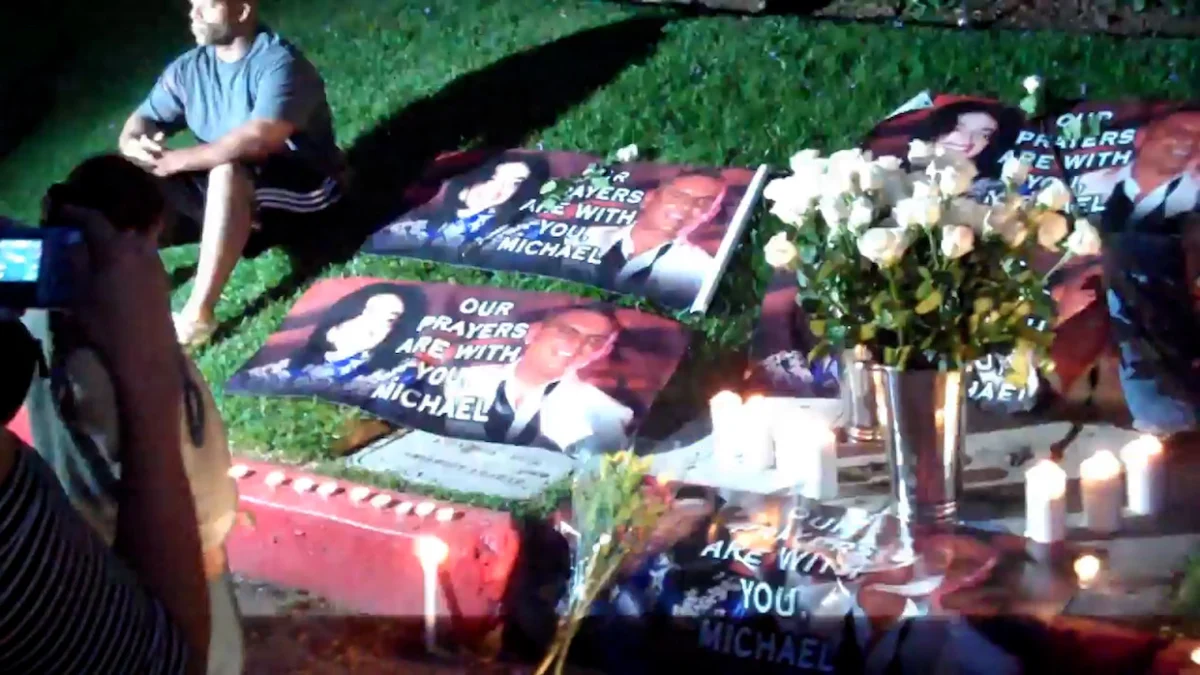
The film also follows mourners onto the streets of Los Angeles, gathering around what they mistakenly believed to be Michael Jackson’s Walk of Fame star, which was, in fact, that of British radio DJ Michael Jackson. The King of Pop’s star was obscured under a red carpet for Sacha Baron Cohen’s Bruno premiere. This poignant error serves as a fitting metaphor for a film that functions as a double memorial: not just for the iconic King of Pop, but for a moment in time when the internet’s inherent cacophony could still coalesce into something resembling a single, albeit sometimes misdirected, chorus.
The Shifting Sands of Online Expression
A central theme in Batto’s work is the palpable sense of naiveté that characterized early online interactions. He is drawn to these spectacles of joint online-IRL experience – flash mobs, dance crazes, and shared celebrity grief – precisely because of this innocence. "With all these videos I found," Batto explains, "there’s this through-line of innocence. People didn’t care about how they looked on their webcam, or how they came off, in the same way they do today. They were just experimenting with this new technology." This observation highlights a critical shift in digital culture. The early internet, particularly platforms like YouTube, fostered a sense of raw authenticity, where the novelty of the medium often outweighed concerns about public image or viral performance. Content was less polished, more spontaneous, and less constrained by the invisible hand of algorithms or the pressure of monetization.
Today, the landscape is dramatically different. Social media is dominated by meticulously curated personal brands, influencer culture, and the relentless pursuit of virality. Every post, every video, is often carefully crafted, optimized for engagement, and filtered through a lens of self-consciousness. The "experimentation" Batto refers to has largely been replaced by strategic content creation. His film, therefore, acts as a time capsule, preserving a moment before the internet became fully commercialized and before the public fully grasped the implications of broadcasting their lives to the world. It invites viewers to reflect on what has been gained and lost in this rapid evolution of digital self-expression.
Echoes Across a Century: From Mitchell & Kenyon to YouTube
Watching the cascade of early YouTube footage in Batto’s film evokes a striking historical parallel to the work of Mitchell and Kenyon. These pioneering British filmmakers, active in the final decade of the nineteenth century, created "Local Films for Local People." Their footage captured everyday life, often showing the curious faces of British children encountering a movie camera for the first time. The comparison is profound: the soot-marked faces of children exiting factories in 1897, wide-eyed at a new technological marvel, share an odd kinship with the webcam-captured mourners of 2009. Both sets of images capture a profound innocence, a moment of unadulterated interaction with a burgeoning medium, compressing the long century between 1897 and 2009. Both, in turn, feel a long way off from the hyper-connected, AI-driven digital landscape of 2026.
This historical resonance underscores Batto’s role not just as a filmmaker, but as a digital historian. He is tracing the evolution of public interaction with audiovisual technology, from its nascent theatrical presentations to its explosion into personal, user-generated content. The film prompts viewers to consider how quickly technology shapes and reshapes human behavior, and how rapidly what once felt novel becomes an artifact of a bygone era. The context of YouTube today, flanked by ASMR sleep aids, AI-generated trailers, and "hype and aura edits," further emphasizes the accelerated pace of digital change, making Batto’s collected innocence all the more precious and rare.
The Future of the Fleeting: Implications for Digital Memory
The premiere of There’ll Likely Be Michael Jackson Vigils Throughout the Night was thoughtfully accompanied by a giveaway of refurbished third-generation iPod Touches, preloaded with the film and a curated playlist. This choice of a near-obsolete device, a relic of the very era the film explores, served as a tangible connection to the past, a physical artifact mirroring the digital archaeology on screen. The presence of a Michael Jackson impersonator, who reportedly fell asleep during the film ("I asked him what he thought afterwards, and he said it was ‘okay,’" Batto reports), adds another layer of ironic commentary, perhaps suggesting the difficulty of truly recapturing or reliving the intensity of such a historical moment.
When questioned about the feasibility of creating a similar film for a more recent celebrity death, Batto offers a sobering assessment. He believes today’s internet no longer creates discernible, cohesive moments in the same way it did in 2009. "It’s all so fleeting," he laments, "You can’t really hold it anymore." This observation highlights a critical shift: the modern internet, with its sophisticated algorithms, personalized feeds, and overwhelming volume of content, tends to fragment collective experience rather than coalesce it. While information spreads faster, it also dissipates quicker, buried under an endless stream of new data, trending topics, and highly individualized consumption patterns. The "single chorus" of 2009 has fractured into countless, isolated murmurs.
There’ll Likely Be Michael Jackson Vigils Throughout the Night does much to make evident the astonishing acceleration of audiovisual history. Marcus Batto, like the catalytic converter thieves he documented in Honeycomb, seems to operate at the end of a certain product’s lifecycle, stripping value from what others have discarded or forgotten. His work masterfully spans the gaps – between artist and archivist, between 2026 and 2009, between the fleeting and the preserved. While there is a clear sense of mourning for a lost innocence and a simpler digital age, Batto is also keenly aware of what might still be salvaged, what precious insights can still be stripped for parts from the vast, unindexed junkyard of our digital past. His films serve as a vital reminder of the impermanence of digital memory and the ongoing, crucial need for digital archaeology in an era where our shared history is increasingly recorded, and increasingly at risk of being lost, online.