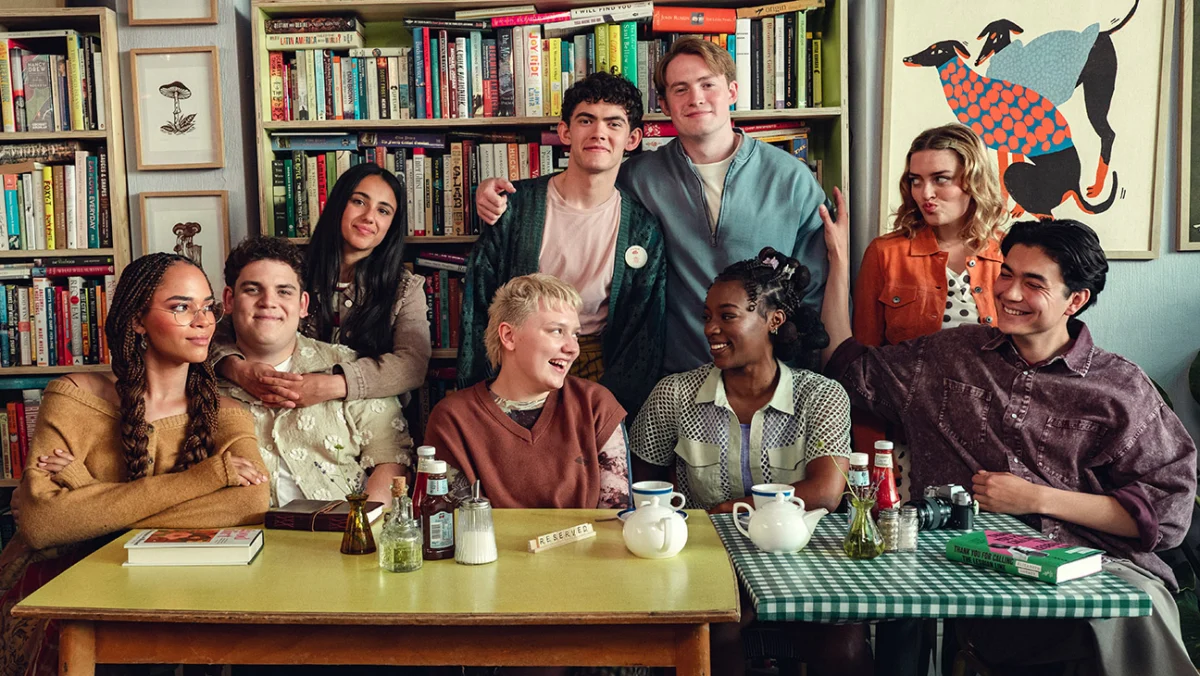
As cameras rolled for the penultimate week of the Heartstopper Forever shoot, the historic Bray Studios in Water Oakley, nestled between the tranquil River Thames and the bustling A308 motorway, buzzed with an energy that was both celebratory and tinged with the knowledge of an impending farewell. Inside a house adorned with rainbow tinsel, a vibrant party scene unfolded, a kaleidoscope of youthful exuberance, shimmering light, and the palpable chemistry that has defined Netflix’s beloved LGBTQIA+ young adult hit. This particular sequence, featuring the joyous reception of Charlie Spring (Joe Locke), newly minted head boy of Truham Grammar, by his adoring boyfriend Nick Nelson (Kit Connor) and their circle of friends, encapsulates the very spirit of the franchise: earnest love and unwavering support. Now, a year and a day after that moment, Heartstopper Forever is set for its global release on July 17, marking the poignant final chapter in an adaptation that has profoundly reshaped the landscape of queer representation in youth media.
A Cinematic Farewell: The Production’s Evolution at Bray Studios
The choice of Bray Studios as the backdrop for Heartstopper Forever carries its own historical resonance. Once the formidable home of Hammer Film Productions, the grounds have witnessed decades of cinematic history, from Dr. Who special effects sequences to the rehearsal sessions of legendary music acts like Pink Floyd. Today, its seven soundstages, numerous offices, and workshops serve as a vital hub for contemporary television and film production. For Heartstopper, this venerable location became the crucible where a beloved webcomic transcended its original form, evolving from a three-season series into a two-hour feature film designed to provide a more mature and expansive conclusion to its narrative.
The transition from a multi-season television format to a cinematic feature was a deliberate decision, as executive producer Patrick Walters explained. "It was made with many factors in mind," Walters stated, highlighting the increasingly busy schedules of its rising stars as a significant consideration. Creator Alice Oseman echoed this, noting that the format switch "was definitely a part of the decision" to accommodate the ensemble. This evolution allowed for a different approach to storytelling, offering a "slightly more real, gritty look at romance" through the lens of a longer-term relationship. Joe Locke, reflecting on the change, told The Hollywood Reporter, "Going from television to cinema is almost like it’s growing up. It’s a really nice way of properly finishing the stories. It meant that we had more time to do it right. You have fewer scenes to shoot in a day, so you can put more attention on making them better." This enhanced focus on cinematic quality aimed to deliver a distinct and authored final installment, one that would challenge both the creators and the audience to engage with the characters’ growth on a deeper, more visually compelling level.
From Webcomic to Global Phenomenon: The Genesis of Heartstopper
The journey of Heartstopper from a personal creative endeavor to a global cultural phenomenon is intrinsically linked to its creator, Alice Oseman. Their narrative began long before the Netflix series, with Oseman securing a six-figure publishing deal at the remarkably young age of 17 in 2014. Two years later, in 2016, they embarked on the Heartstopper webcomic, a story about gay teen Charlie Spring’s burgeoning romance with Nick Nelson amidst navigating school, friendships, and mental health. The webcomic quickly garnered a devoted following, leading to a highly successful Kickstarter campaign in 2018 that funded its transformation into a graphic novel series. This grassroots success laid the groundwork for Netflix’s eventual adaptation, which debuted in 2022 to widespread critical acclaim and immense popularity.

For Oseman, Heartstopper has been a decade-long odyssey. "For me, it has been nearly 10 years. It’s basically been my 20s," Oseman shared last July from an office at Bray Studios, located just 26 miles outside central London. This extended engagement allowed Oseman’s own perspectives to mature alongside their characters. "I can see in the story that the way I interact with the world and the ideas and the themes that I find interesting have shifted and developed in that time," they reflected. The production itself mirrored this journey of growth. Patrick Walters, the executive producer, recounted the early days: "It’s the first show that I’d produced, the first show that [Oseman] had written and when we were stepping onto set, we were doing it in those roles for the first time with actors who’d never led a show before in Kit and Joe. It mirrored a lot of our personal experiences, and we didn’t really know what we were doing. We felt our way through." This shared learning experience, from its humble beginnings to a multi-season hit, culminated in a final chapter where, as Walters noted, "Now we’re on the set for the final time, and we really know what we want. We operate, communicate and do things in a more experienced way."
Redefining British YA Television: A Magnet for Talent
Heartstopper didn’t just tell a story; it redefined a genre. Predecessors like Skins, Misfits, and My Mad Fat Diary, alongside contemporaries such as Chewing Gum, Ackley Bridge, and Sex Education, had explored the complexities of British youth. However, Heartstopper distinguished itself with its predominantly LGBTQIA-led cast and its unabashedly positive, earnest, and heartfelt tonal approach to queer romance. This unique stance allowed the series to carve out a distinct identity in British young adult television.
The show’s groundbreaking nature extended to its ability to attract leading British talent, with acclaimed actors like Olivia Colman, Jonathan Bailey, and Hayley Atwell making notable appearances. Oseman expressed profound gratitude for this, telling THR they’ve been "incredibly grateful that such talented and in-demand actors have wanted to be a part of it, and that their involvement has brought even more viewers to our little queer story." Kit Connor highlighted the show’s departure from typical British youth dramas, describing it as "like the least British show you could make with its honestness and willingness to articulate itself in a real, sincere and heartfelt way." He contrasted it with the often "tongue-in-cheek and very dry, sarcastic and a bit nihilistic" nature of other British shows, suggesting that Heartstopper‘s sincerity challenged perceptions. "Yet a lot of Americans I speak to about Heartstopper say that it feels like this incredibly English thing. So it’s quite funny that it’s maybe changed the perception of what Brits are like," Connor mused, underscoring its cross-cultural appeal and impact on national stereotypes.
The Power of Earnestness: Addressing Criticisms and Impact
While Heartstopper‘s earnestness has been central to its appeal, it has also faced scrutiny. Since its arrival, its "tonal approach to LGBTQIA-centric YA romantic storytelling has faced various criticisms for its earnestness and arguably overly aspirational take on growing up queer." Oseman acknowledged that Heartstopper "did begin very fairy-tale and a little bit idealistic in a beautiful way" – a reflection of their own youth and experiences when they first began writing. However, they emphasized, "I never approached it like I’m going to write a wholesome, adorable show, because that’s different to everyone." Instead, the show tapped into a broader appetite for positivity. "What we’ve seen is that people do enjoy these very earnest, sincere, joyful shows, and maybe that’s something we haven’t seen a lot of," Oseman asserted.
This sentiment was echoed by Jenny Walser, who plays Nick’s sister, Tori. She underscored the vital role such narratives play in a world that can be daunting, particularly for young people grappling with identity. "Everyone knows the world is a pretty scary place, especially if you’re also trying to contend with your own identity and where you sit in it," Walser observed. She stressed the importance of the story not becoming "the sweet, saccharin, rosy show," but rather offering something more profound. "It’s lovely to know that the next generations have access. It can be really cathartic to watch and heal your younger self," she concluded, highlighting the show’s therapeutic potential for viewers. This blend of idealism and grounded emotional depth allowed Heartstopper to resonate deeply, becoming not just entertainment but a source of comfort and validation for a generation.

Growth On and Off Screen: The Cast’s Journey
The journey of Heartstopper has been a parallel coming-of-age for its cast, mirroring the maturation of their characters. Joe Locke and Kit Connor, who portray the central couple, Charlie and Nick, were relatively unknown before the series, catapulting to global fame almost overnight. Within days of season one’s release, they gained millions of followers, a testament to the show’s rapid and widespread impact. Connor described this as a "very formative experience for us to be able to work out the kind of actors that we want to be. I think we’re still working them out."
This rapid ascent brought both immense opportunity and unique challenges. The line between fiction and reality blurred for some fans, leading to intense public scrutiny. Connor notably "feeling forced to publicly disclose their sexuality amid calls for authentic casting," illustrating the immense pressure placed on young, openly queer actors. Despite these challenges, the cast members have diversified their portfolios, appearing in major productions like Agatha All Along, The Summer I Turned Pretty, Doctor Who, Only Murders in the Building, Sweetpea, and Warfare.
However, the industry’s perception remains a "double-edged sword" for Locke and Connor, both openly queer actors. Locke shared, "Things I get offered are a lot of twinks, and that is wonderful. I can do that really well. But it’s that double-edged sword of wanting to push past that while also being really grateful I am seen as someone who could do that in the industry." Connor added to this, explaining the persistent challenge of typecasting: "As is the way with this industry, whether it’s queer or not, when they see you as one thing, and see you in quite a big way as one thing, they will try to see you that way for the foreseeable [future]. That was kind of one of the growing pains for us. You don’t want to be defined by one thing."
Despite these industry hurdles, Heartstopper itself offered its ensemble diverse material, particularly evident in Heartstopper Forever. Characters like Imogen (Rhea Norwood) explore their own sexual fluidity, with Norwood noting, "Imogen has always been experimenting. We’ve seen so many different evolutions of her, and that’s been a really beautiful and hopefully truthful thing to have presented." Kizzy Edgell, who plays Darcy, spoke about the character’s journey with gender expression: "When Darcy started wearing a binder, that was a discussion of: ‘What binder are we buying, how should it fit, what should be comfortable?’ Darcy in a binder the last season and in this movie has meant that I actually feel more confident in flowier things that I wouldn’t actually wear or be comfortable in beforehand." Yasmin Finney, portraying Elle, reflected on her character’s transgender journey and the stark contrast to her own experiences. "My transition when I was growing up, I lost everyone because nobody understood. That in itself is solidarity. When I step into the role, I don’t think I’m trans. This is just me and another version of me that can be an artist and live authentically as myself through the show." These layers of identity exploration provided the young cast with rich, meaningful roles that resonated deeply with their own lived experiences and those of their audience.
Fostering a Safe Environment: Prioritizing Well-being
The production team behind Heartstopper recognized the unique pressures on its young, predominantly LGBTQIA+ cast and made concerted efforts to prioritize their mental health and well-being. Alice Oseman and Patrick Walters maintained an open-door policy, with Oseman stating, "Patrick [and I] are there on set every single day. You can come to us about anything whenever you want, whatever it is, and we will try and help." This was augmented by bringing in organizations like Stonewall U.K. during the first season and providing access to on-set therapists from the very beginning.

Corinna Brown, who plays Tara, attested to the efficacy of these measures: "Nothing was sugarcoated, but you have a therapist that you can speak to, and from the very beginning, we always had that on set in place." She further emphasized the importance of a supportive work environment: "Having the space be so safe — because everybody involved, we get on really well — to learn in was also a massive help." Oseman highlighted the deliberate effort to retain crew members across seasons and the film, fostering a sense of continuity and trust. "We’ve ended up with a lot of people who know the cast well, so when people are coming onto set, it feels like, ‘These people know me, and I’m safe here.’ That’s what we hope the effect of that was." This holistic approach to cast welfare proved crucial, especially as the actors navigated intense public scrutiny and the blurring lines between their public and private identities.
A Timely Narrative: Representation Amidst Shifting Tides
Heartstopper‘s run has spanned a period of significant shifts in the landscape of LGBTQIA+ rights and representation. Debuting in what seemed a comparatively more positive, if not perfect, era for queer visibility, it now concludes in a climate where both are increasingly challenged. The series, which garnered upward of 53.5 million hours viewed for its eight-episode debut alone and consistently ranked in Netflix’s Top 10 across three seasons, proved that "niche" queer stories could achieve mainstream success.
However, the current social and political climate raises questions about the feasibility of replicating such a success today. "We were asking: Could we have even made Heartstopper the TV show now in the U.K. or the States? Would people have taken a chance on what we saw as a niche story? Would anyone have thought, ‘Hey, that could be an internationally beloved series’?" Oseman pondered, acknowledging a growing uncertainty.
In response to this changing environment, Heartstopper Forever does not shy away from political engagement. While maintaining its core romantic and coming-of-age themes, depicting new, more adult shades of physical and emotional intimacy, it also directly addresses movements to strip LGBTQIA+ people of their rights, particularly in the U.K. Oseman discussed a pivotal Pride sequence in the film: "With Elle, what we could do is to have this Pride sequence, which is the characters raising their voices about trans rights and showing their support." Elle’s speech in the film encapsulates "what most trans people are feeling right now — the underlying fear and frustration, because it’s just so constant at the moment." Oseman expressed satisfaction with this inclusion: "I really like how it turned out, and that we have that space in the film, because it’s so important. We have this opportunity to shine a light on those issues and raise our voices. That’s such an essential part of the ethos of Heartstopper." This proactive approach ensures the film remains relevant and impactful, grounding its hopeful narrative in contemporary realities.
The Future of Queer Storytelling: A Call to Action
The conclusion of Heartstopper comes at a critical juncture for LGBTQIA+ representation in media. While titles like Heartstopper Forever continue to draw massive audiences, reports indicate a concerning trend of disinvestment in queer storytelling. GLAAD’s annual "Where We Are on TV" report for 2024-25 found that 41 percent of nearly 500 identified LGBTQIA+ characters are slated to disappear due to cancellations, series finales, or character exits. This withdrawal directly correlates with the rising censorship efforts faced by Oseman’s comics since the show’s release.

Oseman noted the irony of this, given the discourse surrounding Heartstopper. "There were a few cases, particularly in the U.S., where there was a lot of media noise about this book being so explicit for children, which is kind of hilarious given some of the discourse that occurs about Heartstopper," Oseman recounted. They observed that "Parents or whoever it is making the fuss about these stories are seeing these things get popular, and then doing whatever they can to get those stories away from children. It is really devastating to see that happening." As an author, Oseman felt the challenge of how to respond, advocating for boosting the issue, sharing information, and supporting groups fighting these bans.
Despite these challenges, Heartstopper has created an enduring legacy. Tobie Donovan, who plays Isaac, one of the show’s asexual characters, emphasized the show’s power to humanize queer experiences: "It’s a nice thing that people can watch it and feel seen or that their experiences are being reflected." He added, "The lovely thing is how many doors then open for grandparents or people of differing political views who might watch and go, ‘I thought trans people were really scary, but this is just a normal girl going through the same things at school that everyone goes through.’"
Kit Connor affirmed the enduring need for such narratives: "No matter what happens in the world, there will always be queer people. There will always be people who feel othered by society and like they don’t have a place. I hope that there will always be media to make people feel seen and feel optimistic about what can feel like a very scary world." Oseman echoed this, calling for more queer stories that connect with a wide audience. "Niche little stories are important as well, but having those stories in the cultural consciousness in a big way is really significant for change and people becoming aware of queerness and queer issues."
Heartstopper Forever, streaming on Netflix starting July 17, thus serves not only as the culmination of a beloved story but also as a powerful testament to the necessity of authentic, joyful, and politically engaged queer representation. Its bittersweet ending marks a significant milestone, leaving behind a vibrant legacy that champions visibility, understanding, and hope in an ever-evolving world.