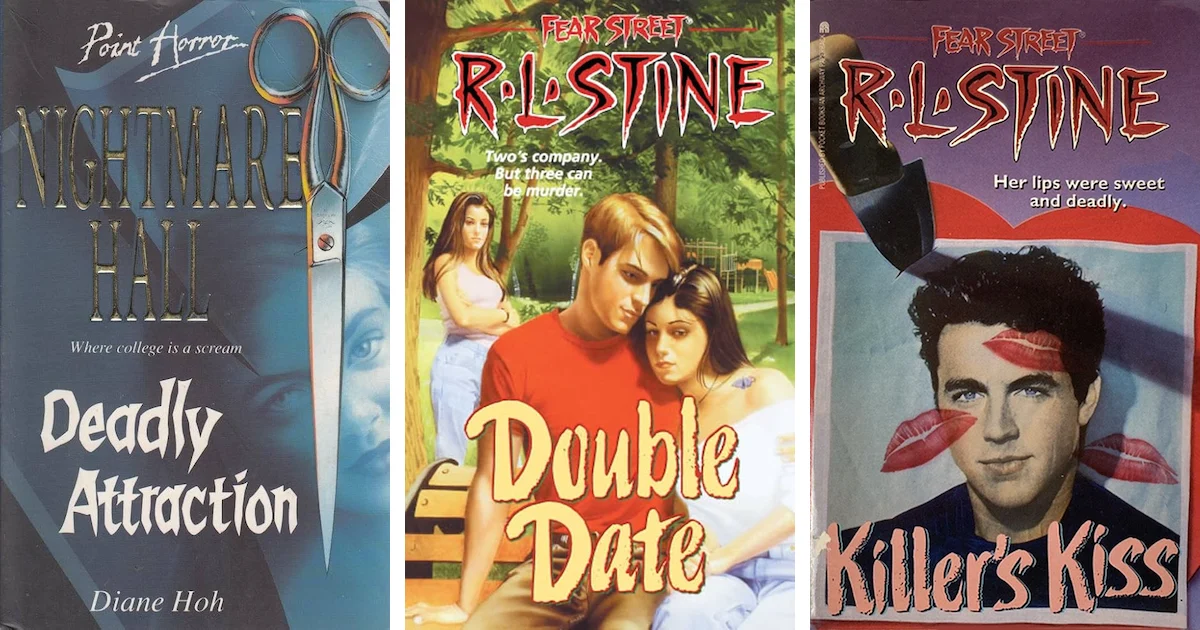
The landscape of ’90s teen horror was undeniably shaped by the tumultuous realm of adolescent romance. Within the pages of popular novels, the anxieties and excitements of young love were consistently interwoven with suspense and terror, creating a potent cocktail for young readers. A recurring trope explored the dangerous implications of romantic deception, particularly when male protagonists attempted to juggle multiple relationships simultaneously. This pattern of behavior, often driven by immaturity and a misguided sense of entitlement, frequently led to catastrophic outcomes, as vividly illustrated in Diane Hoh’s Deadly Attraction (1993) and R.L. Stine’s Double Date (1994) and Killer’s Kiss (1997). These narratives, while fictional, offer a compelling examination of the psychological and physical dangers that can arise when teenage relationships are built on a foundation of lies.
The Allure of Multiple Flames: A Common Thread
Across these three influential novels, a common narrative thread emerges: young men who, in their pursuit of romantic conquest, engage in relationships with multiple girls, employing varying degrees of secrecy and manipulation. In Diane Hoh’s Deadly Attraction, Robert Q. Parker III initially views his dalliance with a girl from Salem as a casual fling. However, his intentions are complicated when his "real" girlfriend returns, forcing him to navigate a precarious balancing act. R.L. Stine’s Double Date presents Bobby Newkirk with a more audacious plan: to date identical twins, Bree and Samantha Wade, without either discovering the other’s existence. Meanwhile, in Killer’s Kiss, Vincent Milano finds himself unable to commit to either the vivacious Delia or the more demure Karina, opting instead to maintain simultaneous relationships with both. In each scenario, the protagonists operate under the flawed premise that "all’s fair in love and war," resorting to elaborate schemes to maintain their multifaceted romantic lives. However, the narratives consistently demonstrate that these girls are not passive participants; they too are capable of extreme actions, driven by heartbreak, betrayal, and a desire for retribution.
Deadly Attraction: The Townie Versus the Campus Elite
Diane Hoh’s Deadly Attraction delves into the social stratification within the fictional Salem University, a setting where the student body often exists in an insular bubble. While excursions to local eateries or shops occur, genuine interaction between the university students and the town residents is notably sparse, highlighting a clear division between "town and gown." This divide becomes a central conflict when Robert Q. Parker III begins dating Darlene, a waitress from a local diner. Darlene, infatuated with Robert Q., endeavors to assimilate into his world, attempting to fit in with his affluent friends. Her efforts, however, are ultimately in vain. Robert Q. harbors no genuine affection, viewing Darlene as a temporary diversion until his ex-girlfriend, Gerrie, re-enters the picture.
The tension escalates when Robert Q. brings Darlene to a fraternity party, signaling his clear preference for Gerrie. Darlene is summarily discarded, a move underscored by Robert Q.’s callous arrangement with his friend Richard. Richard is offered twenty dollars to "take the townie home," a transaction that starkly reveals how both women, Darlene and Gerrie, are perceived by the male protagonists as interchangeable pawns. The incident, overheard by Darlene and another student, Hailey, exposes the callous disregard for their feelings and autonomy. The stark contrast in social class and life experiences between Darlene and Gerrie becomes irrelevant in the eyes of Robert Q. and Richard; they are viewed as disposable commodities, manipulated and discarded at will.
The narrative takes a darker turn when Gerrie is severely injured by a rock outside the fraternity party, requiring immediate hospitalization. Subsequently, Robert Q.’s sports car is set ablaze, and Richard is killed in a hit-and-run while attempting to stop a car theft. Suspicion immediately falls upon Darlene, the ostracized "townie." While Hailey initially defends Darlene, doubts begin to surface, particularly as Darlene remains fixated on Robert Q., convinced of their inevitable reunion. Hailey’s investigation shifts focus to Darlene’s brother, a fellow student whose identity remains unknown to her, adding another layer of mystery and personal involvement to the unfolding tragedy.
The resolution of the mystery reveals a complex familial connection: Darlene’s brother is also Hailey’s half-brother, Finn Conran. However, the true culprit is not Finn, but his childhood friend, Pete Torrance. Pete, harboring a long-standing unrequited crush on Darlene, orchestrates a series of events designed to eliminate romantic rivals, frame Finn, and secure Darlene’s affection. He lures Hailey to Darlene and Finn’s home with the intention of murdering her and framing Finn. Hailey manages to defend herself using chemicals from Finn’s darkroom, trapping Pete and alerting the authorities, thus saving herself before Finn arrives. Darlene, meanwhile, finds a semblance of resolution in a reunion with her ex-boyfriend Bo, though the narrative subtly flags concerning levels of obsession within their relationship as well.
Double Date: The Perils of Twin Deception
Bobby Newkirk embodies the archetypal conceited and self-absorbed male protagonist. His modus operandi involves dating and discarding women without consideration for their emotions, believing it his "duty" to date as many as possible to avoid "depriving" them of his presence. The arrival of identical twins Bree and Samantha Wade presents Bobby with a new challenge: a bet with his friends to date both sisters within a single weekend without either discovering the other. Echoing Robert Q. and Richard’s objectification of women, Bobby views the twins as interchangeable. When a friend questions his ability to distinguish between them, Bobby dismisses the concern, focusing solely on their shared attractiveness and the novelty of dating twins.
However, Bobby’s simplistic plan quickly unravels as he encounters significant differences between Bree, who is reserved, and Samantha, a thrill-seeker who engages in shoplifting. As Bree grows suspicious, the narrative escalates into a series of bizarre twists. Samantha, aware of Bobby’s deception, warns him of Bree’s potential instability, hinting at a history of "fragility" and unpredictable behavior. Cryptic warnings also come from Melanie, one of Bobby’s ex-girlfriends and a friend of the Wade twins, who attempts to steer him away. Undeterred, Bobby continues his double life, confident in his ability to differentiate the twins by a supposed butterfly tattoo on Samantha’s shoulder.
The situation becomes more convoluted when Bree introduces the concept of a third sister, Jennilynn, who is purportedly the truly unstable one. Jennilynn, having previously attempted to harm Bree and Samantha, is said to be living elsewhere but has allegedly tracked them down. This revelation serves as both an ego boost and a psychological game for Bobby, who begins to question his encounters and entertain the possibility of dating triplets, despite the inherent dangers.
Jennilynn’s supposed pursuit leads Bobby to a remote cabin, where he is drugged, tied to a chair, covered in honey, and subjected to an ant attack. After escaping, a disheveled Bobby encounters Melanie, who offers him a ride to the Wade house, conveniently avoiding any sticky residue on her car. Upon arrival, Bobby faces public humiliation as all the girls he has deceived mock him. The revelation is stark: there is no Jennilynn. The twins, fully aware of Bobby’s scheme, orchestrated the entire charade to teach him a lesson. Temporary tattoos were used to switch identities, effectively blurring any distinction between them. Bobby’s public humiliation at the hands of the girls he wronged, and even their parents, culminates in his bewildered question, "You—you mean you don’t like me?" The experience, while potentially traumatic, underscores the power of sisterhood and solidarity in enacting revenge.
Killer’s Kiss: The Competition for a Scholarship and a Boyfriend
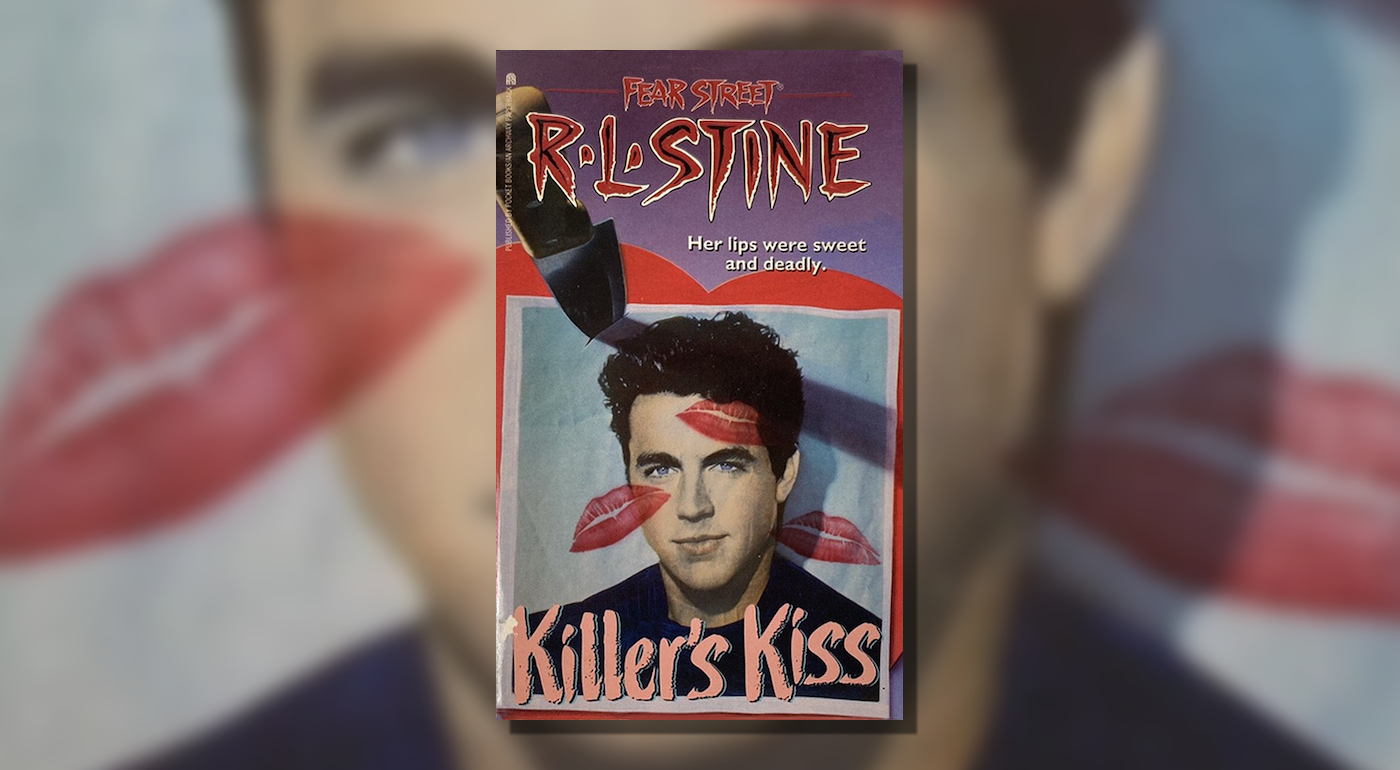
In Killer’s Kiss, Vincent Milano is portrayed not only as a self-proclaimed prize but also as a prize sought after by two fiercely competitive rivals, Delia and Karina. These friends have a history of vying for accolades, from academic achievements to social status. Now, in their senior year, they are both competing for the prestigious Conklin scholarship, which assesses academics, talent, and artistic merit. Adding another layer of conflict, both girls are romantically involved with Vincent, who claims exclusivity with each. He manipulates them by spreading misinformation, telling Delia that Karina believes she is dating him, despite his assurances to Karina that Delia is the one.
The truth of Vincent’s deception is revealed when Delia witnesses him with Karina. A subsequent conversation between the girls reveals their shared experience of being lied to by Vincent. However, this moment of solidarity is short-lived. Vincent resumes his manipulative tactics, further escalating tensions. The competition intensifies when Delia’s scholarship materials are sabotaged—her guitar destroyed before the talent portion and her portfolio defaced before the artistic evaluation. The ultimate betrayal comes with the discovery that Vincent has also begun a relationship with Delia’s younger sister, Sarah.
The narrative climaxes at Vincent’s birthday party, held in an abandoned house on Fear Street. Delia arrives late, visibly injured and disheveled, claiming Karina tricked her and tied her up to prevent her attendance. The following morning, while helping Vincent clean up, Delia and others discover him dead. The presence of Delia’s signature lipstick on his cheek, coupled with blotting papers found in Karina’s room, initially points to Karina as the murderer, framed by Delia. Karina vehemently denies the accusations but is institutionalized based on the apparent evidence.
The story takes a surprising turn when Delia visits Karina in the hospital. During a conversation with their friend Gabe, Delia reveals the truth: she orchestrated the entire sequence of events. She sabotaged her own scholarship materials, faked her injuries, murdered Vincent after the party, and planted the blotting papers in Karina’s room to frame her. Her confession reveals a desperate act driven by the fear of losing everything—Vincent, her sister’s attention, and the scholarship. She admits to killing Vincent because he favored Karina and kissed her sister, and to framing Karina to solve her problems. Gabe’s horror is palpable. However, Karina’s doctor, having overheard Delia’s confession, alerts the authorities, leading to Delia’s apprehension.
Analysis of Implications and Consequences
In Deadly Attraction, Double Date, and Killer’s Kiss, the protagonists’ attempts to date multiple partners invariably lead to dire consequences, ranging from public humiliation to death. These narratives serve as cautionary tales, highlighting the destructive nature of objectification and manipulation in relationships. The male characters consistently treat the female characters as possessions to be won or discarded, rather than as individuals deserving of respect and genuine connection. The girls, in their pursuit of these undeservedly sought-after young men, resort to extreme measures, demonstrating the psychological toll of betrayal.
In Deadly Attraction, Darlene’s initial obsession with Robert Q. morphs into an equally intense fixation on her ex-boyfriend Bo, illustrating a pattern of unhealthy dependence. Hailey observes, "Darlene’s switched heroes… but she’s still using the same script. Woman overboard. She may not be a killer, but she sure could use some help." The girls in Double Date unite to exact elaborate revenge on Bobby, while Delia and Karina in Killer’s Kiss engage in public feuds fueled by their competition for Vincent. While the adage "all’s fair in love and war" might seem to apply, the ultimate repercussions far exceed the initial transgressions, leaving a trail of broken lives and profound regret. These stories, embedded within the popular genre of ’90s teen horror, offer a stark and enduring commentary on the destructive power of deceit and the complex, often dangerous, dynamics of adolescent relationships.