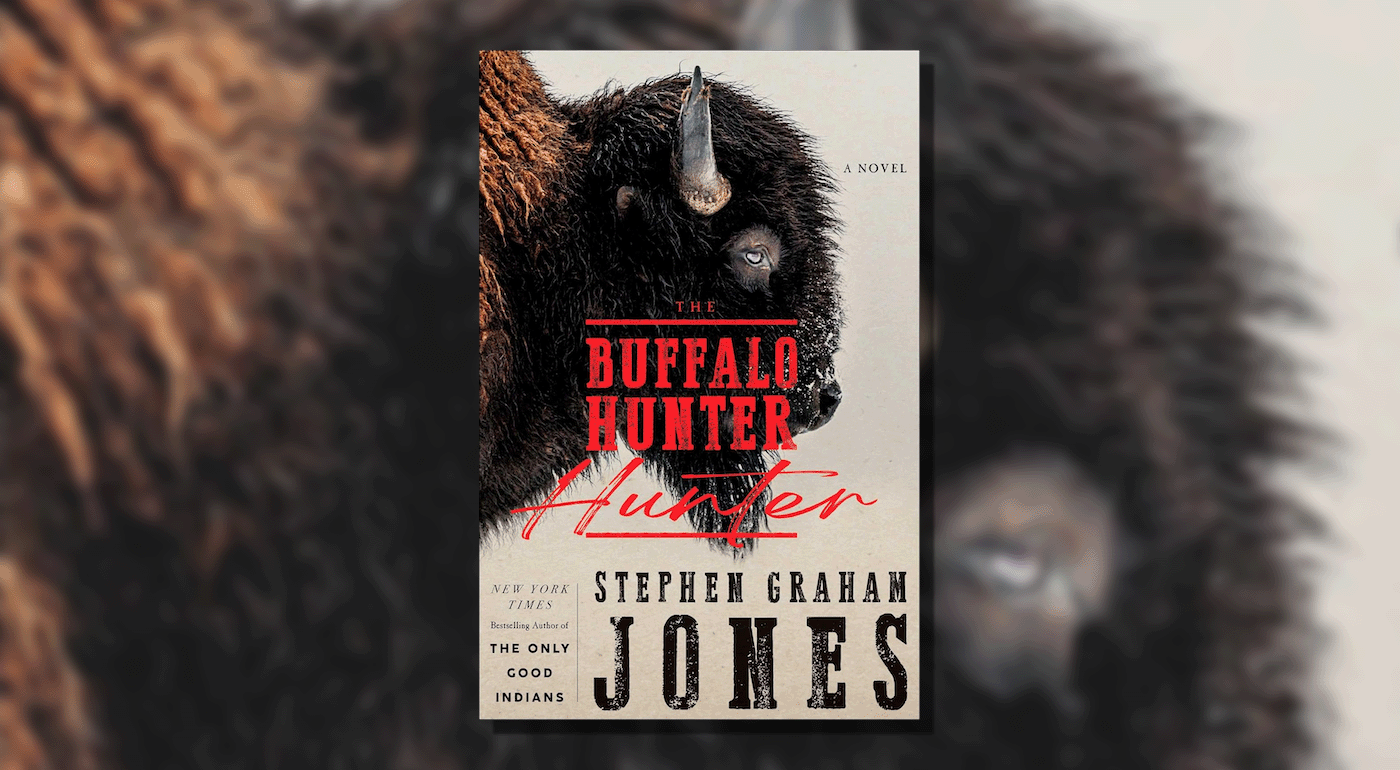
The latest installment of Stephen Graham Jones’s The Buffalo Hunter Hunter, covering chapters 11 and 12, plunges readers deeper into the unsettling unraveling of the Miles City community. First published in 2025, the narrative, as explored through Arthur’s journal entries, paints a grim picture of escalating violence, social disintegration, and profound spiritual crisis. This analysis delves into the events of April 1912, examining the growing body count, the erosion of civic order, and the theological anxieties plaguing the town’s pastor.
Community Under Siege: A Cascade of Violence
The period covered by these chapters is marked by a dramatic surge in fatalities and disappearances, each event further fracturing the already fragile social fabric of Miles City. Arthur’s journal entries serve as a stark chronicle of this descent.
April 18, 1912: The Absolution of Three-Persons
Arthur opens his journal with the shocking news of Chance Aubrey’s meticulously planned suicide. Distraught by the sinking of the RMS Titanic, a symbol of human achievement and Aubrey’s personal investment, he chose a particularly gruesome method. Aubrey attached his noose to an upright post, mounted his plow-horse, and then beat the animal into motion, effectively breaking his own neck. The surreal horror of the scene was compounded by Sheriff Doyle’s subsequent actions; he shot the horse dead, an act Arthur interprets as a visceral expression of frustrated rage.
The violence did not stop with Aubrey. The Pinkerton detective, Dove, was discovered brutally mangled on the train tracks outside of town. Simultaneously, Postmaster Livinius Clarkson vanished without a trace. The desecration of the American flag Clarkson had so diligently maintained, found defaced in a horse trough, serves as a potent symbol of the lawlessness and disrespect pervading the community.
Arthur’s personal sanctuary, the church and rectory, becomes a refuge from the encroaching darkness. He finds solace in the covered walkway connecting the two buildings, shielding him from the open night sky. His only companions are donated ash cakes and the cat, Cordelia. The madam of the local brothel’s aggressive demand for Cordelia’s return, accompanied by a barrage of invective, underscores Arthur’s mortification and his desire to remain hidden, clutching Cordelia tightly.
Arthur grapples with the theological implications of his role as confessor to "Good Stab," the Pikuni individual responsible for the confession. He questions whether he was chosen by divine providence or if he was simply the only available clergyman in Miles City, making him the unwitting target of Good Stab’s ire. This existential questioning leads Arthur to ponder if he is being tested like Job, his faith scrutinized until it proves itself "glowing" or until it inevitably fails.
April 22, 1912: Further Disappearances and Disturbing Discoveries
By Arthur’s next journal entry, "much has transpired." Postmaster Clarkson’s body has been discovered in the badlands, alongside another unidentified individual, adding two more to the growing list of the ignominiously slain. The possibility that this unknown victim is one of the men abducted from San Francisco casts a wider, more sinister net over the unfolding events.
Arthur’s increasing paranoia is evident as he decides to hide his log, fearing its contents might reveal the "devious industry" within his own heart. Only Cordelia, the cat, is privy to its location, a testament to the trust Arthur places in her, albeit an unusual one. He notes that Cordelia, too, harbors secrets, one of which Arthur himself uncovers.
While agonizing over the recent deaths in the church pew, Arthur hears a scuffling sound from above. He climbs a ladder to the rafters, discovering Cordelia near a hidden transom window, a secret ingress and egress. The rafter closest to the window, unusually clean of dust, suggests someone has been sitting there, observing. Arthur’s subsequent fall due to rotted rungs reinforces the vulnerability of his sanctuary. The realization that an agile climber could access the church undetected ignites a chilling suspicion: could Good Stab be spying on him and his journal from above?
Despite the palpable fear, Arthur resolves to "play this farce out to its terminal point." He engages in his own intelligence gathering, posing as someone collecting Dove’s belongings to search the detective’s room. He secures papers containing notes and photographs of the San Francisco abductees. His next move involves a deceptive tactic: presenting Sheriff Doyle with a tin cup smeared with paint, claiming it was handled by an "Indian" seeking water. This fabricated evidence is designed to lure Doyle and his deputies to the next Sunday service, where the "Indian" has supposedly said he will attend. However, Good Stab does not appear. His presence is revealed only later, behind locked doors, as Arthur eats a meal. A creak alerts him to Good Stab’s return to his usual pew.
The ensuing verbal exchange between Arthur and Good Stab reveals more than Arthur intends. Good Stab then performs a disturbing act: he catches a still-living mole, draining its blood before Arthur’s eyes. The chilling question that follows, "How is your heart, Three-Persons?" underscores the psychological torment Arthur endures. Despite his admitted weakness, Arthur declares his willingness to listen, prepared for whatever revelation or torment Good Stab has in store.
Undercurrents of Prejudice and Forgotten Histories
Beyond the immediate horror, the narrative subtly exposes the prevailing prejudices of the era, particularly concerning race and religion.
The Degenerate Dutch: A Subtle Antisemitism
Arthur’s internal monologue reveals a concerning undercurrent of antisemitism. His reluctance to spell Sall Bertram’s name as "Saul" is prefaced by a fear of association with "certain races" who use the Old Testament as their "prime holy text," linking it to usury. This "remarkably roundabout antisemitism" highlights how deeply ingrained prejudices could manifest even in seemingly minor linguistic choices.
Libronomicon: A Glimpse of Erased Narratives
The exclusion of the "source, making, history, and sentimental worth" of Erna Schmid’s sausage from Arthur’s journal entry is noted. This editorial choice by Arthur, to omit the context of the food he consumes, mirrors a broader theme of erasure and the suppression of narratives, suggesting that Arthur wishes he could do the same with the original conversation he had with Good Stab.
Seven Deadly Sins and Counting: Moral Ambiguity
Arthur’s consumption of Mrs. Koch’s ash cakes is presented with a layer of self-serving justification. He claims he eats them "to better grieve for those poor souls drowning in the cold waters." However, the commentary wryly points out that he offers no explanation for "stealing a cat," highlighting his moral ambiguity and the selective application of his conscience.
Ruthanna’s Commentary: A Pastor’s Psychological Turmoil
Ruthanna’s commentary provides an insightful analysis of the psychological and thematic elements at play in these chapters. She notes the escalating body count and Arthur’s peculiar act of "stealing" Cordelia, suggesting a profound need for companionship.
The commentary dissects the gruesome suicide of Chance Aubrey, linking his despair to the sinking of the Titanic and his investment in its perceived invincibility. The tragic fate of the horse, killed by Sheriff Doyle, is also highlighted, with Ruthanna questioning Arthur’s perceived forgiveness as based on personal preference rather than true absolution.
The commentary emphasizes the pervasive nature of violence, extending to the Titanic victims and the detective Dove. Arthur’s passive role in Dove’s death and his unacknowledged role in the unfolding tragedies are scrutinized. The discovery of Clarkson’s body with an "unnamed soul" further deepens the mystery and the sense of widespread loss.
The issue of indigenous casualties is directly addressed. While no Native Americans die on-page, the presence of "The Judges Three" – trophy buffalo heads symbolizing the "eradication of the Indian menace" – underscores the historical violence and dehumanization. The commentary posits that these lives, and the lives of those represented by the heads, "don’t count" in the prevailing societal narrative, a stark contrast to Good Stab’s meticulous accounting.
The commentary concludes by focusing on Good Stab’s act of draining the mole’s blood, interpreting it as a demonstration of his "blood-drinking nature." Arthur’s resignation to "fate," his attempts to trap Good Stab through indirect means, and the unsettling revelation of the San Francisco namesake among the dead all contribute to his growing sense of dread. His church, once a sanctuary, is now a place of vulnerability, his "captor" able to enter and leave at will. Arthur’s identification with King Lear, an aging figure exiled by former allies and facing his own mortality, resonates deeply. His confession of a "weak" heart, yet a "willing" spirit, sets the stage for further confrontation and a grim anticipation of more deaths.
Anne’s Commentary: Deconstructing Motives and Historical Context
Anne’s commentary offers a meticulous deconstruction of the events, particularly Chance Aubrey’s suicide and Arthur’s historical recollections.
The Grotesque Mechanics of Suicide and the Titanic‘s Symbolism
Anne provides a detailed, if disturbing, explanation of Aubrey’s hanging method, clarifying how the horse’s motion would have led to neck breakage. She connects the Titanic‘s sinking to the Edwardian era’s obsession with Anglo-Saxon technological supremacy, highlighting how its loss shattered this hubristic worldview. Aubrey’s intense focus on the Titanic suggests potential obsessive-compulsive disorder, exacerbated by the town’s rising anxiety over the murders, and his belief in an "Indian" killer fuels the "worst dream of America" that Good Stab embodies – the untamable, unkillable other.
Arthur’s Recollections and the Riddle of Yale
Anne delves into Arthur’s journal entry regarding his time at "the Collegiate School" in New Haven, which he claims became Yale University. She meticulously fact-checks this, noting that the institution was renamed Yale College in 1718, not Yale University in 1887. This discrepancy leads Anne to speculate about Arthur’s potential vampiric nature or a significant lapse in his memory. The more likely explanation, she suggests, is a conflation of historical details, though the historical context of Native American subjugation in the East by 1718 is acknowledged.
Cordelia, Good Stab, and the Unsettling Bonds
The commentary concludes by exploring the naming of Arthur’s cat, Cordelia, after King Lear’s faithful daughter. Anne draws parallels between Cordelia and Good Stab, particularly in their "hunting" behaviors. She questions the nature of the bonds forming between Arthur and Good Stab, despite the power imbalance and Good Stab’s violent actions, suggesting a complex psychological dynamic at play.
The narrative continues to weave a tapestry of violence, fear, and theological questioning, leaving readers to anticipate the further unraveling of Miles City and the profound impact on Arthur’s psyche. The escalating body count serves as a grim indicator that this descent into darkness is far from over.