The landscape of North American film and television production is undergoing a seismic shift as California, New York, and New Jersey engage in an intensifying arms race for Hollywood’s billion-dollar production budgets. According to the Q2 2026 industry insights report released by industry tracker ProdPro, the Golden State has managed to maintain its position as the top filming destination, but it faces unprecedented pressure from East Coast rivals that are aggressively expanding their infrastructure and tax incentive programs. While California reported $1.33 billion in production spend—a 5 percent increase year-over-year—the Empire State and the Garden State are seeing much sharper trajectories in growth, signaling a potential realignment of the industry’s domestic footprint.
The State of the Industry: Q2 2026 Data Overview
The latest data highlights a period of "triage and recovery" for California. After several years of "production flight," where major projects moved to more tax-friendly locales or international hubs like the United Kingdom and Canada, California’s efforts to stabilize its industry appear to be yielding results. The state saw an 11 percent increase in filming count during the second quarter, a significant reversal from the declining activity observed as recently as the first quarter of 2026. This resurgence is largely attributed to the state’s decision to double down on its incentive programs, aiming to provide a more competitive environment for both blockbuster features and high-end episodic television.
However, the growth in California is eclipsed by the percentage gains seen in the Tri-State area. New York witnessed a staggering 57 percent surge in total production spend, reaching $1.06 billion for the quarter. This puts New York within striking distance of California’s total spend, a gap that has narrowed significantly over the last twenty-four months. New Jersey, while operating at a lower total dollar volume, saw its production spend jump 41 percent to $387 million, despite a slight 11 percent dip in the total number of projects. This discrepancy suggests that while New Jersey is hosting fewer individual productions, the projects it does attract are of a much higher scale and budget.
The California Strategy: Doubling Down on the Golden State
For Governor Gavin Newsom and the California Film Commission, led by outgoing director Colleen Bell, the Q2 figures represent a hard-fought victory. The state has historically relied on its deep pool of veteran crew members, iconic locations, and established studio infrastructure. Yet, as other states began offering more lucrative tax credits, California’s dominance was threatened.
In response, California expanded its film and television tax credit program, which now emphasizes "committed spend"—the estimated production budget for projects that officially commence photography within the quarter. Alex LoVerde, co-founder and CEO of ProdPro, noted that while the data represents only one quarter, it serves as an early indicator that the expanded incentive is successfully clawing back productions that might have otherwise fled to London or Atlanta. The goal of the California program is not just to attract new work but to provide a "safety net" for the thousands of below-the-line workers whose livelihoods depend on local production.
New York’s Legislative Pivot and Soundstage Explosion
New York’s rapid ascent in Q2 2026 is the direct result of a strategic legislative overhaul. Last year, the state moved to remove the cap on "above-the-line" qualified spending—expenses related to the salaries of actors, directors, and producers. Historically, New York’s credits were focused primarily on "below-the-line" costs like crew wages and equipment rentals. By allowing credits to apply to high-earning talent, the state has made itself significantly more attractive for star-studded tentpole films and prestige television series.
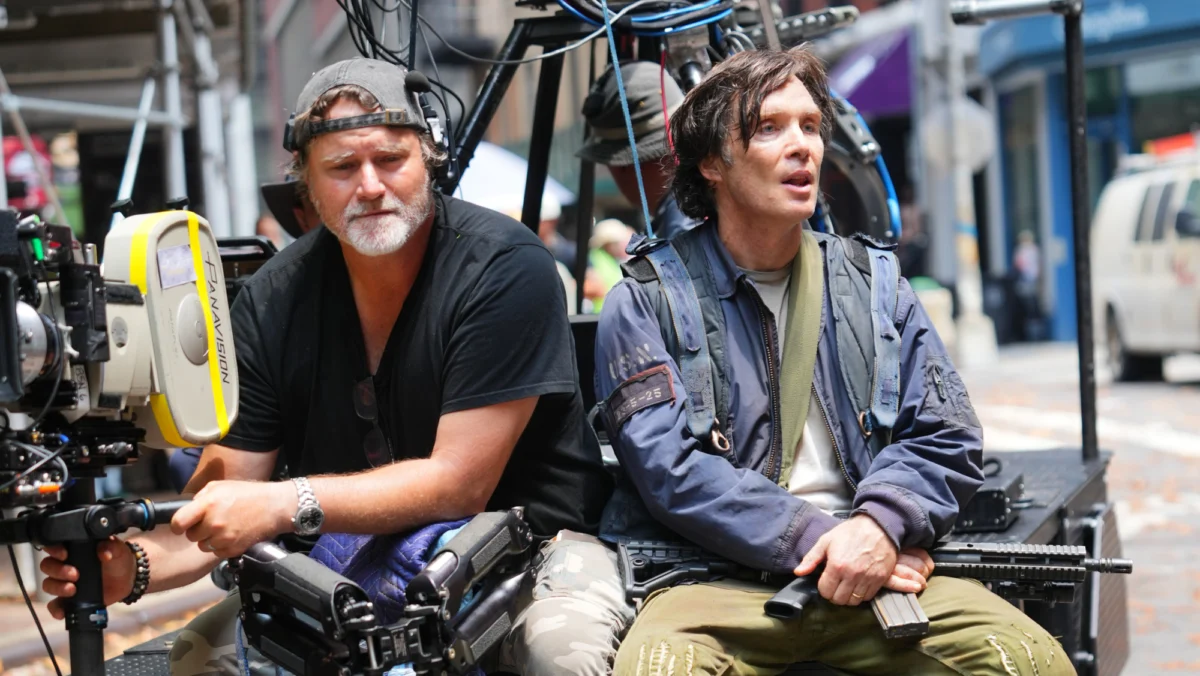
This legislative shift has been complemented by a massive investment in physical infrastructure. A June study by real estate services firm CBRE revealed that soundstage inventory in the New York Tri-State area has grown by 43 percent since 2020. This expansion includes the opening of the Sunset Pier 94 Studios in Manhattan, which recently welcomed the high-profile series Dexter: Resurrection as its inaugural tenant. Additionally, the streets of New York have remained a hotbed for principal photography, with major sequels like Paramount’s A Quiet Place III utilizing the city’s unique urban landscape throughout June.
Industry analysts point out that motion picture employment in New York now stands at 86 percent of pre-pandemic levels. The Hudson Valley and Manhattan are leading this rebound, proving that the combination of modern facilities and aggressive tax breaks is a potent draw for studio executives.
New Jersey: From Supporting Actor to Leading State
Perhaps the most surprising development in the Q2 report is the continued rise of New Jersey. Long considered a secondary location for New York-based shoots, the Garden State has established its own identity by designating major media conglomerates as official "Studio Partners." Netflix, Paramount, and Lionsgate have all entered into long-term agreements with the state, receiving bespoke incentive packages in exchange for significant capital investments and long-term production commitments.
Netflix is currently developing one of the largest production hubs on the East Coast at the former site of Fort Monmouth. Similarly, Paramount signed a 10-year lease for the under-development 1888 Studios in Bayonne, located directly across the water from New York City. Lionsgate is set to anchor Great Point Studios in Newark.
The strategic irony of the current market is perhaps best illustrated by the upcoming CBS legal drama Cupertino. Despite being named after the California city that serves as the headquarters for Apple Inc., the production is shooting entirely in New Jersey. This move highlights a growing trend: studios are no longer bound by geography. If a state can provide the right financial incentives and the necessary soundstage space, producers are willing to recreate any location on Earth within that state’s borders.
The Decline of the "Peach State" and Other Former Hubs
While the Northeast and California are thriving, other regions that were once considered "Hollywood South" are experiencing a cooling period. Georgia, which for years was the primary domestic home for Marvel Studios projects, saw a 40 percent decline in filming activity and a 43 percent drop in production spend in Q2 2026. This downturn is largely due to Marvel moving a significant portion of its production slate to the United Kingdom, where the combination of the British Film Institute’s incentives and world-class facilities at Pinewood and Shepperton have become irresistible.
By the end of 2025, Georgia had already slipped below New Jersey in terms of total quarterly spend. As of Q2 2026, the two states are within $20 million of each other, a scenario that would have been unthinkable five years ago. Other states like New Mexico and Illinois have also seen dips, suggesting that the industry is consolidating its spending into a few "mega-hubs" rather than spreading it across dozens of smaller incentive-chasing locales.
Analysis of Implications: Predictability Over Pure Savings
The shift in production trends suggests that Hollywood producers are prioritizing risk mitigation and predictability over the sheer size of a tax credit. As ProdPro’s Alex LoVerde explained, the most successful programs are those that offer a "meaningful credit" that is easy to monetize and consistent from year to year.
"At the end of the day, producers are trying to reduce risk," LoVerde stated. "The easier and more predictable a program is to use, the more competitive it becomes."
This search for stability is a reaction to the volatility of the past few years, including the COVID-19 pandemic and the 2023 labor strikes. Studios are looking for jurisdictions where they can build long-term pipelines rather than one-off projects. The "Studio Partner" model pioneered by New Jersey is likely to be emulated by other states seeking to lock in production spend for decades rather than months.
Future Outlook and Economic Impact
The economic stakes of this competition are immense. Beyond the direct spending on cast and crew, film and television productions provide a massive stimulus to local economies. Construction companies, catering services, hotel chains, and local transportation providers all see significant revenue spikes when a major production comes to town.
As California continues its triage efforts, the state will likely focus on streamlining its permitting processes and further integrating its legendary post-production and visual effects (VFX) industry into its incentive offerings. Meanwhile, the New York and New Jersey corridor is expected to continue its aggressive expansion, potentially creating a "Bi-Coastal Hegemony" that makes it difficult for other states to compete.
The Q2 2026 data serves as a reminder that in the modern entertainment industry, the "magic of movies" is often a matter of mathematics. While the creative heart of Hollywood may remain in Los Angeles, the financial pulse of the industry is increasingly found wherever the tax laws are most favorable and the soundstages are most modern. For now, California has stopped the bleeding, but the East Coast surge shows no signs of slowing down.