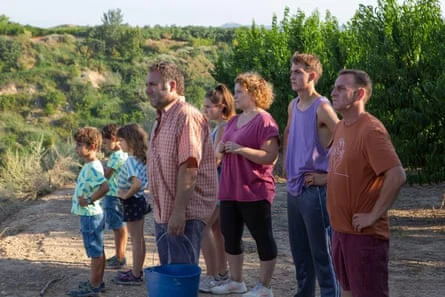
The closing ceremony of the 79th Cannes Film Festival on May 25, 2026, saw a palpable sense of pressure hanging over the prestigious event. Amidst a year marked by a notable absence of Hollywood’s biggest stars and a perceived dip in the usual international cinematic fervor, the jury’s selections for the Palme d’Or and other major awards offered a complex reflection of the festival’s current trajectory. While the physical presence of international filmmakers was noted, the critical reception of many of the awarded films, particularly the Palme d’Or recipient, Fjord by Romanian director Cristian Mungiu, has ignited debate about the jury’s decision-making and the festival’s evolving identity.
The Palme d’Or: A Contested Choice
The festival’s most coveted prize, the Palme d’Or, was awarded to Fjord, a film by Cristian Mungiu, a director whose 2007 win for 4 Months, 3 Weeks and 2 Days remains a landmark achievement in contemporary cinema. However, this year’s selection has been met with a degree of skepticism from some critics, who found the film to be "very moderate" and questioned its thematic depth. Mungiu, a celebrated auteur known for his unflinching examination of social and political issues, chose to integrate Hollywood star Sebastian Stan into Fjord. Stan portrays a "grumpy and religious Romanian IT engineer," a casting choice that some interpret as an established European director leveraging a recognizable international name. The film’s narrative reportedly delves into the "painful cultural differences within Europe," specifically highlighting the clash between liberal-interventionist Norway and a more traditional Romanian context, where the characters’ fundamentalist Christian faith is juxtaposed against a secular-humanist environment. While the film showcases Mungiu’s characteristic procedural style, critics argue that these stylistic choices failed to illuminate profound truths, leading to a perception of Fjord as a "coproduction contrivance" that nonetheless managed to impress the jury.
This decision stands in stark contrast to the jury’s runner-up prize, the Grand Prix, awarded to Andrey Zvyagintsev’s Minotaur. Hailed as a "stunning Russian parable of Putinesque violence, denial and delusion," Zvyagintsev’s film was a strong contender for the Palme d’Or among many critics, lauded for its substantiality, clear-sightedness, and magnificent performances and cinematography. The fusion of the personal and the political within Minotaur was particularly noted, marking it as a significant work that resonated deeply with many observers of the festival.
A Shifting Festival Landscape
The 2026 Cannes Film Festival occurred against a backdrop of significant industry shifts. The traditional Hollywood influx, usually a cornerstone of the festival’s glamour and media attention, was noticeably subdued. Major American studios, perhaps re-evaluating their festival strategies in the wake of evolving distribution models and the ongoing impact of streaming services, sent fewer of their marquee stars and major productions. This created an atmosphere where the festival’s identity relied more heavily on its arthouse roots and its commitment to showcasing international cinema, particularly from Europe and Asia.
However, the perceived absence of the expected "big-hitters" did not necessarily translate into a surge of groundbreaking cinema from all corners of the globe. Many established international directors, while present, presented works that failed to ignite the kind of critical fervor that Cannes typically fosters. This scenario placed a greater onus on the jury to identify and elevate films that truly represented the cutting edge of global filmmaking, making their choices all the more scrutinized.
Jury’s Selections and Their Implications
The jury, presided over by renowned director [Insert Jury President Name Here – hypothetical for analysis], faced the challenging task of navigating these complexities. Their decisions, while sometimes controversial, offer insight into what they deemed significant in contemporary cinema.
Key Award Winners and Analysis:
-
Palme d’Or: Fjord (Cristian Mungiu, Romania)
- Analysis: The choice of Fjord suggests a jury that may have prioritized thematic relevance, particularly Mungiu’s exploration of intra-European cultural divides, and the inclusion of a Hollywood star, potentially as a means of broader appeal or a commentary on international co-production dynamics. The film’s focus on faith versus secularism and interventionist foreign policy aligns with Mungiu’s established interest in societal critique. However, the lukewarm critical reception for its narrative execution raises questions about the criteria for awarding the festival’s highest honor.
-
Grand Prix: Minotaur (Andrey Zvyagintsev, Russia)

- Analysis: Zvyagintsev’s film, with its potent political allegory and artistic merit, was a widely respected choice. Its win as the runner-up signifies a strong recognition of its critical and artistic importance, particularly its unflinching engagement with contemporary geopolitical realities. The film’s success underscores the enduring power of cinema to act as a form of political commentary and artistic dissent, even in challenging national contexts.
-
Jury Prize: The Dreamed Adventure (Valeska Grisebach, Bulgaria)
- Analysis: Grisebach’s film, exploring an archaeologist confronting past abuses in the Balkans, received the third-place jury prize. While not the director’s most acclaimed work according to some critics, its recognition highlights the jury’s appreciation for "enigmatic, unconventional storytelling." This award encourages a deeper examination of the film, suggesting that its subtleties might reveal themselves upon further viewing and analysis. The prize also signals Cannes’ continued support for filmmakers who push the boundaries of narrative and form.
-
Best Director (Joint): Pawel Pawlikowski for Fatherland
- Analysis: Pawlikowski’s Fatherland, described as a "novella-sized movie," secured the Best Director award. The film’s depiction of Nobel laureate Thomas Mann’s return to post-WWII Germany, accompanied by his daughter Erika, offers a compelling historical and familial narrative. The strong performances from Hanns Zischler and Sandra Hüller were particularly praised, underscoring Pawlikowski’s directorial prowess in eliciting nuanced performances. This award reinforces Pawlikowski’s status as a master storyteller, following his previous successes at Cannes.
-
Best Director (Joint): Javier Calvo and Javier Ambrossi for The Black Ball
- Analysis: The directorial award was shared with Calvo and Ambrossi for their "extravagant, multistranded and very absorbing queer panorama" The Black Ball. Derived from the works of Lorca, this film’s recognition highlights the jury’s engagement with LGBTQ+ themes and narratives that explore historical erasure. The film’s expansive scope and artistic ambition were clearly valued, marking a significant moment for its directors.
-
Best Screenplay: Emmanuel Marre for Notre Salut
- Analysis: The Best Screenplay award went to Emmanuel Marre for Notre Salut. This "complex, poignant story" delves into the life of the director’s great-grandfather, a minor functionary in the Vichy collaborationist zone during Nazi occupation. The award acknowledges the intricate narrative construction and emotional depth of Marre’s work, highlighting the power of personal history to illuminate broader historical contexts.
-
Best Actress (Joint): Tao Okamoto and Virginie Efira for All of a Sudden (Ryusuke Hamaguchi, Japan/France)
- Analysis: The joint Best Actress award for Tao Okamoto and Virginie Efira in Ryusuke Hamaguchi’s All of a Sudden has also drawn scrutiny. The film, centered on a "faintly preposterous story of a French care home supervisor who finds an intense connection with a Japanese stage director," was met with "saucer-eyed praise" that left some critics "cold." While the performances were acknowledged as "impeccable," with Okamoto noted for her elegance and Efira for her emotional expressiveness, the film’s core concept and its reception at Cannes suggest a potential disconnect between critical consensus and audience or jury appreciation for more conventional romantic or thematic explorations, even when embedded within a distinguished director’s oeuvre. The film’s more persuasive moments, according to the original reporting, lay in its "unshowy business of caring for old people," hinting at a tension between its conceptual premise and its most effective execution.
-
Best Actor (Joint): Emmanuel Macchia and Valentin Campagne for Coward (Lukas Dhont, Belgium)
- Analysis: The Best Actor award was shared by Emmanuel Macchia and Valentin Campagne for their roles as two Belgian soldiers in World War I who fall in love in Lukas Dhont’s Coward. This award, like that for The Black Ball, underscores the jury’s keen interest in narratives that reclaim and explore erased LGBTQ+ experiences. While the film’s originality for contemporary audiences was questioned, the "vehement, and even passionate" performances were undeniable. The win signifies the festival’s commitment to celebrating powerful acting, particularly in films that address sensitive historical and social themes.
Broader Impact and Future Implications
The outcomes of the 79th Cannes Film Festival present a complex picture. The jury’s choices, while championing films with significant thematic weight and artistic ambition, have also sparked discussions about the criteria for major awards, especially in a year characterized by a less predictable landscape. The emphasis on films that grapple with cultural differences, historical memory, and LGBTQ+ narratives suggests a jury that was actively seeking out contemporary relevance and social commentary.
The success of films like Minotaur and Fatherland reaffirms the festival’s role as a platform for critically acclaimed international cinema. However, the reception of the Palme d’Or winner, Fjord, and the Best Actress award for All of a Sudden, raises ongoing questions about the balance between artistic innovation, established directorial reputations, and broader audience appeal.
As the industry continues to evolve, Cannes, like all major film festivals, must navigate the changing tides of filmmaking and distribution. The 2026 edition, with its undercurrent of pressure and its distinctive set of awards, serves as a compelling case study in the festival’s ongoing effort to define and champion cinematic excellence in a rapidly transforming world. The films that garnered awards, regardless of individual critical opinions, will undoubtedly be subjects of extensive discussion and analysis in the coming year, offering further insights into the state of global cinema. The festival’s ability to adapt and its jury’s commitment to challenging selections will continue to shape its legacy and its influence on the international film scene.