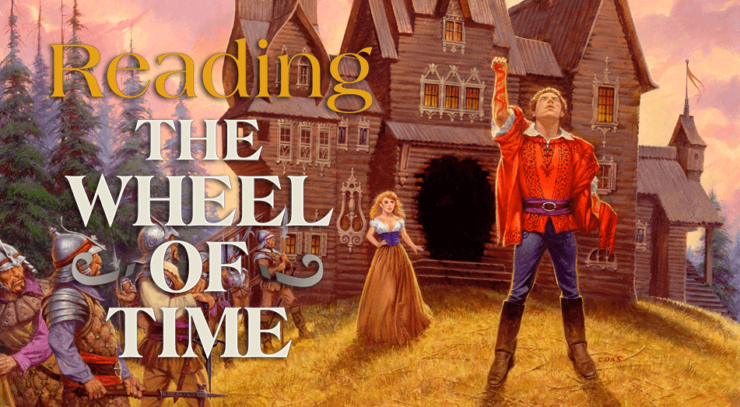
The latest installment of "Reading The Wheel of Time" delves into Chapters 36 and 37, presenting a critical juncture for several key characters and setting the stage for escalating conflict. These chapters illuminate Verin’s cryptic guidance to Mat, Tuon’s ascension and the dawn of a new Seanchan military strategy, and Rand’s grim, decisive actions in Bandar Eban. The intricate weaving of these plotlines offers profound insights into the characters’ evolving roles and the formidable challenges they face in the unfolding narrative of this epic fantasy series.
Verin’s Enigmatic Proposition to Mat Cendrail
Chapter 36 opens with Verin Mathwin engaging Matrim Cauthon in a conversation that probes the nature of destiny and the subtle forces that guide events. Verin recounts her journey from Tear to Tar Valon, a path seemingly dictated by a series of "compounding coincidences" that she recognized as the Pattern’s influence. Crucially, she describes a palpable sensation of being "pulled or tugged on," a sensation Mat immediately identifies with his own recurring experiences of being drawn towards Rand al’Thor. This shared perception of an invisible, insistent force suggests a deeper interconnectedness between the two characters and their respective destinies.
The Pattern’s Influence and Ta’veren Connections
Verin’s explanation of the Pattern’s manipulation of coincidences serves as a foundational element in understanding the world of The Wheel of Time. The concept of ta’veren, individuals around whom the Pattern weaves itself, is central to these occurrences. Mat’s recognition of Verin’s description strongly implies that both he and Perrin Aybara are significant ta’veren, their presence creating ripples that influence those around them, including Aes Sedai like Verin. This revelation underscores the subtle but powerful influence of ta’veren on the grand tapestry of fate, often beyond the comprehension of even the most knowledgeable individuals.
A Glimpse of Rand’s State and the Cleansing of Saidin
Mat’s inquiries about Rand lead to a stark revelation: Rand is perceived as "mad," yet maintaining a precarious control. Verin also informs Mat of the monumental event of saidin‘s cleansing, a fact she downplays with characteristic Aes Sedai reserve. This cleansing, the removal of the taint of the Dark One from the male half of the One Power, is a world-altering development that would ordinarily be met with immense celebration. Verin’s attempt to temper Mat’s astonishment highlights her unique position and her knowledge of the greater dangers that still loom. The act of cleansing saidin is a critical turning point, theoretically allowing men to channel without succumbing to madness, a prospect that has far-reaching implications for the balance of power and the very nature of magic in the world.
The Shadow’s Pursuit and Verin’s Price
Verin further warns Mat that he is actively being hunted by agents of the Shadow. While Mat remains characteristically unfazed, having faced such threats since his departure from Emond’s Field, Verin stresses the gravity of the current situation, urging extreme caution. Her assistance comes with a price: a sealed letter Mat must keep for ten days before opening and following its instructions within Caemlyn. Mat’s staunch refusal to commit to an unknown obligation showcases his deep-seated distrust of Aes Sedai manipulation and his determination to maintain his autonomy. His counter-proposal of thirty days, driven by a desire for safety and the opportunity to research the Tower of Ghenjei and develop Aludra’s dragons, reveals his pragmatic approach to survival and his keen intellect in leveraging circumstances to his advantage. Verin’s perplexed reaction suggests that Mat’s refusal is not a typical response, hinting at the extraordinary nature of her request and the potential consequences of his defiance.
Tuon’s Transformation and the Seanchan Offensive
In Ebou Dar, Chapter 37 witnesses a pivotal moment for Tuon, who formally embraces her destiny as Empress. Her new identity, Fortuona, marks a symbolic severing from her past as Tuon, the Daughter of the Nine Moons. This renaming ritual is a significant aspect of Seanchan culture, signifying not just a change in status but a fundamental shift in identity, often associated with ascension or profound transformation.
The Bloodknives and a Daring Aerial Assault
Fortuona dispatches the five Bloodknives, elite warriors whose ter’angreal rings grant them extraordinary abilities at the cost of their life force. Their mission, to remain behind and inflict maximum casualties on marath’damane (female channelers), underscores the Seanchan’s ruthless strategy against those who wield the One Power. Lieutenant-General Yulan’s plan to utilize raken and to’raken for a direct aerial assault by sul’dam and damane represents a radical departure from conventional warfare. This bold tactic, poised to either usher in a new era of Seanchan military dominance or result in catastrophic failure, highlights the Seanchan’s unwavering pursuit of absolute control and their willingness to gamble on unconventional approaches.
Fortuona’s Realization: The Dragon Reborn Turns His Gaze
Fortuona’s internal monologue reveals a keen understanding of the strategic implications of her actions. She recognizes that this offensive marks a significant escalation, turning the Dragon Reborn, Rand al’Thor, against the Seanchan for the first time. Until this point, their conflicts have been largely one-sided or localized. This shift signifies a direct confrontation with the most powerful force in the world, a development that carries immense weight for the future of the continent.
Rand’s Descent and the Terror of Balefire
Meanwhile, in Bandar Eban, Rand confides in Min about the failure to secure peace with the Seanchan, acknowledging the futility of dwelling on frustration and anger. Min experiences a troubling vision of Dragonmount shrouded in darkness, with a single pinprick of light, a premonition that underscores the mountain’s future significance and Rand’s darkening path. Min’s exhaustion and feelings of inadequacy, stemming from Semirhage’s attack, further emphasize the emotional toll of their struggle. Her previous role as a last line of defense has been shattered, leaving her feeling vulnerable and exploited.
The Pursuit of Graendal and the Natrin’s Barrow Deception
Rand’s immediate intent to confront Graendal, a cunning and powerful Forsaken, reveals his unwavering resolve. He equips himself with a new, enigmatic sword, a testament to his evolving combat capabilities. Min’s decision to accompany him, despite her weariness, showcases her loyalty and determination. Rand explains the strategic importance of Natrin’s Barrow, a fortress transformed into a palace, offering both seclusion and defensibility. His interaction with Ramshalan, a nobleman eager for favor, reveals Rand’s perception of Graendal as an opponent whose intelligence surpasses his own, making a direct confrontation perilous.
A Calculated Gambit and the Price of Compulsion
Rand’s strategy hinges on a complex ruse, enlisting Ramshalan as an emissary to hidden Domani lords and instructing him to seek an alliance at Natrin’s Barrow. This plan, which Rand admits frightens him, involves sending Ramshalan into a potentially deadly situation. The implications are grim: if Graendal’s mind-manipulating abilities are at play, Ramshalan’s life is forfeit, and his knowledge could be twisted against Rand. Nynaeve’s immediate concern that Rand has sent Ramshalan to his death highlights the moral ambiguity of Rand’s actions. However, upon Ramshalan’s return, Nynaeve discovers that all traces of Graendal’s compulsion have vanished, suggesting a deeper purpose behind Rand’s gambit.
The Balefire Reckoning at Natrin’s Barrow
Rand’s disillusionment with Callandor, the Sword That Is the Androl, after its failures in his attempts to revive a child and confront the Seanchan, marks a significant turning point. He declares an end to acting out of emotion, emphasizing the need for deliberate and intentional action. The ensuing scene is harrowing: Rand unleashes balefire, an immensely destructive force that unravels time itself, obliterating Natrin’s Barrow and everyone within it. The physical and metaphysical shockwaves of this act are palpable, leaving Min with the impression that the "very substance of the world had been near to breaking." This catastrophic use of balefire, while horrifying, also removes all traces of compulsion from Ramshalan, suggesting a cleansing effect beyond mere destruction.
The Justification of Ends: Mercy or Annihilation?
Rand’s justification for this act is chilling: he argues that the complete annihilation of the fortress and its inhabitants, who were under Graendal’s profound compulsion, constitutes a mercy. This perspective raises critical questions about the "ends justifying the means," particularly when dealing with a force as destructive as balefire. The act causes irreparable damage to the Pattern, potentially weakening it further against the Dark One’s influence. The Forsaken themselves, who rarely employ balefire due to its inherent danger to reality, avoid its use. This raises concerns about Rand’s increasing willingness to resort to such extreme measures, potentially extending his ruthless calculus to individuals he finds merely "despicable, or annoying."
The Path to Cadsuane and the Role of Tam al’Thor
Following this devastating event, Nynaeve and Min seek out Cadsuane Moryel, recognizing the need for a guiding hand and a more strategic approach. Cadsuane, sensing the gravity of the situation, agrees to include them in her plans, provided Nynaeve can adhere to her directives. Cadsuane’s immediate instruction to Nynaeve to find Perrin Aybara, and her implied belief that Rand needs his father, Tam al’Thor, suggests a nuanced understanding of Rand’s psychological state. Tam’s potential role in reminding Rand of his humanity, beyond his destiny as the Dragon Reborn, offers a poignant hope for Rand’s internal healing.
Evolving Identities and Prophetic Undertones
Fortuona: The Empress and the Metaphor of Death
Tuon’s transformation into Fortuona offers a fascinating insight into Seanchan naming conventions. While often associated with punishment or dehumanization, the renaming also signifies ascension and the creation of a new persona. Fortuona’s contemplation of Tuon’s symbolic death and her relegation to a historical footnote reveals a profound sense of loss, even in victory. This metaphorical death resonates with other prophetic pronouncements within the series, such as Min’s vision of Alivia "helping Rand die" or the Seanchan prophecy of Rand standing on his own grave. These instances suggest that "death" may often be interpreted metaphorically within the narrative, hinting at transformative rather than literal ends.
Dragonmount’s Shadow: A Prophecy of Grief and Reckoning
Min’s vision of Dragonmount, shrouded in darkness save for a single light, could foreshadow a climactic confrontation. The mountain, intrinsically linked to Lews Therin’s despair and the Breaking of the World, may become a focal point for Rand’s internal and external battles. The possibility of a confrontation with Lews Therin, or a resolution to their shared consciousness, looms large. The prophecy of Rand standing on his own grave could be interpreted as a literal return to Dragonmount, the site of Lews Therin’s self-destruction, and a reckoning with his past and his identity.
The Burden of the Dragon Reborn: A Question of Humanity
The underlying theme of Rand’s increasingly detached and ruthless approach is explored in the concluding thoughts of the original analysis. Min’s observation that Rand "no longer cares about anything, or anyone—only defeating the Dark One" encapsulates his perilous descent. The narrative grapples with the fundamental question of whether the Dragon Reborn, a figure destined for unparalleled power and responsibility, can retain his humanity. The Aes Sedai’s attempts to "manage" and "control" Rand, rooted in their experience and authority, are contrasted with Rand’s unique, divinely ordained purpose. Ultimately, the article suggests that Rand’s path requires him to be more than just a tool; he must be allowed to be human, to experience the full spectrum of emotion, if he is to truly fulfill his destiny.
Verin’s Continued Enigma and the Unwritten Future
Verin’s role remains a central mystery. Her apparent perplexity at Mat’s refusal of her sealed letter raises questions about her sincerity and her true motives. The contents of the letter, and the identities of its intended recipients, remain unknown, adding another layer of intrigue to Verin’s clandestine operations. The tantalizing hint that Chapters 38 and 39 contain mind-blowing revelations suggests that Verin’s true purpose and the scope of her plans are far more significant than initially perceived.
The events of Chapters 36 and 37 represent a critical inflection point in The Wheel of Time. The characters are undergoing profound transformations, their actions are shaping the fate of the world, and the shadows of impending conflict lengthen with each turn of the wheel. The narrative skillfully weaves together personal struggles with epic stakes, leaving readers to anticipate the revelations and confrontations that lie ahead.