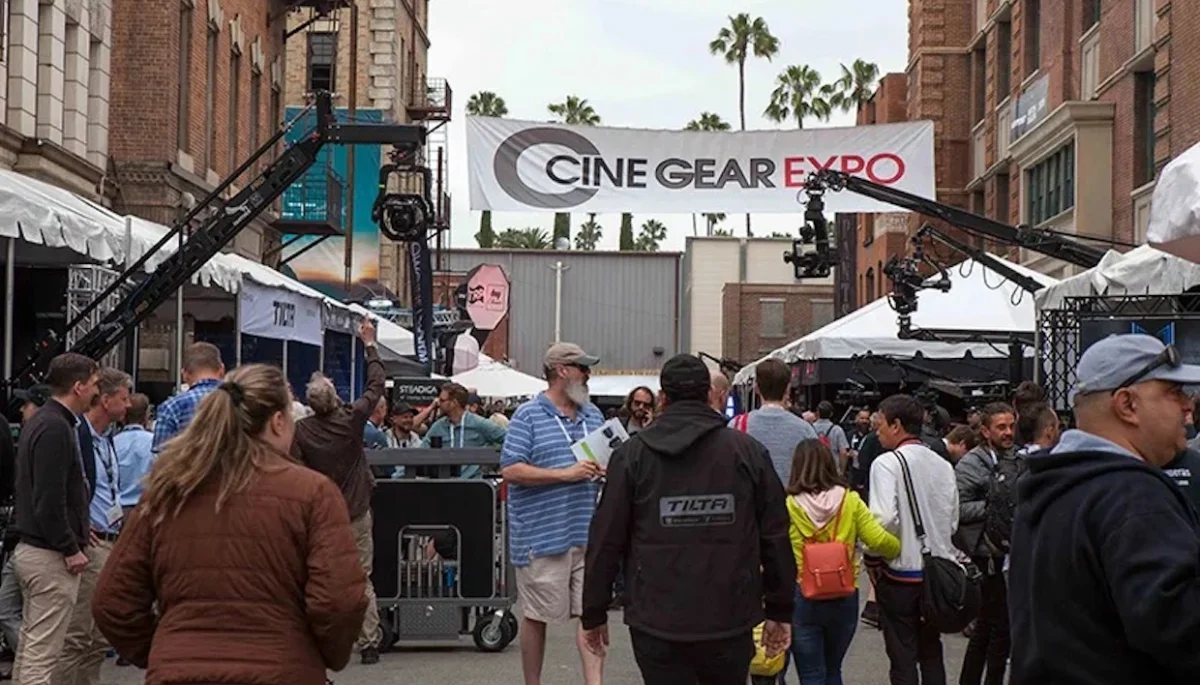
The annual Cine Gear Expo, a pivotal gathering for the motion picture and television industry, recently concluded its 2026 edition, drawing thousands of cinematographers, gaffers, lighting technicians, and industry enthusiasts to the iconic Universal Studios Lot. Unlike larger, more diversified events such as the NAB Show, which often highlight broader video and broadcast technologies, Cine Gear maintains a distinct focus on the art and craft of filmmaking, particularly cinema. This specialized approach fosters an atmosphere of optimism and camaraderie, deeply rooted in Hollywood’s rich history, as professionals convene to explore the latest advancements in gear, exchange insights, and forge connections.
A Gathering on Hallowed Ground: Universal Studios Hosts the Expo
This year’s expo, spanning two days, transformed the historic Universal Studios backlot into a vibrant marketplace of innovation and a hub for professional discourse. The setting itself, a working film studio, imbues the event with an authentic industry spirit, contrasting with its previous tenure at the Warner Bros. lot. While the Universal layout, with seminar areas a shuttle ride away from vendor tents, presented some logistical challenges reminiscent of a bustling film festival rather than a cohesive trade show, attendees navigated the sprawling grounds with enthusiasm. The scene was characterized by brisk activity, with queues forming early for popular panels and attendees eagerly collecting an array of free swag, notably the distinctive bright yellow Insta360 totes seen throughout the grounds.
The demographic composition of the attendees offered interesting insights into the industry’s evolving landscape. On Friday morning, a noticeable preponderance of young people, many appearing to be film school undergraduates or aspiring independent filmmakers, filled the aisles. This observation was echoed by Alec Moeller, a "New Faces class of 2022" alumnus and independent filmmaker known for his expertise in vintage lenses. Moeller, who described his attendance as "ethnographic," noted the vibrant energy, particularly among younger attendees. He cited the recent successes of independent projects like Obsession and Backrooms as contributing to a palpable sense of excitement and possibility among this emerging generation. It was anticipated that Saturday would draw a more established, union card-carrying professional crowd, reflecting Los Angeles’s significant freelance and gig economy workforce.
Insights from Industry Titans: The ASC Panel and Masterclasses
A cornerstone of Cine Gear Expo is its robust program of seminars and panels, offering unparalleled access to the minds behind some of cinema’s most iconic images. The annual American Society of Cinematographers (ASC) panel stood out as a major highlight, featuring an impressive lineup of 15 ASC members. Esteemed cinematographers such as Jeff Cronenweth (The Girl with the Dragon Tattoo, 2011), Rachel Morrison (Black Panther, 2018), Karl Walter Lindenlaub (Independence Day, 1996), Natasha Braier (I Love Boosters, 2026), and Steven Fierberg (Secretary, 2002) shared their perspectives.
The session commenced with a captivating montage celebrating over a century of ASC cinematographic excellence, featuring fleeting glimpses of seminal works like John Toll’s Oscar-nominated cinematography in The Thin Red Line (1998). While the sheer number of panelists meant individual speaking time was limited, their concise insights were profoundly illuminating. Steven Fierberg articulated a philosophy of "body consciousness," emphasizing an intuitive, almost unconscious connection between the cinematographer and the camera’s movement on set. Natasha Braier offered a unique perspective, attributing her ability to tap into the unconscious in her work to her upbringing as the child of psychoanalysts and her experience growing up under a military dictatorship in Argentina, where meaning was often conveyed through subtext. These brief but potent reflections underscored the deeply personal and artistic dimensions that cinematographers bring to their craft.
Beyond the ASC panel, other educational sessions provided valuable learning opportunities. M. David Mullen, a generous contributor to cinematography forums and known for his pedagogic abilities, presented a seminar hosted by Red Digital Cinema. Mullen captivated the audience by meticulously deconstructing a complex tracking shot from the third season of The Marvelous Mrs. Maisel (2019), illustrating the precise placement and movement of each of the four cameras involved. Such masterclasses are invaluable, offering practical insights into advanced techniques and problem-solving on high-level productions.
Innovations in Lighting: Powering the Visual Story
The rapid evolution of lighting technology, particularly in the realm of LEDs, was a central theme throughout the expo. For gaffers and lighting technicians, keeping abreast of these advancements is more critical than ever before. Drew Moe and Jeffrey Taylor, Local 728 gaffers and co-founders of the boutique rental house Canary Yellow (alongside Ryan Oppedisano), articulated their primary objective at Cine Gear: "We’re here to talk to the vendors, hear their elevator pitches for the new products they’re trying to get out into the world, to see what we want to add to the fleet."
Moe highlighted the stark contrast between historical lighting development and the current pace of innovation. "Most of Hollywood’s history has just been tungsten, then HMIs, then fluorescent," he explained, noting that this was a "pretty slow timeline compared to what we have now. Every year they’re updating LED units with new chipsets or attachments. It’s an exciting time." This rapid technological progression means that lighting professionals must continuously evaluate and integrate new tools to enhance creative possibilities and production efficiency.
Canary Yellow expressed particular interest in Aputure’s offerings, singling out their proprietary Blair CG color engine. This technology, previously showcased at NAB Show in Las Vegas, represents a significant step forward in color accuracy and control for LED fixtures, allowing cinematographers and gaffers unprecedented flexibility in shaping light and mood.
Further demonstrating the cutting edge in lighting control, Ian Peterson guided Moe and Taylor through V3, the latest update to the Blackout Lighting Console. This software update introduces visual control components, moving beyond the traditional reliance on numerical values to offer a more intuitive and fluid iPad-based interface. The optionality and ease of control provided by V3 are poised to differentiate Blackout from its competitors upon its release this year, streamlining complex lighting setups and empowering technicians with greater creative command. These advancements signify a shift towards more sophisticated, user-friendly, and powerful lighting solutions that cater to the exacting demands of modern filmmaking.
The Resurgence of Film and Hybrid Camera Innovation
Amidst the digital revolution, Cine Gear 2026 also underscored the enduring allure and surprising resurgence of film, particularly with the introduction of groundbreaking hybrid technologies. A significant buzz surrounded the Cinelux Sixteen, a 16mm camera developed by Cinelux Cinema Tools. On display as a prototype at the CSLA rental house booth, this camera represents the first new film camera to be developed in years and holds the unique distinction of being "the only camera designed to shoot film and digital simultaneously."
Caz Voorhees, chief engineer of the Cinelux Sixteen, explained that the camera records to an SD card at 3.2k resolution, with the digital footage including proxies and a file featuring a film-emulation LUT (Look Up Table) to closely approximate the film footage. This innovative hybrid approach directly addresses a key challenge for producers and directors: bridging the gap between the artistic desire to shoot on film and the practical need for expedited dailies and digital workflows. Voorhees noted that the project has been a "personal project" for the small development team over the past two and a half years.
The prototype at Cine Gear was their third iteration, with Voorhees estimating two more versions before they are "actually happy with everything and can give it to people," with a target release date in mid-2027. Developing a camera from scratch presents formidable technical hurdles. Voorhees indicated that the digital capture element was relatively straightforward, benefiting from readily available information on integrating sensors with computers and utilizing a Sony sensor. However, the film magazine proved to be the most challenging component. "The magazine is really f**king difficult, because you have to move it from one side to the other side, all within an inch or two of space and with zero friction—it has to not touch anything," Voorhees elaborated. This highlights the intricate precision required in mechanical film systems.
Adding to its innovative spirit, Cinelux Cinema Tools is committed to an open-source philosophy for certain aspects of the camera. "We want to make it so that the magazine stuff is all online," Voorhees stated, "so you can download it and 3D-print a magazine if you’re in a pinch or something. I want [our users] to own the camera." This approach empowers users with greater control, repairability, and customization, fostering a strong community around the new camera. The Cinelux Sixteen stands as a testament to the industry’s continued dedication to film aesthetics, offering a practical pathway for its integration into contemporary production pipelines.
Precision and Artistry in Lens Crafting: Vintage Rehousing and Anamorphic Innovation
Lenses, the "eyes" of the camera, received significant attention, showcasing both the meticulous craft of rehousing vintage glass and the innovative development of new anamorphic optics.
Zero Optik: Breathing New Life into Vintage Lenses
Zero Optik, a company renowned for its rehousing services, demonstrated the critical role it plays in making classic optics viable for modern digital cinema. Operations Manager Alex Baxter explained that the company began its rehousing services almost a decade ago, notably with a set of Bausch & Lomb Ultra Baltar lenses from the late 1930s to early 1940s. These photography lenses, originally incompatible with film cameras featuring mirror shutters, were "relegated to attics and basements for years." However, "with digital cinema, all of a sudden you had all these new options," enabling these historically significant lenses to find new life.
These particular Bausch & Lomb lenses are highly favored by acclaimed cinematographers like Ed Lachman, who used them to shoot both El Conde (2023) and Maria (2024), underscoring the enduring appeal of their unique aesthetic qualities. Zero Optik’s expertise extends beyond vintage finds; they also rehouse contemporary photography lenses from brands like Leica, Olympus, and Nikon, transforming them into "proper cinema lenses" with robust mechanics and standardized features suitable for professional film sets.
Their client roster includes prominent DPs, rental houses, and even the ASC itself, which commissioned Zero Optik to restore a set of Todd-AO 65mm prime lenses from the 1950s discovered in their archives. These iconic lenses were instrumental in creating the grand cinematic sweep of Hollywood classics such as Oklahoma! (1955) and The Sound of Music (1965). Zero Optik collaborated with cinematographer Greig Fraser (Dune 2, 2024; Project Hail Mary, 2026) to ensure "as consistent of a look across the set as possible" during the restoration. These meticulously restored lenses are now exclusively available for rent through Keslow Camera, providing filmmakers access to a distinctive piece of cinematic history.
Atlas Lens Co.: Anamorphic Vision from a Cinematographer’s Passion
The journey of Atlas Lens Co. exemplifies how a deep understanding of production needs can fuel innovation. Cofounder Dan Kanes’s career trajectory — from lighting technician to DIT to cinematographer — provided him with firsthand insight into the evolving demands of filmmaking. Recognizing a market gap during the nascent stages of digital cinematography, Kanes developed wireless HD video transmitters from scratch, leading to the creation of Paralinx, a company he later successfully sold to Vitec Group and Teradek.
Instead of a traditional investment, Kanes channeled the proceeds from the sale into his true passion: anamorphic lenses. This led to the formation of Atlas Lens Co., which debuted its first anamorphic lens prototype at NAB Show in 2017. In the nine years since, Atlas lenses have achieved remarkable prominence, gracing major Hollywood productions including Project Hail Mary (2026), Babylon (2022), and the eagerly anticipated Dune: Part Three (2026).
Atlas Lens Co. now offers three distinct anamorphic lens lines: Orion, Mercury, and the recently announced Kaizen series. The flagship Orion line is celebrated for its "vintage look that’s reminiscent of lenses from the 1970s and 1980s." However, Kanes highlighted a unique characteristic that sets them apart: their ability to "hold people in focus across the frame." While many vintage anamorphic lenses exhibit high field curvature, resulting in focus fall-off towards the edges, Atlas’s lenses feature "quite parallel field curvature." This design innovation allows for shots featuring two or even four faces across the frame where "the focus doesn’t fall off too much from left to right," offering cinematographers unprecedented compositional flexibility and clarity in wide anamorphic shots.
The newly introduced Kaizen Series Anamorphic lenses are engineered to complement large sensor cameras such as the Fujifilm GFX Eterna 55, the Arri Alexa 265, or the Blackmagic Design Ursa Cine 17K. Kanes confirmed that these lenses also perform exceptionally well on Super 35 or full-frame sensors, ensuring versatility across various camera systems. Announced earlier this year at NAB Show, the Kaizen series has now begun shipping, marking another significant advancement in anamorphic lens technology.
The Enduring Value of Community and Networking
Beyond the dazzling array of new equipment and insightful seminars, Cine Gear Expo’s fundamental appeal lies in its role as a nexus for the filmmaking community. Cinematographer Chapin Hall, encountered at the Cinelux booth, articulated this sentiment perfectly. Though no longer based in Los Angeles, Hall makes a point to attend Cine Gear, calling it his "favorite trade show." He emphasized the social aspect, stating, "It’s the most fun. The community’s great. Sometimes I can’t make it around the corner for two hours because I keep running into friends." This speaks to the invaluable opportunity the expo provides for professionals to reconnect, share experiences, and informally network in an environment dedicated to their craft.
The expo culminated in a quintessential Hollywood tradition: the annual ASC Clubhouse barbecue. Following two days of intensive exploration and learning on the expansive Universal Studios lot, attendees gathered in the convivial atmosphere of the ASC Clubhouse in Hollywood. This social event, featuring a generous spread of hot dogs, potato and pasta salad, barbecue chicken, and ribs, served as a perfect capstone. It brought into sharp focus the strong sense of community and camaraderie that annually draws professionals to Cine Gear Expo, reinforcing its status not just as a trade show, but as a vital social and professional touchstone for the industry.
Broader Impact and Future Implications
Cine Gear Expo 2026 offered a compelling snapshot of a dynamic industry navigating technological shifts while simultaneously honoring its foundational artistic principles. The innovations showcased, from sophisticated LED lighting systems and intuitive control consoles to groundbreaking hybrid film cameras and specialized anamorphic lenses, point to a future where creative possibilities are continually expanding. The concurrent embrace of both cutting-edge digital tools and the resurgence of traditional film methods underscores a nuanced approach to filmmaking, where technology serves art rather than dictating it.
The development of hybrid cameras like the Cinelux Sixteen has significant implications for producers, potentially easing the logistical and budgetary concerns often associated with shooting on film, thus making film more accessible to a broader range of productions. Similarly, the work of companies like Zero Optik ensures that the rich aesthetic legacy of vintage lenses remains relevant and usable in modern digital workflows, preserving unique visual textures for future generations of filmmakers. Atlas Lens Co.’s commitment to developing anamorphic lenses with distinctive characteristics tailored to contemporary needs reflects a robust market for specialized optics that enhance cinematic storytelling.
Ultimately, Cine Gear Expo reinforces the idea that despite rapid technological advancements, the human element—the shared passion, the collaborative spirit, and the pursuit of artistic excellence—remains at the heart of the motion picture industry. It is a place where the past, present, and future of filmmaking converge, inspiring both seasoned professionals and emerging talents to push the boundaries of visual storytelling. As the industry continues to evolve, Cine Gear will undoubtedly remain a crucial platform for showcasing the tools and talent that define cinematic artistry.