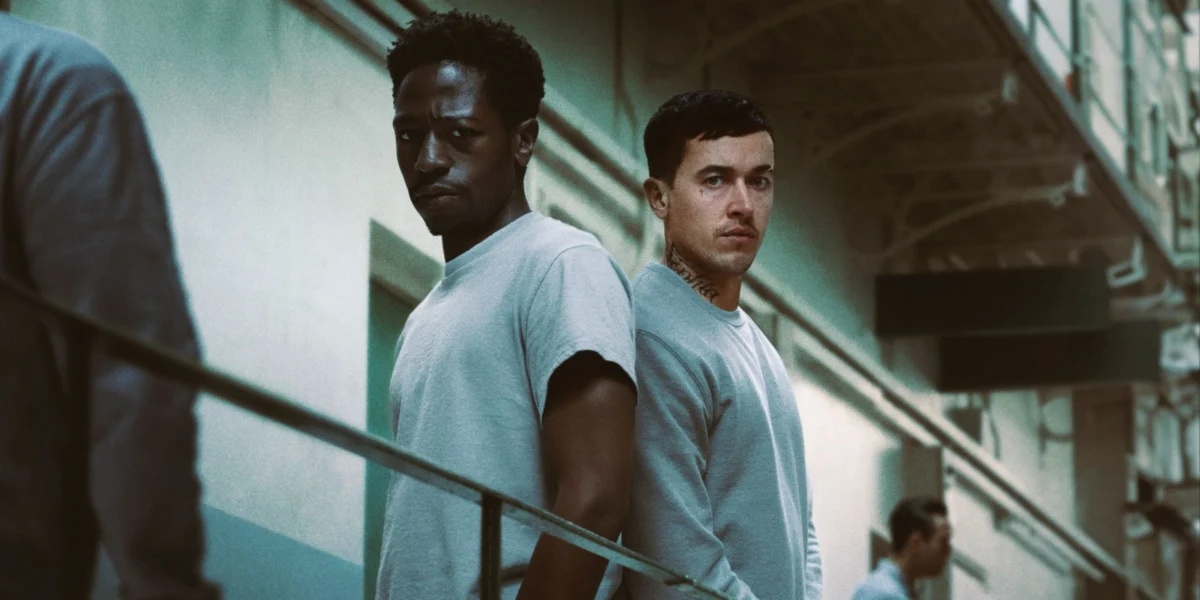
Directed by Cal McMau and written by the screenwriting duo of Hunter Andrews and Eoin Doran, the film has established itself as a definitive exploration of the modern British penal system through the lens of psychological and physical survival. Featuring a dual-lead performance from David Jonsson and Tom Blyth, the production offers a visceral examination of the complexities inherent in incarcerated life. Following a celebrated world premiere at the 2025 Toronto International Film Festival (TIFF), the film has transitioned into a theatrical release under the banner of Sunrise Films, drawing significant attention for its technical execution and the raw, transformative work of its central cast.
Narrative Foundation and Cinematic Vision
The narrative of the film centers on the claustrophobic and high-stakes relationship between two cellmates, portrayed by David Jonsson and Tom Blyth. Forced into an environment where the traditional social contract is replaced by a hierarchy of violence and tactical alliances, the characters must navigate the brutal internal politics of a high-security British prison. The screenplay, penned by Hunter Andrews and Eoin Doran, avoids the clichés of the genre by focusing heavily on the internal emotional landscapes of the protagonists. Rather than relying solely on external action, the script prioritizes the mental fortitude required to endure prolonged isolation and the constant threat of physical harm.
Director Cal McMau, known for a visual style that emphasizes grit and realism, utilizes the prison setting as a character in its own right. Industry analysts have noted that McMau’s approach to the material is reminiscent of the "New Wave" of British realism, characterized by handheld cinematography and a desaturated color palette that reflects the utilitarian nature of the environment. The collaboration between McMau and his lead actors has been cited as a primary factor in the film’s success, with the director reportedly encouraging an improvisational atmosphere to capture the authentic tension between the cellmates.
The Rise of David Jonsson and Tom Blyth
The casting of David Jonsson and Tom Blyth represents a significant intersection of rising talent in the global film industry. Jonsson, who gained widespread recognition for his role in the HBO/BBC series Industry and his performance in Rye Lane, continues to solidify his reputation as a versatile lead actor. In this project, Jonsson portrays a character caught between his innate humanity and the predatory requirements of his surroundings. His performance has been lauded for its subtlety, conveying a sense of suppressed trauma that resonates throughout the film’s quieter moments.
Tom Blyth, coming off the international success of The Hunger Games: The Ballad of Songbirds & Snakes, provides a sharp contrast to Jonsson’s character. Blyth’s role requires a physical and emotional intensity that signals a departure from his previous work in large-scale studio franchises. Critics have observed that the chemistry between the two actors serves as the film’s emotional anchor, turning a story about survival into a profound study of human connection under duress. The "rising star" status of both leads has undoubtedly contributed to the film’s marketability, drawing a demographic that spans both independent cinema enthusiasts and fans of contemporary television drama.
Chronology of Production and Festival Reception
The development of the project began in late 2023, following the acquisition of Andrews and Doran’s screenplay by independent production houses looking to capitalize on the resurgence of British crime and social dramas. Principal photography took place throughout 2024, utilizing decommissioned prison facilities in the United Kingdom to ensure an atmosphere of authenticity. This commitment to realism extended to the production design, which avoided the stylized aesthetics of Hollywood prison films in favor of a more grounded, documentary-like feel.
The film’s trajectory shifted significantly in September 2025 when it was selected for the Toronto International Film Festival. TIFF has long served as a prestigious platform for independent films seeking distribution and awards season momentum. The premiere of the film was met with immediate critical acclaim, with trade publications highlighting McMau’s "unflinching" direction. The positive reception at TIFF was instrumental in securing a robust distribution deal with Sunrise Films, which recognized the project’s potential for both critical success and commercial viability in the specialty market.
Technical Execution and Directorial Style
From a technical standpoint, the film is a masterclass in controlled tension. The cinematography employs tight framing and close-ups to enhance the sense of incarceration, effectively making the audience feel trapped alongside the protagonists. This visual strategy is complemented by a minimalist sound design that emphasizes the industrial noises of the prison—clanging metal, echoing footsteps, and the distant, muffled sounds of other inmates—creating a constant state of auditory unease.

Cal McMau’s directorial choices also extend to the pacing of the film. Rather than a rapid-fire progression of events, the film allows scenes to breathe, forcing the viewer to sit with the characters in their moments of reflection and desperation. This "slow-burn" approach builds toward a climax that feels earned rather than manufactured. Statements from the production team suggest that the editing process was focused on maintaining a balance between the film’s brutal physical sequences and its more nuanced character-driven beats.
Industry Implications and the British Film Landscape
The success of the film comes at a pivotal time for the British film industry. As mid-budget independent films face increasing pressure from streaming platforms and large-scale blockbusters, projects like this serve as a testament to the enduring appeal of character-focused storytelling. The film’s ability to draw positive reviews and maintain a theatrical presence suggests that there remains a significant audience for "gritty" and "intense" narratives that tackle difficult subject matter.
Furthermore, the film highlights the strength of the current generation of British screenwriters. Hunter Andrews and Eoin Doran have been praised for their ability to weave social commentary into a genre framework. While the film is primarily a survival drama, it implicitly touches upon themes of systemic failure, the cyclical nature of crime, and the psychological toll of the penal system. By grounding the narrative in the personal experiences of two individuals, the writers allow the audience to engage with these broader themes without the film feeling overly didactic.
Distribution and Global Market Presence
Sunrise Films has strategically managed the release of the film, focusing on a platformed theatrical rollout that prioritizes major metropolitan areas before expanding. This strategy is designed to build word-of-mouth momentum, leveraging the positive critical consensus generated at TIFF. The inclusion of the film in various film festivals worldwide following its Toronto debut has further enhanced its international profile, making it a strong contender for various regional film awards.
In addition to its theatrical run, the film has been supported by an extensive promotional campaign featuring David Jonsson and Tom Blyth. In recent interviews, both actors have discussed the mental and physical preparation required for their roles. Jonsson spoke about the necessity of understanding the "rhythm" of prison life, while Blyth emphasized the importance of the bond formed between the two leads during production. These insights have provided audiences with a deeper appreciation for the craft behind the film, reinforcing its status as a high-quality production rather than a standard genre exercise.
Broader Impact and Critical Legacy
As the film continues its theatrical run, its impact on the careers of its creators and stars is becoming increasingly evident. For Cal McMau, the film represents a successful transition into high-stakes dramatic filmmaking, positioning him as a director to watch in the coming years. For Jonsson and Blyth, it serves as a powerful showcase of their range, likely leading to further opportunities in both independent and mainstream cinema.
The film’s legacy will likely be defined by its refusal to look away from the harsh realities of its subject matter. In a cinematic landscape often dominated by escapism, the production stands out for its commitment to truth and emotional honesty. It joins a long tradition of British cinema that seeks to explore the darker corners of society with empathy and technical precision. As it reaches a wider audience through its theatrical and subsequent digital releases, the film is expected to remain a topic of discussion among critics and cinephiles alike, cementing its place as one of the most significant British films of 2025.
The film is currently showing in theaters, and its performance will be closely watched by industry analysts as a bellwether for the health of independent cinema in the current market. With its combination of strong directorial vision, exceptional acting, and a compelling narrative, the production has already achieved a level of critical respect that many films strive for but few attain. As the awards season approaches, the film is poised to remain at the forefront of the conversation, representing the best of contemporary British filmmaking.