Herman Yau: A Master Craftsman’s Prolific Journey and Artistic Vision
Herman Yau, born in China’s Guangdong province in 1961, stands as one of Hong Kong cinema’s most prolific and successful directors. Over a remarkable 39-year career, Yau has directed no fewer than 86 films, with an additional two currently in production, a testament to his relentless dedication and versatile directorial prowess. His extensive filmography is not merely a collection of projects but includes a significant number of big-budget productions and highly successful film franchises. Notable among these are the popular "Troublesome Night" series (1997–1999), a staple of Hong Kong horror-comedy, and the critically acclaimed "Shockwave" and "White Storm" franchises, which have solidified his reputation in the action-thriller genre. These commercial successes demonstrate Yau’s adeptness at delivering high-octane entertainment that resonates with a broad audience.
Beyond the realm of commercial blockbusters, Yau is equally revered for his ability to craft impactful narratives even with more constrained resources. He has often expressed a personal preference for working with modest budgets, believing it fosters a more intimate and focused creative process. It is this artistic duality that allows him, periodically, to channel the earnings from his commercial hits into more personal, socially resonant films. Examples such as "Whispers and Moans" (2007) and "Sara" (2015) underscore his commitment to exploring complex societal issues. "We’re Nothing At All" distinctly falls into this category, a passion project largely written, financed, and produced by Yau himself. This hands-on approach likely stems from the increasing difficulty of securing investment for "difficult" or socially challenging films within the contemporary Hong Kong film industry, where commercial viability often overshadows artistic or social commentary. Yau’s ability to navigate these financial landscapes, leveraging his mainstream success to fund his more personal artistic expressions, highlights his unique position as both a commercial force and an independent auteur in Hong Kong cinema.
From Real Tragedy to Cinematic Narrative: The Unveiling of "We’re Nothing At All"
The narrative foundation of "We’re Nothing At All" is rooted in a chilling real-life incident: a bus explosion that occurred on Valentine’s Day 1998 in Wuhan, a major metropolis in mainland China. Herman Yau meticulously transplants this event to Hong Kong, setting the film’s pivotal incident on the morning of another Valentine’s Day. The film opens by following a double-decker bus traversing the bustling streets of Hong Kong, capturing the mundane rhythm of urban life as passengers embark and disembark. This seemingly ordinary journey takes a sudden, catastrophic turn as the bus, upon turning onto Hei Fai Street, explodes and is instantly engulfed in flames.
This dramatic opening, reminiscent of Yau’s signature action blockbusters, quickly subverts audience expectations. What initially appears to be a high-octane thriller transforms into a profound social commentary. The city and its media are plunged into shock, and the police force finds itself baffled by the inexplicable tragedy. In response, forensic specialist Lung (portrayed by Patrick Tam), who had been dishonorably discharged from the police force years prior, is recalled to active duty. Alongside his dedicated team, Lung is tasked with piecing together the fragments of a seemingly unsolvable puzzle, meticulously examining the human remains scattered across the catastrophic scene. This forensic investigation grounds the film in a stark realism, moving away from conventional action tropes to delve into the grim aftermath of a profound human tragedy.
The film’s deliberate narrative choice reveals the perpetrators and their motivations relatively early, diverging from typical suspense thrillers. As its tagline explicitly states: "A couple, on a beautiful day, ended their unbeautiful lives." The revelation that the bus explosion is a consequence of a double suicide, albeit one that tragically takes numerous innocent lives, immediately shifts the audience’s focus from "whodunit" to "why." The fact that the couple at the center of this tragedy is gay, while not the direct cause of the act itself, is crucial to understanding the complex web of circumstances that led to their spectacular demise. These deeply personal and societal factors are gradually unveiled through a series of carefully constructed flashbacks. This ambitious narrative structure, largely effective, meticulously details the couple’s struggles, their love, and the systemic pressures that pushed them to such extreme measures. However, the film faces a minor critique regarding a subplot involving police officer Lung and his girlfriend (Kearen Pang), which some critics suggest feels somewhat forced and could have been omitted without detracting from the main narrative’s power.
Unpacking the Core Themes: Love, Class, and Desperation
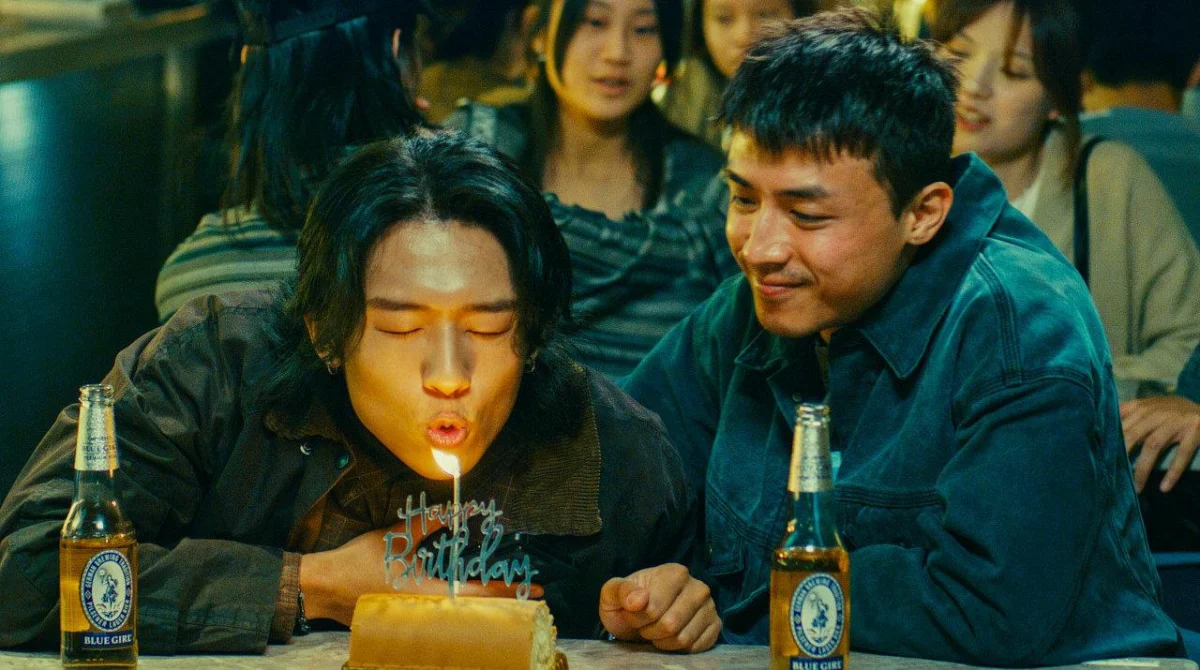
"We’re Nothing At All" is a powerful exploration of intertwined social issues, particularly focusing on the challenges faced by marginalized communities in contemporary Hong Kong. At its heart, the film delves into the lives of Fai (Anson Kong) and Ike (Ansonbean), the gay couple whose tragic act forms the crux of the story. Their sexuality, openly portrayed, is a significant thematic element, particularly in a city like Hong Kong where, despite its cosmopolitan image, overt representation of homosexuality in mainstream media remains a bold and often challenging endeavor. The decision by Herman Yau to cast two prominent teen idols, Anson Kong and Ansonbean (Anson Chan’s stage name), in these roles was a particularly daring move. Their acceptance of such challenging and sensitive characters speaks volumes about their commitment to artistic integrity and their willingness to contribute to a broader social discourse. This casting choice not only adds a layer of authenticity to the portrayal of the couple’s relationship but also leverages the idols’ considerable public platforms to bring these critical issues to a wider audience.
Beyond the portrayal of their sexuality, the film profoundly examines class issues, positioning Fai and Ike at the very bottom of Hong Kong’s stark social ladder. Fai, a construction worker, finds himself ensnared in the pervasive issue of wage theft, constantly put off by his employer regarding overdue payments. His struggle highlights the vulnerability of blue-collar workers to exploitative practices and the systemic injustices they often face. Ike, on the other hand, is a street performer, a profession often precarious and frequently subjected to harassment by law enforcement, reflecting the marginalization of those who operate outside conventional employment structures.
Both characters are depicted under immense pressure, their lives a relentless struggle against economic precarity and social stigma. Their shared apartment, a sanctuary in their tumultuous lives, is constantly threatened, symbolizing the fragile hold they have on stability and belonging. The two young actors deliver truly heartbreaking performances, portraying their love with a devotion and intensity that is genuinely captivating. Their chemistry and emotional depth render their desperate circumstances palpable, drawing the audience into their tragic plight and fostering a deep sense of empathy. The film effectively argues that their personal tragedy is inextricably linked to the broader societal failures to protect and support its most vulnerable members, making their final act a desperate cry against a system that has, in their eyes, abandoned them.
Casting Bold Choices and Powerful Performances
The success of "We’re Nothing At All" is significantly bolstered by its strong ensemble cast, particularly the bold choices made in casting the central couple and the nuanced performances delivered across the board. The decision to cast Anson Kong and Ansonbean (Anson Chan), two of Hong Kong’s most popular teen idols, as the gay couple Fai and Ike, was a calculated risk that paid off immensely. This move not only challenged conventional casting but also brought a new level of visibility and authenticity to the portrayal of LGBTQ+ relationships in Hong Kong cinema. Their performances are lauded for their emotional honesty and raw intensity, making their characters’ struggles and their profound love deeply resonant with audiences. Their willingness to embrace such challenging roles speaks volumes about their evolving artistry and the potential for a new generation of actors to tackle sensitive social issues.
Veteran actor Patrick Tam delivers another fine performance as Lung, the forensic specialist. Tam, who has become a leading figure in Hong Kong’s commercial cinema in recent years, brings a gravitas and weary determination to his character, embodying the moral complexities of an individual navigating a demanding and often grim profession. His portrayal anchors the investigative aspect of the film, providing a steady counterpoint to the emotional intensity of the central tragedy.
Wong You-nam also stands out in a key supporting role as Lung’s assistant, offering a compelling performance that complements Tam’s portrayal. Wong’s presence, along with his role in "Ciao UFO" released around the same time, further highlights his growing prominence in the industry. The supporting cast collectively contributes to the film’s realistic depiction of police work, which is shown with almost documentary-like precision. This emphasis on authenticity in the investigative process further grounds the film in reality, lending credibility to its exploration of the aftermath of such a devastating event.
Crafting Realism: Cinematography and Production Design
The aesthetic choices in "We’re Nothing At All" play a crucial role in reinforcing its thematic depth and realistic portrayal of Hong Kong. Cinematographers Mandy Ngai and Derek Siu deliberately employ a sober and unadorned visual style, presenting a far-from-glamorous depiction of the city. This approach eschews the flashy, stylized visuals often associated with commercial Hong Kong cinema, opting instead for a gritty realism that mirrors the harsh realities faced by the film’s characters. The camera work is often observational, capturing the mundane and the tragic with equal unflinching honesty, allowing the audience to feel immersed in the unvarnished truth of the narrative.
Further enhancing this impression of authenticity is the meticulous work of production designer Fion Li and costume designer Chun Yan-so. Both previously collaborated with Herman Yau on the acclaimed "White Storm 2" (2019), demonstrating a proven ability to craft compelling visual environments. In "We’re Nothing At All," their designs contribute significantly to the film’s overall aesthetic, creating settings and character appearances that feel genuinely lived-in and reflective of the socio-economic strata explored in the story. From the cramped, precarious living spaces of Fai and Ike to the functional, unembellished police offices, every visual element serves to underscore the film’s commitment to portraying a raw, unromanticized version of Hong Kong life. This collaborative effort in visual storytelling ensures that the film’s aesthetic is not merely decorative but integral to its message, reinforcing the themes of class struggle, desperation, and the often-overlooked corners of urban existence.
The Evolving Landscape of Hong Kong Cinema
"We’re Nothing At All" is not an isolated phenomenon but rather a significant entry in a burgeoning trend within Hong Kong cinema. In recent years, there has been a noticeable shift towards more serious, less flashy productions, moving away from the high-octane action and flamboyant comedies that historically defined the industry. This evolution reflects a growing appetite among filmmakers and audiences alike for narratives that engage with social commentary and explore the complex realities of contemporary Hong Kong.
Films such as "Still Human" (2018), "The Last Dance" (2019), and "The Way We Talk" (2019) exemplify this trend. These productions, while diverse in their specific subjects, share a common thread: they offer compelling and entertaining cinema that also serves as powerful social commentary. "Still Human," for instance, explores the relationship between a paralyzed man and his Filipina domestic helper, delving into themes of dignity, immigration, and human connection. "The Last Dance" tackles end-of-life care and the challenges faced by the elderly, while "The Way We Talk" examines the intricacies of communication and relationships within a modern urban context.
This shift can be attributed to several factors, including the changing socio-political landscape of Hong Kong, a desire by filmmakers to address pressing local issues, and perhaps a growing maturity in audience preferences. As Hong Kong grapples with its identity and future, its cinema increasingly reflects these internal dialogues, providing a platform for critical examination and empathetic storytelling. "We’re Nothing At All," with its unflinching look at class disparity, LGBTQ+ struggles, and the tragic consequences of societal neglect, firmly establishes itself within this vital movement, demonstrating that compelling cinema can be both deeply entertaining and profoundly thought-provoking. It reinforces the idea that these more grounded, socially conscious films are not merely niche productions but represent a significant and enriching direction for the future of Hong Kong’s vibrant film industry.
Box Office Performance and Broader Implications
The respectable box office performance of "We’re Nothing At All," grossing approximately US$500,000 in its initial two-week run, signals a positive reception from the Hong Kong audience. While not reaching the stratospheric numbers of a major blockbuster, this figure is significant for a film that tackles "difficult" social themes and features a bold, non-commercial storyline. It suggests that there is a discernible audience segment eager for narratives that resonate with contemporary societal issues, even when they challenge conventional entertainment expectations. This commercial viability, albeit modest, provides a crucial validation for filmmakers like Herman Yau who endeavor to create art with a conscience.
The film’s immediate release after its premiere at the Hong Kong Film Festival also indicates confidence from distributors in its potential to connect with viewers beyond the festival circuit. Its strong critical reception (implied by the detailed analysis of its artistic merits and thematic depth) further positions "We’re Nothing At All" as an important cultural artifact.
Looking at the broader implications, "We’re Nothing At All" contributes to a vital dialogue within Hong Kong society regarding LGBTQ+ rights, economic inequality, and mental health. By openly portraying a gay couple’s struggles and the systemic pressures that lead to their tragic actions, the film pushes boundaries and encourages introspection. It serves as a powerful reminder of the human cost of social marginalization and the urgent need for empathy and systemic reform.
Furthermore, Herman Yau’s personal investment in the project, financing and producing it almost single-handedly, highlights the challenges faced by independent and socially conscious filmmakers in a commercially driven industry. His success, both artistic and financial, offers a beacon of hope for other directors who aspire to tell important stories that might not easily attract traditional investors. "We’re Nothing At All" therefore stands as a testament to artistic resilience, a potent piece of cinema that not only entertains but also provokes thought and contributes meaningfully to the evolving cultural narrative of Hong Kong. Its impact extends beyond mere box office figures, cementing its place as a significant and poignant reflection of contemporary societal dynamics.