A legendary figure in comedy and cinema, Eddie Murphy, was presented with the 51st AFI Life Achievement Award on Saturday night at Hollywood’s iconic Dolby Theatre. The prestigious ceremony, a two-hour tribute to a career spanning five decades, saw Murphy, true to form, deliver his acceptance with characteristic wit and a touch of self-deprecating humor, foregoing tears in favor of laughter. Holding the silver star trophy, he quipped, “Have these always been this size? It seems like this is small. Is it?” The remark drew roars of laughter from an audience packed with a who’s who of entertainment industry luminaries, including comedy heavyweights, studio executives, Oscar winners, filmmakers, actors, and ardent fans. Indeed, for a career as monumental and multifaceted as Murphy’s, evidenced by the larger-than-life character portraits adorning the stage, no single award might truly capture its magnitude.

The Significance of the AFI Life Achievement Award
The American Film Institute (AFI) Life Achievement Award stands as the highest honor for a career in film, recognizing individuals whose entire body of work has fundamentally advanced the art of filmmaking and whose contributions have been of lasting importance to the American motion picture. Established in 1973, with director John Ford as its first recipient, the award is bestowed by the AFI Board of Trustees, comprising leaders from the film community, business, and academia. Over its five-decade history, the award has celebrated an extraordinary roster of cinematic titans, including Bette Davis, Alfred Hitchcock, Kirk Douglas, Jack Nicholson, Steven Spielberg, Martin Scorsese, Harrison Ford, Barbra Streisand, Tom Hanks, Robert De Niro, Meryl Streep, George Lucas, Al Pacino, Warren Beatty, Michael Douglas, Steve Martin, George Clooney, and Nicole Kidman, among many others.
Murphy’s induction into this esteemed pantheon is particularly notable. While the award has honored versatile performers, it less frequently recognizes figures primarily known for groundbreaking comedy and stand-up. Murphy becomes one of only a handful of comedians to receive the honor, joining the likes of Steve Martin and Mel Brooks. Furthermore, he is only the fourth Black artist to be recognized, following Sidney Poitier (1992), Morgan Freeman (2011), and Denzel Washington (2019), underscoring his profound cultural impact and trailblazing career. The ceremony itself, meticulously crafted to celebrate his legacy, is scheduled to stream globally on Netflix on May 31, allowing a wider audience to witness the tribute.

A Career Defined by Innovation and Versatility: A Chronology
Eddie Murphy’s journey to becoming an AFI Life Achievement Award recipient is a testament to unparalleled talent, audacious creativity, and remarkable longevity. Born in Brooklyn, New York, in 1961, Murphy’s comedic genius first exploded onto the national stage in 1980 when, at just 19 years old, he joined the cast of NBC’s Saturday Night Live. His tenure on the show (1980-1984) is widely regarded as one of its most transformative periods, with iconic characters like Gumby, Buckwheat, and Mr. Robinson, alongside his sharp impressions, revitalizing the struggling program and cementing his status as a comedic wunderkind.
His cinematic debut in 1982’s 48 Hours immediately showcased his magnetic screen presence and ability to blend comedy with action, earning him a Golden Globe nomination. This was swiftly followed by his groundbreaking stand-up special Delirious in 1983, which revolutionized the genre with its raw energy and fearless observational humor. The subsequent year, 1984, saw the release of Beverly Hills Cop, a blockbuster that propelled him to global superstardom, grossing over $234 million domestically and establishing him as a bankable leading man. His 1987 stand-up film, Raw, further cemented his legend, becoming the highest-grossing stand-up film of all time.

The late 1980s and 1990s demonstrated Murphy’s astonishing range. Films like Coming to America (1988), where he famously played multiple distinct characters, and Harlem Nights (1989), which he also directed, showcased his creative ambition. He continued to evolve through the 1990s with hits like Boomerang (1992) and The Nutty Professor (1996), the latter earning him immense critical praise for his masterful portrayal of seven different characters, a feat of comedic acting that underscored his extraordinary versatility. The new millennium brought a fresh dimension to his career with his iconic voice role as Donkey in the Shrek franchise, starting in 2001, which garnered him another Golden Globe nomination and captivated a new generation of fans. In 2006, Murphy delivered a critically acclaimed dramatic performance as James "Thunder" Early in Dreamgirls, earning him an Academy Award nomination for Best Supporting Actor and proving his prowess beyond comedy.
Recent years have seen a triumphant return to his roots and continued success. Dolemite Is My Name (2019) was hailed as a critical and commercial comeback, showcasing his enduring talent and earning him another Golden Globe nomination. His latest project, Beverly Hills Cop: Axel F, slated for release, signals his ongoing relevance and ability to revisit beloved characters with fresh energy. Across this remarkable timeline, Murphy has not only delivered countless hours of laughter but has also consistently challenged himself, broken barriers, and inspired generations of performers.

A Star-Studded Homage: Tributes from Fellow Legends
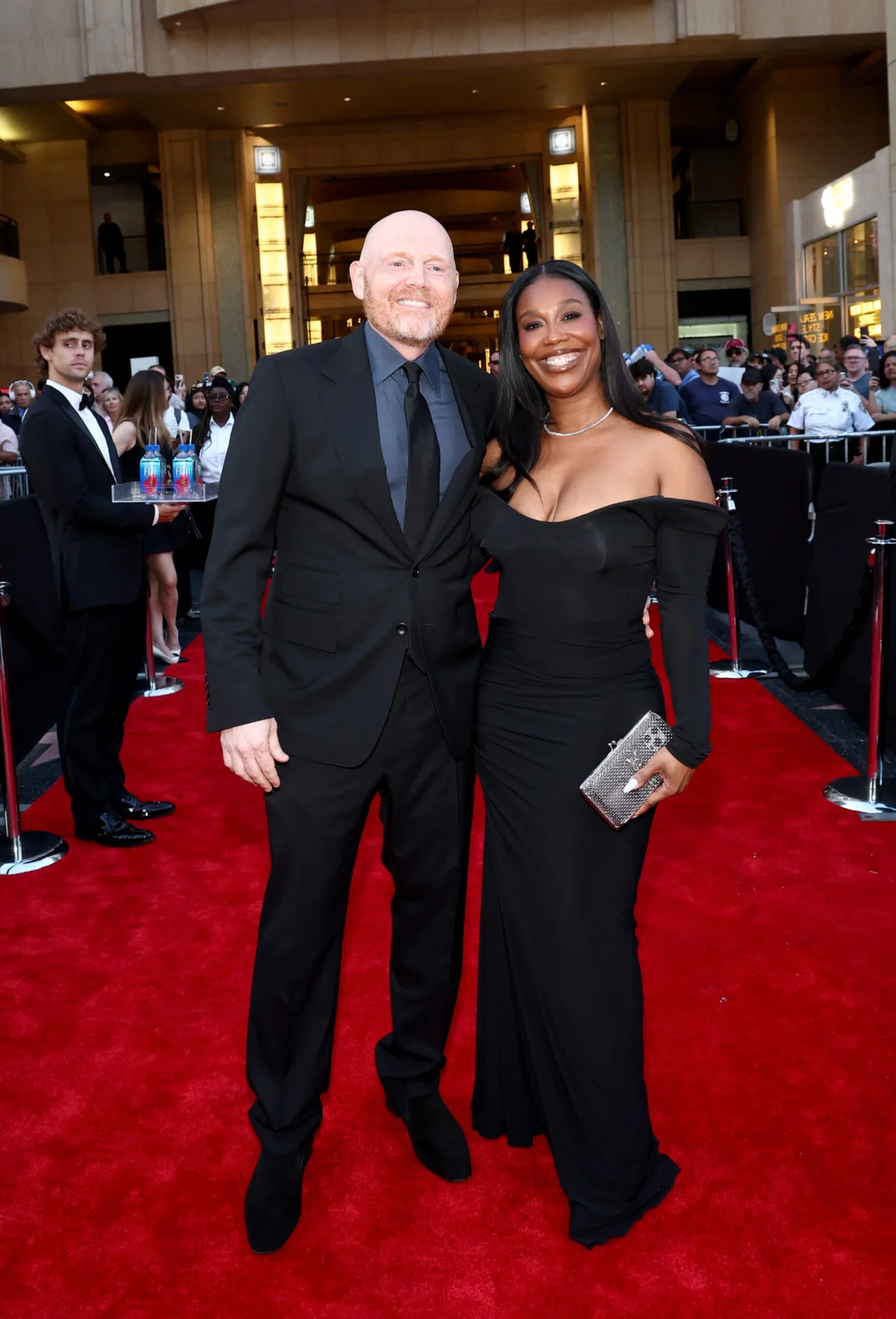
The two-hour gala was a testament to Murphy’s colossal influence, featuring a veritable constellation of stars who took the stage to share anecdotes, praise his talent, and express their admiration. The lineup of presenters included comedy titans Chris Rock, Dave Chappelle, Kevin Hart, Martin Lawrence, Bill Burr, Mike Myers, Tracy Morgan, Kenan Thompson, and Arsenio Hall, alongside musical icon Stevie Wonder, esteemed filmmaker Robert Townsend, actor Judge Reinhold, and acclaimed performers Eva Longoria, Da’Vine Joy Randolph, and Jennifer Hudson. Jennifer Hudson also delivered a powerful medley of songs from Dreamgirls, a poignant reminder of Murphy’s dramatic range. Dan Aykroyd, a fellow SNL alumnus, was scheduled to present but was unable to attend due to "life circumstances," with his daughter, Belle, reading his prepared remarks.
Kevin Hart kicked off the evening, describing Murphy as "our pop, our friend," acknowledging his profound impact. "I stand where I stand today because of the work that you did before me, the doors that you opened up before me," Hart praised, calling Murphy "a brother, a mentor, an inspiration. God damn it, you’re an idol. And I’m lucky to call you a friend, man." Hart’s words encapsulated the sentiment of many younger comedians who view Murphy as a foundational figure.

Tracy Morgan echoed this, hailing Murphy as an icon and an inspiration. He humorously recounted Murphy’s impression of him on SNL’s 50th anniversary special, quipping, "My God, what if he’s funnier than me?" Morgan also credited Murphy with doing "more for red leather outfits and cowboy boots than any Black man in history," a nod to Murphy’s iconic stand-up attire.
Kenan Thompson, the longest-serving cast member in SNL history, called Murphy "the blueprint." He elaborated on Murphy’s daring approach: "Proof that you could come in young, take big swings, trust your voice, and leave a mark that lasts decades." Thompson particularly admired Murphy’s incredible range, noting, "You could have stayed in one lane and been comfortable forever, but you didn’t do that. You evolved. You challenged yourself. You even changed your laugh. I mean, who does that?"

Dave Chappelle, a co-star in The Nutty Professor, delivered a deeply personal tribute. He spoke of a "fear for their heroes" that Black people often carry, referencing the tragic fates of figures like Michael Jackson, Rick James, and Prince. "Man, when you came up, it looked lonely. You was just by yourself… and somehow you survived it," Chappelle remarked, highlighting Murphy’s resilience in the face of immense pressure. Chappelle also shared a poignant recent conversation with Murphy about his late brother, Charlie Murphy, a regular on Chappelle’s Show. During this visit, on the day after Murphy’s 65th birthday, Chappelle recounted Murphy suggesting a Chappelle’s Show movie. Chappelle then playfully pitched, "So Eddie, if I do it, man, do the Charlie parts and let’s f***ing go," sparking enthusiastic applause and laughter.
Music legend Stevie Wonder, who received standing ovations upon his entrance and exit, shared a humorous origin story of their friendship. "Eddie and I found each other because he would imitate me on Saturday Night Live. He made fun of a blind man," Wonder joked. He then recounted how he "took over his show live on Saturday Night Live" to demonstrate what a blind man could do, forging a lifelong bond. Wonder praised Murphy’s unique ability to use humor to "ease the pain, builds a bridge and diffuses a situation which makes a real difference. That is power. And that is courage. And that is the funny man. My friend. A real man. Not AI."

Arsenio Hall, Murphy’s longtime friend and co-star in Coming to America, championed Murphy’s unmatched versatility. Hall recalled a journalist commending his own "amazing range" for playing four characters in their film, to which Hall responded, "Pump the brakes, dog, save the word range for Eddie." He enumerated Murphy’s chameleon-like abilities: "When Eddie does a family film, he played a whole damn family. Black characters, white characters, old Jewish men, a prince, a member of Congress, a human spaceship, Gumby, a donkey. That’s range."
Mike Myers, who famously co-starred with Murphy as Shrek to his Donkey, made a memorable appearance dressed in Shrek’s signature green. He lauded Murphy’s portrayal of Donkey as a "masterpiece," encapsulating lovable, hilarious, joyous, vulnerable, and loyal qualities. Myers expressed profound respect, stating, "I never got to work with Charlie Chaplin. I never got to work with Alec Guinness. I never got to work with Peter Sellers, but it is my absolute honor to say and to be able to tell my kids that I got to work with Eddie Murphy."

Oscar-winning actress Da’Vine Joy Randolph spoke emotionally about how Murphy "bet on me" for her breakout role in Dolemite Is My Name. She described being "knighted by a king in this industry" by receiving his stamp of approval, which "opened countless doors for me with other titans in this industry. It has completely and wholly changed the trajectory of my career." Randolph also recounted Murphy’s generosity during the Dolemite press tour, ensuring her inclusion in every step, an experience that "prepared me for my own journey with my award season with The Holdovers." She learned from "Eddie the artist, but Eddie the icon," observing his grace and humor in handling the immense "star power" that often overwhelmed her.
Even off-the-clock encounters highlighted Murphy’s quick wit. Chris Rock shared an anecdote about a woman approaching Murphy in a club, exclaiming, "Oh my God, I’ve never kissed a Black man before." Murphy, surrounded by his entourage, swiftly retorted, "Hey, hey, hey, hey, you can’t start at the top. You got to kiss one of these broke [expletive] first." Martin Lawrence recounted a less fortunate initial meeting where Murphy coolly denied his request for a photo. However, Lawrence humorously noted that times have changed, as they are now in-laws through the marriage of their children, Eric Murphy and Jasmin Lawrence, allowing for all the photos he desires. Filmmaker Robert Townsend encapsulated Murphy’s broader impact, stating, "They say laughter is healing. It’s medicine. If that’s true, then your body of work has helped heal this planet a few times."

Murphy’s Acceptance and Enduring Legacy
At 65, Murphy mused that he received the award at "just the right time," young enough to fully enjoy the celebration with friends, collaborators, and family, yet accomplished enough to undeniably deserve it. He noted his recent milestones, including welcoming his first grandson and third granddaughter. "It just feels like it’s raining blessings on me this month," he shared, adding, "and to get this award and still look like myself, because sometimes they’ll let you wait till you’re real old to get this award." He playfully referenced past recipients like Mel Brooks (86), Francis Ford Coppola (86), and the oldest, Lilian Gish (92), joking, "If you made me wait until I was 92, I would’ve come out here and said, ‘F everybody. F everybody!’ Then I would have s*** on the floor."
Shifting to a more serious and heartfelt tone to conclude the ceremony, Murphy expressed profound gratitude. "I was looking out and seeing all my family, all my kids, my beautiful wife, seeing all the different people that I worked with. This is a special moment. And I want to thank and [Netflix co-CEO] Ted Sarandos for putting this whole thing together. I wish y’all can feel what I’m feeling, see what I’m seeing." He concluded with a characteristic blend of humor and emotion, promising, "I’m going to get backstage and cry," before taking his final bow.

The AFI Life Achievement Award for Eddie Murphy is more than just a recognition of an extraordinary career; it is an affirmation of the enduring power of laughter, the significance of versatility in artistic expression, and the profound cultural impact of a singular talent. His journey, from a teenage stand-up sensation to a global icon, has not only entertained millions but has also paved the way for countless artists, particularly within the Black community, by breaking barriers and demonstrating the limitless possibilities of creative ambition. As his legacy continues to unfold with new projects and a renewed appreciation for his past work, Murphy’s honor cements his place as one of the most vital and beloved figures in the history of American entertainment.