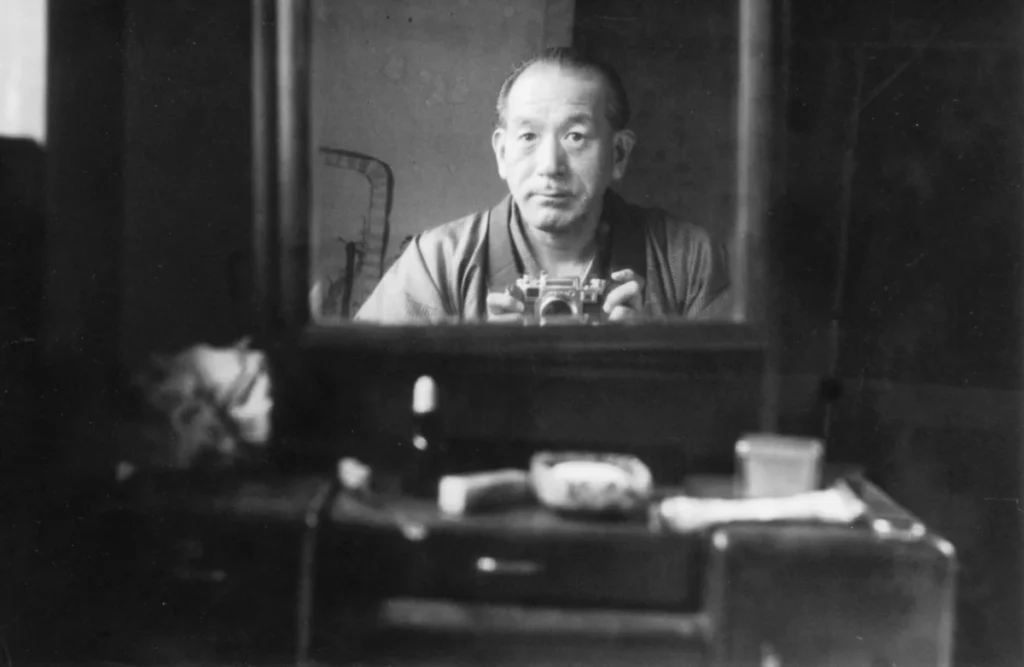
Director Takashi Ishii has established himself as a penetrating observer of Japan’s societal shifts, particularly those following the profound economic upheaval of the post-Bubble era. Through a distinctive fusion of genre conventions and an inclination towards experimental narrative structures, Ishii’s cinema frequently dissects the intricate evolution of human relationships and the pervasive influence of concepts like property and ownership. His earlier works, notably “A Night in Nude” (1995) and “Alone in the Night” (1994), offer poignant reflections on these themes, portraying individuals grappling with the altered landscape of Japanese society. However, the "Gonin" film series, comprising "Gonin" (1995) and its sequel "Gonin 2" (1996), introduces an additional layer of complexity to his filmography, delving into themes of gender roles, societal stereotypes, and the crumbling of traditional masculinity, all while remaining firmly rooted within the gritty framework of the yakuza genre. While the initial "Gonin" underscored how the nation’s economic downturn deconstructed established notions of masculinity, "Gonin 2" emerges as both a narrative continuation and a thematic extension, proposing a potential avenue for liberation from the cyclical patterns of ownership, objectification, and exploitation, hinting at the possibility of a novel form of solidarity and union.
The Post-Bubble Economic Landscape and Its Societal Echoes
To fully appreciate the thematic depth of Takashi Ishii’s "Gonin 2," it is crucial to understand the socio-economic backdrop of post-Bubble Japan. The economic "bubble" of the late 1980s, characterized by soaring asset prices and rampant speculation, burst dramatically in the early 1990s, ushering in what became known as Japan’s "Lost Decades." This period saw prolonged economic stagnation, widespread corporate restructuring, rising unemployment, and a profound sense of disillusionment across society. Traditional corporate loyalty eroded, lifetime employment guarantees vanished, and the very fabric of Japanese social stability began to fray.
For men, particularly, this era challenged long-held ideals of masculinity tied to corporate success, stable employment, and the ability to provide for a family. The "salaryman" archetype, once a symbol of national pride and economic prowess, found itself under immense pressure. Ishii’s earlier films, such as “A Night in Nude,” which explores the lives of individuals on the fringes of society, and “Alone in the Night,” which often depicts isolated figures navigating moral ambiguities, already hinted at the psychological toll of this changing world. These works frequently featured characters struggling with their identities and relationships in an increasingly materialistic and unforgiving environment, where financial security became paramount and human connections often felt transactional.
"Gonin" (1995) directly engaged with this crisis of masculinity. It depicted five disparate men – a former yakuza, a transsexual bar owner, a corrupt detective, a male prostitute, and a disillusioned businessman – united by a desperate scheme to rob the yakuza. Their individual stories reflected the various ways men were failing or being failed by the post-Bubble economy, their traditional roles and self-worth undermined. The film portrayed a sense of brutal nihilism and a relentless cycle of violence, where individual attempts at reclaiming agency often led to further destruction. "Gonin 2," released just a year later, takes this established thematic groundwork and pivots, offering a distinctly gendered re-examination of similar societal pressures.
The Narrative Convergence: Revenge and Rebellion
"Gonin 2" weaves together two distinct yet ultimately converging narratives, both born from the desperation and violence of the era. The first centers on Masamichi (portrayed by Ken Ogata), a business owner entangled in an insurmountable debt to the yakuza. Despite his efforts to improve his financial standing, the prospect of repaying the gangsters remains bleak. The yakuza, seeking to assert their dominance and send a brutal message, assault Masamichi and sexually violate his wife. Unable to endure the brutal trauma, she tragically commits suicide. Consumed by an incandescent rage and an insatiable thirst for vengeance, Masamichi retreats, forging a samurai sword with his own hands. He embarks on a grim mission to systematically eliminate the yakuza lieutenants responsible for his wife’s suffering, simultaneously searching for a specific ring he had promised to buy for her before her death, a final symbolic gesture of farewell.
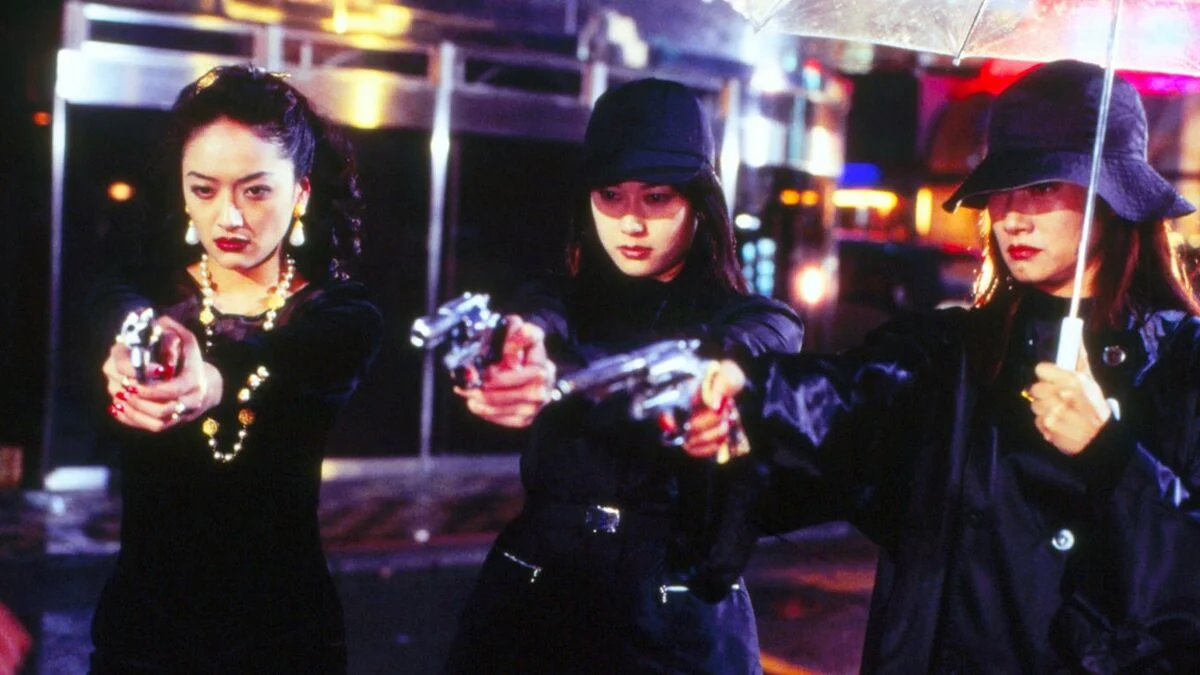
Parallel to Masamichi’s solitary quest for retribution, the film introduces five women: Ran (Kimiko Yo), Sayuri (Shinobu Otake), Saki (Yui Natsukawa), Shiho (Yumi Nishiyama), and Chihiro (Mai Kitajima). These women become inadvertently embroiled in a jewelry heist that goes awry. Demonstrating unexpected resilience and resourcefulness, they manage to fend off the original robbers and escape with the stolen loot. The discovery of the jewels ignites individual dreams of a life free from financial burden and societal constraints. They decide to celebrate their newfound fortune before parting ways, unaware that the vengeful yakuza are now hot on their trail, determined to reclaim their stolen property. To complicate matters further, Masamichi’s wife’s coveted ring is among the stolen jewels, inevitably drawing him into the women’s orbit as he relentlessly pursues his personal vendetta. The stage is set for a violent confrontation where disparate lives, driven by revenge, greed, and a longing for freedom, collide with brutal force.
Gendered Perspectives on Exploitation and Trauma
Where "Gonin" presented a spectrum of masculine archetypes struggling for survival and identity in the wreckage of post-Bubble Japan, "Gonin 2" ingeniously mirrors this structure, placing female characters at its core. This is not a mere replication but a sophisticated re-interpretation, exploring how similar societal pressures and violent conflicts manifest differently through a gendered lens. Ishii draws striking parallels between characters from both films, highlighting his deliberate thematic continuity.
For instance, Kimiko Yo’s Ran in "Gonin 2" bears a notable resemblance to Koichi Sato’s Bandai from the original film. Both characters find themselves in precarious positions, their livelihoods and survival often dependent on the "grace" (and financial leverage) of the yakuza. They are survivors operating within a dangerous underworld, constantly negotiating their existence with powerful, often male, figures. Similarly, Yui Natsukawa’s Saki in "Gonin 2" echoes Masahiro Motoki’s Mitsuya from "Gonin." Both characters are profoundly marked by trauma, having been exposed to severe male violence that leaves deep psychological scars. Saki’s quiet strength and underlying vulnerability are handled with remarkable subtlety, avoiding the melodramatic pitfalls that such a character could easily fall into, a testament to both Natsukawa’s performance and Ishii’s direction.
While one could extend these character comparisons further, Ishii’s genius lies not in simple mimicry, but in his acute awareness of how gender fundamentally alters the impact and experience of conflict within this world. In "Gonin," the men, despite their collective desperation, often retained an element of individual agency; they could have acted alone, even if their combined strength proved more effective. Their bond, while born of necessity, sometimes felt more transactional. In stark contrast, the union among the five women in "Gonin 2" feels less like a choice and more like an existential necessity, a true and profound solidarity forged in the crucible of shared experiences. These women have all, in varying degrees, endured exploitation and violence at the hands of male figures, rendering them dependent on a system often dominated by men. Their collective bond, therefore, transcends mere strategic alliance; it becomes a form of mutual salvation, a refuge from a hostile world.
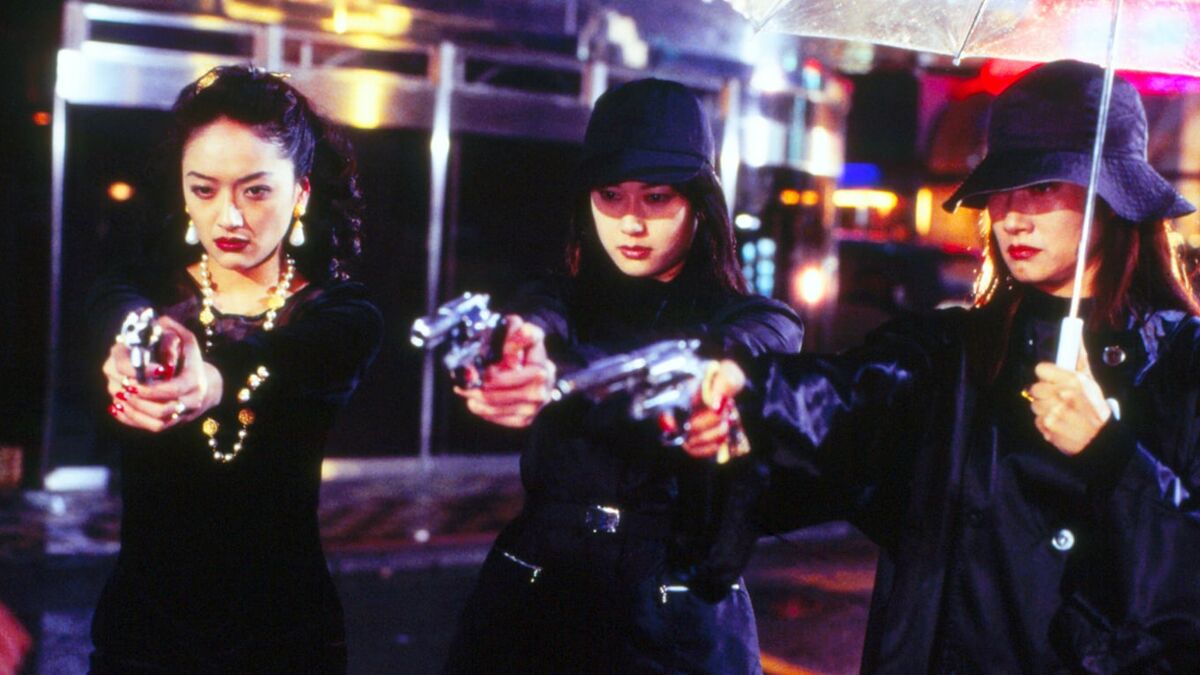
Ishii repeatedly emphasizes this nascent union as a powerful act of rebellion against the prevailing patriarchal status quo. Their defiance, their refusal to be mere objects or victims, naturally provokes the ire of men, particularly those embodying the oppressive forces of the yakuza. The women’s collective strength challenges the established order, threatening the very foundations of male power and control in a society still struggling with its identity.
Critique of Materialism and the Illusion of Happiness
Beyond its exploration of gender dynamics, "Gonin 2" amplifies Takashi Ishii’s critical stance on materialism and the pervasive influence of capitalism, perhaps even more explicitly than its predecessor. In "Gonin," the idea of robbing the yakuza, while a desperate act, also represented a gamble on material wealth as a path to freedom. Similarly, in "Gonin 2," the loot from the jewelry store, initially perceived as a ticket to a carefree life, quickly becomes a source of internal tension within the group. This material desire begins to undermine the very shared experiences and traumas that initially brought the women together and fostered their fragile bond.
Ishii meticulously illustrates how succumbing to these material and individualistic urges inevitably leads to isolation, further violence, and the potential disintegration of the very union that could offer genuine salvation for the characters. The film posits that true liberation cannot be found in the accumulation of wealth but must emerge from a deeper, more meaningful connection.
Characters like Ran and Chihiro are deeply tethered to the concept of capital; their aspirations for the future, and indeed their very survival, are inextricably linked to money and property. The act of gazing at, acquiring, or simply desiring money and jewelry is portrayed not merely as a personal choice but as a symptom of profound social conditioning. This conditioning relentlessly teaches that happiness, love, contentment, and even personal validation can be purchased or obtained through material possessions. Ishii subtly but powerfully questions whether this deeply ingrained societal urge can ever truly be transcended or, more optimistically, replaced by something more substantial, more meaningful, and ultimately, more life-affirming. The film challenges viewers to consider whether genuine human connection and solidarity can thrive in a system fundamentally built upon the principles of ownership, objectification, and relentless exploitation.
Performances and Subtlety in Direction
As an ensemble feature, "Gonin 2" presents the challenge of highlighting individual performances while ensuring the collective narrative remains cohesive. Given the breadth of characters and interwoven plotlines, some roles, such as Shinobu Otake’s Sayuri, might feel less developed than others, a common trade-off in multi-protagonist films. Nevertheless, the cast delivers a series of potent performances that elevate the film’s thematic resonance.
Ken Ogata, as the vengeful businessman Masamichi, delivers a powerful portrayal of a man consumed by grief and a primal desire for retribution. His transformation from a desperate debtor to a cold, calculated killer is chillingly effective, emphasizing the profound damage wrought by the yakuza’s cruelty. Kimiko Yo, as Ran, skillfully conveys the inner turmoil of a woman forced to navigate a treacherous world, her expressions hinting at a constant battle between survival instincts and a yearning for something more.
However, it is Yui Natsukawa’s portrayal of Saki that deserves particular commendation. Saki’s character, deeply scarred by past male violence, could have easily veered into a one-dimensional, overtly melodramatic depiction. Instead, Natsukawa, guided by Ishii’s nuanced direction, opts for a remarkable subtlety. Her performance is imbued with a quiet resilience, a profound sense of inner suffering, and a delicate strength that makes her character truly resonate. She embodies the film’s central tension between vulnerability and nascent empowerment, making her quest for a new path particularly compelling. The ensemble collectively manages to convey the inner turmoil of their characters, the difficult choices they are forced to make, and how their respective quests for revenge or freedom have blurred their perception of the collateral damage caused by their actions.
Broader Impact and Lasting Implications
With "Gonin 2," Takashi Ishii masterfully reframes the pervasive narrative of post-Bubble disillusionment through a distinctly gendered lens. The film transcends a mere critique of capitalism, evolving into a profound meditation on the very possibility of authentic human connection and union within a societal system fundamentally structured around ownership, objectification, and exploitation.
The film’s exploration of women finding solidarity and agency in a male-dominated, violent world resonated with audiences and critics, offering a stark counterpoint to the more masculine-centric narratives prevalent in much of Japanese cinema at the time. Its unflinching depiction of violence, its critique of economic pressures, and its nuanced portrayal of gender dynamics ensured its place as a significant work in Ishii’s oeuvre and within the broader context of 1990s Japanese genre cinema.
"Gonin 2" continues to hold lasting relevance in contemporary discussions surrounding gender equality, economic disparities, and the enduring human search for meaning and connection in an increasingly materialistic world. By presenting a group of women who, despite their individual flaws and desires, find strength in their shared vulnerability and collective rebellion, Ishii suggests that a "newfound union" might indeed be the only way out of the vicious circles of violence and self-destruction. The film challenges viewers to envision a future where solidarity, empathy, and genuine connection can ultimately triumph over the divisive forces of greed and individualistic pursuit, offering a glimmer of hope amidst the pervasive darkness of its narrative.