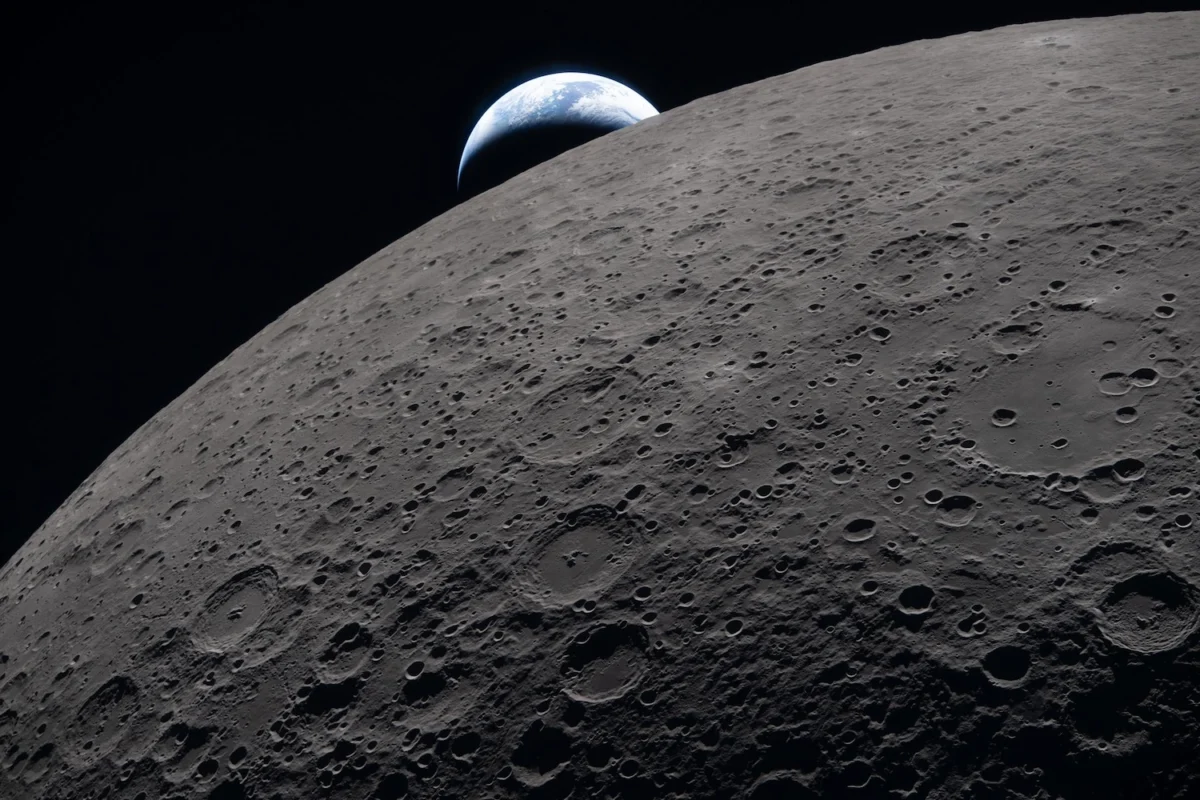
The recent successful voyage of the Artemis II spacecraft, carrying Canadian astronaut Jeremy Hanson and his crewmates on a groundbreaking mission around the Moon, has captured the global imagination. This historic undertaking, a significant leap in humanity’s ongoing quest to explore the cosmos, has not only demonstrated remarkable technological prowess but has also reignited a deep-seated fascination with our closest celestial neighbor. As the world collectively held its breath during the astronauts’ journey, the enduring allure of the Moon, a constant presence in our night sky for millennia, has been brought into sharp focus.
The Moon, a silent witness to the rise and fall of civilizations and a constant muse for artists and scientists alike, has long been a symbol of the unknown and the aspirational. Its gravitational pull has shaped our oceans and our calendars, and its ethereal glow has inspired countless myths, legends, and, more recently, scientific endeavors. The very idea of venturing to the Moon, once confined to the realm of fantasy, has now transitioned into tangible reality, thanks to the persistent efforts of space agencies and the unwavering courage of astronauts.
This historical progression from myth to moonshot underscores a fundamental human drive: the innate desire to explore, to push boundaries, and to understand our place in the universe. The Artemis II mission, a testament to decades of scientific research, engineering innovation, and international collaboration, represents a pivotal moment in this grand narrative. It’s a moment that invites us to reflect on how far we’ve come and to anticipate the even greater challenges and discoveries that lie ahead.

A Celestial Companion: The Moon Through Human History
The Moon’s influence on human culture is profound and multifaceted. From ancient astronomers meticulously charting its phases to modern scientists analyzing lunar rocks for clues about the early solar system, our relationship with the Moon has evolved dramatically. Its consistent presence has made it a reliable marker of time and a powerful symbol in art, literature, and religion across diverse cultures.
Before the dawn of the space age, humanity’s engagement with the Moon was primarily observational and imaginative. Storytellers, poets, and philosophers contemplated its mysteries, often imbuing it with supernatural qualities or seeing it as a gateway to other realms. These early narratives, born from wonder and speculation, laid the groundwork for future explorations by shaping a collective consciousness that yearned to reach beyond Earth’s atmosphere.
From Fantasy to Fact: Literary Precursors to Lunar Travel
The transition from purely fantastical notions of lunar journeys to scientifically plausible concepts began to gain momentum in the 19th century. As scientific understanding advanced and technological capabilities expanded, authors began to weave tales of space travel that, while imaginative, were grounded in emerging scientific principles. These literary works not only entertained but also served to inspire and inform a growing public interest in space exploration.
Jules Verne’s "Around the Moon" (1869) stands as a monumental achievement in this literary tradition. Following the success of his earlier work, "From the Earth to the Moon" (1865), which addressed the monumental task of financing, constructing, and launching a colossal projectile via the "Columbiad" cannon, "Around the Moon" plunges its protagonists into the heart of their celestial voyage. The novel follows Barbicane, Nicholl, and Ardan as they embark on a mission not to land, but to circumnavigate the Moon and return to Earth.

Verne’s narrative, while set in an era of burgeoning industrialism, masterfully anticipates many of the challenges and wonders of space travel. The crew faces unknown hazards, unexpected phenomena, and the constant peril of a journey from which return is far from guaranteed. The book’s enduring legacy lies in its ability to blend scientific speculation with thrilling adventure, capturing the public’s imagination and fostering a sense of possibility about humanity’s future in space. It’s worth noting that early English translations of Verne’s works were often of dubious quality, a testament to the era’s perception of science fiction as a less serious genre in the Anglosphere. The fortunate inclusion of both "From the Earth to the Moon" and "Around the Moon" in a single volume, as recalled by one observer, was a small mercy that allowed readers to experience the full arc of the daring mission.
The Dawn of Technological Lunar Voyages: Iconic Narratives
As the 20th century unfolded, the concept of lunar travel continued to evolve in fiction, mirroring advancements in real-world science and technology. Authors explored increasingly sophisticated methods of propulsion and encountered more complex societal and ethical dilemmas associated with space exploration.
Thea von Harbou’s "Die Frau im Mond" (The Woman in the Moon) (1928), a seminal work that inspired Fritz Lang’s iconic film of the same name, presents a compelling narrative of lunar ambition driven by the allure of riches. The story centers on Helius, a brilliant engineer capable of constructing a Moon rocket, and his associate Professor Mannfeldt, who is convinced of the Moon’s vast gold reserves. This prospect of immense wealth serves as the primary motivation for Helius to transform theoretical designs into a functioning spacecraft.
However, their endeavor is fraught with peril as criminal elements, led by the gangster Turner, learn of Mannfeldt’s claims and seek to exploit the expedition for their own gain. Helius is forced to include Turner in the crew, transforming their mission into a high-stakes gamble. The surprisingly large crew, including assistants Windegger and Friede, a stowaway named Gustav, and even a small mouse named Josephine, embarks on the spaceship Friede towards the Moon. Their journey is complicated by technical hurdles and romantic entanglements, but the true danger lies in the lengths to which greed will drive individuals like Turner. The novel’s exploration of the human condition against the backdrop of space travel, coupled with its detailed technical descriptions, cemented its place as a significant contribution to early science fiction cinema and literature. The narrative humorously highlights the unlikely survival of Gustav, the stowaway, in a testament to the spacecraft’s robust engineering.

Masked Vigilantes and Convict Crews: A Gritty Lunar Frontier
The mid-20th century saw science fiction delve into more diverse and often darker themes, exploring the psychological and societal implications of space exploration. These narratives began to question the motivations behind such ambitious ventures and the ethical considerations involved.
Will Eisner’s "The Spirit on the Moon" (1952), a compelling arc featuring the iconic masked crimefighter Denny Colt, AKA the Spirit, offers a starkly different vision of lunar exploration. In this story, the Interplanetary Flight Commission faces a critical challenge: finding qualified individuals willing to undertake a potentially one-way journey to a hostile, airless world. The solution, as grim as it is pragmatic, lies in recruiting hardened convicts who are offered freedom in exchange for their participation.
The Spirit is tasked with accompanying these convicts, ensuring their compliance and the success of the mission. However, the narrative delves into the immense psychological pressure on the Spirit as he grapples with the immense danger, the fear of the convicts, and the inevitable fatalities that plague the expedition. The story is notable for its unflinching portrayal of the bleak realities of early space travel, questioning the morality of using prisoners for such perilous missions. Eisner, along with collaborators Jules Feiffer and Wallace Wood, crafted a narrative that was both a thrilling adventure and a somber reflection on human nature and societal priorities, contrasting the public’s outrage over animal testing with the apparent indifference towards sending convicts into space. The stark contrast between this gritty realism and more optimistic tales highlights the varied perspectives on lunar exploration within the science fiction landscape.
The Adventures of Tintin and the Challenges of a Packed Rocket
For younger audiences and those who appreciate a more whimsical approach to space travel, the adventures of Tintin have long provided a beloved gateway into the wonders of the cosmos. Hergé’s masterful storytelling, combined with meticulous attention to detail, brought the excitement of lunar exploration to life in a way that resonated with millions.

Hergé’s "On a marché sur la Lune" (Explorers on the Moon) (1954), translated into English as "Explorers on the Moon," is a cornerstone of the Tintin series. The narrative centers on Professor Calculus’s revolutionary atomic-rocket-powered spacecraft, designed to transport a team of professionals to the Moon and return them safely. However, as is often the case in Tintin’s adventures, the mission quickly becomes complicated by an abundance of unintended passengers.
The spacecraft is not only crewed by the Professor, his assistant Frank Wolff, the intrepid reporter Tintin, his dog Snowy, and the perpetually inebriated Captain Haddock, but also by a surprising number of stowaways, both accidental and deliberate. Among them are the bumbling detectives Thomson and Thompson, and the formidable Jorgen. Despite the added mass and the ensuing comedic chaos, the rocket successfully reaches and lands on the Moon. However, the sheer number of individuals aboard raises concerns about the available air supply for the return journey. Hergé’s work humorously satirizes the perceived ease of stowing away on spacecraft in earlier narratives, suggesting that such tales might have inadvertently promoted the importance of thorough pre-flight checks. The book’s enduring popularity lies in its blend of scientific imagination, slapstick comedy, and the undeniable charm of its characters.
Arthur C. Clarke: Competition, Commodification, and Celestial Taxation
Arthur C. Clarke, a titan of science fiction and a visionary who foresaw many technological advancements, also explored the complexities of lunar exploration in his writings. His ability to blend scientific accuracy with engaging storytelling offered a unique perspective on humanity’s potential future in space.
Arthur C. Clarke’s "Venture to the Moon" (1956), a collection of linked short stories later incorporated into "The Other Side of the Sky," vividly portrays the early days of international lunar expeditions. In this narrative, the British, Americans, and Russians collaborate on the first mission to the Moon, a testament to the spirit of cooperation in the face of cosmic challenges. However, this partnership is tinged with a friendly rivalry, as each nation vies to be the first to achieve a simultaneous landing.

The stories explore a range of scenarios, from navigational mishaps and unexpectedly successful scientific research to the unsanctioned commodification of lunar resources. Yet, Clarke injects a uniquely British element of humor by highlighting the challenges presented by the British tax system. This seemingly trivial detail underscores a poignant reality: the lengths to which individuals might go, even to the extent of enduring extended stays on a harsh, airless world, to mitigate tax burdens. Clarke’s masterful storytelling reminds us that even in the grandest of human endeavors, the mundane realities of earthly life can often follow us into the stars.
The Enduring Legacy of Lunar Dreams
These pre-Apollo 11 narratives represent just a fraction of the rich tapestry of fictional accounts that have shaped our collective understanding and anticipation of lunar exploration. Figures like Lucian of Samosata and Cyrano de Bergerac, whose early fantastical voyages predate modern scientific inquiry, also contributed to this enduring fascination.
The Artemis II mission, by bringing humanity back to the lunar vicinity, has not only fulfilled a long-held dream but has also revitalized interest in these foundational works of science fiction. As we continue to push the boundaries of space exploration, these stories serve as powerful reminders of the human spirit’s relentless curiosity and its capacity to envision futures that, with dedication and ingenuity, can indeed become reality. The dialogue between scientific advancement and imaginative storytelling remains a crucial driver of progress, inspiring future generations to look to the stars and wonder, "What’s next?"