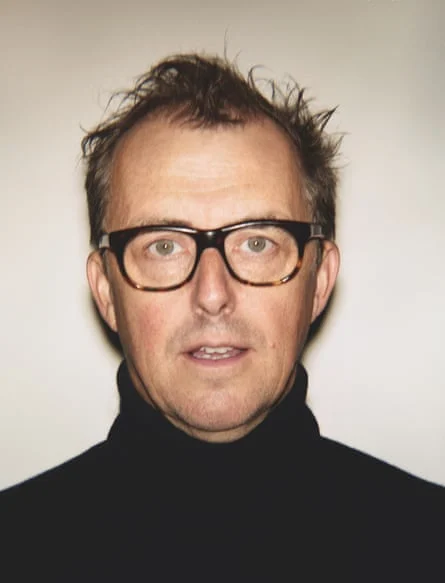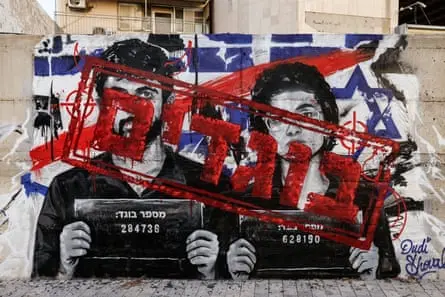
In the glittering social circles of New York, he was a figure of intrigue, whispered about as the “Jewish James Bond.” Peter Sichel, a refugee from Nazi Germany, harbored a profound gratitude for his American sanctuary, a sentiment that propelled him to volunteer for the U.S. Army. His sharp intellect and linguistic prowess quickly saw him rise through the ranks, ultimately becoming the CIA’s first station chief in Berlin while still in his twenties. In this pivotal early role, he provided crucial intelligence on burgeoning Soviet activities, warnings that some historians credit with foreshadowing and defining the early contours of the Cold War.
Beyond his espionage exploits, Sichel, much like his fictional counterpart, possessed a refined appreciation for life’s finer pleasures, including a good drink. After his departure from the U.S. foreign intelligence service, he would go on to achieve remarkable commercial success, transforming a sweet German white wine, Blue Nun, into one of the world’s best-selling vintages. Yet, a documentary released a year after his passing at the remarkable age of 102 reveals a more complex legacy, casting Sichel not just as a suave operative, but as a figure akin to a Jewish Jason Bourne – a former agent who grew increasingly disillusioned with the CIA’s clandestine interventions and emerged from retirement as a trenchant critic of U.S. foreign policy, particularly its entanglement in Iran.
A Spy’s Disillusionment: The Last Spy Unveiled
The documentary film, "The Last Spy," directed by American-German filmmaker Katharina Otto-Bernstein, presents a candid portrait of Sichel’s evolving perspective. In the film, Sichel openly critiques successive U.S. administrations for their propensity to disregard the counsel of their own intelligence agencies and to orchestrate the overthrow of democratically elected leaders in nations like Guatemala, Indonesia, Congo, and, most notably, Iran.
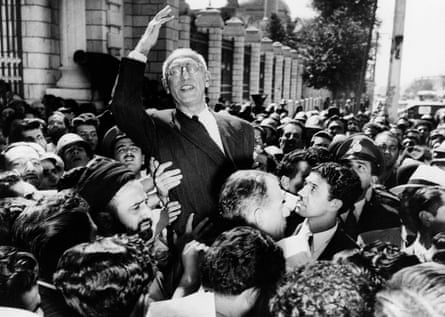
His most pointed criticisms are reserved for the 1953 coup in Iran, an event that indelibly shaped the nation’s trajectory and continues to reverberate in geopolitical dynamics today. This operation, instigated by Britain’s MI6 and the CIA, was designed to thwart the nationalization of Iran’s oil interests under the socialist Prime Minister Mohammad Mossadegh. The successful coup bolstered the authoritarian rule of Shah Mohammad Reza Pahlavi, a reign that ultimately culminated in the 1979 Iranian Revolution.
Echoes of Intervention: The Iranian Coup and its Aftermath
The 1953 coup, officially known as Operation Ajax, was a watershed moment in U.S. foreign policy and a stark illustration of the burgeoning Cold War’s proxy conflicts. Mossadegh, a nationalist leader who sought to reclaim Iranian resources from foreign control, had nationalized the Anglo-Iranian Oil Company, a move that deeply alarmed British economic interests. The Eisenhower administration, influenced by Secretary of State John Foster Dulles and his brother, CIA Director Allen Dulles, viewed Mossadegh’s government as a potential gateway for Soviet influence, despite intelligence suggesting otherwise.

The operation involved a sophisticated propaganda campaign, bribery, and the orchestration of protests, ultimately leading to Mossadegh’s arrest and the Shah’s return to power. This intervention, while seemingly securing Western oil interests in the short term, is now widely recognized as a catalyst for long-term instability.
In "The Last Spy," Sichel articulates his profound regret: "If we had not gotten rid of Mossadegh, Iran today would be a good member of the family of nations, a socialist democratic country," he states on camera. He further asserts that bolstering the Shah’s authoritarian regime "caused a revolution" and "indirectly caused the arrival of the mullahs," referring to the Islamic theocracy that has since defined Iran’s political landscape. This perspective offers a stark counter-narrative to the prevailing U.S. foreign policy discourse, particularly in recent times, where the current regime has been described in starkly adversarial terms.
A Rare Candor: Tracing the Consequences of Action
While Sichel is not the first former CIA operative to voice criticism of the agency’s past actions – the CIA itself acknowledged in 2023 that its 1953 intervention in Iran was "undemocratic" – his level of self-reflection and clear-sighted analysis is considered exceptionally rare. U.S. historian Stephen Kinzer, author of "Overthrow: America’s Century of Regime Change from Hawaii to Iraq," highlights this distinction: "I don’t think there has ever been a film in which such a former CIA officer so thoughtfully reveals what he did, what he saw, and analyses it in such a way that is deeply critical, but also thoughtful and sophisticated."
Kinzer elaborates on Sichel’s central argument: "He’s arguing that actually we wasted a lot of lives and we intensified conflicts in the world rather than trying to resolve them." Sichel’s poignant observation from the film, "We don’t think it through until the end, that an action we take today might in the long run be against our interest," encapsulates this critique of short-sighted foreign policy decision-making.
A Life of Service and Shifting Perspectives: From Mainz to Berlin and Beyond
Born in Mainz, Germany, in 1922, Peter Sichel hailed from a prosperous family of wine merchants whose esteemed clientele included establishments like the Ritz in Paris. His early education included a period at a public school in Buckinghamshire, England, providing him with an international perspective from a young age. However, the escalating persecution of Jews following the introduction of the Nuremberg race laws in 1935 forced his family to flee. They initially sought refuge in Bordeaux, France, before ultimately settling in New York.
It was in America that Sichel’s profound sense of gratitude manifested in his immediate decision to enlist in the U.S. Army on the day following the Japanese attack on Pearl Harbor in December 1941. His exceptional linguistic abilities and affable demeanor quickly drew the attention of the Office of Strategic Services (OSS), the precursor to the CIA. He was recruited for his aptitude in extracting intelligence from German prisoners of war.
Even in these early stages of his intelligence career, Sichel exhibited a discernible inclination towards meticulously gathered information over impetuous action. This disposition placed him at odds with certain military figures. He notably offered a critical assessment of General George S. Patton, a celebrated U.S. general of World War II, whom Sichel described as "a very stupid man" and a "bad general," emphasizing his own preference for strategic intelligence over direct confrontation.
The Genesis of the Cold War and the CIA’s Early Days
Following the Allied victory, Allen Dulles, the director of the OSS, recognized Sichel’s exceptional talent and potential. At just 23 years old, this "wunderkind" was tasked with remaining in Berlin to oversee the intelligence agency’s operations within the U.S.-occupied sector. His responsibilities included managing key informants and establishing an intelligence network across the Soviet-controlled eastern zone. He demonstrated remarkable initiative, even infiltrating KGB headquarters in Karlshorst through a "honey trap" – a woman who initiated an affair with the KGB head’s chauffeur – and successfully recruiting two agents from within the SED (Socialist Unity Party) Central Committee and the DWK (German Economic Commission).
Sichel’s early warnings about Soviet intentions proved prescient. He recognized the growing threat posed by the Soviet Union even before George Kennan penned his influential "Long Telegram," a document that articulated the strategy of containment. As Otto-Bernstein notes, Sichel "rang in the cold war" in a sense, but also "was also the first one to recognise that the Russians had no intentions of marching west." This nuanced understanding of Soviet capabilities and intentions would later set him apart from more hawkish elements within the U.S. foreign policy establishment.
A Shift in Agency Focus: From Intelligence Gathering to Active Intervention
In 1954, Sichel was transferred to Washington D.C. to head the CIA’s German and Eastern European desk. During this period, he was involved in significant U.S. propaganda efforts, including the establishment of Radio Free Europe. He also oversaw "Operation Gold," an ambitious undertaking that involved constructing a 450-meter (1,400-foot) tunnel from West to East Berlin to tap Soviet-controlled underground telephone cables, a testament to the innovative and often audacious methods employed by intelligence agencies during the Cold War.
While Sichel maintained a loyalty to Allen Dulles, he grew increasingly wary of the fervent anti-communism espoused by John Foster Dulles, Allen’s brother, who served as U.S. Secretary of State under President Eisenhower from 1953. Sichel described John Foster Dulles as deeply disliked within the intelligence community, suggesting a rift between the pragmatic intelligence professionals and the ideologically driven political leadership.
Under the leadership of the Dulles brothers, the CIA underwent a significant transformation. It evolved from an organization primarily focused on intelligence gathering to one that actively engaged in covert operations and regime change. Sichel was reportedly taken aback by the recklessness of some of these operations. He recounted instances where a considerable number of U.S. operatives lost their lives after being airdropped into Poland, Ukraine, and Albania to establish resistance networks, only to be swiftly apprehended by Soviet forces.
The Perils of Ideology Over Intelligence
Sichel’s experiences led him to a profound understanding of the dangers inherent in allowing pre-conceived ideological frameworks to supersede factual intelligence. "People in high places have an idea of what the picture should be, and if the intelligence doesn’t fit, they don’t believe the intelligence," he laments in "The Last Spy." This sentiment underscores his critique of how political imperatives can distort the interpretation of vital intelligence, leading to disastrous policy decisions.
This rigid mindset, Sichel argued, fostered a view within the U.S. that any nationalist leader challenging American hegemony was a de facto Soviet pawn, thus justifying covert action to depose them. This logic, he believed, underpinned interventions against leaders like Iran’s Mossadegh, Guatemala’s Jacobo Árbenz, Congo’s Patrice Lumumba, and Sukarno in Indonesia.
Sichel himself was peripherally involved in some of these controversial operations. In one notable instance, he was tasked with sending a female agent disguised as an air hostess to retrieve a stool sample from Indonesian President Sukarno after the president had used an onboard toilet. This was part of an effort to investigate a rumor, which proved to be false, that Sukarno was suffering from ill health, a detail that speaks to the often bizarre and invasive nature of intelligence gathering.
Retirement and a Legacy of Wine and Wisdom
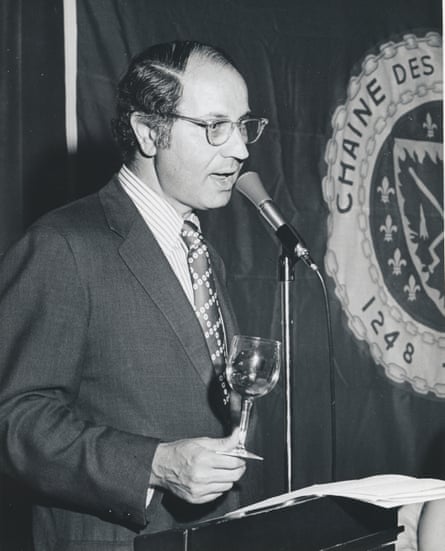
By the late 1950s, Sichel had become a vocal critic within the CIA, leading to him being investigated by the FBI under suspicion of harboring communist sympathies. Disillusioned by the agency’s direction and the pervasive ideological biases, he retired from intelligence work in 1960. He then assumed control of his family’s wine business, operating from New York.
The phenomenal commercial success of Blue Nun, a brand he meticulously cultivated and marketed, provided him with a comfortable and fulfilling retirement. The wine’s sweet taste and easily pronounceable name were key to its international appeal, particularly in the U.S. and the UK. This commercial triumph, achieved through astute business acumen, allowed Sichel to look back on his complex career without the bitterness that might otherwise have consumed him.
As historian Stephen Kinzer concludes, Sichel’s enduring message, as conveyed in "The Last Spy," is a lament for a worldview that rigidly divides the world into "good and evil" and an inability to appreciate nuance. He criticizes the tendency for challenges to American primacy to be met with "violent lashing out rather than a thoughtful policy trying to ease differences." Sichel’s critique, delivered from the perspective of a man who witnessed the Cold War’s dawn from its front lines and later achieved commercial success far removed from the shadows of espionage, serves as a potent reminder that the impulse for forceful intervention, often divorced from a deep understanding of consequences, remains a powerful and potentially destructive force in international relations, perhaps even intensifying in recent times. The documentary is currently showing in select UK cinemas and is available on streaming platforms such as Amazon Prime Video and Apple TV.