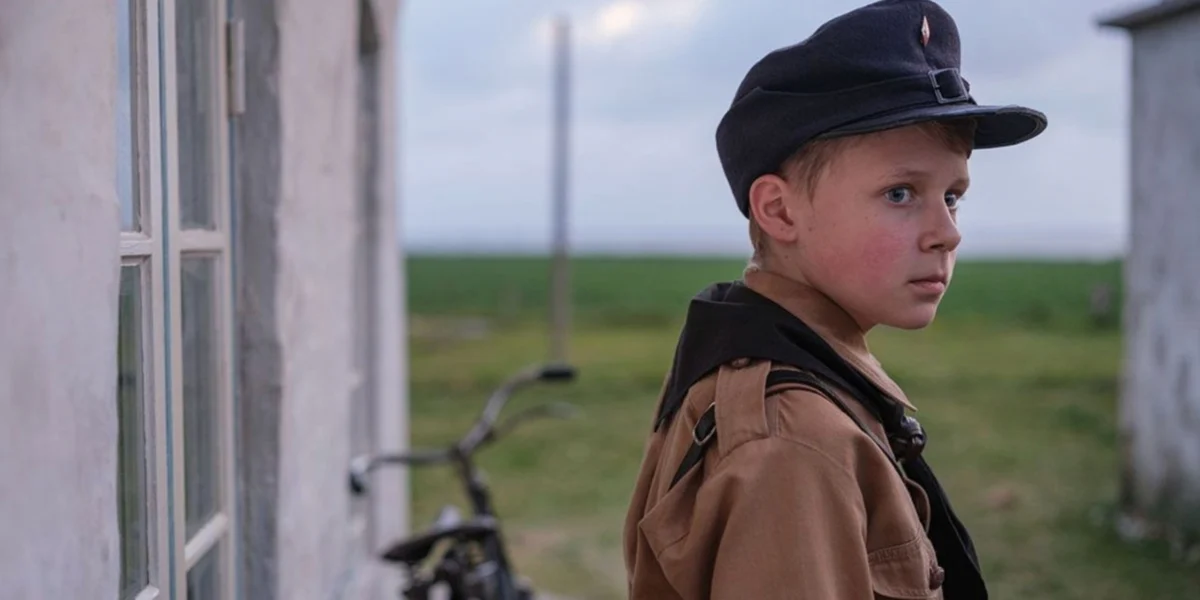
The global cinematic landscape in 2025 has been significantly enriched by the release of Amrum, a profound historical drama that marks a pivotal collaboration between two of Germany’s most influential filmmakers, Fatih Akin and the late Hark Bohm. Directed by Akin and co-written with Bohm, the film serves as a semi-autobiographical account of Bohm’s formative years on the German island of Amrum during the tumultuous closing chapter of the Second World War. Following its high-profile world premiere in the Cannes Premiere section of the 2025 Cannes Film Festival, the film has garnered widespread acclaim for its meticulous direction, evocative screenplay, and a breakthrough performance by its young lead, Jasper Billerbeck. As the production transitions to its North American theatrical run under the stewardship of Kino Lorber, it stands not only as a critical success but as a poignant tribute to Hark Bohm, who passed away shortly after the film’s German debut.
The Narrative Core and Historical Context of Amrum
Set against the stark, windswept beauty of the North Frisian Islands, Amrum explores the intersection of childhood innocence and the encroaching shadow of geopolitical collapse. The story is centered on the experiences of a young boy—portrayed by Jasper Billerbeck—as he navigates the final months of 1945. While the mainland of Germany faced the devastating advance of Allied forces and the systematic disintegration of the Third Reich, the island of Amrum existed in a state of suspended animation, a microcosm where the horrors of the war were filtered through the isolation of the sea and the resilience of its local population.
The screenplay, developed by Akin and Bohm, draws directly from Bohm’s personal memories, providing an authentic texture to the period piece. The narrative avoids the traditional tropes of the "war movie" by focusing on the domestic and psychological toll of the conflict. It captures the arrival of refugees, the scarcity of resources, and the shifting moral compass of a community that realizes the world they knew is about to vanish forever. By grounding the global tragedy in the specific geography of Amrum, the filmmakers provide a unique perspective on the German "Heimat" (homeland) during a period of total transition.
A Legacy of Collaboration: Akin and Bohm
The partnership between Fatih Akin and Hark Bohm is one of the most enduring and creatively fruitful in contemporary European cinema. Akin, known for his visceral explorations of the Turkish-German experience in films such as Head-On and The Edge of Heaven, has long cited Bohm as a mentor and vital creative sounding board. Their previous collaborations include the critically acclaimed In the Fade (2017), which won the Golden Globe for Best Foreign Language Film, and the coming-of-age road movie Goodbye Berlin (2016).
Amrum represents the culmination of this relationship. For Akin, taking on a project so deeply rooted in Bohm’s personal history was an act of both artistic ambition and profound friendship. The film reflects a synthesis of Akin’s energetic, modern directorial style and Bohm’s classical sensibility and intimate knowledge of the subject matter. The dedication of the film to Bohm’s memory, following his death just two months after the German theatrical release, adds a layer of elegiac weight to the viewing experience, positioning the film as Bohm’s final cinematic testament.
Casting and Performance: The Discovery of Jasper Billerbeck
The success of a film centered on a child’s perspective relies heavily on its lead performance, and critics at the Cannes Film Festival were unanimous in their praise for Jasper Billerbeck. As the young protagonist, Billerbeck delivers a performance characterized by a quiet intensity and a lack of artifice, capturing the curiosity and confusion of a child witnessing the end of an era.
The supporting cast is a "who’s who" of German acting talent, providing a robust framework for the narrative. Diane Kruger, who previously won the Best Actress award at Cannes for her role in Akin’s In the Fade, returns to work with the director, bringing her trademark emotional depth to the screen. She is joined by Matthias Schweighöfer, Laura Tonke, Kian Köppke, and Detlev Buck. This ensemble cast effectively portrays a community under pressure, illustrating the diverse ways in which the German citizenry processed the impending defeat—ranging from denial and stoicism to a desperate search for survival.
Production Timeline and Critical Reception
The journey of Amrum from conception to the international stage followed a rigorous production timeline:

- Development and Pre-production (2023-2024): Akin and Bohm finalized the script, focusing on historical accuracy and the specific linguistic nuances of the North Frisian region.
- Principal Photography (2024): Filming took place on location in Amrum and other parts of Schleswig-Holstein to capture the authentic atmosphere of the island’s dunes and coastal architecture.
- Cannes Premiere (May 2025): The film debuted in the Cannes Premiere section, a category reserved for established filmmakers whose work remains vital and innovative. It received an extended standing ovation.
- German Theatrical Release (Summer 2025): The film opened to strong box office numbers and critical praise in its home country.
- The Death of Hark Bohm (Late Summer 2025): The passing of the co-writer and legendary filmmaker cast a somber light on the film’s ongoing success.
- North American Distribution (April 2026): Kino Lorber secured the rights for a limited theatrical run and subsequent digital release in the United States.
Critical reception has focused on Akin’s ability to balance the sweeping scale of history with the intimacy of a memoir. Reviewers have noted that the film avoids the pitfalls of sentimentality, instead opting for a gritty, realistic depiction of what it meant to be a child in 1945. The cinematography, which utilizes the natural light and harsh landscapes of the North Sea, has also been highlighted as a standout element.
Supporting Data: The Historical Geography of Amrum in 1945
To understand the stakes of the film, it is necessary to look at the historical data regarding the North Frisian Islands during World War II. Amrum, like its neighbors Sylt and Föhr, was strategically significant but physically isolated. During the final months of the war, these islands became havens for thousands of refugees fleeing the Soviet advance from the East.
Historical records indicate that the population of many of these islands nearly doubled in the first half of 1945. This influx created immense logistical challenges regarding food and housing, themes that are explored with historical rigor in the film. Furthermore, the island was a site for coastal defense batteries, though it saw little direct combat compared to the mainland. The "phoney war" atmosphere of the island—where the conflict was visible on the horizon but had not yet landed on the shore—provides the unique tension that Akin exploits throughout the narrative.
Broader Implications and Cultural Impact
Amrum arrives at a time when European cinema is increasingly looking back at the mid-20th century to find parallels with contemporary social and political shifts. By focusing on the displacement of people and the collapse of a national identity, Akin and Bohm’s work resonates with modern audiences grappling with similar themes of migration and societal change.
For Fatih Akin, the film represents a significant evolution in his career. While his earlier work often focused on the friction between cultures in a modern urban setting, Amrum proves his capability as a master of the historical epic. It demonstrates a maturity in his filmmaking, characterized by a more restrained and contemplative approach to storytelling.
For the German film industry, the movie is a reminder of the power of personal narratives in addressing the complexities of national history. The film contributes to the ongoing "Vergangenheitsbewältigung" (the process of coming to terms with the past), offering a perspective that is neither purely accusatory nor defensive, but rather humanistic and observational.
Distribution and Viewing Information
Kino Lorber, a distributor known for its commitment to high-quality international and independent cinema, is handling the North American release of Amrum. The film is currently playing at the Quad Cinema in New York City, a venue celebrated for showcasing significant works of world cinema. Following its New York engagement, the film is scheduled to open at the Laemmle Royal in Los Angeles on April 24th.
Industry analysts expect the film to perform well in the prestige arthouse circuit, potentially entering the conversation for year-end awards in the international film categories. The combination of Akin’s directorial pedigree, the emotional weight of Bohm’s final project, and the universal themes of childhood resilience makes Amrum a significant cultural event of 2025 and 2026.
As the film continues its journey through international theaters, it stands as a testament to the power of memory and the enduring necessity of storytelling. In the final months of a war that reshaped the world, a young boy on a small island saw the end of one life and the beginning of another; through Amrum, that vision is preserved for future generations.