"Daughter’s Daughter," directed by Xi Huang, emerges as a poignant and complex exploration of intergenerational relationships, grief, and the multifaceted nature of motherhood within the evolving landscape of contemporary Chinese society. The film, which has garnered attention through platforms like the MINT Chinese Film Festival and its Emerging Critics Scheme, distinguishes itself by moving quietly between past and present, anchoring its narrative in the raw emotional reality of a family fractured by loss and unspoken histories.
The narrative commences with a stark, evocative image: a hospital bed, a setting that immediately establishes a delicate tension between life and mortality, and between the generations it connects – mother, daughter, and the fragile, often unspoken bonds that define their existence. This opening scene sets the stage for the film’s central character, Ai, and her strained relationships with her two daughters. One, Emma, was adopted and later reunited with Ai, carrying the weight of a past separation. The other, Zuer, is depicted as emotionally distant and persistently misunderstood, her unconventional lifestyle and appearance serving as a constant, subtle barrier between her and her family.
The Intricacies of Disconnection and Modern Identity
From the outset, "Daughter’s Daughter" meticulously crafts a sense of tentative connection. Zuer’s arrival is cautious, marked by a palpable distance. Her girlfriend is introduced simply as a "colleague," a term that, while seemingly innocuous, subtly underscores the family’s struggle to fully embrace Zuer’s identity and life choices. Her ongoing in-vitro fertilization (IVF) treatment is discussed in purely practical, medical terms, devoid of the emotional depth and support one might expect. This portrayal highlights a recurring theme: Zuer’s inner world, her feelings and aspirations, remain just out of reach for those closest to her, including her partner, her sister, and most significantly, her mother. This quiet alienation speaks volumes about the societal pressures and family expectations that can create fissures in even the most fundamental relationships.
This portrayal of Zuer’s life subtly mirrors broader societal discussions in China regarding evolving family structures, individual autonomy, and the increasing visibility of LGBTQ+ individuals, even if the film approaches these topics with a delicate touch. While China has made strides in economic development, traditional family values often remain deeply ingrained, sometimes leading to misunderstandings or quiet disapproval of lifestyles that deviate from established norms. The use of "colleague" rather than a more intimate descriptor for Zuer’s partner is a powerful cinematic choice, reflecting the nuanced ways in which non-traditional relationships are sometimes navigated or acknowledged within conservative family settings.
Tragedy, Ethical Dilemmas, and the Echoes of the Past
The narrative takes a sharp and disorienting turn with the sudden arrival of tragedy. Zuer’s unexpected death plunges Ai into a profound grief, compounded by the crushing weight of everything left unsaid, all the unresolved conflicts and unexpressed affections. The emotional toll is immense, but it is swiftly followed by an immediate and stark ethical dilemma: what to do with Zuer’s fertilized embryo. The options presented are clinical and weighty: freeze it, donate it, terminate it, or find a surrogate. The language surrounding this decision is, initially, purely medical and procedural, reflecting the cold, hard facts of advanced reproductive technology.
However, as the film progresses, grief irrevocably reshapes this language for Ai. The decision about the embryo becomes inextricably linked to her own complicated history of motherhood. This history is layered with regret and past mistakes: one daughter, Emma, she gave up, believing she was offering her a better life, and another, Zuer, she loved imperfectly, constantly struggling to bridge the gap between her expectations and her daughter’s reality. This central conflict elevates "Daughter’s Daughter" beyond a simple premise, transforming it into a profound meditation on the enduring impact of choices made and the elusive nature of maternal fulfillment.
Contextualizing Reproductive Technologies in China
The inclusion of IVF and the ethical dilemma surrounding a deceased daughter’s embryo is particularly resonant in the Chinese context. China has one of the largest and fastest-growing markets for assisted reproductive technologies (ART) globally. According to the National Health Commission, there are hundreds of ART centers across the country, performing millions of cycles annually. While ART offers hope to many struggling with infertility, it also brings complex ethical and legal questions, especially concerning posthumous reproduction. Chinese law is still developing in this area, with cases often handled on an individual basis, leading to considerable ambiguity. The film taps into this very real societal discussion, prompting audiences to consider the moral, emotional, and legal implications of extending life beyond traditional boundaries.
Moreover, the legacy of China’s one-child policy (1979-2015) continues to influence family dynamics and attitudes towards offspring. For many generations, the single child carried immense parental hopes and societal expectations. This historical context can amplify the emotional weight surrounding fertility, lineage, and the profound grief of losing a child, making the dilemma Ai faces even more acutely felt.
Xi Huang’s Vision and Cinematic Craft
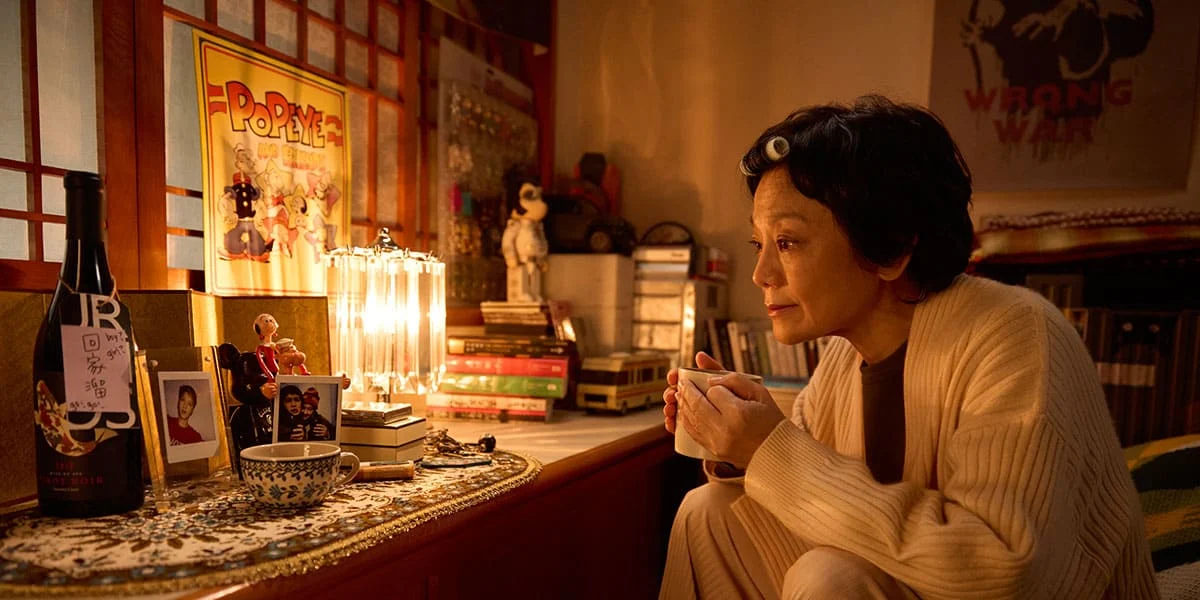
Director Xi Huang, known for her meticulous attention to detail and ability to evoke deep emotion through subtle visual storytelling, masterfully employs quiet scenes to convey Ai’s internal struggle. Sequences of Ai recording and listening to voice notes, passing through an airport with her daughter’s ashes, or staring at unclaimed socks in a laundrette, are not merely cinematic fillers but powerful visual metaphors. They linger in the ache of regret, the mundane details becoming conduits for profound sorrow and introspection.
Huang’s directorial style eschews overt melodrama, opting instead for a restrained realism that allows the audience to immerse themselves in Ai’s emotional landscape. This approach is characteristic of a burgeoning trend in Chinese independent cinema, where filmmakers are increasingly turning their lenses inward, exploring domestic dramas, personal struggles, and the nuanced psychological states of individuals navigating a rapidly changing society. Her previous works, if any specific titles can be found, often delve into themes of human connection, memory, and the unspoken truths that shape family histories. This consistent thematic thread reinforces her position as a filmmaker committed to exploring the complexities of human experience.
Motherhood: A Negotiated Identity
"Daughter’s Daughter" profoundly understands that motherhood is not a fixed, idealized identity, but rather something continuously negotiated over time. It is shaped by a confluence of fear, pride, expectation, and the indelible marks left by past decisions. The film actively resists simplifying motherhood into the conventional clichés of sacrifice or inherent virtue, instead presenting it as a messy, often contradictory journey.
By the time Ai makes her decision regarding Zuer’s embryo, it doesn’t arrive as a definitive resolution or a neat closure to her grief. Instead, it feels like a continuation – another attempt to repair past mistakes, to reconcile with the ghost of an imperfect love, or perhaps, to find a new pathway for her maternal instincts. This refusal to offer simplistic answers is what makes the film so poignant and resonant. It acknowledges that healing is rarely linear and that understanding comes not in grand epiphanies, but in the slow, painstaking acceptance of life’s complexities.
The film’s ultimate message is one of profound acceptance: motherhood is both burden and grace, a legacy passed down imperfectly from one generation to the next. This nuanced perspective challenges traditional Confucian ideals of filial piety, which often place immense pressure on children to honor parents and maintain family lineage. While respect for elders remains a cornerstone of Chinese culture, "Daughter’s Daughter" subtly suggests that genuine connection and understanding often require a departure from rigid expectations, acknowledging the autonomy and individual struggles of both parents and children.
The MINT Chinese Film Festival and Emerging Critical Voices
"Daughter’s Daughter" gained significant exposure and critical acclaim as part of the 2026 MINT Emerging Critics Scheme, presented by the MINT Chinese Film Festival in partnership with Asian Movie Pulse. The MINT Chinese Film Festival plays a crucial role in promoting contemporary Chinese cinema to a global audience, showcasing films that often explore diverse themes and push artistic boundaries. Its Emerging Critics Scheme is particularly vital, designed to nurture new voices in film criticism and provide platforms for insightful analysis of groundbreaking works.
By selecting "Daughter’s Daughter" for this scheme, the festival underscored the film’s artistic merit and its capacity to spark meaningful discussion. The program allows budding critics like Ellie Hodgetts to engage deeply with complex narratives, offering fresh perspectives that enrich the broader critical discourse. This initiative not only supports emerging talent but also ensures that films with significant cultural and artistic value receive the thoughtful attention they deserve. The festival’s commitment to showcasing films that delve into social issues, personal struggles, and evolving identities reinforces its mission to present a comprehensive and nuanced view of Chinese filmmaking today.
Broader Impact and Implications
"Daughter’s Daughter" stands as a significant contribution to contemporary Chinese cinema, reflecting a growing trend of films that confront uncomfortable truths about family life, individual identity, and societal pressures. Its exploration of adoption, IVF, and subtly implied LGBTQ+ themes places it firmly within a wave of cinema that seeks to move beyond traditional narratives and engage with the complexities of modern existence.
The film’s focus on a mother’s journey through grief and ethical quandaries provides a powerful lens through which to examine broader societal changes. It invites audiences to reflect on how technology intersects with deeply personal choices, how past policies (like the one-child policy) continue to shape present-day family dynamics, and how cultural attitudes towards gender, sexuality, and lineage are slowly but surely evolving.
Critically, the film’s refusal to offer easy answers ensures its lasting impact. It leaves viewers with questions rather than resolutions, prompting continued introspection about their own relationships, their understanding of motherhood, and the legacies they inherit and create. This open-ended approach is a hallmark of thought-provoking cinema, establishing "Daughter’s Daughter" not merely as a story, but as a catalyst for deeper dialogue on what it means to be a family in the 21st century.
In conclusion, Xi Huang’s "Daughter’s Daughter" is a meticulously crafted and deeply affecting film that transcends its premise to deliver a profound meditation on the enduring complexities of maternal love, loss, and the ever-shifting landscape of family identity. Its critical reception through initiatives like the MINT Emerging Critics Scheme highlights its significance as a work that not only entertains but also challenges, informs, and enriches our understanding of the human condition within a specific, yet universally resonant, cultural context.