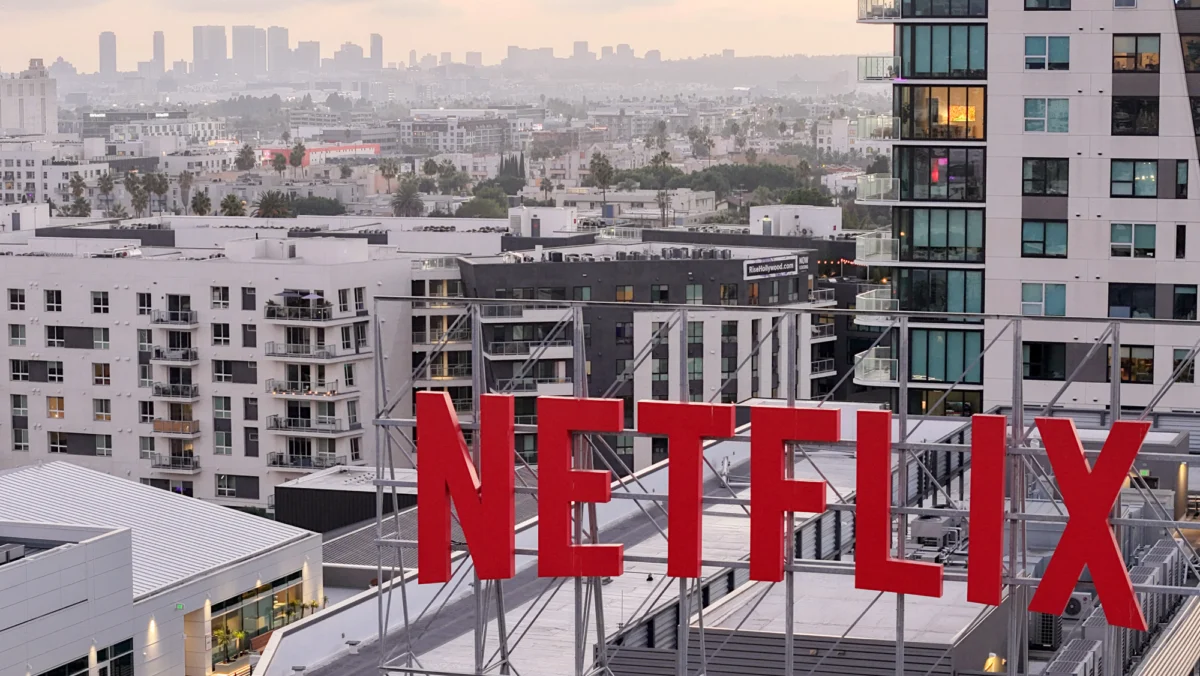
Netflix Inc. officially announced on Thursday the authorization of a new $25 billion stock repurchase program, a move designed to stabilize its fluctuating share price and signal long-term confidence to a skeptical Wall Street. This substantial capital allocation strategy comes at a critical juncture for the streaming pioneer, which has seen its market valuation erode by more than 16 percent over the last six months. The new program is intended to supplement the company’s existing 2024 buyback initiative, which currently retains approximately $6.8 billion in authorized funds. By aggressively returning capital to shareholders, Netflix executives are attempting to counter the narrative of slowing growth and address concerns regarding the company’s recent financial guidance, which many analysts labeled as conservative despite recent subscription price hikes.
The decision to launch such an expansive buyback program follows a period of uncharacteristic stock volatility and strategic pivots. In recent months, Netflix found itself at the center of a potential industry-shifting consolidation play during its pursuit of Warner Bros. Discovery assets. While the company ultimately opted not to match a competing deal from Paramount Global, the flirtation with a major traditional media acquisition left investors uneasy about Netflix’s future capital expenditures and its core identity as a tech-first streaming platform. Although the company walked away with a significant $2.8 billion breakup fee after the dissolution of those negotiations, the stock struggled to regain its previous momentum, as the market pivoted its focus toward the company’s organic growth prospects and forward-looking revenue metrics.
Strategic Timing and the Search for Market Stability
The timing of the $25 billion authorization is no coincidence. Stock buybacks, or share repurchases, are a common tool used by mature corporations to increase the value of remaining shares by reducing the total supply available on the open market. For Netflix, this serves a dual purpose: it boosts earnings per share (EPS) and acts as a formal declaration from the Board of Directors that they believe the current market price does not accurately reflect the intrinsic value of the company.
The 16 percent decline in share price over the past two quarters represents a significant departure from the post-pandemic recovery Netflix had enjoyed throughout 2023 and early 2024. During that period, the company successfully implemented a crackdown on password sharing and launched a tiered advertising model, both of which initially drove subscriber numbers to record highs. However, the "low-hanging fruit" of these initiatives appears to have been harvested, leading Wall Street to question where the next phase of explosive growth will originate. The new buyback program is a direct response to these questions, suggesting that even if subscriber growth moderates, the company remains a highly profitable cash-generating machine capable of rewarding its investors.
A Chronology of Recent Financial Developments
To understand the necessity of this $25 billion move, one must look at the sequence of events that led to the current valuation gap. The timeline begins in late 2024, when Netflix first hinted at a renewed interest in large-scale M&A (mergers and acquisitions) activity.
- The Warner Bros. Pursuit (Late 2024 – Early 2025): Netflix entered preliminary discussions regarding a potential merger or acquisition of Warner Bros. Discovery assets. This signaled a shift in strategy from purely organic content creation to industrial consolidation. During this period, Netflix paused its existing stock buyback program to preserve liquidity for a potential multi-billion dollar transaction.
- The Paramount Deal and Breakup Fee (Mid 2025): As the bidding war for media assets intensified, Paramount Global emerged with a deal structure that Netflix ultimately deemed too dilutive or strategically risky to match. Upon withdrawing from the process, Netflix received a $2.8 billion breakup fee. While the cash injection was positive, the withdrawal left a vacuum in the company’s long-term growth narrative.
- Q1 and Q2 Earnings Reports (2025): Despite hitting subscriber targets, Netflix’s financial guidance for the upcoming fiscal years failed to impress analysts. Concerns were raised regarding the Average Revenue per Member (ARM) and the potential ceiling for the advertising-supported tier.
- Subscription Price Hikes (Recent Months): In an effort to boost revenue, Netflix implemented price increases across its Standard and Premium tiers in several major markets. While such moves usually signal pricing power, the stock price continued to lag, suggesting that investors were more concerned about potential churn and the saturation of the domestic market.
- The $25 Billion Authorization (Present): With $6.8 billion left in its old program and a stock price that has failed to recover from its six-month slump, the Board authorized the massive new program to utilize its $2.8 billion breakup fee and robust free cash flow to support the share price.
Analyzing Investor Concerns and Guidance Discrepancies
The primary friction between Netflix and Wall Street lies in the "guidance" provided during recent earnings calls. Institutional investors typically value companies based on their future earnings potential rather than past performance. Even though Netflix remains the undisputed leader in the streaming space—boasting over 280 million global subscribers—the market has become hyper-focused on the slowing rate of margin expansion.
Analysts have noted that while the password-sharing crackdown provided a one-time "bump" in new sign-ups, the long-term sustainability of that growth is in question. Furthermore, the advertising-supported tier, while growing, has not yet reached the scale required to offset the massive content spending budget, which remains upwards of $17 billion annually. By announcing a $25 billion buyback, Netflix is effectively telling the market that it produces more cash than it can effectively reinvest into content or acquisitions at this time, making share repurchases the most efficient use of capital.
This "signaling" is crucial. When a company with the stature of Netflix commits to such a large buyback, it often sets a floor for the stock price. It discourages short-sellers and encourages long-term institutional holders to maintain their positions, knowing that the company itself will be a major buyer of its own stock in the coming months and years.
Official Stance and Market Reaction
While Netflix executives have been measured in their public comments, the underlying message from the Thursday morning announcement was clear: the company believes the market is overreacting to short-term headwinds. In previous communications with Wall Street, Chief Financial Officer Spencer Neumann emphasized the company’s commitment to a "disciplined" approach to capital allocation.
"We have always said that we would return excess cash to our shareholders once we have met our internal investment needs and maintained a healthy balance sheet," a source close to the company’s financial planning indicated. "The resumption and expansion of the buyback program reflect our confidence in the multi-year growth trajectory of our revenue and operating margins."
Market reactions in the early hours following the announcement were cautiously optimistic. Several brokerage firms adjusted their ratings, noting that the $25 billion commitment represents a significant percentage of Netflix’s total market capitalization. This move effectively reduces the "risk profile" of the stock for value-oriented investors who may have been wary of the streaming sector’s inherent volatility.
Broader Implications for the Streaming Industry
Netflix’s decision to pivot toward shareholder returns over aggressive M&A marks a significant moment in the "Streaming Wars." For years, the industry was defined by a "growth at all costs" mentality, where companies spent billions of dollars on content and acquisitions to capture market share. Netflix’s shift suggests that the era of hyper-expansion may be giving way to an era of maturity and fiscal discipline.
This move puts pressure on competitors like Disney+, Max (Warner Bros. Discovery), and Paramount+. Unlike Netflix, many of these competitors are still struggling with profitability in their direct-to-consumer segments. Netflix’s ability to generate enough free cash flow to fund a $25 billion buyback while simultaneously spending $17 billion on content highlights the widening gap between the market leader and the rest of the field.
Furthermore, the decision to avoid the Warner Bros. deal, despite the short-term hit to the stock price, may be viewed in hindsight as a prudent move. By remaining "lean" and focusing on its own ecosystem, Netflix avoids the complications of integrating a legacy media company’s declining linear television business. Instead, it can focus on high-margin digital revenue and emerging opportunities in live sports and gaming.
Conclusion and Future Outlook
As Netflix begins to execute this massive $25 billion repurchase program, the financial community will be watching closely to see if it provides the intended boost to the share price. Success will depend not just on the volume of shares bought, but on the company’s ability to prove that its core business can continue to innovate.
The coming fiscal quarters will be a test of Netflix’s new "mature" strategy. With the $2.8 billion breakup fee acting as a catalyst and the new buyback program providing a safety net, the company is well-positioned to weather market skepticism. However, the long-term challenge remains: in a saturated market, Netflix must continue to justify its premium valuation through original content excellence and the successful scaling of its advertising business. For now, the $25 billion buyback stands as a bold bet by Netflix on its own future, aimed at convincing the world that the king of streaming is far from reaching its peak.