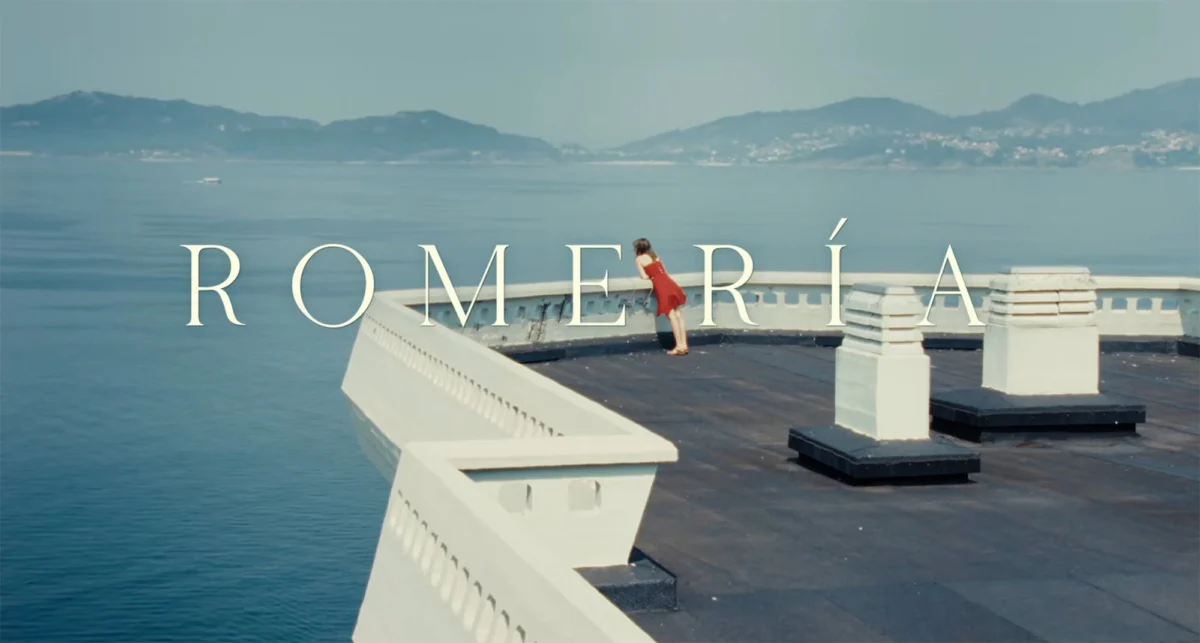
Janus Films has officially released the first United States trailer for Romería, the highly anticipated third feature film from award-winning Spanish writer and director Carla Simón. Following its successful world premiere in the Main Competition at the 2025 Cannes Film Festival, the film is scheduled to arrive in select American theaters on June 26, 2026. This release marks a significant milestone for Simón, who has established herself as a leading voice in contemporary European cinema through her previous works, Summer 1993 and the Berlinale Golden Bear winner Alcarràs. Romería serves as the concluding chapter in what critics have described as an informal autobiographical trilogy, delving into the complexities of family heritage, the weight of silence, and the reconstruction of personal identity against the backdrop of late 20th-century Spain.
Narrative Overview and Thematic Foundations
Set during the transition between the 1980s and 1990s, Romería follows Marina, an 18-year-old woman portrayed by newcomer Llúcia Garcia Torras in her debut role. The narrative is catalyzed by Marina’s practical need to secure official documentation for her university enrollment, a task that necessitates a journey to the Atlantic coast of Vigo to reconnect with her biological father’s side of the family. However, the administrative quest quickly evolves into a profound emotional investigation. Armed with her mother’s diary and a collection of letters—written by Neus Pipó Simón, the director’s real-life relative—Marina begins to peel back the layers of a family history shrouded in mystery and discomfort.

The film explores the "unconventional life" and "turbulent past" of Marina’s parents, addressing themes that have become hallmarks of Simón’s filmography: the interplay between childhood memory and adult realization, the rural-urban divide in Spain, and the specific socio-political climate of the post-Franco era. By tracking down her father’s siblings, Marina uncovers secrets that challenge her understanding of her origins, transforming the film from a standard coming-of-age story into a trenchant investigation of how family connections, or the lack thereof, shape the self.
The Artistic Vision of Carla Simón
Carla Simón’s rise in the international film circuit has been characterized by a distinct naturalistic style and a focus on intimate, character-driven storytelling. Her 2017 debut, Summer 1993, which dealt with her own experience of losing her parents to AIDS, won the Best First Feature award at the Berlin International Film Festival and swept the Goya Awards in Spain. She followed this success with Alcarràs in 2022, a poignant look at a family of peach farmers facing eviction, which secured the Golden Bear at Berlin, making her the first Spanish female director to achieve the honor.
With Romería, Simón continues her exploration of the "memory of the body" and the way secrets are inherited across generations. The film is described as a "sun-kissed drama," suggesting a visual palette that contrasts the warmth of the Spanish coast with the cold reality of the truths Marina uncovers. The production utilized archival materials and personal correspondence to lend the film an air of authenticity, bridging the gap between fiction and documentary-style realism.

Chronology of Production and Festival Recognition
The journey of Romería to the American market has been marked by a rigorous and prestigious international festival circuit. The timeline of the film’s rollout highlights its status as a significant cultural export:
- May 2025: World Premiere at the Cannes Film Festival. The film was selected for the Main Competition, competing for the Palme d’Or and solidifying Simón’s standing among the world’s elite filmmakers.
- Late 2025: Following Cannes, the film embarked on an extensive global tour, appearing at the Busan International Film Festival in South Korea, the Hamburg Film Festival in Germany, and the BFI London Film Festival.
- Autumn 2025: North American audiences first encountered the film during its screenings at the New York Film Festival (NYFF), the Vancouver International Film Festival, and the Denver Film Festival.
- April 2026: Janus Films releases the official US trailer and promotional poster, initiating the final marketing push for the domestic theatrical run.
- June 26, 2026: Scheduled theatrical debut in select US cities, including New York and Los Angeles, followed by a planned expansion.
Production Credits and Cast Performance
The film is produced by María Zamora of Elástica Films, a frequent collaborator of Simón and a prominent figure in the Spanish independent film scene. The casting of Llúcia Garcia Torras in the lead role follows Simón’s tradition of discovering and nurturing new talent, often working with non-professional or first-time actors to achieve a sense of unforced realism. Torras’s performance has been hailed by early critics as a "bravura" turn, anchoring the film’s emotional stakes.
The supporting cast features a blend of established Spanish talent and fresh faces, including Mitch Martín, Tristán Ulloa, Celine Tyll, León Romagosa, Hans Romagosa, and Marina Troncoso. Tristán Ulloa, a veteran of Spanish cinema and television, provides a seasoned presence that balances the youthful energy of the protagonist. The technical crew includes many of Simón’s long-term collaborators, ensuring a cohesive aesthetic that aligns with her previous award-winning features.

Distribution Strategy and Industry Implications
The acquisition of Romería by Janus Films is a testament to the film’s perceived artistic value. Janus Films, known for its curated library of world cinema classics and its close partnership with The Criterion Collection, typically selects films that demonstrate long-term cultural significance. By positioning Romería for a mid-summer release, Janus is targeting the "prestige indie" window, appealing to cinephiles and audiences who have followed Simón’s career since her debut.
Industry analysts suggest that the release of Romería further cements the "New Spanish Cinema" movement on the global stage. This movement, led by directors like Simón, Rodrigo Sorogoyen, and Pilar Palomero, is characterized by a move away from the high-concept melodramas of previous decades toward more grounded, regional, and personal narratives. The success of these films in the US market indicates a growing appetite for subtitled content that explores specific cultural identities while maintaining universal emotional themes.
Historical and Cultural Context
To fully appreciate the narrative of Romería, one must consider the historical context of Spain in the 1980s and early 90s. This period was defined by "La Movida Madrileña" and a general sense of liberation following decades of dictatorship, but it was also a time of significant social struggle, including the heroin epidemic that devastated a generation of young Spaniards. Simón’s work often touches upon these "uncomfortable secrets" of the era, reflecting on how the trauma of the past continues to vibrate through the modern Spanish family structure.

The setting of Vigo, a major port city in Galicia, also plays a crucial role. Known for its rugged coastline and industrial history, Vigo provides a starkly different atmosphere than the rural Catalonia seen in Alcarràs. This shift in geography allows Simón to explore a different facet of Spanish identity, focusing on the Atlantic influence and the specific maritime culture of the northwest.
Critical Anticipation and Broader Impact
Early reactions from the international festival circuit have praised Romería for its "vibrant and captivating" depiction of family dynamics. Critics have noted that while the film is deeply personal to Simón, it avoids the pitfalls of self-indulgence by grounding Marina’s journey in a relatable search for truth. The film’s investigation into "how family connections form new identities" resonates in an era where genealogy and the discovery of biological roots have become prominent cultural fixations.
As the June release date approaches, Romería is expected to be a mainstay in discussions regarding the year’s best foreign-language films. Its arrival in US theaters provides an opportunity for American audiences to engage with a sophisticated level of storytelling that honors the complexities of the human experience. With Janus Films’ backing, Romería is poised to not only succeed at the box office within its niche but also to find a permanent home in the canon of significant 21st-century cinema. The film stands as a poignant reminder that while the past may be buried, its discovery is often the only way to navigate the future.