
After establishing a significant presence as a prominent guest actor in South Korean film and television for over a decade, American actor Joey Albright is embarking on a new chapter, relocating to the United States to further his career in the American market. Known for his diverse roles across numerous acclaimed K-dramas and films, including his recent portrayal of Ian in Bloodhounds Season 2, Albright’s journey from a cultural enthusiast to a seasoned actor in a foreign industry offers a compelling look at the evolving landscape of global entertainment. His decision to return to the U.S., while maintaining deep ties to Korea, underscores the increasing fluidity of international acting careers in an era of unprecedented cross-cultural media consumption.
Joey Albright’s Korean Odyssey: A Decade in the Heart of Hallyu
Albright’s unique career trajectory began not with an ambition for acting, but with a profound interest in Asian culture. At the age of 21, driven by a fascination with both Japan and Korea, he made the pivotal decision to move to South Korea. What was initially conceived as a brief period of language study and cultural immersion blossomed into a transformative, multi-decade commitment. "What started as a short trip for me turned into something much bigger," Albright explained, detailing how his initial stay led to a return after a stint in Australia, ultimately culminating in university studies in Korea, marriage, and the establishment of a family. He describes Korea as his "home" where he has spent "all of my adult life," highlighting the depth of his integration into Korean society.

During this period, Albright carved out a niche for himself in the rapidly expanding Korean entertainment industry, becoming one of the most recognizable foreign faces on screen. His extensive filmography includes appearances in dozens of high-profile productions, showcasing his versatility. Notable credits span critically acclaimed historical dramas like Mr. Sunshine, contemporary hits such as Vincenzo and Chief Detective 1958, and genre-bending projects like Space Sweepers and Peninsula. These productions, many of which have achieved significant global recognition, allowed Albright to hone his craft within a distinct cinematic and television culture. The sheer volume of his work underscores the demand for foreign actors in an industry increasingly catering to international audiences, even if often in supporting roles.
Navigating the K-Drama Landscape: Challenges and Cultural Acclimation
Albright’s success in South Korea was not without its challenges, particularly those rooted in cultural and linguistic differences. Beyond the initial language barrier, which he diligently overcame, Albright cited the hierarchical nature of Korean work environments, especially on film sets, as a significant adjustment. "It’s not just the language. It’s about how to communicate and adjust to the hierarchical work system that exists on sets," he elaborated. This hierarchy, deeply embedded in the Korean language through honorifics and specific verb endings, requires a nuanced understanding of social position and respect. Interacting with a director, for instance, demands the politest linguistic forms and adherence to customs like bowing, creating a complex social "dance" that is integral to effective collaboration.
Another formidable hurdle was navigating casting expectations, which often involved specific typecasting for Western actors. Albright noted that the industry frequently seeks "model-esque people" for certain roles or "an older gentleman with gray hair" for businessmen, often limiting the scope for foreign talent. As a "taller, heavier-set actor," Albright initially struggled to fit these predefined molds. However, through perseverance, he learned to "focus on what I bring to a role rather than trying to fit into a particular mold or box." This self-discovery enabled him to forge his own path, demonstrating resilience in an industry that, while globalizing, still often relies on established archetypes. Furthermore, Albright highlighted the complexities of the "business side of things" in a foreign language, requiring him to strategically advocate for himself and adapt to unfamiliar professional norms. These experiences, he believes, have ultimately made him "more adaptable and more resilient overall as an actor."

The Global Boom of Korean Content and Albright’s Expanding Horizons
The unprecedented global surge of Korean media, often referred to as Hallyu or the Korean Wave, has profoundly impacted Albright’s career. This phenomenon, amplified by streaming platforms like Netflix, has catapulted K-dramas and films into mainstream international consciousness, exemplified by the global success of Squid Game and the Oscar-winning Parasite. Netflix, for instance, has invested billions in Korean content, recognizing its immense global appeal, which has led to a dramatic increase in production and distribution worldwide.
Albright directly attests to the benefits of this global spotlight. He observes a significant increase in opportunities, noting, "I do get noticed by casting directors in the States as well." The growing number of crossover productions, such as Beef and XO Kitty, filmed in Korea for international audiences, further exemplify this trend. These projects allow foreign actors based in Korea to gain exposure in both the K-drama sphere and broader international markets. Albright’s casting in Inheritance, a movie filmed in Korea featuring Bridgerton actress Phoebe Dynevor, serves as a testament to this expanding landscape. Beyond artistic reasons, Korea has become an attractive hub for international filming due to its "unique and efficient system," offering cost-effectiveness and quicker production turnarounds, further cementing its role on the global production stage.
Bloodhounds Season 2: The Role of Ian and Collaborative Character Development
Albright’s recent role as Ian in Bloodhounds Season 2, an action-packed Netflix series that has garnered significant attention, exemplifies his unique position. His casting process for Bloodhounds was a testament to both serendipity and his refined acting instincts. He recounted receiving an urgent audition request while on an anniversary trip with his family. Despite the tight deadline, he quickly prepared and filmed his audition, showcasing his dedication.
Initially, Albright had auditioned for a different character, a boxing coach, leveraging his background in boxing and MMA training for stunts. However, during his callback, the director recognized a different potential, handing him the script for Ian. Albright described an immediate, clear instinct for the character and, trusting his gut, asked to perform without extensive preparation. His interpretation, while different from the director’s initial vision, resonated powerfully. "He told me my interpretation was different from what he originally imagined, but that he really liked it. That meant a lot to me," Albright shared, highlighting the value of an actor’s unique perspective.
Albright’s approach to Ian’s character was deeply collaborative and focused on adding depth beyond a simple, one-note portrayal. He drew parallels between Ian and a character he auditioned for in Squid Game, noting that while both were investors, their core motivations differed: the Squid Game billionaire sought "the love of the game," while Ian was driven by strategic, long-term financial objectives. Albright actively worked with the director to finesse the dialogue, requesting adjustments to make Ian’s lines "more specific and accurate to the character" and to reflect a realistic "problem-solution" mindset. This often involved comparing Korean and translated English scripts to ensure subtext was preserved, a crucial skill developed from his linguistic immersion. His ability to respectfully suggest modifications, ensuring the character’s authenticity while respecting the writer’s intent, showcases his mature understanding of the craft and the cross-cultural production environment.
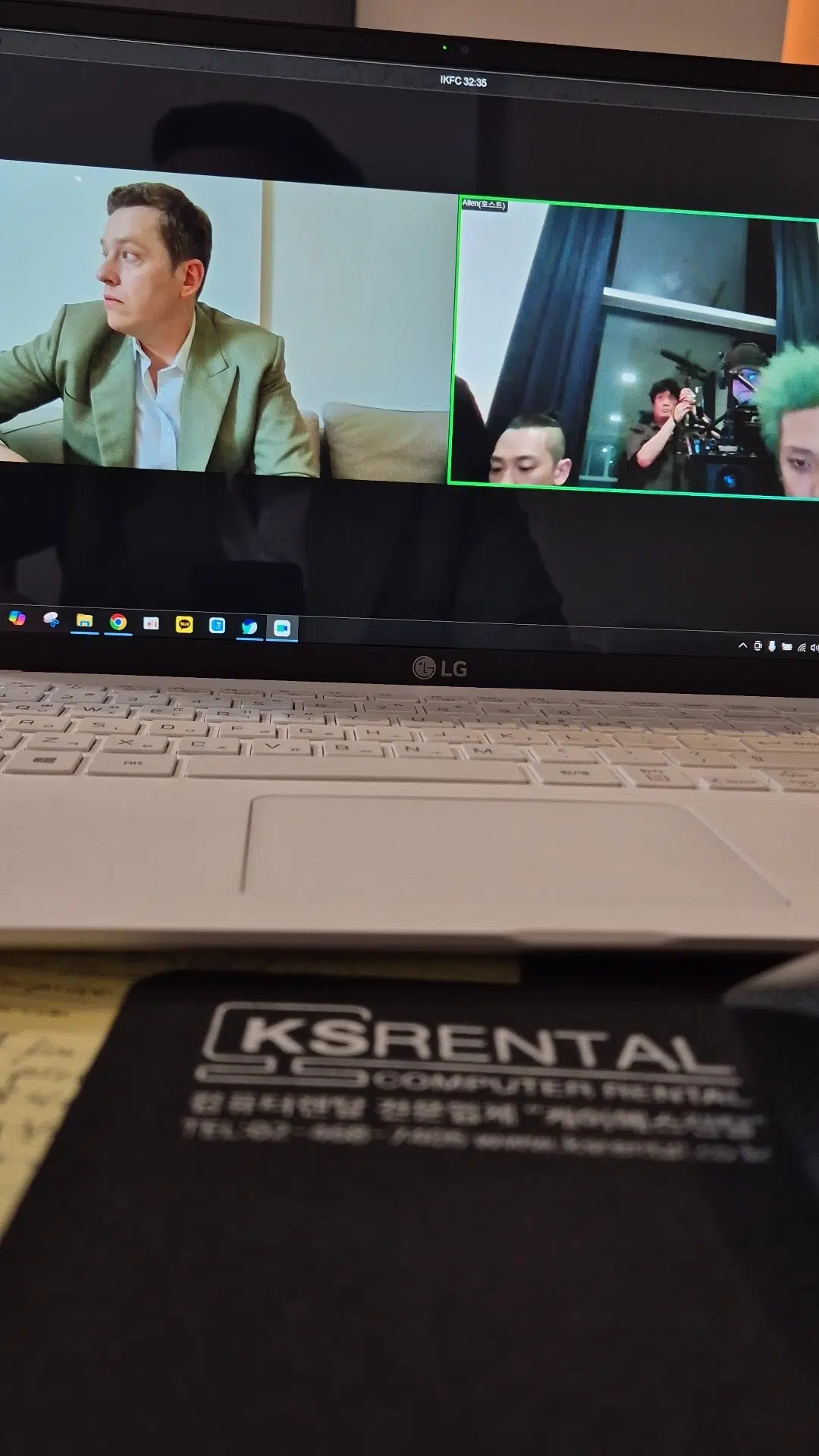
The filming of Albright’s scenes with prominent co-stars Rain and Lee Myung-ro presented another unique challenge, demonstrating the innovative solutions employed in modern production. Due to scheduling and expensive location bookings, Albright was not initially slated to film on the same day as his co-stars. Instead, he participated in a rehearsal where his co-stars filmed their parts, with Albright providing his lines via a video call setup. Later, the camera was brought to him, and his scenes were shot from a "stagnant" angle, mimicking a video call. To enhance realism, a green screen was utilized to superimpose the co-stars’ video, creating the illusion of a live interaction. "It turned out to be a great experience, and the team was incredibly supportive," Albright remarked, underscoring the adaptability and teamwork prevalent in Korean productions.

Future Prospects and a New Chapter in the U.S.
Looking ahead, Albright remains hopeful for a return to the Bloodhounds universe. With lead actors expressing interest in additional seasons, he eagerly awaits any potential developments for Ian. "I really want to do Ian again. He’s so much fun to just jump into," Albright expressed, conveying his enthusiasm for the character. He praised the director’s intelligence and poignancy, as well as the talent of his co-stars, noting how working with such caliber "really elevated my performance." His willingness to even accept a "small cameo" of Ian, perhaps "being tied up and beaten up by Baek Jung," highlights his deep affection for the project and the positive experience it provided.
However, the most significant next step for Albright is a strategic pivot back to the American market. This move is deeply rooted in personal and family considerations. During the COVID-19 pandemic, Albright had a stint in the U.S., where he filmed "7 short films in 70 days," leading in five of them. Despite this productive period, his family-oriented nature made the distance from his wife and young child difficult. "I can’t be that far away from my family. I’m very family-oriented," he stated. This led to a joint decision with his wife to relocate their family to the United States.
Albright plans to settle in Portland, Oregon, a city where he has roots, having grown up there before moving to Los Angeles. He views Portland as a "good, safe area for family," despite its smaller acting community compared to major hubs. This choice reflects a balanced approach, prioritizing family well-being while actively pursuing career growth. He plans to continue his professional development by taking in-person acting classes, a welcome change from 4 a.m. Zoom sessions, and to immerse himself in the local acting community. While stepping into the U.S. market, Albright maintains that "Korea will always be my second home," expressing his readiness to "fly back to Korea anytime I book something." His transition marks a new phase, allowing him to leverage his extensive international experience while exploring new opportunities closer to his American roots, positioning him as a unique talent bridging two vibrant entertainment industries.