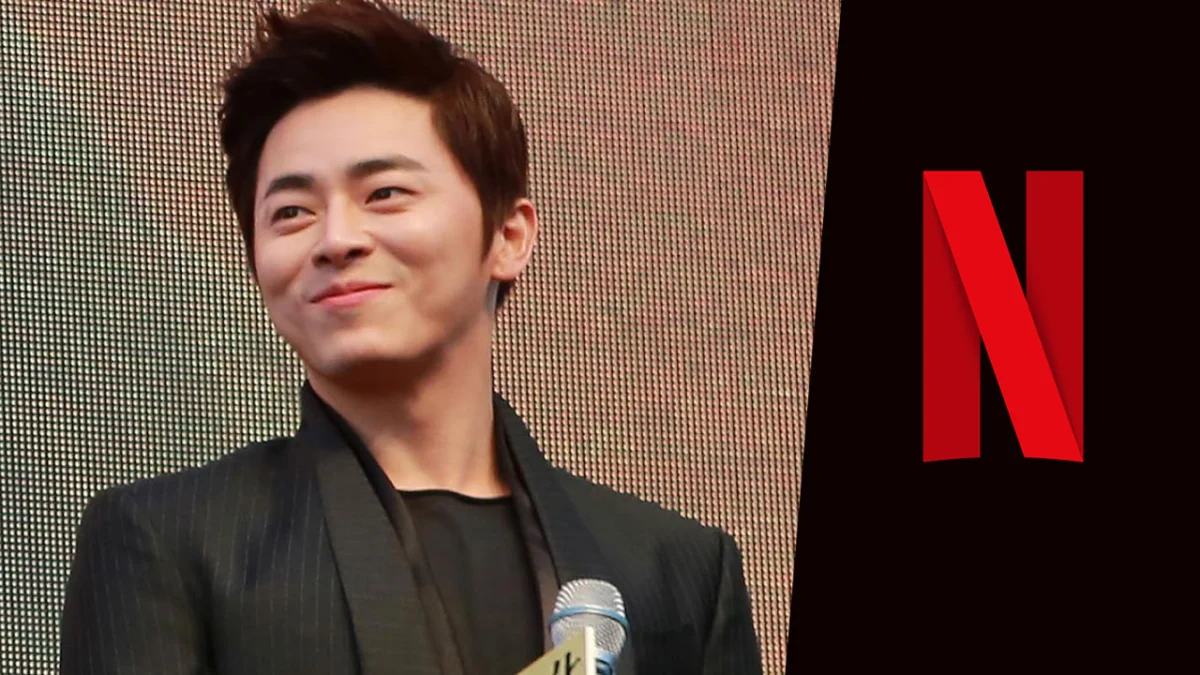
Veteran South Korean actor Jo Jung Suk, widely recognized for his versatile performances, most notably his lead role in the beloved medical drama Hospital Playlist, is currently in advanced discussions to take on the central character in Paperman, an eagerly anticipated Netflix Original K-drama series. The news, which has sparked considerable excitement among K-drama enthusiasts and industry observers alike, indicates Netflix’s continued strategy of enlisting top-tier talent for its expanding roster of Korean content. While official confirmation awaits, reports suggest that Jo Jung Suk and his agency are "positively reviewing" the offer, a phrase in the entertainment industry that typically denotes serious negotiations are underway.
The potential casting of Jo Jung Suk signals a high-profile addition to Paperman, a series shrouded in an intriguing premise: "Tells the story of a color-blind man who becomes entangled with counterfeit money." This concise synopsis immediately suggests a narrative ripe with potential for psychological depth, moral ambiguity, and high-stakes suspense, distinguishing it from typical genre fare. The project is set to be helmed by director Lee Il Hyung, known for his work on critically received films such as Karma and Remember, suggesting a focus on intricate plotting and character-driven storytelling.
Jo Jung Suk: A Career Defined by Versatility and Acclaim
Jo Jung Suk’s potential involvement brings a significant level of star power and acting prowess to Paperman. Born in 1980, Jo began his career primarily in musical theater, where he garnered widespread recognition for his exceptional vocal abilities and stage presence. His transition to television and film in the early 2010s was met with similar success, establishing him as one of South Korea’s most reliable and charismatic actors. His filmography showcases remarkable range, moving seamlessly between comedic, dramatic, and action-oriented roles.
His breakout role in the 2012 film Architecture 101 solidified his presence in cinema, earning him accolades for his memorable supporting performance. This was followed by a string of successful projects across different mediums. On the small screen, he captivated audiences in dramas like The King 2 Hearts (2012), You Are the Best! (2013), and the fantasy romance Oh My Ghost (2015), where he displayed his comedic timing and romantic lead capabilities. His portrayal of a quick-witted reporter in Don’t Dare to Dream (Jealousy Incarnate) (2016) further cemented his status as a leading man, showcasing his ability to blend humor with genuine emotional depth.
However, it was his role as Lee Ik-jun, a charismatic and warm-hearted liver surgeon in the critically acclaimed Hospital Playlist (seasons 1 and 2, 2020-2021), that elevated his global profile significantly. The series, a Netflix Original, resonated with millions worldwide due to its slice-of-life approach, strong character development, and focus on the camaraderie of a group of doctor friends. Jo Jung Suk’s performance was lauded for its nuanced portrayal of a dedicated professional and a loving single father, showcasing his dramatic weight and subtle comedic flair. This role not only garnered him immense popularity but also highlighted his appeal to a global audience, making him a prime candidate for future international projects.
Beyond Hospital Playlist, Jo Jung Suk has demonstrated his capabilities in various Netflix-distributed or licensed content, including the historical romance Captivating the King, where he played a complex monarch, and guest appearances in anticipated series like Weak Hero Class 2, Resident Playbook (a spin-off of Hospital Playlist), and When the Stars Gossip. His film work is equally diverse, featuring prominently in blockbusters like the disaster action film Exit (2019), which was a box office success, and the recent comedy Pilot (2024), further proving his versatility and box office draw. His consistent ability to deliver compelling performances across varied genres makes him an invaluable asset to any production, especially one with the unique premise of Paperman.
"Paperman": Unpacking the Intriguing Premise and Thematic Potential
The official synopsis for Paperman remains tantalizingly brief: "Tells the story of a color-blind man who becomes entangled with counterfeit money." This core concept immediately presents several layers of narrative and thematic exploration. Color blindness, a condition that affects an individual’s perception of hues, can serve as a powerful metaphor for various forms of perception – truth, deception, and morality – within the context of a crime thriller.
In a story involving counterfeit money, the ability to discern subtle differences in color, texture, and detail is paramount. A protagonist who lacks this ability could be either uniquely vulnerable or, paradoxically, uniquely positioned to approach the problem from a different angle, relying on other senses or deductive reasoning. This creates inherent dramatic tension and opportunities for innovative storytelling.
Paperman could potentially delve into several genres simultaneously:
- Crime Thriller: The entanglement with counterfeit money suggests a plot driven by investigation, danger, and potentially a cat-and-mouse game with criminals or law enforcement.
- Psychological Drama: The protagonist’s color blindness could be explored beyond its literal implications, delving into his internal world, his struggles with perception, and how this condition shapes his understanding of reality and trust.
- Mystery: The unraveling of the counterfeit operation, coupled with the unique perspective of the lead character, could form a compelling mystery narrative.
The series could explore themes such as:
- Perception vs. Reality: How does one interpret the world when a fundamental aspect of visual information is missing? How does this impact one’s judgment in high-stakes situations?
- Truth and Deception: Counterfeit money is inherently about deception. How does a character who perceives the world differently navigate a landscape built on fabricated realities?
- Identity and Vulnerability: The protagonist’s condition could be a source of both weakness and unexpected strength, leading to a journey of self-discovery and resilience.
- Social Commentary: Depending on the script’s direction, Paperman could also offer commentary on economic disparity, the underground economy, or the systemic vulnerabilities that allow such criminal enterprises to flourish.
The uniqueness of the premise positions Paperman to stand out in the crowded K-drama landscape, appealing to viewers looking for stories that combine genre excitement with intellectual depth.
Behind the Camera: Director Lee Il Hyung’s Vision
Directing Paperman is Lee Il Hyung, a filmmaker whose previous works suggest a strong hand in crafting intense, character-driven narratives. Lee Il Hyung is known for both writing and directing. His filmography includes:
- Karma: While specific details about this film are less widely publicized, the title itself suggests a focus on consequence and moral reckoning, themes that could align well with a story about counterfeit money.
- Remember (2022): This action-thriller, starring Lee Sung Min and Nam Joo Hyuk, tells the story of an octogenarian veteran with dementia who seeks revenge on pro-Japanese collaborators. The film was praised for its emotional depth, thrilling action sequences, and the powerful performances it elicited from its cast.
Lee Il Hyung’s experience with Remember in particular demonstrates his ability to handle complex plots involving personal vendettas and moral dilemmas, while also directing compelling performances. His previous work indicates a preference for strong narrative arcs and the exploration of justice and memory. For Paperman, this directorial style could translate into a taut, suspenseful drama that meticulously builds its world and characters, ensuring that the unique premise is explored with both emotional resonance and thrilling execution. His involvement provides a strong artistic foundation for the series, promising a sophisticated and engaging viewing experience.
Netflix’s Global K-Drama Powerhouse Strategy
The potential addition of Paperman with a lead actor of Jo Jung Suk’s caliber underscores Netflix’s unwavering commitment to expanding its Korean content library and reinforcing its position as a global leader in K-drama distribution. Over the past few years, Netflix has significantly invested in South Korean productions, recognizing their immense global appeal and cultural impact.
This strategic investment has yielded massive successes, transforming K-dramas from niche content into mainstream global phenomena. Shows like Squid Game, Hellbound, All of Us Are Dead, The Glory, and Kingdom have not only broken viewership records but also garnered critical acclaim and numerous awards, demonstrating the storytelling prowess and production quality of the Korean entertainment industry. These successes have cemented Netflix’s role as a vital platform for K-content creators, offering them unprecedented global reach and creative freedom.
In 2021, Netflix announced plans to invest nearly $500 million in South Korean content, followed by an additional $2.5 billion commitment over the next four years, as revealed in 2023. This substantial financial backing allows for ambitious projects, attracts top talent, and ensures high production values. The acquisition of a project like Paperman, with its unique concept and a highly sought-after actor like Jo Jung Suk, aligns perfectly with this strategy:
- Attracting A-List Talent: Securing actors like Jo Jung Suk, who have proven their appeal both domestically and internationally, ensures a built-in audience and a high level of performance.
- Diverse Storytelling: Investing in unique premises like Paperman‘s "color-blind man entangled with counterfeit money" showcases Netflix’s commitment to diverse and innovative narratives, moving beyond traditional romance or thriller genres.
- Global Appeal: The universal themes of perception, deception, and justice, presented through a distinct Korean lens, have the potential to resonate with audiences across different cultures.
- Strengthening Content Pipeline: Continuously adding high-quality, original K-dramas keeps subscribers engaged and attracts new ones, solidifying Netflix’s competitive edge in the streaming wars.
The Development Pipeline: A Look at K-Drama Production
At the time of reporting, Paperman is officially in the development phase. This initial stage is crucial for any K-drama production and typically involves:
- Script Development: The core story is fleshed out, characters are defined, and the entire series arc is mapped. Given the intriguing premise, this stage would involve meticulous research into color blindness and the intricacies of counterfeiting.
- Casting: Actors are approached and cast for various roles. The news of Jo Jung Suk "positively reviewing" the lead role indicates this stage is well underway for the main character. Other supporting roles would also be cast around this time.
- Pre-production: Once the script is finalized and main cast members are secured, detailed planning begins. This includes scouting locations, designing sets, costume design, assembling the full production crew, and creating a detailed shooting schedule.
- Budgeting: Financial planning is continuously refined throughout these stages to ensure the project stays within its allocated budget.
The journey from initial concept to a globally streaming series is extensive. For a high-profile K-drama, the typical lifecycle can span anywhere from 18 to 36 months, sometimes longer, depending on the complexity of the script, the availability of talent, and post-production requirements.
Given that Paperman is still in the development phase and there is no confirmed filming schedule, estimations for its release are speculative but can be based on industry norms. If filming were to commence in 2026, as some initial projections suggest:
- Filming Duration: K-drama filming can take several months, often between 4 to 8 months, sometimes longer for complex productions.
- Post-Production: This stage, which includes editing, visual effects (VFX), sound design, and color grading, can also take several months, typically 4 to 6 months. For a show with a unique visual element like color blindness, VFX might play a significant role.
- Localization and Marketing: After post-production, the series needs to be localized for global audiences (subtitles, dubbing) and undergo extensive marketing campaigns by Netflix.
Considering these factors, if filming were to begin in 2026, a realistic release window for Paperman on Netflix would likely be in the second half of 2027 or potentially early 2028. This timeline allows for the meticulous craftsmanship and high production standards that audiences have come to expect from Netflix’s K-drama offerings.
Industry Reactions and Anticipation
The news of Jo Jung Suk’s potential casting has been met with significant enthusiasm across the K-drama community. Fans are eager to see the actor take on a role that seems tailor-made for his blend of dramatic intensity and subtle character work. Industry analysts also view this as a strategic move by Netflix, as Jo Jung Suk’s involvement almost guarantees a certain level of quality and audience engagement.
While official statements from Netflix or the production company regarding specific plot details, other cast members, or the production timeline are typically reserved until later stages, the positive review from Jo Jung Suk’s agency is a strong indicator of serious intent. In the competitive landscape of Korean entertainment, securing an actor of his stature often involves careful consideration of the script’s quality, the director’s vision, and the overall potential of the project. His decision to "positively review" suggests that Paperman has met these high standards.
Broader Implications for K-Content and Streaming
The ongoing development of projects like Paperman and the consistent pursuit of leading actors like Jo Jung Suk signify a maturing phase for Netflix’s K-content strategy. It moves beyond merely acquiring popular existing content to actively commissioning and shaping original narratives with global appeal from inception. This not only benefits Netflix by providing exclusive, high-demand content but also invigorates the South Korean production industry, fostering innovation and providing more opportunities for local talent.
For viewers, it promises a continuous stream of diverse, high-quality K-dramas that push narrative boundaries and explore complex themes. Paperman, with its unique premise and potential star, represents another exciting chapter in the evolving global narrative of Korean entertainment, solidifying its place as a powerhouse of compelling storytelling on the international stage. The anticipation for this series will undoubtedly continue to build as more details emerge from its development.