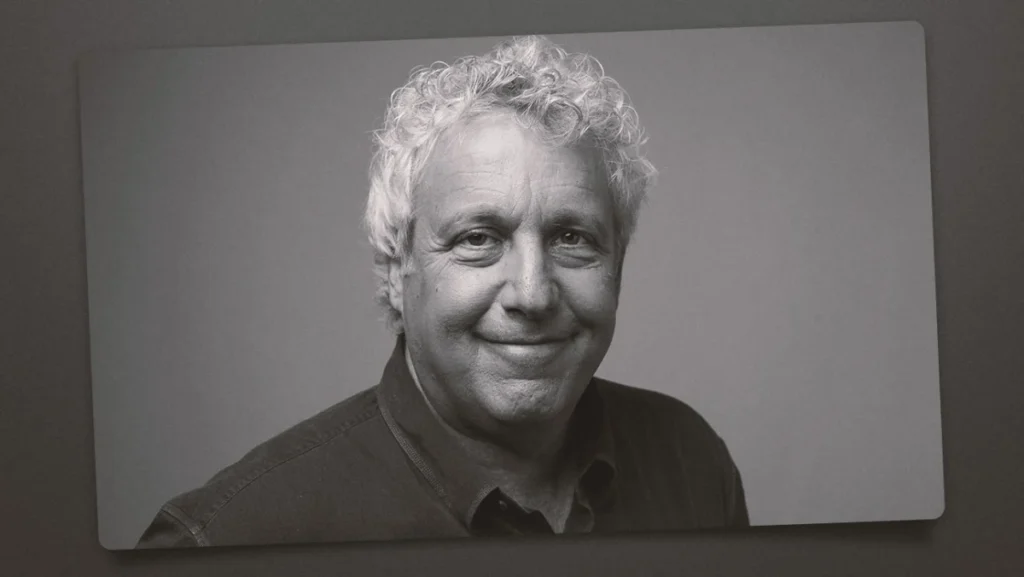
John Hockridge, a revered first assistant director whose meticulous planning and calm leadership were instrumental in bringing numerous cinematic blockbusters and beloved comedies to the screen, passed away on April 17, 2024, in Portland, Oregon. He was 79 years old and succumbed to liver cancer, having been diagnosed with stage 4 of the disease in December. His daughter, Lindsey Hockridge, confirmed his passing to The Hollywood Reporter, marking the end of a prolific career that spanned over four decades and left an indelible, if often behind-the-scenes, mark on Hollywood.
Hockridge’s professional journey was characterized by an unparalleled ability to manage the complex logistics of film production, a skill that earned him the trust and admiration of a diverse array of directors. His most extensive and notable collaboration was with director Peter Segal, a partnership that yielded eight successful films. This enduring creative alliance underscored Hockridge’s capacity to seamlessly integrate into a director’s vision, ensuring that the demanding schedules and intricate requirements of major motion pictures were met with precision and efficiency.
A Legacy of Efficiency and Collaboration: Hockridge’s Impact on Filmmaking
The role of a first assistant director (A.D.) is one of the most demanding and critical in film production, acting as the primary liaison between the director and the entire crew. It requires a unique blend of organizational prowess, leadership, and diplomacy, often under immense pressure. As Hockridge himself once described his role in a 2003 interview, "Generally, we A.D.’s are logistics people. I jokingly say that I’m the chief yeller and screamer on the set. But I really don’t work that way and don’t like people who do. The biggest job an A.D. has is to try to minimize the time for the D.P. [Director of Photography] to have the set and actors ready and the cameras rolling.” This statement encapsulates his philosophy: a focus on efficiency and respect, rather than authoritarianism, to keep productions on track.
Hockridge’s contributions were central to maintaining the delicate balance between artistic ambition and practical execution. He was responsible for drafting and adhering to the shooting schedule, managing the cast and crew on set, ensuring safety protocols were followed, and coordinating between various departments—from camera and lighting to sound and art direction. His expertise allowed directors like Peter Segal, Jerry Zucker, and John Badham to focus on the creative aspects of filmmaking, confident that the logistical machinery of the production was in capable hands. Without a skilled A.D. like Hockridge, even the most brilliant cinematic visions can falter under the weight of missed deadlines and budgetary overruns. His consistent presence on high-profile projects is a testament to his reputation for reliability and excellence in a notoriously unpredictable industry.
A Prolific Career: From Comedy Gold to Sci-Fi Classics
Hockridge’s filmography is a testament to his versatility and the high regard in which he was held across various genres. His eight collaborations with Peter Segal formed a significant portion of his career, yielding some of Adam Sandler’s most commercially successful comedies. These included Anger Management (2003), which paired Sandler with Jack Nicholson and grossed over $195 million worldwide; 50 First Dates (2004), another Sandler-Drew Barrymore hit that earned over $198 million; and the remake of The Longest Yard (2005), featuring an ensemble cast of comedians and sports figures, which pulled in over $190 million globally. This enduring partnership began with Segal’s early directorial efforts, including Naked Gun 33 1/3: The Final Insult (1994), a beloved slapstick comedy that continued the iconic franchise; Tommy Boy (1995), a cult classic starring Chris Farley and David Spade; and My Fellow Americans (1996), a political comedy featuring Jack Lemmon and James Garner. Later collaborations with Segal also included the spy comedy Get Smart (2008), starring Steve Carell, and the boxing dramedy Grudge Match (2013), which brought together Robert De Niro and Sylvester Stallone. This consistent engagement over nearly two decades speaks volumes about the deep professional trust and mutual respect that characterized their working relationship.
Beyond his work with Segal, Hockridge also forged strong alliances with other prominent directors. He teamed with John Badham on the action thriller Drop Zone (1994), starring Wesley Snipes, and the innovative real-time suspense film Nick of Time (1995), featuring Johnny Depp. His work with Jerry Zucker included the iconic romantic fantasy Ghost (1990), a cultural phenomenon starring Patrick Swayze, Demi Moore, and Whoopi Goldberg, which earned over $505 million worldwide and garnered multiple Academy Awards. He also worked on Zucker’s ensemble comedy Rat Race (2001). Furthermore, Hockridge collaborated with David Zucker on the parody Scary Movie 3 (2003), a box office success that continued the popular horror spoof franchise. Each of these directors, with their distinct styles and demands, relied on Hockridge to translate their creative visions into practical, shootable realities, underscoring his adaptability and broad skill set.
His extensive A.D. résumé further included a diverse array of memorable films:
- Soapdish (1991), a satirical comedy exploring the world of daytime soap operas.
- Necessary Roughness (1991), a sports comedy about a college football team.
- Penelope Spheeris’ Wayne’s World (1992), a cultural touchstone born from Saturday Night Live sketches, which became a massive commercial hit, grossing over $183 million globally.
- Leap of Faith (1992), a dramedy starring Steve Martin as a fraudulent faith healer.
- Philip Noyce’s Sliver (1993), an erotic thriller featuring Sharon Stone.
- Kevin Hooks’ Black Dog (1998), an action film starring Patrick Swayze.
- The Mothman Prophecies (2002), a supernatural thriller starring Richard Gere.
- Cats & Dogs: The Revenge of Kitty Galore (2010), a family-friendly spy comedy.
- When in Rome (2010), a romantic comedy starring Kristen Bell and Josh Duhamel.
These titles, spanning comedies, thrillers, dramas, and action films, illustrate Hockridge’s consistent demand and his capacity to contribute to productions of varying scales and complexities.
The Unsung Heroes: The Art of the First Assistant Director
The role of the first assistant director is often dubbed the "unsung hero" of film production, a vital but frequently overlooked position by the general public. While directors shape the artistic vision and actors bring characters to life, the A.D. is the maestro of the set, orchestrating hundreds of moving parts. Their day begins long before the cameras roll and ends long after, involving meticulous planning of shooting schedules, managing call times for cast and crew, coordinating stunts and special effects, and ensuring strict adherence to budgets and timelines. The A.D. is the one who keeps the production flowing, solves myriad problems on the fly, and mediates between departments, all while maintaining a safe and productive work environment.
Hockridge’s self-description as a "logistics person" who avoided being a "yeller and screamer" highlights the evolution and professionalization of the A.D. role. While historically, some sets might have been run with a more authoritarian hand, modern filmmaking emphasizes collaboration and efficiency through clear communication and well-structured planning. The Directors Guild of America (DGA), of which Hockridge was a member, plays a crucial role in defining and supporting the professional standards of A.D.s, ensuring they are recognized for their complex responsibilities and leadership on set. Hockridge’s career exemplifies the ideal A.D. — someone who could maintain order and drive progress without resorting to undue pressure, fostering an environment where creativity could thrive within the necessary structural confines of a major film production. His ability to consistently deliver this under diverse directorial styles and project types cemented his reputation as one of the industry’s finest.
Early Life and Path to Hollywood
John Edward Hockridge was born on April 2, 1947, in Mexico, Missouri. His early life was characterized by mobility, a common experience for children of corporate professionals. His father, D.W., was a manager with JC Penney, and the family frequently relocated as his father was tasked with opening new stores across different regions. This early exposure to varied environments and constant adaptation may have inadvertently prepared him for the dynamic and ever-changing landscape of film production.
Hockridge initially pursued a different academic path, studying engineering at the University of Oklahoma. However, his creative inclinations soon led him to pivot, and he ultimately graduated with a degree in graphic design in 1969. This blend of logical, problem-solving skills from engineering and aesthetic sensibility from graphic design proved to be an ideal foundation for a career in film, particularly in a role that demanded both technical understanding and an appreciation for visual storytelling.
In 1969, with his distinctive red afro, Hockridge made the quintessential journey to Hollywood, traveling in his Volkswagen van. He further honed his artistic skills by spending a year at the prestigious ArtCenter College of Design in Pasadena, an institution renowned for its contributions to visual arts and design. His entry into the film industry was through commercials, after gaining initial experience handling photo development and printing as an intern for a local photographer. This progression from still photography to advertising and eventually feature films is a classic trajectory for many behind-the-scenes professionals, allowing them to build foundational technical and organizational skills before tackling larger cinematic projects.
A Career Spanning Decades: From Studio System to Freelance
Hockridge’s career began in an era when the studio system still held significant sway, and he worked for Paramount Pictures for many years, a period that would have provided him with invaluable experience within a structured, large-scale production environment. Working within a major studio like Paramount meant exposure to diverse projects, stringent quality controls, and the opportunity to learn from seasoned professionals. This foundational experience would have been crucial in developing the robust organizational and leadership skills he became known for.
As the industry evolved, Hockridge transitioned to freelance work, a common career path for many highly skilled crew members who prefer the flexibility and variety of working on different projects with different teams. This shift allowed him to collaborate with a broader range of directors and production companies, further diversifying his impressive portfolio. His ability to secure consistent freelance work, especially on high-profile productions, speaks volumes about his reputation and the demand for his expertise.
After decades of intense and demanding work, Hockridge chose to retire in 2013. His retirement marked the end of an illustrious career dedicated to the craft of filmmaking. He spent much of his later years indulging his passion for travel, exploring the world and experiencing new cultures. His family fondly recalled that he "enjoyed nothing so much as having a great meal with his family, watching the clouds as the sun began to set," painting a picture of a man who, after a lifetime of orchestrating cinematic chaos, found profound joy in simple, cherished moments with loved ones.
Tributes and Legacy
While official statements from many of his past collaborators are still anticipated, the profound impact of John Hockridge’s work is evident in the sheer volume and success of the films he helped bring to fruition. Directors, producers, and fellow crew members who worked alongside him are undoubtedly remembering a professional whose commitment to excellence and calm demeanor made challenging productions manageable. His long-standing partnership with director Peter Segal, in particular, speaks to a deep professional trust and mutual respect that is the hallmark of successful filmmaking teams. Such relationships are built on shared understanding, efficient communication, and the ability to anticipate and solve problems collaboratively.
Hockridge’s legacy extends beyond individual films; it lies in the countless hours he dedicated to perfecting the intricate art of film production management. He was a cornerstone for directors, providing the stable foundation upon which their creative visions could be built. His ability to navigate the logistical labyrinth of Hollywood sets, ensuring that millions of dollars and hundreds of people were coordinated effectively, made him an indispensable asset. His career serves as a powerful reminder that while actors and directors often receive the accolades, the true magic of cinema is a collaborative effort, with skilled professionals like John Hockridge playing an utterly crucial, albeit often unsung, role. The smooth operation of a film set, the adherence to tight schedules, and the ability to overcome unforeseen challenges are all testaments to the quiet power and profound importance of a brilliant first assistant director.
John Hockridge is survived by his two daughters, Lindsey and Kailey, and their respective partners, Michael and William. He also leaves behind three grandchildren, who will carry forward the memory of a man who not only helped shape cinematic history but also cherished his family above all. His passing marks the loss of a true craftsman whose dedication to the art and science of filmmaking will be deeply missed by those who knew him and by the industry he so ably served.