The chilling resonance of "Hokum" is not merely auditory; it’s a visceral experience that has prompted audible whimpers from audiences in packed theaters, a testament to its escalating horror. This sentiment, echoed after two viewings in full auditoriums, underscores the film’s potent ability to disturb. For those seeking an unadulterated descent into dread, experiencing "Hokum" in a crowded, darkened cinema, with minimal prior knowledge, is strongly advised. This analysis will cautiously outline the film’s foundational elements before delving into a more detailed exploration of its thematic depths, aiming to preserve the immersive terror for newcomers.
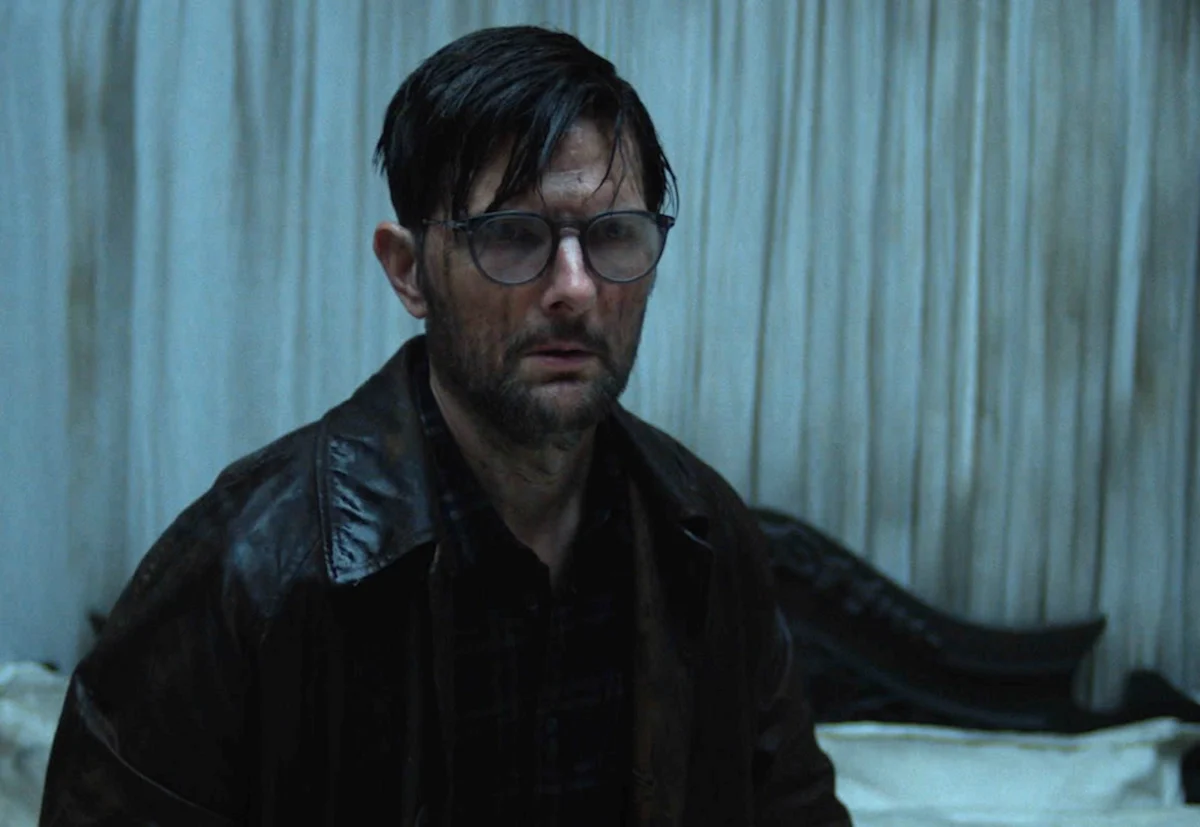
The narrative premise of "Hokum" centers on Adam Scott’s portrayal of Ohm Bauman, a critically acclaimed author grappling with the creative paralysis that has stalled the conclusion of his bestselling trilogy. In a classic display of artistic torment, Ohm succumbs to procrastination and alcohol, seeking solace and inspiration at the Bilberry Woods Hotel in Ireland. This remote location holds personal significance, being the site of his parents’ honeymoon. His initial objective is a brief respite from his writing, coupled with the somber task of scattering his parents’ ashes. This introductory phase, efficiently dispatched within the film’s initial eight minutes, serves as a swift prelude to the true unfolding of the plot: the hotel harbors a deeply unsettling secret.
Damian McCarthy, the visionary behind "Hokum," continues to solidify his reputation as a master of atmospheric horror. This marks his third feature film, following the critically lauded "Caveat" and "Oddity." For devotees of his previous works, "Hokum" is poised to be another compelling addition, while simultaneously serving as an accessible gateway for those new to McCarthy’s distinct cinematic universe. His consistent exploration of recurring themes and motifs, woven seamlessly into each narrative, creates a cohesive and immersive world that feels organically developed, eschewing the often-forced connections seen in larger cinematic franchises. Fans of his earlier films will recognize thematic echoes and visual cues, but these elements are masterfully integrated to serve the immediate story, rather than functioning as mere callbacks. Despite the presence of a Hollywood star like Adam Scott and wider distribution through Neon, the film retains the intimate, singular artistic vision that defines McCarthy’s oeuvre.
Adam Scott delivers a performance of remarkable depth as Ohm. While Scott is consistently lauded for his acting prowess, the character of Ohm provides him with an expansive canvas to explore new emotional facets and embark on a genuinely transformative journey. Without divulging specific plot points, McCarthy’s directorial choice for Ohm’s character arc is both inspired and expertly embodied by Scott, making for a compelling and resonant performance.

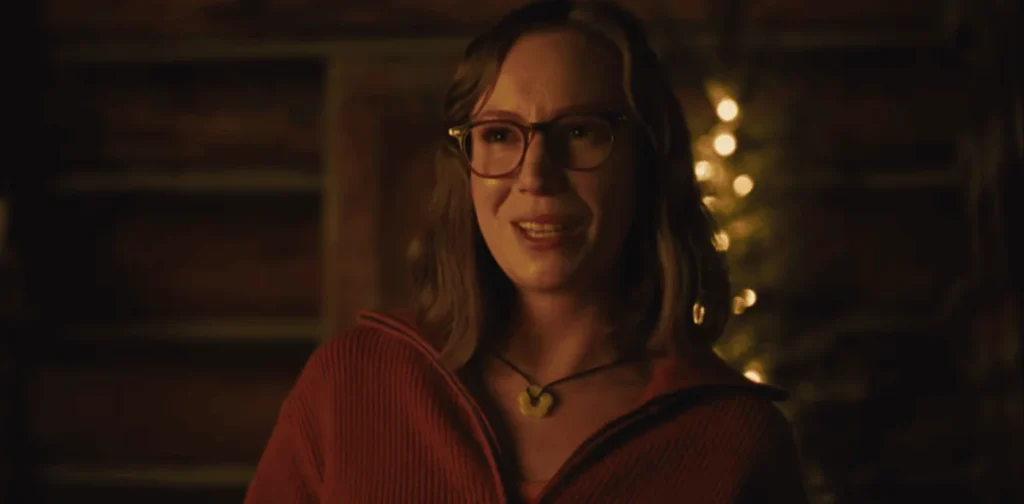
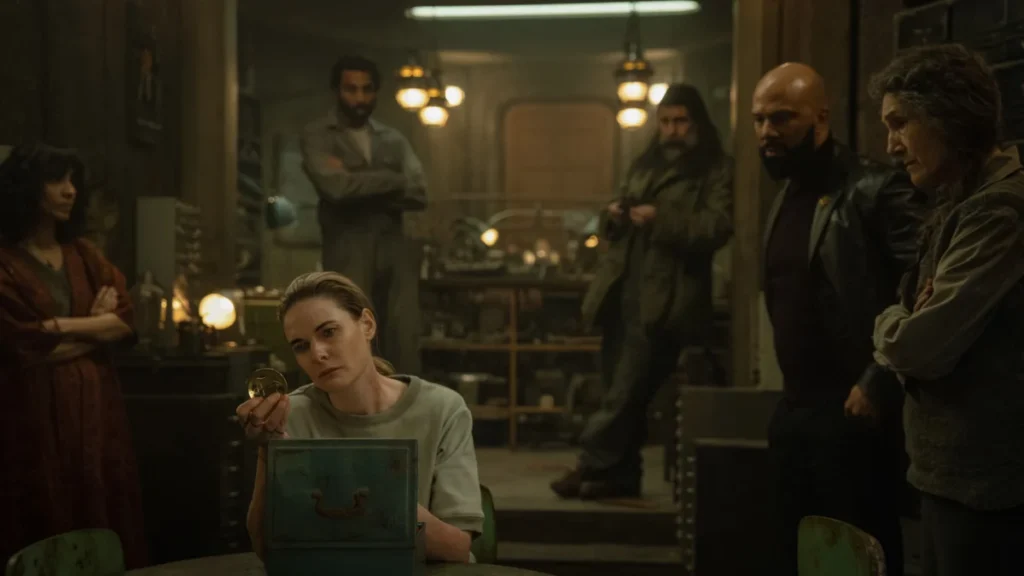
The supporting cast, though small and confined to the hotel’s insular environment, imbues their characters with a palpable sense of humanity. Michael Patric portrays Fergal, a gruff handyman with a peculiar aversion to goats. Peter Coonan plays Mal, the perpetually nervous desk clerk and son-in-law of the hotel’s ancient proprietor, Mr. Cobb, portrayed by Brendan Conroy. Mal’s anxiety is understandable given his familial connection to the hotel’s patriarch. Rounding out the staff are Alby (Will O’Connell), a rather hapless bellhop, and Fiona (Florence Ordesh), the bartender. The ensemble is further augmented by Jerry (David Wilmot), a reclusive local who resides in a van on the fringes of the forest. While each character is afforded moments to shine, the narrative firmly remains Ohm’s journey.
Atmospheric Foundation: Crafting the Folk Horror Ambiance
"Hokum" excels in its creation of a perfect folk horror atmosphere. Set in West Cork, Ireland, near the remnants of the country’s temperate rainforest, the film’s setting evokes a sense of isolation and ancient mystery. This locale is reminiscent of, yet distinctly superior to, the setting in "The Watchers," a film that, despite the commendable presence of Olwen Fouéré, struggled to fully realize its folk horror potential. "Hokum," in contrast, achieves this with remarkable success.
The Bilberry Woods Hotel, brought to life by Production Designer Til Frohlich, is an exceptional horror setting. From the exterior, it appears as a sprawling, rambling structure nestled within the woods. Internally, its décor feels subtly worn, hinting at a faded grandeur that belies a deeper unease. The longer one observes, the more it feels as though unseen entities are lurking in the shadows.
Director of Photography Colm Hogan masterfully manipulates light and shadow, creating an oppressive atmosphere. The shadows in "Hokum" possess a tangible menace, seeming to seethe with unspoken threats. The interplay of single lamps and flickering torches creates small, ephemeral pockets of light that are often more terrifying than the surrounding darkness, amplifying the sense of vulnerability. The film emphasizes the profound isolation of the hotel: as dusk falls, the surrounding forest becomes an impenetrable blackness, devoid of any other signs of civilization. This stark reality, where a solitary night spent at the hotel truly means being utterly alone, is a crucial element of the film’s terror.

Editor Brian Philip Davis deserves significant praise for the film’s pacing and the masterful calibration of its scares. "Hokum" is a concise, tightly edited film that utilizes well-timed jump scares to great effect. These moments of startling terror are not gratuitous; they serve a distinct narrative purpose, building tension and amplifying the overall sense of dread. Joseph Bishara’s evocative score further enhances this atmosphere, creating a pervasive sense of unease that has the potential to become a go-to soundtrack for writers seeking inspiration in the macabre.
Echoes of the Past: McCarthy’s Recurring Motifs
Light Spoilers Ahead
For aficionados of McCarthy’s prior films, "Caveat" and "Oddity," the return of resonant objects will be a welcome, and unsettling, discovery. "Hokum" prominently features a desk bell, a crossbow, ropes and chains, disturbing rabbit imagery, and the familiar "See/Hear/Speak No Evil" motif. A particularly intriguing element for long-time fans is the presence of a book purportedly authored by a "D. Odello," a subtle nod to the universe McCarthy has been meticulously constructing. As the narrative unfolds, these objects, much like in his previous works, acquire increasing symbolic weight and significance.
McCarthy also revisits a central theme from his earlier films, exploring it in a new and profoundly horrifying manner. To elaborate further would delve into spoiler territory, but the thematic continuity within his directorial output is a notable aspect of his artistry.
Influences and Homages: A Tapestry of Horror
"Hokum" masterfully employs atmosphere, shadow, and subtle sound design over explicit gore or violence. The Bilberry Woods Hotel itself serves as an homage to classic haunted house narratives, drawing parallels with Shirley Jackson’s "The Haunting of Hill House," Jack Clayton’s "The Innocents," and Dorothy McArdle’s seminal Irish gothic novel, "The Uninvited." The very premise of a writer trapped in a hotel with a dark secret inevitably conjures comparisons to Stephen King’s "The Shining" and John Cusack’s "1408." Furthermore, Ohm Bauman’s status as a bestselling author of a book series reminiscent of Stephen King’s "The Dark Tower" series adds another layer to this King-esque resonance. However, "Hokum" engages in a subtle dialogue with these influences, never allowing them to overpower McCarthy’s unique storytelling. The allusions are nuanced, enriching the narrative without becoming derivative.

The film showcases a wealth of exquisite detail, with two specific elements eliciting particular admiration, though their revelation would detract from the intended viewing experience. These intricate touches contribute significantly to the film’s overall impact and suggest a deeper layer of thematic exploration.
McCarthy astutely avoids leaning into Irish kitsch. While the hotel itself, with its ostentatious Halloween party and garish carved turnips, caters to a certain tourist aesthetic, the film’s core remains grounded in a more authentic portrayal of its setting. Ohm, the American outsider, is thrust into this world, with only a fleeting understanding of local customs and the meaning of "craic." He encounters local traditions, folklore, and even the potent spirit of poitín, with little explanation offered, highlighting his dislocated perspective.
The brief inclusion of Ogham script adds an authentic touch that resonates with the film’s deeper exploration of Irish heritage and ancient practices. The celebration of poitín, a potent Irish spirit, further grounds the film in its cultural milieu, evoking a sense of nostalgic regret for those who may have passed up an opportunity to experience it firsthand.
Echoing themes from his previous work, "Hokum" delves into the complexities of guilt, the arduous path to forgiveness, and the concept of purgatorial in-between spaces. In this instance, the hotel itself becomes an intensely claustrophobic purgatorial realm. Once the layout of the main hotel suite is understood, the impossibility of escape becomes starkly apparent, reminiscent of the psychological trap in "1408."
The film’s title, "Hokum," is particularly insightful. A recurring element in McCarthy’s filmography is the skeptical outsider who dismisses folklore and superstition. In "Hokum," this trope is amplified by making the protagonist an American author who profits from horror narratives. Ohm views Irish culture from an external perspective, believing he understands the mechanics of a spooky story, even as he finds himself ensnared within one. However, his intellectual detachment crumbles when faced with the possibility that the "hokum" he dismisses might be disturbingly real.

The Irish Connection: A Legacy of Haunting Tales
The fertile ground of Irish horror, as discussed previously, can be attributed to a confluence of historical trauma, a resilient national identity, and a rich cultural heritage steeped in storytelling, song, and literature. These elements provide a deep wellspring for exploring themes of ghosts, curses, and the supernatural. McCarthy’s previous films, featuring antagonists like landlords and English figures, and Aislinn Clarke’s works focusing on the trauma of Magdalene Laundries and intergenerational suffering, exemplify this trend. Paul Duane’s "All You Need Is Death," which tackles the desperation of immigrant youths exploiting "authenticity" for survival, further illustrates the nuanced social commentary embedded within Irish horror.
What distinguishes many of these films, including "Hokum," is their refusal to reduce complex characters to simple psychological pathologies or societal grievances. While societal issues and personal histories often contribute to the darkness, these films allow for ambiguity, mystery, and the uncanny. The notion that "monsters just ARE" is a powerful one, and sometimes, what appears monstrous to human eyes can possess a different, perhaps even beautiful, essence. Whether the supernatural elements are literally "real" or not is secondary to the efficacy of the narrative. "Hokum" embraces this ambiguity, offering a story that, while prompting questions, ultimately delivers a profoundly satisfying and terrifying experience, solidifying its position as one of the year’s most compelling horror films.