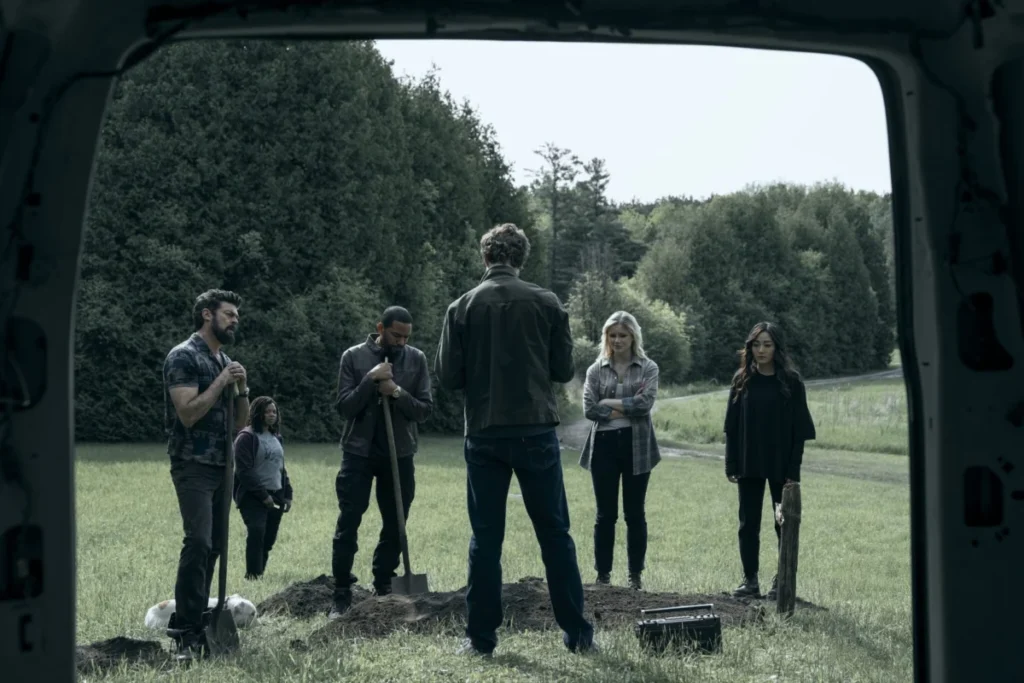
The enduring allure of zombie fiction often hinges on the chilling depiction of the undead as mindless, primal forces. In the vast majority of these narratives, a zombie is a creature stripped of its former humanity, driven solely by an insatiable hunger for the living. This stark dichotomy between the living and the undead forms a core element of horror, playing on the fear of losing one’s identity and the terror of seeing a loved one transformed into a soulless monster. However, a compelling counter-narrative has emerged within the genre, one that deliberately challenges this convention by seeking to imbue zombies with vestiges of their former selves. These stories explore the unsettling possibility of the undead retaining fragments of consciousness, memory, and even emotion, offering a more nuanced and often more poignant perspective on the apocalypse. This exploration delves into five prominent examples from literature, film, and television that have charted this different path, demonstrating that the line between human and zombie can be far more blurred than typically portrayed.
George A. Romero’s Enduring Legacy: Day of the Dead (1985)
George A. Romero, a foundational figure in modern zombie lore, presented a complex exploration of this theme in his 1985 masterpiece, Day of the Dead. Set seven years after the initial outbreak that decimated the global population, this third installment in his Dead series (though watchable as a standalone narrative) plunges viewers into a world where humanity’s survival is confined to an underground military bunker in Florida. The film starkly contrasts the desperate measures of military survivors with the ethically ambiguous scientific endeavors aimed at understanding and potentially controlling the zombie plague.
Within this claustrophobic setting, two primary scientific approaches emerge. Dr. Sarah Bowman (Lori Cardille) champions the pursuit of a cure, representing a hopeful, albeit increasingly desperate, scientific front. Conversely, Dr. Matthew Logan (Richard Liberty), derisively nicknamed "Frankenstein" for his ethically questionable experiments, focuses on domesticating the undead. Logan’s most significant, and arguably most sympathetic, subject is a zombie known as Bub (Sherman Howard). Through Logan’s cruel ministrations, Bub displays remarkable cognitive development for an undead being. He learns to obey commands, recognizes his former tormentors, and even exhibits signs of rudimentary emotional responses, such as recognizing a familiar object from his past life.
While Bub’s development is undeniably a product of exploitation by the living, his treatment and his glimpses of preserved personality evoke a complex emotional response from the audience. His cannibalistic urges are undeniable, yet his interactions, particularly his growing awareness and eventual defiance against his abusers, position him as a tragic figure. By the film’s climax, Bub’s actions, driven by a twisted sense of loyalty and retribution, inadvertently position him as a heroic, or at least an anti-heroic, figure in the narrative, underscoring Romero’s persistent exploration of the moral grey areas in a world consumed by the undead. The film’s setting, a stark representation of humanity’s retreat from the world, amplifies the psychological toll of survival and the desperate search for meaning, even among those who have lost their very essence. The scientific debates within the bunker mirror broader societal discussions about how to approach insurmountable crises – eradication versus understanding and integration, however flawed.
A Romance Against the Odds: Warm Bodies (2010)
Isaac Marion’s novel Warm Bodies, published in 2010 and later adapted into a successful film, offers a decidedly more romantic and introspective take on the humanized zombie. The story is narrated from the perspective of "R," a zombie who, while still retaining many of the hallmarks of the undead – decaying flesh, a limited vocabulary consisting primarily of guttural sounds – possesses a degree of self-awareness and memory retention that sets him apart. Unlike his shambling brethren, who are solely driven by instinctual hunger, R exhibits curiosity and a lingering sense of longing. His name itself is a fragmented echo of his lost identity, a poignant symbol of his fragmented consciousness.

The narrative takes a significant turn when R encounters Julie, a living human woman. In a pivotal moment that defies zombie protocol, R saves Julie from his fellow undead, an act that marks a profound departure from his programmed existence. This encounter sparks a nascent connection, a slow-burning romance that blossoms amidst the desolate landscape of the apocalypse. Marion skillfully navigates the potential for saccharine sentimentality by infusing the story with wry humor and philosophical musings. R’s internal monologues offer a unique lens through which to examine themes of love, connection, and the search for meaning in a world devoid of it.
The "cure" in Warm Bodies is not a scientific vaccine but rather the transformative power of human connection. As R’s bond with Julie deepens, his physical and mental state begins to revert, mirroring a broader societal phenomenon where the infected start to regain their humanity. This concept offers a powerful metaphor for healing and redemption, suggesting that even in the face of utter devastation, the capacity for love and empathy can be a potent force for change. The novel’s success highlights a growing audience appetite for zombie narratives that move beyond pure horror to explore deeper emotional and philosophical questions about what it truly means to be alive. The backdrop of a world struggling with societal collapse and the breakdown of normal human interaction further emphasizes the importance of genuine connection, even between the most unlikely of beings.
The Promise of a New Generation: The Girl With All the Gifts (2014)
M.R. Carey’s 2014 novel, The Girl With All the Gifts, presents a compelling and chilling exploration of a hybrid state between humanity and the infected. The story centers on Melanie, a ten-year-old girl with a remarkable intellect and an insatiable thirst for knowledge, who is also a "hungry" – a term used for those infected with the cordyceps fungus, which has now jumped from ants to humans. Melanie represents a unique evolutionary stage, a being caught between the primal urge to consume human flesh and the retention of full cognitive control, provided she doesn’t encounter the scent of living humans.
The narrative unfolds in a post-apocalyptic Britain where the remnants of the government are dedicated to studying children like Melanie. The hope is that by understanding this "halfway" state, a cure or a method of co-existence can be developed. However, when the research facility where Melanie is housed is attacked by a horde of feral hungries, she is thrust into the outside world, accompanied by a small group of deeply apprehensive adults, including her teacher, Miss Justineau, and a military escort.
What makes Melanie such a captivating character is her undeniable humanity coexisting with her dangerous nature. She is a bright, curious child who craves love and understanding, yet she possesses the inherent predatory instinct of the infected. Carey masterfully balances thrilling action sequences with Melanie’s internal struggles and her developing relationships with the adults. Her capacity for empathy, her desire to learn, and her moments of vulnerability make her far more than a monstrous entity. She is a complex individual grappling with her dual nature, forcing the surviving humans to confront their own prejudices and fears. The novel’s exploration of the fungus’s lifecycle and its impact on human evolution provides a scientific grounding for the narrative, while Melanie’s character arc delves into profound ethical questions about who deserves compassion and the definition of humanity itself. The bleak, overgrown landscapes of the UK serve as a stark reminder of nature’s reclamation and the fragility of human civilization.
Navigating the Threshold of Infection: Happiness (2021)
The 2021 South Korean television series Happiness offers a unique perspective on the zombie outbreak by focusing on the transitional phase of infection. The drama begins with a seemingly typical K-drama setup: Sae-bom, a resourceful woman, secures an apartment in a prestigious high-rise by entering into a marriage of convenience with her long-time friend, Yi-hyun. Their idyllic settling-in period is shattered when a new, aggressive virus begins to spread throughout the building, forcing residents into lockdown.

Unlike many zombie narratives where a bite results in immediate, irreversible zombification, the virus in Happiness induces a staggered transformation. Infected individuals experience periods where they oscillate between their normal selves and a state of extreme, violent hunger. This creates a complex social dynamic within the besieged building. Residents grapple with the ethical dilemmas of how to treat those who are infected but still retain some semblance of their former selves, leading to tense debates and fractured alliances. The show masterfully blends elements of suspenseful horror with romantic yearning, as Sae-bom and Yi-hyun navigate the escalating crisis while their own feelings for each other begin to surface.
The show’s strength lies in its depiction of the psychological toll of living alongside the infected and the breakdown of social order under extreme pressure. The apartment building becomes a microcosm of society, highlighting themes of prejudice, fear, and the struggle for survival. The nuanced portrayal of the virus, allowing for moments of lucidity and humanity even in the infected, complicates the traditional hero-villain dynamic and forces viewers to question the very definition of "monster." The series’ exploration of a confined environment and the interdependencies it fosters among survivors provides a potent commentary on community and resilience in the face of overwhelming adversity. The sleek, modern architecture of the apartment building stands in stark contrast to the primal chaos erupting within its walls, amplifying the sense of unease.
A Glimmer of Hope in the Aftermath: 28 Years Later: The Bone Temple (2026)
While details surrounding the specific plot of 28 Years Later: The Bone Temple are subject to spoiler warnings, the film, as a direct sequel to 28 Years Later (2025), continues to explore the aftermath of the devastating "Rage" virus that swept across the United Kingdom. Set 28 years after the initial outbreak, the film depicts a society struggling under strict quarantine measures, with survivors largely left to fend for themselves in a world still grappling with the feral infected.
The critical element that humanizes the infected in The Bone Temple, as revealed in spoiler sections, lies in the approach taken by Dr. Ian Kelson (Ralph Fiennes). While the prevailing instinct among survivors is to eradicate the infected on sight, Dr. Kelson adopts a more humane strategy, opting to sedate them rather than kill them. This unconventional approach allows him to establish a tentative rapport with a particularly formidable Alpha infected, whom he names Samson (Chi Lewis-Parry). The narrative culminates in a profoundly impactful scene where, under the influence of morphine, Samson utters a single word, shattering the assumption of complete mental annihilation in the infected. This moment serves as irrefutable proof that Kelson’s compassion was not misplaced, providing him with the impetus to pursue a cure. The film’s climax, depicting Samson experiencing a moment of profound clarity amidst the wreckage, offers a powerful, albeit fleeting, glimpse into the enduring spark of humanity within the infected.
The uncertain future of a potential third film in the series underscores the challenges and rewards of exploring such complex themes. However, Dr. Kelson’s dedication to finding humanity within the undead highlights the potential for scientific inquiry and empathy to yield unexpected breakthroughs, even in the most dire circumstances. The film’s narrative arc, focusing on Kelson’s journey and his interactions with Samson, serves as a testament to the idea that understanding and compassion can be powerful forces, even when confronted with seemingly insurmountable biological and societal collapse. The desolate, post-apocalyptic British landscape provides a stark and compelling backdrop for this exploration of resilience and the enduring search for hope.
The persistent reimagining of the zombie archetype across various media reflects a deeper cultural fascination with themes of identity, loss, and redemption. By moving beyond the simplistic portrayal of mindless monsters, these narratives invite audiences to consider the ethical complexities of survival, the enduring power of human connection, and the possibility of finding humanity even in the most unexpected and terrifying of circumstances. The continued exploration of these nuanced portrayals suggests that the zombie genre, far from being exhausted, remains a fertile ground for examining the very essence of what it means to be human.