Filmmaker David Lowery’s previous work, particularly The Green Knight, resonated deeply with audiences, establishing a unique cinematic space that few other films have managed to occupy. While Lowery has a slate of upcoming projects, the arrival of Mother Mary on the horizon has generated significant anticipation for those seeking a similar artistic sensibility. Mother Mary shares a dreamlike quality with Lowery’s earlier acclaimed film, employing a narrative rich with metaphor, intimate dialogue, and a focus on duets between characters. However, Mother Mary distinguishes itself by offering a profound experience that may prove particularly resonant for a significant portion of the global population: a cinematic world where the thoughts, opinions, and presence of men are conspicuously absent, creating an unprecedented sense of sanctuary.
This deliberate exclusion, even from a film written and directed by a man, imbues Mother Mary with a weight of psychological relief for viewers unaccustomed to seeing their perspectives centered. The film largely eschews male characters, their voices, and their influence, allowing for an exploration of womanhood that is not dictated by external patriarchal frameworks or predefined notions of what it means to be female.
The Narrative Unfolding: A Superstar’s Crisis and Rekindled Connection
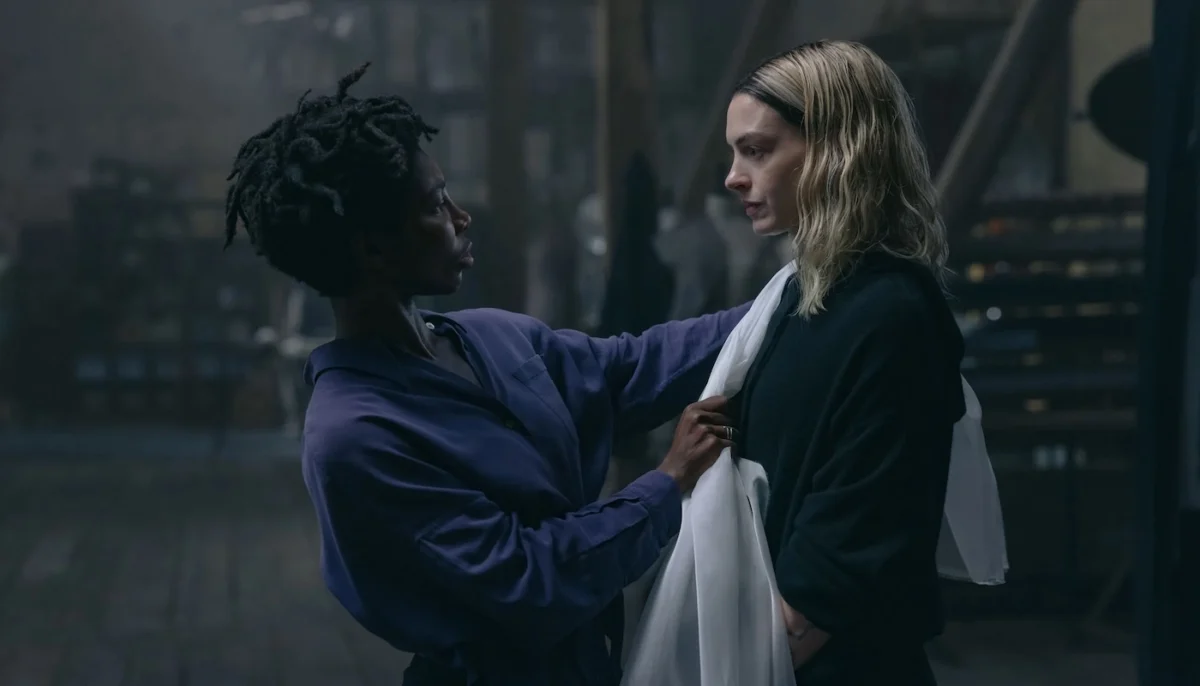
The central narrative of Mother Mary revolves around the titular character, portrayed by Anne Hathaway. Mother Mary is depicted as a pop superstar of the highest caliber, yet she finds herself grappling with a profound crisis of personhood. As she prepares for her next major tour, a crucial detail—the fit of a designer dress—triggers a deeper existential unease. Eschewing her entourage, producers, and handlers, she seeks out Sam Anselm, a fashion designer and a former close friend with whom she experienced a significant falling out. Mary implores Sam to create a new dress for her. This request becomes the catalyst for the two women to confront the unresolved issues in their past relationship. Through their shared process of reconciliation, they discover they are both haunted by a persistent "red specter."
The creation of Mother Mary’s pop star persona within the film was a meticulously crafted endeavor. The creative team reportedly engaged in extensive discussions about inspirations, citing artists such as a future iteration of Taylor Swift, Beyoncé, and drawing from the songwriting prowess of Jack Antonoff, Charli XCX, and FKA Twigs to craft the musical pieces Hathaway would perform. While the sheer effort involved in constructing this entire pop star oeuvre is undeniably impressive, serving as a backdrop that largely functions as set dressing, the film’s narrative thrust does not hinge on the authenticity of this stardom. Instead, the film uses this glamorous facade to explore deeper themes.
Art as Spiritual Experience: The Deification and Sacrifice of Stardom
The moments in Mother Mary where the protagonist’s rise and fall as a pop star come into focus offer a narrative relatable to anyone who has experienced art as a form of spiritual or religious experience. The film delves into what happens to the individuals who embody such powerful artistic archetypes. The name "Mother Mary" is not incidental; it functions as an invocation, and the film presents a heightened, high-definition exploration of the full spectrum of this experience. Audiences witness revelation, catharsis, renewal, ascension, sacrifice, deification, and suffering—all hallmarks of the intense journey of a global icon.
The film acutely highlights how the apex of pop stardom operates as a complex machine, fueled by artists who pour their bodies, voices, sweat, and struggles into a singular vision, often for one individual to receive all the credit. This resonates with the enduring appeal of auteur theory, the human inclination to gravitate toward a singular, magnificent figure whose "vision" and "personal genius" illuminate the darkness.
Beyond the Spectacle: The Intimate Struggle of Two Women
However, beyond the glittering halos, stadiums, and adoring fans, Mother Mary centers on the raw, intimate story of two women still reeling from the loss of each other. The script masterfully maintains a deliberate vagueness regarding the specific events that led to their past estrillamiento, recognizing that specificity is unnecessary. What matters is their shared desire for resolution. The film portrays their complex dynamic, with Sam arguably maintaining a subtle control throughout, as the party who feels more wronged and has been patiently awaiting an opportunity for closure.
The "ghost" that Mother Mary and Sam perceive may not be a supernatural entity in the conventional sense. The specter, consistently identified as female by both characters, is a manifestation of Sam’s sorrow and abandonment. The imagery surrounding its formation is striking, suggesting it is born of rage and loneliness, perhaps even representing the miscarried potential of their fractured relationship. The film leaves these interpretations open-ended, allowing for individual viewer engagement.
Divine Feminine Imagery: A Subversion of Traditional Tropes
Mother Mary is replete with divine feminine imagery that steadfastly avoids succumbing to its usual "opposite" – the masculine. The creative team appears to have embraced this vision without reservation, filling the frame with evocative symbols. Viewers encounter vaginal wounds, fabric formations resembling clitoral folds with pearls at their center, menstrual blood, and intimate physical touch. Moments that might typically carry phallic connotations are deliberately recontextualized. For instance, during a séance, Sam utilizes her artist’s tools as symbolic objects, her needle transformed into a sword of protection. The film suggests that penetration, a recurring theme, is never achieved through phallic means, implicitly positioning queer intimacy as the primary mode of sexual expression within this reality.
While some viewers might express disappointment at the absence of overt romantic declarations or physical intimacy like kissing between the two women, the film’s queer essence is undeniable. It is intrinsically about women loving women, hating women, and the profound inability to exist without them. This is a direct consequence of the film’s constructed reality where men are conspicuously absent.
The Experience of Being the Default: A Nonbinary Perspective
The film’s sustained focus on female experience raises a compelling question: is this what it feels like to be the default? Even from a nonbinary perspective, the immersive experience of Mother Mary offers a profound sense of being centered and actualized. The film constructs a world where girlhood, women’s art, and the power of female and AFAB (assigned female at birth) relationships are paramount. It envisions a reality where all girls engage in seances, where the loss of these vital connections—whether platonic, romantic, or somewhere in between—can fundamentally shatter individuals. For the reviewer, this immersion in a film that so profoundly understood and exclusively focused on this aspect of existence was an utterly alien and impactful experience.
This perspective does not diminish the significant work being done by women and gender-nonconforming creators in narratives where men are present and integral. However, it highlights the agonizing rarity of art that does not dedicate substantial time, focus, and space—whether overt or subtle—to dissecting the constant stress created by living within and under patriarchal systems. Mother Mary offers a much-needed respite, a psychological relief that is not to be underestimated.
Pacing, Performance, and the Unquestionable Artistry
While the film exhibits minor pacing issues and deliberately sidesteps certain real-world complexities of relationships, these criticisms feel secondary when weighed against the film’s overwhelming strengths. The characters of Mother Mary and Sam Anselm are rendered beatific in every frame, radiating emotion whether in tears, joy, or playful performance. Their sartorial choices and every design element are impeccably curated. The film offers the privilege of watching two impeccable performers engage in a prolonged, intense interplay, consistently raising the emotional stakes. Michaela Coel’s performance is described as a mesmerizing force, capable of elevating even the most abstract dialogue into something resonant. For those who find Anne Hathaway’s earnestness or "theater kid energy" challenging, the reviewer sincerely suggests moving past such reservations to appreciate her profound contribution to the film.
Mother Mary invites viewers to "kneel at the altar" of its unique cinematic vision and embrace its profound exploration of female existence, art, and connection. The film stands as a testament to the power of focused narrative and the profound psychological impact of creating spaces where specific experiences are not just acknowledged but are the very fabric of reality.