Adam Scott, the acclaimed actor whose career spans critically lauded television series and significant film roles, recently offered a candid glimpse into his experiences on set, the intricacies of character portrayal, and his enduring passions. In a series of interviews, Scott delved into the meticulous creation of his unsettlingly subtle performance in the Apple TV+ dystopian thriller Severance, his initial anxieties on the monumental set of Martin Scorsese’s The Aviator, his reflections on playing "nervous" characters, and his deep appreciation for the iconic band R.E.M.
The Art of the Elevator Shift in "Severance"
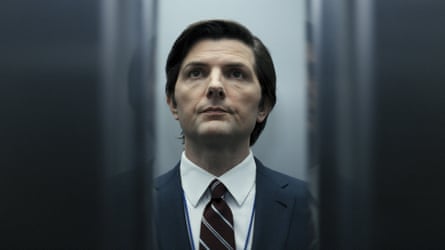
One of the most discussed aspects of Severance is the stark, almost jarring, transformation characters undergo when transitioning between their work and personal lives, particularly within the show’s enigmatic elevator sequences. Scott elaborated on the deliberate and painstaking process of crafting these moments for his character, Mark Scout.
"We worked on that for a long time, trying to figure out what specifically happens in the elevator," Scott revealed. "We must have tried 100 times before we landed on it." The breakthrough, he explained, came from director Ben Stiller’s suggestion to incorporate a subtle, almost imperceptible, "fluttering of my eyelids" as Mark’s consciousness shifts between his "innie" (work persona) and "outie" (personal life persona). This minute physical cue, born from extensive experimentation, became a crucial visual shorthand for the audience, conveying the profound psychological disjunction at the heart of the series. The show, which premiered in February 2022, quickly garnered widespread critical acclaim for its unique premise, compelling narrative, and Scott’s central performance, leading to its renewal for a second season. The conceptual depth of Severance has sparked considerable discussion among viewers and critics alike, with many dissecting the philosophical implications of a society that bifurcates its citizens’ memories and experiences.

Navigating the Grandeur of "The Aviator"
Scott’s foray into the world of historical drama with Martin Scorsese’s The Aviator (2004) presented a different kind of challenge: the sheer scale and star power of the production. He admitted to initial apprehension. "I was pretty freaked out at first," Scott stated. However, this anxiety soon dissipated upon immersing himself in the working environment. "But once you’re there, you realize these are just regular people who happen to be actors figuring out a scene. Everyone was extremely kind and generous to me and made me feel comfortable straight away."
The experience also provided Scott with invaluable insight into Scorsese’s directorial prowess. "It also became clear very quickly how Martin Scorsese gets such great performances," he observed. "He’s incredibly collaborative and encourages you to bring yourself to the proceedings and improvise." Scott recounted a specific scene filmed on an elaborate recreation of the Cocoanut Grove nightclub, featuring Leonardo DiCaprio, Cate Blanchett, and Jude Law. He described an atmosphere of intense focus and mutual respect. "Everyone was focused on making the best possible movie. But within that context, it was also loose, collaborative and great fun." The Aviator, a biographical drama about the eccentric aviation pioneer Howard Hughes, was a critical and commercial success, earning 11 Academy Award nominations and winning five, further cementing Scorsese’s reputation as a master filmmaker.
The "Nervous Guy" Persona and Personal Growth
Throughout his career, Scott has often been cast in roles that embody a certain anxious or neurotic disposition. When asked if this persona extended to his real life, he acknowledged a historical tendency. "When I was starting out, I was cast as nervous characters, because I was nervous in all my auditions," he explained. "So the only roles I would get were ones where I was a nervous person. It’s kind of a default setting for me." While admitting he might still be perceived as the "go-to nervous guy," Scott indicated a conscious effort to evolve. "But I’ve worked on it." This self-awareness suggests a thoughtful approach to his craft and personal development, moving beyond initial casting types.
Finding Home in Ireland for "Hokum"
Scott’s recent film, Hokum, saw him filming in Ireland, a land with which he shares ancestral ties. He spoke fondly of his experience in Skibbereen, West Cork, a region known for its scenic beauty and warm hospitality. "It’s difficult not to feel at home when you’re in Skibbereen in west Cork," he enthused. He highlighted his stay at the Liss Ard estate, describing it as "one of the most beautiful places I’ve ever been," and praised the local populace: "And the people are the loveliest. No matter who you are, you’re going to feel at home there." The film, which delves into themes of grief and identity, allowed Scott to connect with his heritage in a profound way, blending professional commitments with personal discovery.
A Resemblance to a Hollywood Icon
The question of whether he’s often told he resembles Tom Cruise is a recurring one for Scott. He addressed it with characteristic good humor. "I do get it every once in a while," he confirmed. "I mean, it’s a huge compliment. I love Tom Cruise, I love his work and I think he looks spectacular." He added with a smile, "There’s nothing wrong with being told that you resemble Tom Cruise. Maybe we could play brothers." This lighthearted response reflects Scott’s grounded perspective on celebrity and public perception.
The Enduring Enigma of R.E.M.
Scott’s deep affection for the band R.E.M. resonated with fans, particularly his admiration for their track "Exhuming McCarthy." He attempted to articulate the elusive quality that makes the band so compelling. "When I became aware of R.E.M., there was still a lot of mystery around them," he recalled. "They weren’t in their own music videos. Even if you bought one of their albums, it was hard to find a photo of them and you couldn’t understand what Michael Stipe was saying. The music was weird. The song structures were different."
However, this unconventionality was precisely what drew him in. "But at the same time, it was pop music – hooky, and the songwriting was bulletproof," he continued. "It had just enough mystery and weirdness while still scratching that pop itch." He also acknowledged the band’s undeniable cool factor: "Their clothes were cool, they had cool hair, so when I was a teenager, I immediately connected with them." Scott’s assessment of R.E.M. as "the best American band ever" underscores their profound impact on his formative years and his enduring appreciation for their unique artistic vision.
Calzones, Pizza Delivery, and the "Parks and Rec" Legacy
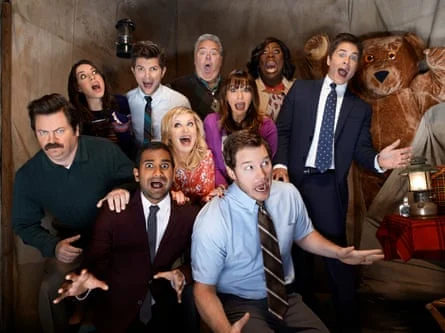
The beloved sitcom Parks and Recreation, in which Scott played the earnest councilman Ben Wyatt, left an indelible mark on popular culture, particularly through its characters’ quirks and obsessions. The show’s penchant for calzones led to a fan question about his ideal ingredients. Scott playfully corrected the premise, noting that mozzarella is indeed cheese, before offering his preferences: "You can’t go wrong with pepperoni." He then shared a nostalgic anecdote from his youth, recalling a summer job delivering pizzas in the early 1990s. "I delivered pizzas for a summer in the early 90s and calzones were quite popular with stoners, because it’s like a folded portable pizza – a pizza sandwich," he reminisced. "I would deliver three calzones, two pints of Ben & Jerry’s and a Cheech & Chong movie, because we would rent videotapes as well." This vivid memory encapsulates a specific cultural moment and the communal joy associated with simple pleasures.
Regarding the possibility of a Parks and Recreation reunion, Scott expressed skepticism, deferring to the show’s creators, Amy Poehler and Mike Schur. "I doubt it, but that’s above my pay grade," he stated. He fondly described the show as "a dream job" and emphasized that the cast never took their experience for granted. "We all loved being there and knew how lucky we were." He recalled the show’s precarious position on the cusp of cancellation during its run, contrasting it with its later surge in popularity. "People loved it, but it wasn’t watched by enormous numbers at the time. It’s certainly grown in popularity since then, and I’m happy it has." The enduring appeal of Parks and Recreation is a testament to its heartwarming characters and optimistic outlook, a sentiment Scott clearly shares.
An Unexpected Audience with Pope Leo XIV
In a particularly surprising anecdote, Scott recounted an encounter with Pope Leo XIV. Despite not being Catholic and identifying as "closer to agnostic," Scott expressed fascination with his visit to the Vatican and admiration for the Pope’s stances. "He’s not afraid of the Trump administration and doesn’t stand for any of their bullshit," Scott stated, highlighting the Pope’s perceived courage and integrity. He admitted to being unsure of the exact reason for his invitation but was eager to accept. The Pope, he explained, spoke about the crucial role of movies in fostering communal experiences, a sentiment Scott found resonant in an increasingly fragmented world. "He was really encouraging us, as a creative community, to keep making movies, to keep putting movies in cinemas, and encouraging exhibitors to keep their movie theatres open." This exchange underscores the shared value placed on cinematic arts by figures from diverse spheres.
The Evolving Landscape of Recognition Post-"Severance"
The profound impact of Severance has undeniably elevated Scott’s public profile. He observed that post-show, he’s approached by a different demographic of fans. "Different people come up and talk to me, because people are really engaged with the show intellectually," he noted. "It certainly has a very passionate fanbase." Despite this increased recognition, Scott confessed that his inherent nervousness persists. "I’m hopefully less nervous than I used to be. But if you ever see me on a talk show, just know that, five seconds before I walk out, I’m considering running out of the building." This candid admission reveals the persistent internal struggle with public performance, even for a seasoned actor. The success of Severance has not only provided a platform for Scott’s nuanced performances but has also sparked vital conversations about work-life balance, corporate culture, and the very nature of consciousness, solidifying his position as a significant voice in contemporary cinema and television.