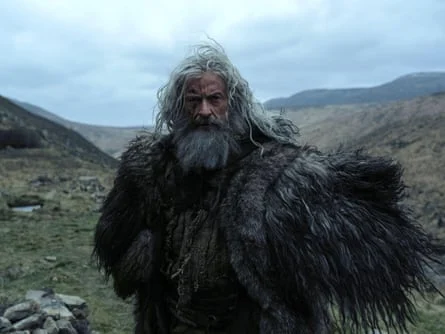
Jim Ghedi, a British folk musician known for his brooding and apocalyptic sound, has landed a significant role in Hollywood, composing the score for the upcoming A24 film "The Death of Robin Hood," starring Hugh Jackman and Jodie Comer. The unexpected opportunity arose through a direct message on Instagram, a testament to the power of digital platforms in connecting artists across disciplines and continents. Ghedi, whose critically acclaimed 2023 album "Wasteland" garnered attention for its unflinching exploration of societal decay, found himself unexpectedly thrust into the world of film scoring, a domain far removed from his previous professional experiences.
An Unconventional Path to the Silver Screen
The genesis of this remarkable collaboration traces back to a seemingly ordinary evening for Ghedi. While sharing a chicken dinner with his mother in Sheffield, he noticed a peculiar notification on his phone: a director had begun following him on Instagram. The director in question was Michael Sarnoski, known for his work on the acclaimed film "Pig." Intrigued by Sarnoski’s profile, which featured pictures with Hollywood heavyweight Nicolas Cage, Ghedi made a lighthearted remark to his mother, expressing a whimsical notion of offering to score Sarnoski’s next film. As if orchestrated by fate, Sarnoski then initiated contact, directly proposing that Ghedi undertake the scoring duties for his forthcoming project.
"This director started following me on Instagram," Ghedi recalled in an interview. "And there’s pictures of him with Nicolas Cage. As a joke, I said to my mam: ‘I might message him and say, let me do your next film score.’ As I said it, he messaged me, saying: ‘I want you to do my next film score.’"
The film, "The Death of Robin Hood," is a significant production from A24, a studio renowned for its distinctive and critically lauded cinematic output. The prospect of working on such a project, especially for an artist who had primarily operated within the independent music scene, presented a daunting yet exhilarating challenge. Ghedi admitted to a degree of disbelief, anticipating that his relatively low profile might lead to the opportunity dissolving.
"I thought that the film opportunity would all blow away and they’d find out who I am," Ghedi confessed. "Some top producer would put up the red flag." However, Sarnoski’s conviction in Ghedi’s artistic vision, particularly his 2023 album "Wasteland," proved unwavering. The album, released on the small Calder Valley label Basin Rock, was lauded for its "stirring and brooding" atmosphere, offering a potent reflection on societal decay in England. While "Wasteland" marked Ghedi’s most ambitious and successful release to date, it had not propelled him to mainstream recognition, making the film offer all the more extraordinary.
Building Bridges Through Music and Shared Influences
Despite his lack of prior film scoring experience, Ghedi was entrusted with the project. The initial stages of their collaboration were conducted remotely through video calls, during which Ghedi and Sarnoski discovered a profound artistic synergy. A shared appreciation for the legendary British folk-rock band Steeleye Span served as a crucial point of connection, facilitating a natural rapport between the director and the musician. This shared understanding allowed Ghedi to translate his distinct musical sensibilities into a score that he describes as "quite doomy, earthy and dark," yet also possessing elements of "light and orchestrated" complexity.
The creative process involved Ghedi composing both the songs and the instrumental score for "The Death of Robin Hood." While he was invited to Los Angeles to work on the project, Ghedi opted to remain rooted in his hometown of Sheffield, a decision that underscored his grounded approach to his craft. This commitment to his origins, however, did not entirely shield him from the psychological challenges of such a high-profile undertaking.
"There were moments when impostor syndrome was a real thing," Ghedi revealed during an interview conducted in a Sheffield pub. "It’s very rare for someone like me, and where I’m from, to get those kinds of opportunities. You don’t usually get to see that world. But I also had to think: ‘I’m being asked for a reason.’ I held tight to that." This internal dialogue highlights the significant leap Ghedi was making, navigating the often intimidating landscape of mainstream cinema while staying true to his artistic identity.
The Evolution of a Working-Class Folk Artist
Jim Ghedi’s musical journey began at the age of eight when he received his first guitar. By his teenage years, he had developed into a proficient player, though his early musical infatuations were with hip-hop and punk. The lyrical narratives of hip-hop, in particular, resonated deeply with him, offering a mirror to his own experiences.
"Hearing people talk about being raised by a single mum was like, whoa," Ghedi reflected. "Here’s someone artistically talking about something that I’m also experiencing in my life." This early exposure to artists who articulated relatable social and personal themes laid the groundwork for his own songwriting approach, which often grapples with contemporary issues through a personal and allegorical lens.
A pivotal moment in his musical development was the discovery of the influential folk guitarist Bert Jansch. Jansch’s raw and powerful acoustic playing was a revelation for Ghedi, demonstrating that the instrument could be employed with immense force and aggression, deviating from what he perceived as conventionally "pretty" acoustic music. "It was the first time I’d heard someone who played an acoustic guitar and it was not pretty," he stated. "It was really heavy and aggressive. So then I ripped him off for 10 years."

Ghedi perceives a strong continuity between the expressive power of hip-hop and the traditional spirit of folk music. He argues that folk music, historically, has served as a voice for the working class, a role he sees echoed in contemporary genres like hip-hop and grime. This perspective informs his artistic ethos, imbuing his music with a sense of social consciousness and authenticity.
Lyrical Depth and Socio-Political Resonance
Ghedi’s early musical output was primarily instrumental, showcasing his technical prowess on the guitar. However, his immersion in Sheffield’s vibrant DIY scene exposed him to a diverse range of artistic expressions, from noisy avant-garde performances to traditional folk pub sessions. It was within these informal folk gatherings that Ghedi began to find his voice as a vocalist and songwriter.
The fusion of these disparate influences gradually became a hallmark of his music. He began incorporating traditional folk structures and melodies into his compositions, using them as vehicles to explore modern anxieties and societal critiques. His original songs, often imbued with a similar thematic weight, started to lean into more experimental sonic territories, creating a unique and compelling artistic statement.
His latest single, "The Hungry Child," exemplifies this evolution. Ghedi describes the track as a further exploration of his sonic palette, noting, "I’ve gone even further sonically. This one is bigger, doomier, darker, heavier." The song is based on an early 19th-century German poem, later translated into English, which depicts a child’s desperate plea for sustenance and the tragic consequences of being made to wait.
Ghedi’s approach to adapting traditional material is selective; he only engages with pieces that possess a genuine and immediate connection to his own experiences and observations. "The Hungry Child" had been in his possession for years before he felt the time was right to bring it to fruition. "Sometimes, the time has to find you for it to make sense and do it with conviction," he explained. The song’s contemporary relevance, for Ghedi, lies in its resonance with the ongoing struggles of working-class communities who have been repeatedly let down by systemic failures. "I was looking at where I’m from and thinking about working-class people who have repeatedly been let down, and how government failures have allowed starving people to continue to starve."
Class Consciousness in the Contemporary Folk Scene
While Ghedi often employs metaphor and nuance rather than direct political pronouncements, the theme of class is undeniably central to his music and his artistic identity. He acknowledges a past tendency to "assimilate" but has since embraced his background, recognizing its integral role in his creative output.
"When I was younger, I was really naive and I tried to assimilate," he recounted. "But I realised: I need to own where I’m from. I’m not trying to be a spokesperson, but the folk scene is very middle class. The divide and the drop-off is huge, and in some ways, the disparity is worse now than when I started." This observation highlights a perceived chasm within the folk music community, where accessibility and representation for working-class artists remain significant challenges.
Ghedi expresses concern about the economic realities faced by aspiring musicians today. "In the current [economic] climate, I don’t think I would have been able to sustain doing it," he admitted. He emphasizes the importance of not only raising awareness of social issues but also ensuring that working-class voices are authentically represented within artistic material. "It’s important to raise awareness but also for that kind of working-class voice to have a place within the material. It’s become more important to me as I’ve got older – it’s so entwined and ingrained in what I’m doing."
A Future Unmoved by Stardom
Jim Ghedi’s trajectory, from a Sheffield pub circuit to scoring a major Hollywood film, represents a rare and inspiring narrative. Despite the memorable experience of working on "The Death of Robin Hood" and his admiration for the film’s team, Ghedi remains remarkably grounded and resistant to the pressures of playing the industry game.
"As long as I stick to focusing on creativity, nothing else matters," he asserted. "Whether I’m playing to 10 people in a room or 1,000, it’s the same for me." This unwavering dedication to his artistic principles suggests that even with his newfound access to the global film industry, Ghedi’s core commitment to authentic expression and meaningful connection through his music will remain paramount. His story serves as a powerful reminder that artistic integrity and genuine passion can indeed open doors to unexpected and significant opportunities, regardless of one’s background or prior experience. The success of "The Death of Robin Hood" and its score will undoubtedly be closely watched, not only for its cinematic merit but also as a testament to the unconventional but ultimately rewarding path of a working-class artist making his mark on the world stage.