Al Pacino’s career, spanning over five decades, is a testament to his enduring power as a cinematic force. From his early, raw performances to his more seasoned, nuanced portrayals, Pacino has consistently delivered characters that linger in the collective consciousness. This exploration delves into some of his most significant film roles, examining their impact, context, and the artistic choices that define them.
The Evolution of a Legend: Tracing Pacino’s Iconic Performances
Alfredo James "Al" Pacino, born on April 25, 1940, in New York City, emerged as a prominent figure in the New Hollywood era, a period characterized by groundbreaking artistic expression and a departure from traditional studio filmmaking. His early work, particularly in the 1970s, cemented his reputation as an actor capable of profound emotional depth and electrifying intensity.
Early Brilliance and Defining Roles
Dog Day Afternoon (1975): A Masterclass in Raw Emotion
The film that stands as the pinnacle of Pacino’s career, according to many critics and fans alike, is Sidney Lumet’s Dog Day Afternoon (1975). This gripping heist-gone-wrong drama, set against the sweltering backdrop of a New York summer, showcases Pacino in his most visceral and emotionally resonant performance. He portrays Sonny Wortzik, a desperate bank robber whose meticulous plan unravels into chaotic spectacle. The film’s enduring power lies in Pacino’s ability to navigate the complex terrain between heartbreak and farce, portraying Sonny with exposed nerve endings and an almost palpable sense of urgency.
Pacino’s initial hesitation to take on the role, stemming from exhaustion after filming The Godfather Part II, underscores the demanding nature of his craft. However, a conversation with Dustin Hoffman, who was reportedly considered for the part, reignited his interest. This decision proved prescient. Pacino’s performance as Sonny, a man attempting to fund his lover’s gender affirmation surgery, earned him an Oscar nomination. While he ultimately did not win for this role, many argue it was a far more deserving win than his eventual Academy Award for Scent of a Woman (1992).
The film’s impact was immediate, resonating with audiences and critics for its unflinching portrayal of desperation and societal alienation. Pacino’s dynamic range is on full display, from the explosive public declarations of "Attica! Attica!" to the tender, intimate exchanges with his co-conspirator, played by John Cazale, and his lover, portrayed by Chris Sarandon. A notable anecdote highlights Pacino’s meticulous attention to detail: after viewing the first day’s footage, he convinced director Sidney Lumet to reshoot the opening scene. His rationale was that Sonny’s momentous day should begin with the oversight of not bringing his glasses, a small but significant detail that amplified the character’s flawed humanity.

The Godfather (1972): The Genesis of a Cinematic Icon
Francis Ford Coppola’s The Godfather (1972) not only redefined the gangster genre but also launched Al Pacino into international stardom as Michael Corleone. The studio’s initial reluctance to cast Pacino, deeming him too "shrimp" and "funny-looking," highlights the gamble Coppola took. However, persistent advocacy from casting director Fred Roos, Coppola himself, and George Lucas’s wife, Marcia Lucas, who famously stated Pacino "addresses you with his eyes," ultimately secured him the role.
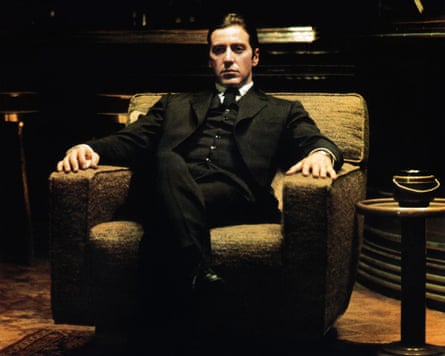
Pacino’s portrayal of Michael Corleone is a study in moral descent. He masterfully conveys the character’s initial implacability and soulful gaze, which gradually hardens into the indomitable, chilling resolve seen in the film’s final iconic shot of him closing the door on his wife, Kay. The film’s central tragedy lies in Michael’s gradual embrace of the darkness inherent in his family’s power. Pacino subtly foreshadows this corruption from the outset, most notably in his recounting of his father’s infamous "offer he couldn’t refuse," hinting at the moral compromises that will define his character’s trajectory.
The film’s cultural impact is undeniable, becoming a touchstone for cinematic storytelling and influencing countless films that followed. Pacino’s performance established him as an actor capable of embodying profound internal conflict and the seductive allure of power.
The Godfather Part II (1974): The Calcification of Power
In the critically acclaimed sequel, The Godfather Part II (1974), Pacino reprises his role as Michael Corleone, now fully entrenched in the mantle of family patriarch. While the prequel sections, featuring Robert De Niro’s captivating portrayal of a young Vito Corleone, are often lauded for their vitality, Pacino’s performance as the older, hardened Michael remains a powerful counterpoint.
Pacino embodies Michael’s calcification by power, his cruelty becoming an almost visible aura. The infernal heat of his confrontations with his estranged wife Kay (Diane Keaton) and his disloyal brother Fredo (John Cazale) are palpable. The film also features a compelling dynamic between Pacino and Lee Strasberg, a legendary acting coach and Method titan, who plays mobster Hyman Roth. This intergenerational encounter between two titans of the acting world adds another layer of richness to the film, even as its narrative grip may have softened for some viewers over time.
Exploring Nuance and Intensity
Serpico (1973): The Righteous Maverick
Sidney Lumet’s Serpico (1973) cast Al Pacino as Frank Serpico, a real-life NYPD detective who became a pariah for his refusal to participate in widespread police corruption. The role proved to be a remarkable synthesis of actor and character. Serpico’s unwavering integrity and eccentricities mirrored Pacino’s own artistic persona: a principled individual with unconventional modes of expression.
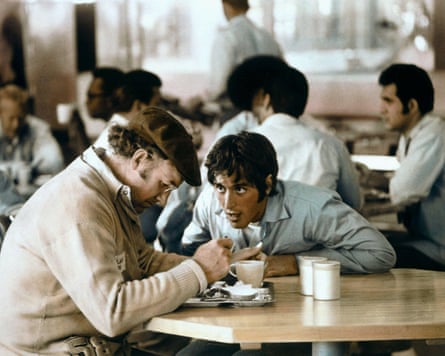
Pacino’s Serpico is a straight-shooter who evolves into an increasingly peculiar figure as he adheres to his principles. His growing collection of pets and expanding facial hair become visual metaphors for his growing isolation and eccentricity within the corrupt system. The film also features an early instance of Pacino’s renowned "Shouty Al" persona, as Serpico defiantly proclaims his right to shout in a public cafe. Lumet recognized the symbiotic relationship between the actor and the character, noting that Pacino’s ability to make the often-difficult Serpico lovable was a testament to his profound acting talent.
Dog Day Afternoon (1975): A Performance of Unrivaled Texture
As previously highlighted, Dog Day Afternoon represents a career-defining performance for Pacino. The film’s ability to balance genuine human drama with moments of dark comedy is largely attributable to Pacino’s nuanced portrayal of Sonny. His ability to shift from explosive rage to tender vulnerability in a heartbeat cemented his status as one of the era’s most compelling actors. The film’s exploration of societal issues, including LGBTQ+ rights and the failures of the justice system, alongside its gripping narrative, ensures its continued relevance.
A Diverse Filmography: From Thrillers to Dramas
Pacino’s career is marked by a willingness to explore a wide range of genres and character types, often pushing the boundaries of his own established on-screen persona.
Charting a Varied Course
Scarecrow (1973): A Melancholic Road Trip
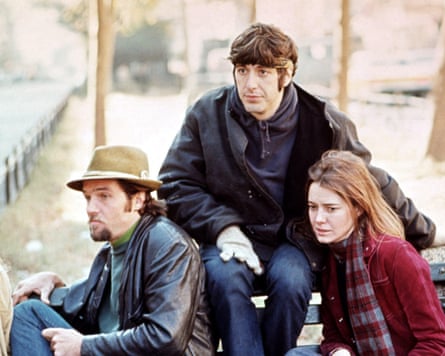
Following his early successes, Pacino reunited with director Jerry Schatzberg for Scarecrow (1973). This melancholic buddy movie follows two drifters, portrayed by Pacino and Gene Hackman, as they traverse the American landscape. Pacino plays an ingenuous former sailor searching for his estranged daughter, carrying a lamp he refuses to part with. While Hackman initially favored the film, Pacino reportedly came to appreciate its profound impact only later in his career, acknowledging its bruised charm and emotional resonance in his memoir. The film’s evocative cinematography by Vilmos Zsigmond contributes significantly to its enduring atmosphere.
Cruising (1980): Navigating Controversy
William Friedkin’s Cruising (1980) proved to be a controversial endeavor, facing protests from gay activists during its production and release. Pacino stars as an undercover detective investigating a series of murders within New York City’s leather bar scene. While the film was initially perceived as exploitative, its reputation has evolved, with many now viewing it as a nuanced critique of homophobia and a daring cinematic outlier. Pacino’s commitment to addressing the film’s problematic reception led him to donate his fee to LGBTQ+ charities, a gesture of solidarity that highlighted the complexities surrounding the film’s themes and its reception.
Sea of Love (1989): A Triumphant Return
After a period of relative quiet following the public disappointment of Revolution (1985), Pacino made a significant return to cinema with the Richard Price-scripted thriller Sea of Love (1989). He delivers an affecting performance as a jaded detective falling for a suspect, played by Ellen Barkin, while pursuing a murderer who uses personal ads to find victims. The film’s lean, effective storytelling and Pacino’s compelling portrayal marked a significant resurgence in his cinematic career.
Glengarry Glen Ross (1992): Mastering Mamet’s Dialogue
In David Mamet’s adaptation of his Pulitzer Prize-winning play, Glengarry Glen Ross (1992), Pacino delivers a commanding performance as Ricky Roma, a smooth-talking real-estate salesman. The film, set in the cutthroat world of sales, is renowned for Mamet’s sharp, rhythmic dialogue. Pacino’s relish in delivering the play’s iconic lines, including a particularly memorable insult directed at Kevin Spacey’s character, showcases his mastery of verbal performance. His role earned him an Oscar nomination, further solidifying his status as a consistently acclaimed actor. He later reprised his role on Broadway, demonstrating his enduring connection to the material.
Carlito’s Way (1993): Sweet Sincerity and Impatience
Brian De Palma’s Carlito’s Way (1993) features Pacino in a role of "sweetly sincere" romantic longing as Carlito Brigante, an ex-convict striving to go straight. The film is punctuated by De Palma’s signature intricate set pieces, including a memorable pool-hall ambush and a climactic shootout in Grand Central Station. Pacino’s performance captures Carlito’s yearning for redemption, even as his inherent impatience sometimes surfaces, as evidenced by an anecdote where he reportedly hijacked a subway train to head home due to frustration with a difficult shot.
Heat (1995): The Landmark Confrontation
The pairing of Al Pacino and Robert De Niro in Michael Mann’s Heat (1995) was a cinematic event of immense anticipation. Their iconic coffee shop scene, a masterclass in understated intensity, remains a highlight. While Pacino’s character, a driven detective, exhibits moments of erratic behavior, attributed by Mann to an excised subplot involving cocaine addiction, the actor’s performance is a crucial component of the film’s gripping narrative. The film’s exploration of the cop-and-robber dynamic, elevated by the presence of these two legendary actors, cemented its place as a modern classic.
Donnie Brasco (1997): Poignant Portrayal of Loyalty
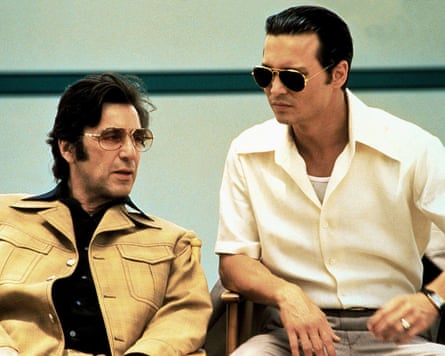
In Donnie Brasco (1997), Pacino delivers a "unbearably poignant" performance as Lefty Ruggiero, a low-level mob lieutenant who takes Johnny Depp’s undercover FBI agent under his wing. Pacino’s ability to convey Lefty’s vulnerability and misguided loyalty, even in the face of his own impending downfall, is deeply affecting. The film’s director, Mike Newell, noted Pacino’s method of building a character through costume, a testament to his commitment to embodying his roles.
The Irishman (2019): A Late-Career Triumph
Martin Scorsese’s epic crime drama The Irishman (2019) saw Pacino collaborating with the renowned director for the first time. At 79, Pacino played Jimmy Hoffa, the charismatic and powerful Teamsters boss, holding his own amongst a cast of seasoned mob movie veterans like Robert De Niro and Joe Pesci. His colorful portrayal of Hoffa stands out against the film’s often somber palette, adding a vibrant energy to the ensemble. The film’s exploration of aging, loyalty, and the consequences of a life of crime resonated deeply, with Pacino’s performance adding a crucial dimension to the narrative.
Embracing the Unexpected
Manglehorn (2014): A Quiet Character Study
In Manglehorn (2014), Pacino takes on the role of a former baseball coach turned locksmith, a character marked by his quiet demeanor and a heart seemingly locked away. The film, while offering a potentially "cringe-worthy" scene of romantic miscommunication, delves into the depths of a man grappling with past loss. Pacino’s performance here showcases his ability to inhabit characters with hidden depths, even in more subdued narratives.
Insomnia (2002): Subdued Intensity
Christopher Nolan’s atmospheric thriller Insomnia (2002) features Pacino in a role that required him to dial down his characteristic intensity. As a detective haunted by guilt, Pacino, alongside Robin Williams as the antagonist, delivers a performance marked by a fascinating restraint. This subdued approach allows the psychological tension of the film to build, showcasing Pacino’s versatility in inhabiting characters grappling with internal turmoil.
The Devil’s Advocate (1997): The Grandiose Antagonist
The Devil’s Advocate (1997) presents Pacino in a flamboyant, almost theatrical role as the Devil himself. While the film’s Faustian premise and Pacino’s "carnival barker routine" may have proved tiresome for some, it undeniably taps into his capacity for larger-than-life performances. The film’s visually striking setting, including the use of Donald Trump’s apartment as a location, amplifies its heightened, almost operatic, tone.
Any Given Sunday (1999): The Idealistic Coach
Oliver Stone’s frenetic football drama Any Given Sunday (1999) features Pacino as an idealistic coach. Despite the film’s often "overloaded and unsubtle" nature, Pacino’s performance is lauded for its "style and grace." His character’s philosophy, emphasizing character and integrity over mere victory, provides a moral anchor amidst the on-field chaos. His memorable line, "On any given Sunday, you’re gonna win or you’re gonna lose. The point is – can you win or lose like a man?" encapsulates the film’s underlying themes.
Scarface (1983): The Bombastic Icon
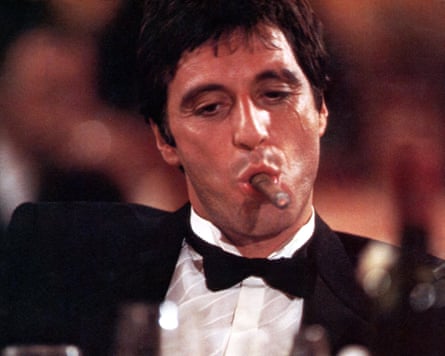
Brian De Palma’s Scarface (1983) remains a polarizing but undeniably iconic film, driven by Pacino’s powerhouse performance as Tony Montana. Pacino himself championed the remake, envisioning the character as a Cuban refugee. The film’s "overkill" and "showboating" are deliberate choices, as Pacino stated, reflecting the "bombast" they aimed to convey. While the film’s relentless energy can be exhausting, Montana’s rise and fall is a compelling, albeit extreme, narrative.
The Godfather Part III (1990): A Lingering Melancholy
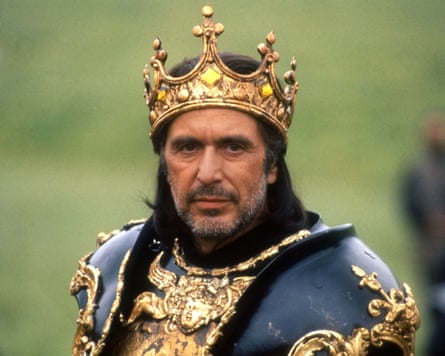
While often considered the weakest installment of the Godfather saga, The Godfather Part III (1990) holds a special place for some viewers, including director Luca Guadagnino, who praised its "longing" and "melancholy." Pacino’s portrayal of Michael Corleone in this film is marked by a profound sense of regret and haunting introspection. His silent scream in the film’s final moments is a powerful expression of grief and despair, showcasing the enduring emotional depth he brings to the character.
Looking for Richard (1996): A Metaphorical Exploration
Looking for Richard (1996), a documentary directed by and starring Pacino, delves into the complexities of Shakespeare’s Richard III. Pacino’s dual role as himself and the titular character is described as "a revelation," particularly given his previous avoidance of overt comedic likenesses on screen. The film’s innovative approach to exploring a classic text, blending academic inquiry with performance, highlights Pacino’s intellectual engagement with his craft.
The Panic in Needle Park (1971): Raw and Unvarnished
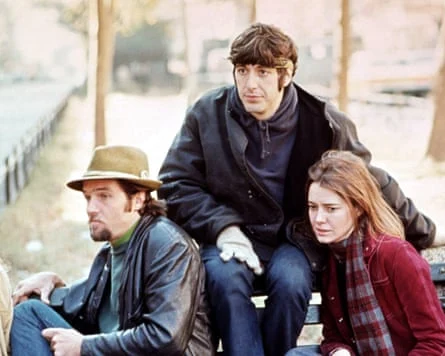
Pacino’s second film, The Panic in Needle Park (1971), immediately showcased his capacity for raw, unvarnished portrayals. As a heroin addict introducing his girlfriend (Kitty Winn) to the world of drugs, Pacino’s youthful beauty contrasts starkly with the character’s "corroded soul." His descent into addiction is depicted with a stark realism that marked him as an actor unafraid to explore the darker facets of human experience.
A Legacy of Impact
Al Pacino’s filmography is a rich tapestry of iconic characters and enduring performances. From the morally complex Michael Corleone to the desperate Sonny Wortzik and the righteous Frank Serpico, he has consistently demonstrated an unparalleled ability to inhabit diverse personalities with authenticity and power. His willingness to take on challenging roles, coupled with his profound understanding of human emotion, has cemented his status as one of cinema’s most revered and influential actors. As he continues to grace the screen, Pacino’s legacy remains a testament to the transformative power of acting and the indelible mark he has left on the art of filmmaking.