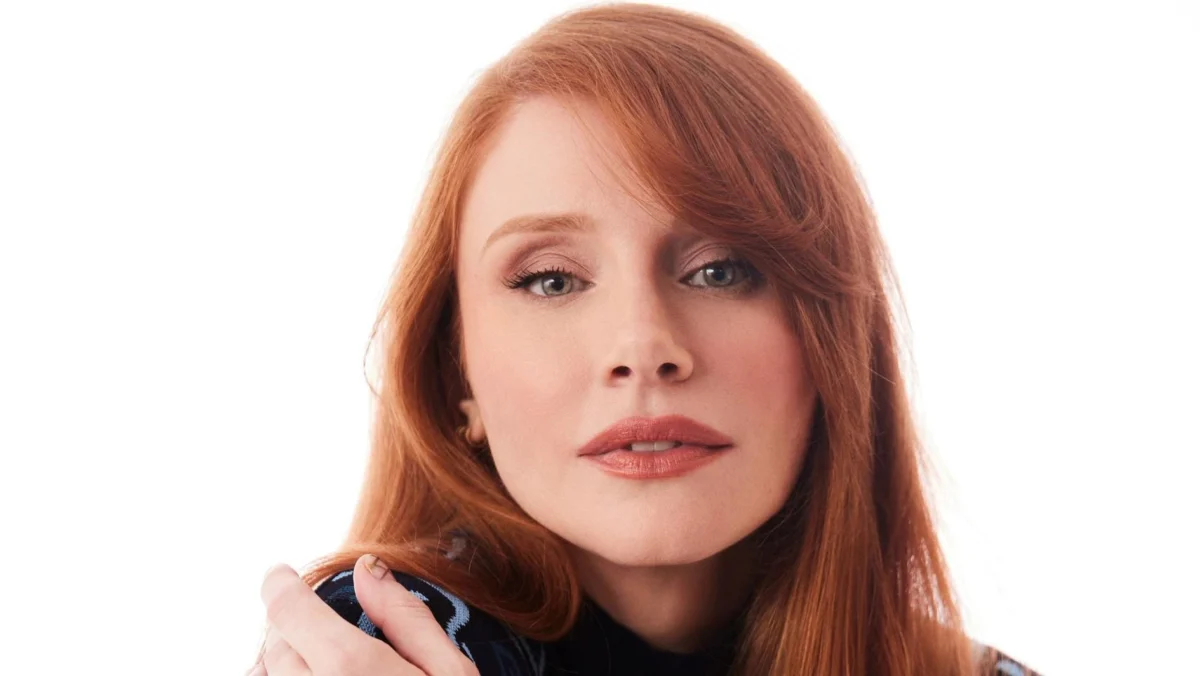
Bryce Dallas Howard, known for her versatile career spanning blockbuster franchises and critically acclaimed dramas, has officially joined the cast of Anything But Ghosts, the enigmatic horror feature from burgeoning writer-director Curry Barker and writer-star Cooper Tomlinson. Production for the film reportedly wrapped earlier this month, signaling its progression into post-production and intensifying industry anticipation. While specific plot details remain shrouded in secrecy, Howard’s involvement adds considerable star power and intrigue to a project already garnering significant buzz due to its powerhouse producing team and the rapid ascent of its director.
A Distinguished Career: From Blockbusters to Directing A-List "Star Wars" Episodes
Bryce Dallas Howard’s participation in Anything But Ghosts marks another compelling turn in her already diverse and impactful career. The daughter of acclaimed filmmaker Ron Howard, she has carved out a unique path in Hollywood, demonstrating remarkable range both in front of and behind the camera. Onscreen, Howard is perhaps most widely recognized for her starring role as Claire Dearing in the wildly successful Jurassic World trilogy, a franchise that has collectively grossed billions worldwide. Her performance as the initially rigid, later heroic, operations manager provided a crucial emotional anchor across the three films, solidifying her status as a leading lady capable of anchoring major studio tentpoles.
Beyond the dinosaur-infested landscapes of Isla Nublar, Howard has showcased her dramatic prowess in a variety of challenging roles. She delivered a memorable performance as Sheila Eileen Dwight in the Elton John biopic Rocketman (2019), navigating the complexities of a mother-son relationship with nuance. Her early career saw her collaborate with M. Night Shyamalan in the atmospheric psychological thriller The Village (2004), where she portrayed a blind young woman navigating a secluded, fear-driven community. She also earned critical acclaim for her role as the unlikable but pivotal Hilly Holbrook in Tate Taylor’s poignant civil rights-era drama The Help (2011), a performance that garnered her a Screen Actors Guild Award for Outstanding Performance by a Cast in a Motion Picture. More recently, she appeared in Matthew Vaughn’s spy-action comedy Argylle (2024), further illustrating her willingness to experiment across genres.
However, Howard’s influence in the entertainment industry extends significantly beyond her acting credits. She has emerged as a highly sought-after director, particularly within the expansive universe of Disney+’s Star Wars series. Her directorial work on key episodes of The Mandalorian, The Book of Boba Fett, Ahsoka, and the upcoming Skeleton Crew has been consistently praised for its visual flair, emotional depth, and ability to capture the essence of the beloved franchise while introducing fresh perspectives. Directing for a property as iconic and scrutinized as Star Wars requires not only technical skill but also a deep understanding of storytelling and fan expectations, all of which Howard has demonstrably mastered. Her transition into directing for a major franchise like Star Wars underscores her artistic versatility and growing clout within Hollywood, making her decision to join a mysterious horror feature all the more intriguing. It suggests a calculated move to align herself with innovative projects and emerging talent, even as she continues to expand her directorial portfolio.
"Anything But Ghosts": A Collaboration of Horror Titans and Emerging Visionaries
The announcement of Anything But Ghosts first captivated Hollywood’s attention in September, not merely for its enigmatic title but for the unprecedented alliance it represented. The film marks the inaugural collaboration between two of the most influential and successful figures in contemporary horror production: Jason Blum, the visionary behind Blumhouse Productions and now Blumhouse-Atomic Monster, and Roy Lee, the prolific producer known for bringing iconic Asian horror to Western audiences. This partnership alone was enough to signify that Anything But Ghosts was a project of considerable ambition and potential.
Jason Blum, through Blumhouse, has revolutionized the horror genre by pioneering a highly successful model of low-budget, high-concept films that consistently yield massive returns. His track record includes genre-defining hits such as Paranormal Activity, Insidious, The Purge, Get Out, and M3GAN. The recent merger of Blumhouse with James Wan’s Atomic Monster further solidified his empire, creating a horror powerhouse capable of dominating the market. Roy Lee, on the other hand, is renowned for his instrumental role in bringing Japanese and Korean horror films to American screens, producing successful remakes like The Ring and The Grudge, and later expanding his portfolio with films like The Strangers and It. The combined expertise and market savvy of Blum and Lee provide Anything But Ghosts with an unparalleled foundation of genre knowledge, distribution potential, and audience reach. Their decision to back a young filmmaker like Curry Barker speaks volumes about their confidence in his vision and potential.
Complementing this formidable producing team is Steven Schneider, a "Paranormal Activity" maestro whose name is synonymous with innovative horror, particularly in the found-footage subgenre. His involvement, alongside Adam Hendricks and Greg Gilreath for Divide/Conquer, further bolsters the film’s production bona fides, ensuring a blend of seasoned expertise and a fresh, dynamic approach. Image Nation and Barker and Tomlinson’s own banner, That’s a Bad Idea, also contribute to the production, reflecting a collaborative spirit that spans both established industry players and the independent, creative forces driving the project.
Curry Barker: The Meteoric Rise of a New Horror Auteur
At the epicenter of Anything But Ghosts is Curry Barker, a name that has rapidly become synonymous with the next wave of genre filmmaking. Barker’s journey to becoming "one of the hottest up-and-coming directors in town" is a testament to the evolving landscape of Hollywood, where raw talent and innovative approaches can quickly capture attention. His roots in sketch comedy, a background seemingly disparate from the dark intensity of horror, have likely endowed him with a unique perspective on timing, character, and narrative subversion. This unexpected foundation suggests a filmmaker unafraid to blend elements or challenge conventional genre tropes, potentially injecting Anything But Ghosts with a distinctive tone.
Barker first burst onto Hollywood’s radar with his $800 horror YouTube feature, Milk & Serial. This ultra-low-budget project, created with minimal resources but maximum creativity, served as a powerful proof of concept, demonstrating his ability to craft suspenseful narratives and elicit genuine scares without relying on expensive special effects. In an industry often criticized for its reliance on established formulas, Barker’s grassroots success resonated deeply, marking him as a talent to watch.
His trajectory since Milk & Serial has been nothing short of meteoric. Focus Features, a division of NBCUniversal known for acquiring and distributing critically acclaimed and commercially successful films, recently secured the rights to Anything But Ghosts. This acquisition followed closely on the heels of another major triumph for Barker: his film Obsession. Obsession was the undisputed "toast of the Toronto Film Festival," where it landed the festival’s biggest sale, indicating strong critical reception and immense market demand. The film is set to open on May 15, and its impending release is eagerly awaited as a further indicator of Barker’s mainstream appeal and storytelling prowess.
Adding to his impressive slate, Barker recently inked a high-profile deal to reinvent The Texas Chainsaw Massacre for A24, a studio celebrated for its distinctive, often elevated horror offerings like Hereditary, Midsommar, and Talk to Me. This commission for such an iconic and brutal horror franchise under the A24 banner underscores the industry’s profound confidence in Barker’s ability to revitalize beloved properties while maintaining artistic integrity. His involvement with The Texas Chainsaw Massacre positions him as a significant voice in the future of horror, capable of both generating original concepts and reinterpreting classic narratives for a contemporary audience. The combination of his independent breakthrough, critical acclaim at major festivals, and securing deals for highly anticipated projects with prestigious studios like Focus Features and A24 paints a picture of a director whose creative vision is rapidly shaping the genre’s future.
The Enigma of the Plot and Anticipation for the Unknown
Despite the wealth of talent attached, the core narrative of Anything But Ghosts remains tantalizingly vague. The official synopsis merely states that plot details are "unknown," fostering an air of mystery that is itself a potent marketing tool in the horror genre. Barker co-wrote the script with his frequent collaborator Cooper Tomlinson, who also stars in the film opposite Aaron Paul, another significant addition to the cast. The involvement of Paul, an Emmy-winning actor known for his intense dramatic work in series like Breaking Bad and films such as Need for Speed, further elevates the project’s profile and suggests a narrative with considerable emotional depth or high stakes.
The title itself, "Anything But Ghosts," offers a subtle hint while simultaneously deepening the intrigue. In a genre often saturated with spectral entities, this title could imply a deliberate subversion of traditional ghost stories. It might suggest a different kind of supernatural threat, a psychological horror that merely feels ghostly, or perhaps a narrative that plays with audience expectations, presenting something far more insidious or existential than conventional apparitions. Industry analysts speculate that given Barker’s background and the pedigree of the producers, the film is likely to feature a fresh take on terror, avoiding predictable tropes and aiming for a more sophisticated or psychologically unsettling experience. This intentional ambiguity surrounding the plot allows for wide speculation and maintains a high level of anticipation among horror aficionados and general audiences alike.
Filming Concludes: The Road Ahead
With production now wrapped, Anything But Ghosts enters the critical post-production phase. This period will involve meticulous editing, sound design, visual effects work, and the composition of an original score, all of which are crucial in shaping the film’s atmosphere and impact. The collaboration between Barker’s distinct vision and the expertise of the post-production teams will be key to realizing the film’s full potential.
Given Focus Features’ acquisition and the prominence of its creative team, the film is expected to undergo a robust marketing campaign leading up to its eventual release. While no release date has been announced, the rapid pace of Barker’s other projects suggests a keenness from the studios to bring his work to audiences swiftly. The success of Obsession later this year will undoubtedly amplify interest in Anything But Ghosts, positioning it as a major release within the horror landscape.
Broader Implications: A Shifting Landscape for Genre Cinema
The convergence of talent and resources behind Anything But Ghosts reflects a broader trend in Hollywood: the increasing recognition of horror as a critically viable and consistently profitable genre. No longer relegated to niche audiences, horror films are attracting A-list talent, innovative directors, and significant studio investments. This shift is partly due to the genre’s ability to explore complex social issues, psychological fears, and existential anxieties through compelling narratives, often with relatively modest budgets that guarantee high returns.
The backing of Blum and Lee for an emerging voice like Barker, coupled with the casting of established stars like Bryce Dallas Howard and Aaron Paul, signifies a deliberate strategy to push the boundaries of genre cinema. It suggests a commitment to fostering new talent while leveraging the appeal of familiar faces, creating a powerful synergy that can draw diverse audiences. For Bryce Dallas Howard, joining such a project not only broadens her acting repertoire but also aligns her with a director poised to become a significant force in the industry. It’s a strategic move that reflects her continued evolution as a creative force, both in front of and behind the camera, signaling a keen eye for compelling storytelling and groundbreaking talent.
As Anything But Ghosts progresses through its final stages of creation, the industry watches with bated breath. The combination of its mysterious premise, the unprecedented collaboration of horror titans, the meteoric rise of its visionary director, and the addition of a versatile and esteemed actress like Bryce Dallas Howard positions this film as a highly anticipated and potentially genre-defining release that could reshape perceptions of contemporary horror cinema.