The chilling new horror film Hokum, penned and directed by Damian McCarthy, is poised to unsettle audiences with its unique blend of psychological dread and unsettling imagery. Starring Adam Scott in a transformative role as Ohm Bauman, a reclusive novelist grappling with profound grief, the film plunges viewers into the dark heart of an isolated Irish inn. The narrative centers on Ohm’s pilgrimage to scatter his parents’ ashes, a somber task that rapidly devolves into a nightmarish ordeal as he finds himself trapped within the inn’s ancient walls. Whispers of a malevolent witch and the pervasive, disquieting presence of bunny-shaped horrors suggest that Ohm’s internal struggles are manifesting in terrifyingly tangible ways.
This deep dive into the film’s unsettling themes and creative genesis is informed by an exclusive interview with writer-director Damian McCarthy and lead actor Adam Scott, conducted in the lead-up to Hokum‘s highly anticipated release. McCarthy offered insights into the deliberate construction of the film’s disturbing visual landscape, particularly the pervasive rabbit motif, while Scott elaborated on his portrayal of Ohm’s fractured psyche and his character’s journey through self-forgiveness. The conversation also shed light on the significance of the inn’s atmosphere and the casting of Brendan Conroy as the enigmatic hotel owner.
The Genesis of a Nightmare: Isolation and Internal Turmoil
Hokum sets its stage in a remote Irish inn, a location chosen by McCarthy for its inherent ability to amplify feelings of isolation and vulnerability. "It was going to be a long time spent with just this one character [Scott’s Ohm] in the one location," McCarthy explained. "He arrives at the hotel, he interacts with the other characters, but by the time he lands in the situation he’s in and trying to escape this night, there’s nobody else there." This deliberate confinement of the protagonist within a single, often claustrophobic, setting is a classic horror trope designed to heighten tension and audience empathy. The inn itself, with its meticulously crafted production design, becomes more than just a backdrop; it transforms into an active participant in Ohm’s descent into terror.
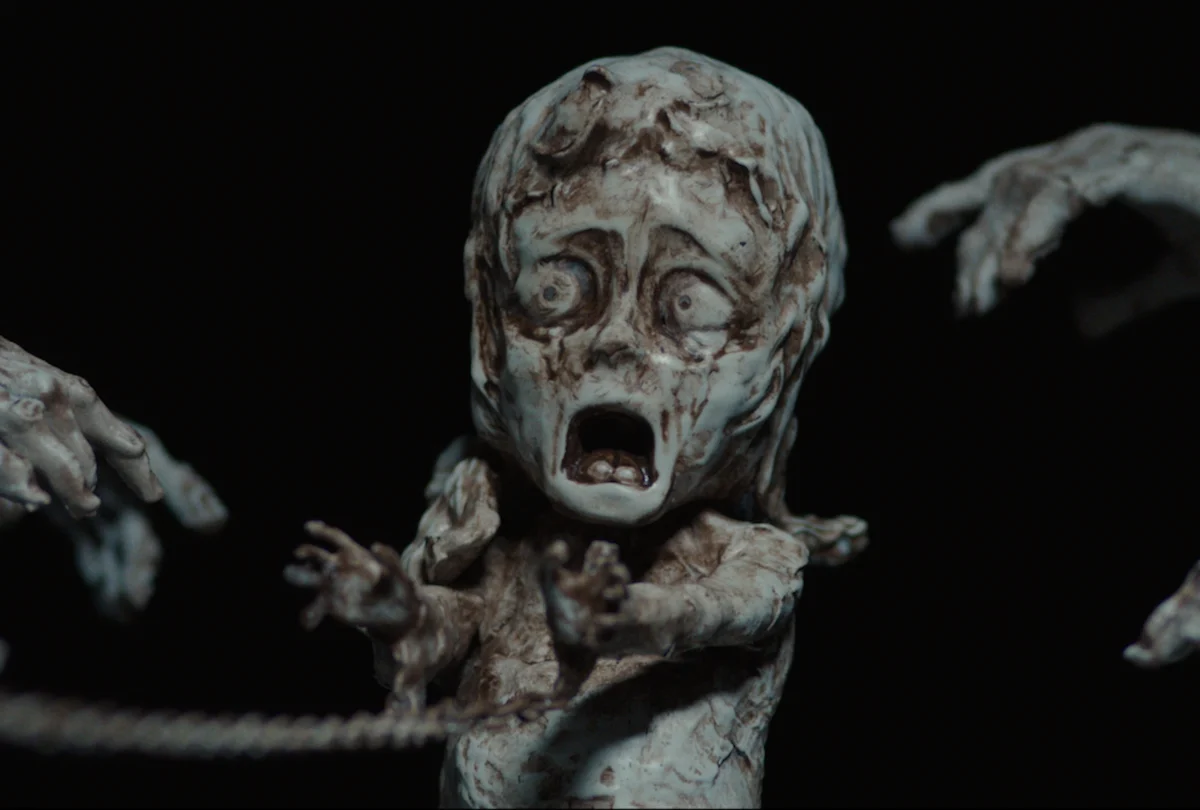
McCarthy emphasized the crucial role of the inn’s environment in conveying the film’s psychological depth. "Your production design – every ornament and painting – everything in the room becomes vital then, and those are the things that are that are watching him." This approach aligns with a tradition of horror filmmaking where the setting actively reflects or even embodies the characters’ inner turmoil. The unsettling details, from "haunting clocks" to "carvings of the babies, the cherubs over the fireplace," are not mere set dressing but rather carefully curated elements intended to "tighten those screws and make the film a lot more unsettling." This meticulous attention to detail suggests a narrative that leans heavily on atmosphere and suggestion, allowing the audience’s imagination to fill in the most terrifying blanks.

Adam Scott on Portraying Ohm Bauman: A Journey of Self-Forging
Adam Scott, known for his diverse roles in both comedy and drama, expressed his immediate enthusiasm for Hokum, citing McCarthy’s previous work, the critically acclaimed Irish horror film Oddity, as a significant draw. "I think that one of the reasons I was so excited to do the movie – other than Damian’s previous movie Oddity, such a big fan of that – was the character," Scott revealed. His portrayal of Ohm Bauman is central to the film’s exploration of trauma. Scott described Ohm as starting as "this prickly, for lack of a better word, a-hole," a characterization that hints at a deeply guarded and perhaps self-destructive personality.
The actor elaborated on Ohm’s arc, highlighting a journey of internal healing. "He’s taking this journey where, unbeknownst to him, he’s figuring out how to forgive himself and forgive his father, to let himself off the hook." This internal quest for absolution is inextricably linked to the external horrors Ohm faces. Scott suggested that the terrifying events unfolding within the inn are not necessarily objective realities but rather potent manifestations of Ohm’s inner state. "I think that whether or not everything that happens over the course of the movie is actually happening or not, it is a direct reflection of how he feels about himself and how he sees the world," he explained. This perspective suggests that Hokum is as much a character study as it is a horror film, using supernatural elements as a lens through which to examine profound psychological trauma and the arduous path toward self-acceptance. Ohm’s "investigation" within the inn becomes a process of confronting his own past and the unresolved issues that have shaped him.
The Unsettling Symbolism of the Rabbit
One of the most distinctive and talked-about elements of Hokum is its pervasive use of rabbit imagery, a motif that McCarthy admits to being a recurring fascination in his work. When asked about the origins of this striking visual, McCarthy traced it back to childhood memories and cinematic influences. "It seems to keep coming back, those rabbits keep seeming to find their way into the movie," he stated. His early exposure to the animated classic Watership Down, a film known for its surprisingly dark and frightening portrayal of rabbit society, clearly left a lasting impression.
Beyond Watership Down, McCarthy cited other films that have explored the unsettling duality of rabbits: "as a film student, things like Donnie Darko and Gummo, the kid who has the bunny ears, or Sexy Beast, that demonic hare that’s following Ray Winstone around the desert." Adam Scott chimed in with another relevant cinematic touchstone: "Fatal Attraction." These references highlight a common thread in their symbolic use: rabbits, often perceived as innocent and docile creatures, can also be imbued with an unsettling, almost demonic, quality when presented in a horror context.
McCarthy further connected the rabbit imagery to the archetypal journey into the unknown, referencing Lewis Carroll’s Alice in Wonderland. "And then you get into Alice in Wonderland, that’s what leads her into this other strange world, which I always loved as a child. I think all of that now, just as an adult and making films, seems to keep finding its way back in there." This suggests that the rabbits in Hokum serve as symbolic guides, drawing Ohm into a distorted reality that mirrors his own psychological landscape. Their presence, often described as "bunny-shaped in nature" within the film’s premise, likely functions as a surreal and deeply unnerving element, blurring the lines between innocence and terror, and forcing Ohm to confront something primal and unsettling.

The Shanachie and the Voice of the Inn
The casting of Brendan Conroy as the innkeeper was a deliberate choice by McCarthy to imbue the film with a specific cultural resonance. Conroy, an acclaimed Irish actor, was sought for his ability to embody a "shanachie," an old Irish storyteller. "We call them in Ireland a shanachie, which would be an old Irish storyteller," McCarthy explained. "And I wanted somebody that would have that kind of gravitas… This part has got to be a shanachie. This has gotta be a guy who’s sitting down and telling everybody in the pubs some old, interesting story."
This casting decision suggests that the innkeeper is more than just a character; he is a conduit for the inn’s history and its folklore, potentially foreshadowing or explaining the supernatural events to come. The shanachie tradition itself is deeply rooted in Irish culture, emphasizing the power of oral storytelling and the transmission of ancient myths and legends. By casting Conroy in this role, McCarthy is likely tapping into this rich tradition, suggesting that the horrors within the inn are not random but perhaps tied to the very fabric of Irish folklore and history. The actor’s performance, described as "fantastic" and possessing "gravitas," would undoubtedly lend authenticity and weight to this crucial character.
Broader Implications and the Future of Irish Horror
The release of Hokum arrives at a time when Irish horror cinema is experiencing a renaissance, garnering international attention for its distinctive voice and ability to craft deeply atmospheric and psychologically resonant films. McCarthy’s previous work, Oddity, received critical acclaim for its inventive approach to the genre, and Hokum appears to build upon that foundation. The film’s focus on internal trauma, combined with its unsettling visual style, positions it within a contemporary wave of horror that prioritizes psychological depth over jump scares.
The success of films like The Hole in the Ground, A Dark Song, and You Are Not My Mother has demonstrated a global appetite for Irish horror that draws from the country’s rich cultural heritage and landscape. Hokum‘s exploration of themes like grief, self-forgiveness, and the manifestation of internal demons through folklore-tinged horror suggests it has the potential to further cement Ireland’s reputation as a powerhouse in the genre. The film’s premiere is scheduled for May 1, 2026, with audiences eager to experience the unique terrors that Damian McCarthy and Adam Scott have conjured within the haunted walls of the Hokum inn. The film’s success could further embolden independent filmmakers to explore darker, more introspective narratives within the horror space, pushing the boundaries of what audiences expect from the genre. The integration of traditional storytelling elements with modern psychological horror promises a viewing experience that is both disturbing and thought-provoking, leaving a lasting impression long after the credits roll.