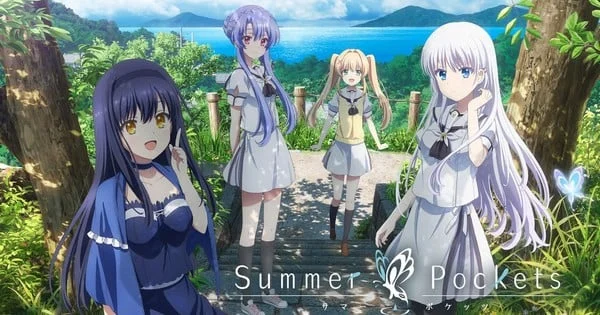
The anime adaptation of Key’s visual novel, Summer Pockets, arrives with the well-established promise of emotional resonance and heartbreak, a hallmark of the renowned Japanese visual novel developer. For fans familiar with Key’s extensive catalog, including seminal works like Clannad, Kanon, and AIR, Summer Pockets (often abbreviated as SP) represents a quintessential offering from the studio. These titles, whether experienced in their original visual novel format or through their subsequent anime adaptations, have cemented Key’s reputation for crafting narratives steeped in drama and profound emotional impact. The studio’s latest foray into anime adaptation aims to translate the intricate character-driven storytelling and signature emotional arcs that have garnered a dedicated following.
The Quintessential Key Experience
Summer Pockets embodies many of the characteristics that anime enthusiasts have come to expect from Key productions. The series is distinguished by its vibrant color palettes, a visual signature that often enhances the emotional weight of its narratives. The storytelling is inherently character-driven, focusing on the intricate relationships and personal journeys of its protagonists. Crucially, the series delivers on Key’s promise of "big sad," weaving moments of significant emotional distress and catharsis into its plot.
A significant strength of the Summer Pockets anime lies in its atmosphere, which masterfully captures the idyllic and often nostalgic essence of a summer vacation. The series excels at portraying quiet, languid moments, punctuated by the natural sounds of summer like chirping cicadas. These scenes, where characters simply exist in the present, absorbing the ambiance of the season, evoke a powerful sense of warmth and nostalgia. This immersive quality is so effectively rendered that viewers unfamiliar with the visual novel source material might not immediately perceive the accelerated pacing of certain story routes within the anime adaptation.
An Adaptation’s Balancing Act
As an anime adaptation, Summer Pockets presents a mixed outcome, falling somewhere between the more flawed visual novel adaptations and the critically acclaimed successes. While it avoids the pitfalls of less successful adaptations, such as Dies irae or Chaos;Child, it also does not reach the heights of exemplary adaptations like Steins;Gate or the Heaven’s Feel films from the Fate series.
One of the primary challenges in adapting Summer Pockets is maintaining the narrative pacing of the original visual novel. Several story elements in the anime are condensed, leading to a sense of rushed progression compared to the deliberate unfolding of events in the source material. Furthermore, the distinctive visual style of the visual novel, a key component of Key’s aesthetic, is not fully translated into the anime. While the anime’s visuals are not inherently poor, they tend to feature softer edges and less vibrant colors than the source material, a departure from Key’s typically bold and distinctive visual presentation. Character designs also exhibit this softening, with some characters translating more successfully than others.
However, the adaptation does offer improvements in certain areas. The protagonist, Hairi, is portrayed in a less unsettling manner in the anime compared to his depiction in the visual novel, making him a more palatable and engaging central figure for a wider audience.
A Cast of Distinct Personalities
A defining characteristic of Key’s works, and Summer Pockets is no exception, is the presence of a roster of romanceable female characters who play pivotal roles in the protagonist’s narrative. In Summer Pockets, these characters are Kamome, Ao, Tsumugi, and Shiroha, each with their own dedicated story routes.
The quality of these individual routes varies. While the personalities of the girls are a diverse mix, three of the four—Kamome, Ao, and Tsumugi—offer story arcs that are generally engaging and sufficiently developed to hold viewer attention. These routes are distinct from one another and often venture into unexpected narrative territories. Shiroha’s story route, conversely, is widely considered the weakest, and in the opinion of this reviewer, she is also one of the less charming characters, though not entirely unappealing. Despite this perceived narrative weakness, it is evident that significant creative and production effort was invested in making Shiroha a central and prominent figure. Consequently, while each character receives their moment in the spotlight, the character who may be perceived as the least interesting is also the one who appears most frequently throughout the series.
The Emotional Core: Drama, Heartbreak, and Tears
The element that most fans anticipate from a Key title is its capacity for profound emotional impact—the drama, the heartbreak, and the tears that have become synonymous with the studio’s output. While titles like AIR laid the groundwork for Key’s reputation in this regard, it was the immense success of Clannad that firmly established Key in the collective consciousness of the anime community as "the studio that makes super depressing visual novels, many of which become super depressing anime."
Summer Pockets, while perhaps not reaching the same stratospheric emotional highs as Clannad—a benchmark that is admittedly very high—still delivers impactful moments that ensure the summer vacation experience is tinged with bittersweet emotions, regardless of which character’s story resonates most with the viewer.
Pacing Predicaments and Production Nuances
A significant factor hindering Summer Pockets from achieving its full emotional potential is its inconsistent pacing. As previously noted, many narrative beats are condensed, creating a sense of rush. Paradoxically, these emotionally charged moments often occur between extended periods of leisurely summer vacation activities. Furthermore, a major plot development occurs late in the second half of the series, leaving the impression that the narrative is only truly beginning at that juncture. This results in an anime that feels simultaneously rushed and excessively slow-paced, creating a disorienting overall rhythm.
On the production side, it is an interesting irony that the anime, an animated medium, does not always convey the same sense of vitality as the still images within the visual novel. Nevertheless, the visual quality is generally considered good, albeit not exceptional. The animation quality is consistently maintained throughout the 26-episode run, a commendable achievement in an era where such consistency in longer series is becoming increasingly rare. The musical score and voice acting, while not groundbreaking, are charming and contribute positively to the overall experience.
A Balanced Verdict
For viewers seeking a dose of gentle melancholy, particularly when paired with the immersive ambiance of a sweltering summer vacation, the Summer Pockets anime adaptation serves as a solid choice. It may not ascend to the pantheon of iconic summer break anime, but it possesses its share of memorable moments. Positioned firmly in the middle of Key’s extensive discography, it is neither the studio’s finest nor its weakest offering. The series stands as a testament to Key’s enduring ability to craft narratives that resonate emotionally, even when navigating the inherent challenges of adaptation. The sun may beat down on its narrative, and the cicadas may continue their ceaseless chirping, but the story of Summer Pockets unfolds with a familiar, yet often poignant, blend of youthful summer days and the inevitable onset of emotional storms.