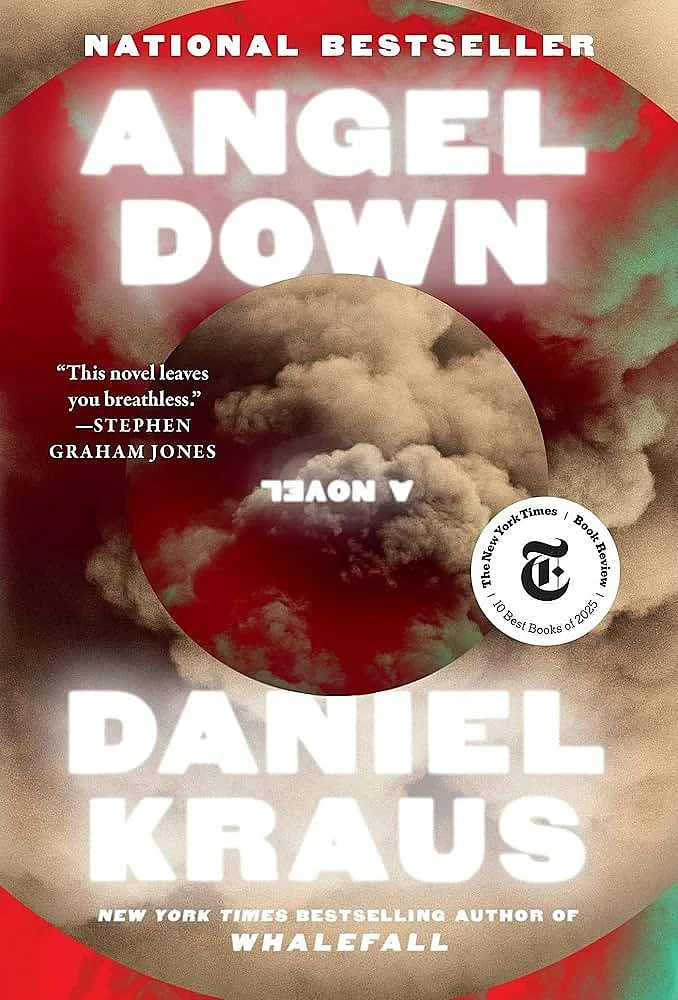
Horror novelist Daniel Kraus has achieved a significant milestone in his literary career, with his groundbreaking novel, Angel Down, being awarded the Pulitzer Prize for Fiction. This esteemed recognition places Kraus among the literary elite and highlights his innovative approach to storytelling, particularly within genres often overlooked by mainstream awards. The announcement, made via Kraus’s personal Bluesky account, has sent ripples of excitement through the literary and horror communities.
A Meteoric Rise in Contemporary Literature
Daniel Kraus has steadily built a formidable reputation over the past decade, marked by ambitious collaborations and critically acclaimed original works. His early career saw him partner with acclaimed director Guillermo del Toro on the novel Trollhunters, a project that demonstrated his ability to craft compelling narratives within established universes. He later took on the challenging task of completing George A. Romero’s final novel, The Living Dead, a testament to his understanding of zombie lore and narrative continuation.
More recently, Kraus captivated audiences with Whalefall, a novel lauded for its unique premise and visceral storytelling. The book, which chronicles the harrowing experience of a man swallowed by a whale, is currently in development as a feature film starring Austin Abrams, slated for release on October 16th via 20th Century Studios. The impending film adaptation of Whalefall further underscores the growing momentum behind Kraus’s literary output.
"Angel Down": A Masterpiece of Experimental Narrative
The novel that has now garnered the Pulitzer Prize, Angel Down, is celebrated not only for its compelling subject matter but also for its daring structural innovation. The narrative centers on a group of five soldiers stationed in No Man’s Land during World War I who make a startling discovery: an angel. This fantastical element set against the grim backdrop of trench warfare provides a rich tapestry for exploration.
However, the most striking aspect of Angel Down is its composition as a single, unbroken sentence. This stylistic choice, often discouraged in traditional academic settings, challenges conventional literary norms and immerses the reader in a continuous, flowing experience. By eschewing conventional punctuation and paragraph breaks, Kraus creates a sense of urgency and relentless progression, mirroring the anxieties and disorienting nature of war. This experimental approach, while potentially daunting for some readers, has been widely praised for its effectiveness in conveying the novel’s themes and atmosphere. The Pulitzer committee’s decision to honor a work with such a distinctive narrative structure signals a growing appreciation for literary experimentation.
The Announcement and Initial Reactions
Kraus himself took to the social media platform Bluesky to share the monumental news. His post, characterized by an enthusiastic brevity, read: "Guys, Angel Down won the Pulitzer Prize. Let’s get nuts." This informal announcement, a stark contrast to the typically formal nature of award revelations, perfectly encapsulates Kraus’s unpretentious yet passionate engagement with his craft and audience. The phrase "Let’s get nuts" reflects the sheer exhilaration of achieving such a significant accolade.
While direct quotes from the Pulitzer committee regarding Angel Down‘s specific merits have not yet been released, the award itself speaks volumes. The Pulitzer Prize for Fiction is awarded to "a distinguished novel by an American author, preferably dealing with American themes." The selection of Angel Down, with its World War I setting and exploration of profound existential questions, suggests the committee recognized the novel’s universal themes and its significant contribution to American literature, even if its primary setting is not the United States. The inclusion of the "preferably dealing with American themes" clause leaves room for interpretation, and the committee’s decision to honor Angel Down may indicate a broader interpretation of "American themes" to encompass universal human experiences and the impact of historical events on the human psyche.
Context and Significance of the Pulitzer Prize
The Pulitzer Prizes, established in 1917 by provisions in the will of American journalist and publisher Joseph Pulitzer, are among the most prestigious awards in journalism, literature, and musical composition in the United States. The Fiction category, in particular, has a storied history of recognizing influential and enduring works of American literature. Past recipients include literary giants such as William Faulkner, Toni Morrison, John Steinbeck, and Harper Lee, whose works have significantly shaped the American literary landscape.
The awarding of the Pulitzer to Angel Down is particularly noteworthy for several reasons. Firstly, it elevates a work of speculative fiction, a genre often relegated to the periphery of literary awards, to the highest echelon of literary achievement. This recognition could pave the way for greater acceptance and critical engagement with genre fiction. Secondly, it celebrates a bold stylistic choice. The Pulitzer committee’s endorsement of a novel written in a single, continuous sentence suggests an openness to innovative narrative forms and a willingness to reward artistic risk-taking.
Analyzing the Implications of the Award
The Pulitzer Prize for Angel Down carries significant implications for both Daniel Kraus and the broader literary landscape.
- Elevated Literary Stature: This award solidifies Daniel Kraus’s position as a major voice in contemporary American literature. His previous collaborations and acclaimed novels had already established him as a talent to watch, but the Pulitzer Prize provides undeniable validation and will likely open new avenues for his work, including increased interest from publishers, academics, and readers.
- Championing Experimental Fiction: By honoring a novel with such a unique structural conceit, the Pulitzer committee sends a powerful message about the value of literary experimentation. This could inspire other authors to push the boundaries of narrative form and encourage publishers to take on more unconventional projects. It might also lead to a renewed critical examination of stylistic innovation within literary studies.
- Increased Reader Engagement: The prestige of the Pulitzer Prize is expected to draw a wider audience to Angel Down. Readers who might not typically explore horror or experimental fiction may be prompted to discover Kraus’s work due to the award’s recognition. This could lead to a broader appreciation for the depth and complexity found within these genres.
- Film Adaptation Momentum: With Angel Down now a Pulitzer Prize winner, its film adaptation by Imagine Entertainment is likely to gain considerable traction. The award will add a layer of critical acclaim and cultural significance to the project, potentially attracting higher-profile talent and greater marketing investment. This follows the trajectory of his earlier novel, Whalefall, which is also slated for a major film release.
A Look Back at Kraus’s Diverse Portfolio
Kraus’s career trajectory demonstrates a consistent exploration of diverse storytelling challenges. His collaboration on Trollhunters with Guillermo del Toro, for instance, involved not just writing but also adapting existing lore and visual concepts into a compelling narrative. This experience likely honed his ability to work within established frameworks while injecting his own creative vision.

The completion of George A. Romero’s The Living Dead presented a unique historical and stylistic challenge. Romero, a pioneer of the modern zombie genre, left behind a substantial body of work and a distinct narrative voice. Kraus’s task was to honor that legacy while bringing the story to a satisfying conclusion, a feat that requires a deep understanding of genre conventions and a sensitivity to the original author’s intent.
Whalefall, as previously mentioned, showcases Kraus’s talent for creating high-stakes, character-driven narratives within extraordinary circumstances. The innovative chapter titling, based on remaining air in the protagonist’s tank, exemplifies his commitment to using form to enhance thematic resonance. This technique directly implicates the reader in the protagonist’s struggle for survival, creating a palpable sense of claustrophobia and dwindling hope. The impending film adaptation of Whalefall by 20th Century Studios further validates the cinematic potential of his storytelling.
Future Prospects and Anticipation
The recognition of Angel Down with the Pulitzer Prize places Daniel Kraus at a pivotal moment in his career. The award not only acknowledges his past achievements but also sets a high benchmark for his future endeavors. Literary critics and readers alike will undoubtedly be watching with keen interest to see how he builds upon this monumental success.
The upcoming film adaptation of Whalefall, scheduled for release on October 16th, provides an immediate opportunity for audiences to experience Kraus’s narrative artistry on screen. The success of this adaptation could further amplify his profile and introduce his work to an even broader global audience.
In conclusion, Daniel Kraus’s Pulitzer Prize win for Angel Down is a landmark achievement that celebrates both individual literary brilliance and the evolving landscape of contemporary fiction. It is a testament to the power of bold storytelling, innovative structure, and the enduring capacity of literature to surprise and profound impact its readers. The award is a well-deserved recognition of an author who consistently pushes creative boundaries and captivates with his unique vision.