The anticipation surrounding Christopher Nolan’s ambitious cinematic adaptation of Homer’s ancient Greek epic, The Odyssey, has reached a fever pitch this week. The release of a gripping new trailer and a rare, in-depth interview with the acclaimed director on Stephen Colbert’s US chatshow has significantly amplified excitement for the film, slated for a July 17th release. As new details emerge, a comprehensive look at Nolan’s vision for this timeless tale, starring Matt Damon as the titular hero Odysseus, and its potential faithfulness to the original poem, becomes increasingly pertinent.
A Slow Burn of Anticipation: The Unveiling of Nolan’s Odyssey
The rollout of information regarding Nolan’s The Odyssey has been a deliberate, decade-long strategy, beginning with a teaser trailer shown in cinemas prior to screenings of Jurassic World Rebirth in July of last year. This initial glimpse was followed by a substantial six-minute "prologue" that received a similar cinematic release in December. Shortly thereafter, a full trailer debuted online, just before the Christmas holiday. Further footage was then showcased by Nolan at the CinemaCon trade show last month, culminating in the release of the comprehensive new trailer this week, offering audiences an extended look at the epic’s grandeur and dramatic scope.
A Pantheon of Characters and Perilous Journeys
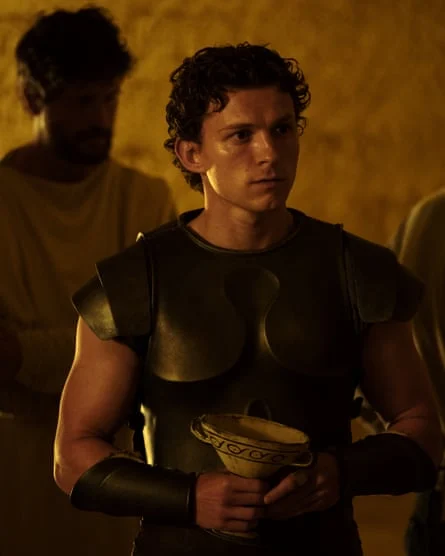
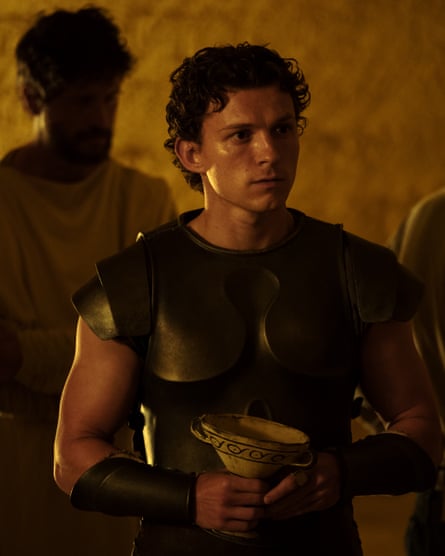
The latest trailer and previously released footage confirm that many of the Odyssey‘s most iconic characters and perilous encounters will be brought to life on the silver screen. Audiences have been given tantalizing glimpses of the monstrous Cyclops, the treacherous whirlpool Charybdis, and Odysseus’s spectral descent into the underworld to commune with the dead. The escalating crisis on Odysseus’s besieged home island of Ithaca is prominently featured in the newest trailer. Robert Pattinson is poised to deliver a formidable performance as Antinous, the most audacious and detestable of the suitors vying for the hand of Odysseus’s devoted wife, Penelope (portrayed by Anne Hathaway), while simultaneously tormenting their son, Telemachus (played by Tom Holland).

Nolan’s penchant for incorporating pivotal, albeit not explicitly detailed, narrative elements from the broader Homeric cycle is evident in the inclusion of the famed Trojan Horse. This ingenious stratagem, devised by Odysseus to breach the defenses of Troy, was featured in the first trailer and was the central focus of the December prologue. While Homer’s Odyssey itself does not recount the full story of the horse’s construction and deployment, it is referenced within the epic. Odysseus requests a bard to narrate the tale, and King Menelaus later mentions it to Telemachus when he seeks news of his father’s whereabouts.
The trailers have yet to reveal how Nolan will visually interpret the sorceress Circe’s transformative powers, which famously turned men into swine and back again. Similarly, the sonic landscape composer Ludwig Göransson will create for the enchanting, yet deadly, Sirens remains a mystery. However, the breadth of material showcased thus far suggests that most, if not all, of the Odyssey‘s celebrated "greatest hits" will be meticulously rendered on screen. Even Odysseus’s loyal dog, Argos, a poignant figure in the epic, makes a notable appearance in the new trailer, underscoring Nolan’s commitment to capturing the poem’s emotional resonance.
Nolan’s Affinity for the Epic and its Thematic Depth
Christopher Nolan, who has cemented his reputation as Hollywood’s preeminent architect of cerebral blockbusters since helming the critically acclaimed Dark Knight trilogy, appears to be an exceptionally fitting choice to adapt The Odyssey. The epic’s vast canvas, encompassing grand adventures, profound family dynamics, the arduous journey home, and the burning quest for revenge, aligns perfectly with Nolan’s thematic interests and directorial prowess.
"You’re always looking for something that hasn’t been done before," Nolan stated during his interview with Colbert on Monday night, articulating his motivation for undertaking this monumental project. "And Greek mythology… hasn’t really been done on a kind of A-budget, big studio, throw everything at the screen and see what sticks kind of way. It’s just one of the great adventure stories, and I really wanted to see it done justice."
A Cinematic Void: The Long Wait for a Definitive Odyssey Adaptation
It is somewhat surprising that The Odyssey has not received a definitive cinematic adaptation prior to Nolan’s endeavor. While the golden age of Hollywood in the 1950s and 1960s drew heavily from biblical narratives and Roman history, Greek mythology remained comparatively underexplored. The era did produce a relatively lightweight Italian "peplum" film, Ulysses (1954), starring Kirk Douglas. More recently, The Return (2022), featuring Ralph Fiennes and Juliette Binoche, focused exclusively on the latter part of Odysseus’s journey, concentrating on his revenge against the suitors and omitting much of the epic’s more fantastical and colorful material. The most comprehensive screen interpretations of the story to date have been for television, including an eight-part Italian series from 1968 and a 1997 mini-series starring Armand Assante and Greta Scacchi.
Roots of the Project: A Long-Held Ambition
Nolan’s deep-seated interest in The Odyssey can be traced back to his initial involvement with Wolfgang Petersen’s Troy (2004), a film that dramatized Homer’s earlier epic, the Iliad, while taking significant liberties with the source material. Nolan was initially slated to replace Petersen as director for a planned Batman v Superman film, which ultimately fell through. Petersen then returned to Troy. As a consolation, Nolan was given the reins for Batman Begins, a hugely successful reboot that propelled him into the upper echelons of Hollywood directors and solidified his status as a visionary auteur of blockbuster cinema.
However, Nolan never relinquished his aspiration to bring a grand Greek epic to the screen. "It was a world I was very interested to explore," he revealed to Empire magazine last year. "So it’s been at the back of my mind for a very long time. Certain images, particularly. How I wanted to handle the Trojan horse, things like that."
Narrative Innovation: Nolan’s Embrace of Non-Linear Storytelling
One of the most compelling aspects of The Odyssey that undoubtedly appealed to Nolan is its sophisticated narrative structure, a remarkable feat for a work of such ancient origin. "It’s the original non-linear narrative," Nolan observed to Colbert, highlighting a technique he has masterfully employed throughout his career. From his early, acclaimed low-budget debut Following to his breakthrough film Memento (2000), Nolan has consistently experimented with temporal fragmentation. His subsequent films, including Inception, Interstellar, and Tenet, further showcase his fascination with the complexities of time and his ability to weave intricate, mind-bending plotlines.
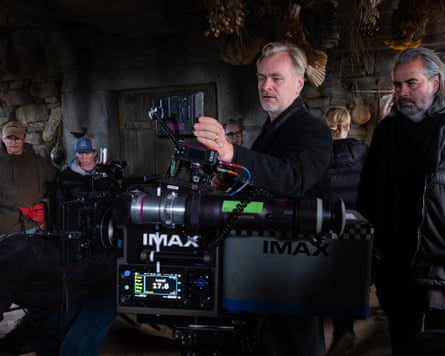
The poem itself, while not involving wormholes or inverted chronology in the scientific sense, features multiple narrative threads. At various points, it shifts focus between Odysseus’s and Telemachus’s journeys, employing a technique that foreshadows modern cross-cutting. Many of the most celebrated episodes – Odysseus’s encounters with the Cyclops and Circe, his communion with the spirits of fallen comrades, and his perilous navigation of the Sirens, Scylla, and Charybdis – are presented as flashbacks. These are primarily recounted by Odysseus himself during his stay with the Phaeacians, a narrative device that mirrors Nolan’s own use of non-linear storytelling. Other stories unfold through anecdotes and digressions, contributing to the epic’s rich tapestry.
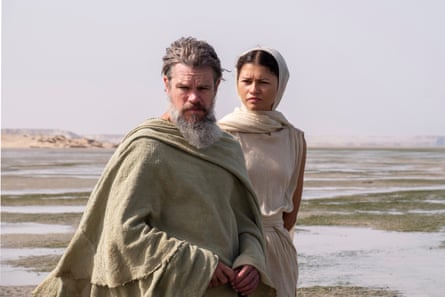
Nolan has confirmed that the film’s narrative will commence in Ithaca, without Odysseus present, mirroring the structure of the poem. This adherence to the source material extends to the film’s likely depiction of the divine realm. Zendaya is reportedly cast as Athena, a pivotal figure in the Odyssey who serves as a crucial patron and helper to both Odysseus and Telemachus.
When questioned by Colbert about the presence of gods in his film, Nolan offered a characteristically enigmatic response, hinting at the film’s intent to immerse audiences in the ancient Greek worldview. "This is a world where people saw gods in everything, everywhere – so the thunder, the tides coming in, the wind blowing. That’s all evidence of divinity that they’re surrounded by, so what we’re trying to do is take the audience and put them in that world and put them in that mindset."
The challenge of portraying divine intervention has been a recurring hurdle for modern adaptations of Homeric epics. Films like Petersen’s Troy and The Return notably omitted the gods, yet their active involvement is fundamental to the original texts. Nolan’s commitment to capturing this essential dimension suggests a potentially more faithful and nuanced interpretation.
Navigating the Moral Complexities of the Odyssey
The extent to which Nolan will delve into the more ethically challenging and violent aspects of The Odyssey remains a subject of considerable interest. The poem’s depiction of slavery, its portrayal of the suitors’ violent demise, and the controversial execution of twelve enslaved women who consorted with the suitors present significant narrative hurdles.
The poem’s servant characters, such as the nurse Eurycleia and the swineherd Eumaeus, are explicitly enslaved workers, and the palace society depicted was fundamentally reliant on human trafficking and forced labor. The poem’s conclusion involves the brutal slaughter of all the suitors. Whether Nolan will extend sympathy to any of them, or present a more nuanced view beyond their villainous portrayal in Homer’s text, is yet to be seen.
Perhaps the most contentious element is the fate of the twelve enslaved women who engaged in sexual liaisons with the suitors, a situation the poem leaves ambiguous regarding the degree of coercion. The reported casting of Mia Goth as Melantho, one of these disloyal characters, suggests that Nolan may not shy away from this grim narrative arc, though previous adaptations have largely avoided depicting this episode. Homer’s stark description of their execution – how they "struggled with their feet for a little while, but not for long" – offers a chilling visual that could translate powerfully to the screen, albeit with significant ethical considerations.
Visualizing the Unseen: Homeric Imagery and Cinematic Translation
The vividness of Homer’s prose offers fertile ground for cinematic interpretation. The poem is replete with unforgettable images that seem almost pre-written for the screen. One such moment occurs when Odysseus witnesses six of his men being snatched from their ship by the monstrous Scylla. His recollection – "I saw above me their hands and feet as they were lifted up" – naturally suggests a visceral point-of-view shot. As Scylla devours the men, Odysseus hears their screams and sees them desperately reaching out to him. It will be fascinating to witness how Nolan translates these and countless other extraordinary moments into a compelling visual narrative.
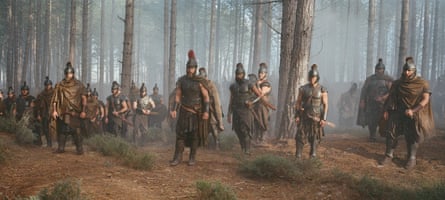
The film’s July 17th release date positions it as a major summer blockbuster, and the sustained marketing campaign, coupled with Nolan’s formidable reputation, suggests Universal Pictures has immense confidence in The Odyssey‘s commercial and critical potential. As audiences await the full unveiling, the prospect of Nolan bringing his signature blend of intellectual rigor and cinematic spectacle to one of the foundational texts of Western literature promises a truly monumental cinematic event.