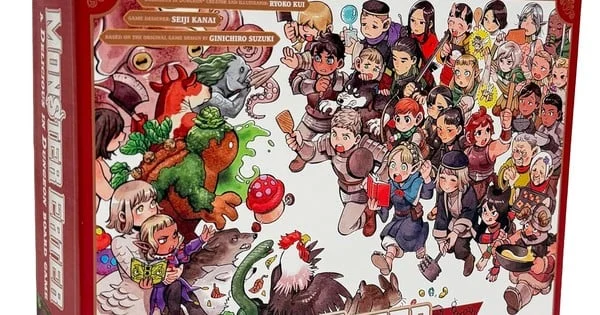
The rules of the game are as follows: You and other players have to travel down two levels of a dungeon, slay some monsters along the way, and then, in true Delicious in Dungeon fashion, cook ’em up real nice, all for some victory points. This tabletop adaptation of the popular anime and manga series Delicious in Dungeon (known in Japan as Dungeon Meshi) translates the beloved narrative of dungeon crawling and culinary adventure into a competitive board game experience. Developed by Arclight and designed by Seiji Kanai, Monster Eater: A Delicious in Dungeon Board Game invites players to embody the spirit of the series, where strategic resource management, tactical combat, and the art of monster gastronomy are key to victory.
Core Gameplay Mechanics and Objectives
At its heart, Monster Eater is a race to the bottom of a two-level dungeon, with the ultimate goal of accumulating the most victory points. Players are dealt a hand of five dungeon cards at a time, which serve as the primary tools for progression and interaction. These cards can be used to advance through the dungeon, strategically force opponents into monster encounters using "encounter" cards, or facilitate escapes from perilous creatures. The dungeon itself is populated by formidable bosses: Chimera Falin guards the first level, while the more elusive Lunatic Magician Sissel awaits on the second. Defeating these bosses, along with the myriad of monsters encountered along the way, and successfully preparing them as meals, directly contributes to a player’s victory point total. The player who has amassed the most victory points by the time Sissel is vanquished emerges as the victor.
Character Representation and Party Management
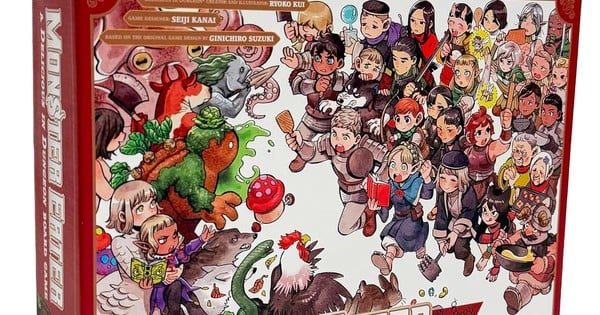
The game cleverly integrates familiar characters from the Delicious in Dungeon franchise by assigning them specific RPG classes within player parties. Each player manages a party, with the core "Laios" party serving as a prime example. This party comprises Laios himself, a formidable warrior, alongside Marcille (magician), Senshi (warrior), Chilchuck (locksmith), and Izutsumi (ninja). Beyond the Laios party, players can also command "Kabru," "Shuro," "Tansu," and "Canaries" parties, each featuring a unique combination of magicians, warriors, and other specialized classes. A notable feature is the inclusion of Falin as a special magician character who can be added to any party, offering an additional strategic layer. The game further enhances flexibility with an optional rule allowing players to freely mix and match characters from different parties, encouraging diverse party compositions and emergent strategies.
The Turn Structure and Resource Management
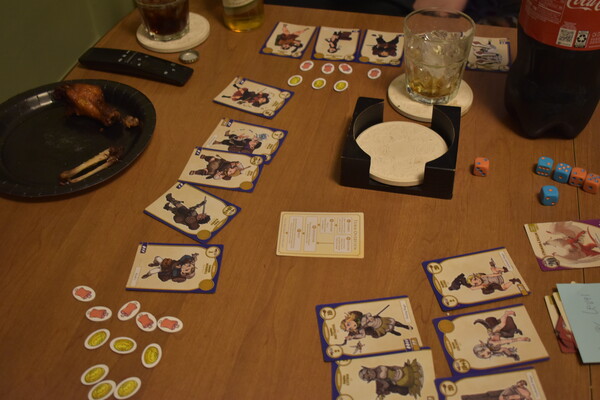
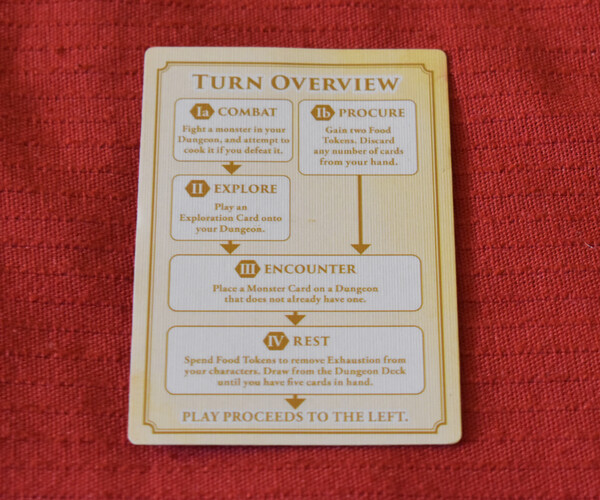
Each player’s turn is structured into distinct phases, designed to guide the flow of dungeon exploration and monster interaction. The core loop involves attempting to progress through the dungeon, provided no monsters are blocking the path. When a monster is encountered, players can engage it using their characters’ attack or magic points, augmented by dice rolls. A unique mechanic within Monster Eater is that characters do not possess traditional HP. Instead, they become "exhausted" after use, rendering them temporarily inactive until revived at the end of the turn by expending a food token.
The act of defeating a monster is only half the battle; the other, arguably more crucial, half involves cooking it. A successful cook roll, requiring a dice roll equal to or greater than the monster’s specified cooking level, yields valuable food tokens and victory points. Food tokens are essential for reviving exhausted characters, a critical aspect of sustained dungeon delving. Failure to defeat a monster or to successfully cook it presents alternative, albeit less advantageous, outcomes. If a monster cannot be overcome, players may "procure" cards by exchanging cards from their hand with those from the deck, but this comes at the cost of halting dungeon progression for that turn. Conversely, if a monster is slain but not successfully cooked, players can still explore the dungeon, but they forfeit any victory points or food tokens from that encounter, emphasizing the importance of the culinary aspect.
Dungeon Progression and Player Interaction
Dungeon progression is managed through "dungeon cards," each representing a specific percentage of the floor explored (e.g., 10%, 20%, 30%). Players collectively play these cards until the total reaches 100%, at which point the player who played the final card is responsible for confronting the floor’s boss on their subsequent turn. Beyond direct progression, player interaction is a significant element, primarily facilitated by "encounter cards." These cards allow players to force opponents into fighting monsters, a strategic maneuver designed to impede their progress and potentially drain their resources.
The turn concludes with a "rest" phase, where players draw new cards to replenish their hands. This phase also allows for the revival of exhausted characters using accumulated food tokens. While the turn structure can initially seem complex, it is streamlined into a manageable four phases (or three if the "procure" action is taken, as it prevents dungeon exploration). A helpful reference card detailing the turn phases is provided, and the game’s mechanics are designed to minimize complex statistical calculations, relying instead on dice rolls for combat and cooking outcomes.
Adaptability and Rule Variations
A notable strength of Monster Eater lies in its inherent adaptability, allowing for significant rule modifications to suit different player preferences and time constraints. The game incorporates "coins," which can be earned and converted into victory points (three coins per point). An optional rule allows these coins to be spent on item cards that grant advantages during dungeon exploration, introducing an economic layer to the gameplay. Party size can also be adjusted, with options for seven, six, or even a more challenging three characters per party. For players seeking a shorter experience, the game can be truncated by ending it upon the defeat of Chimera Falin, the first-level boss. Conversely, for those craving a more extended challenge, the progress cards can be halved (e.g., 5% instead of 10%), effectively doubling the time required to reach the dungeon’s end.
Clarifications and Minor Ambiguities
While the 26-page rulebook comprehensively covers most aspects of the game, a few minor ambiguities may arise during play. One such point of discussion could be the strategic implication of dungeon progression versus point accumulation. If a player is not yet well-equipped to earn significant victory points, should they deliberately slow their dungeon progression to maximize their chances of success later? Additionally, the wording around "encounter cards" can lead to questions. The rulebook states, "you may place an encounter card," suggesting an optional action. This raises the question of what happens if a player is unable to place an encounter card, perhaps due to a lack of available encounter cards in hand or because all players are currently engaged in combat. These are considered minor points, likely to be resolved through player consensus or by simply embracing the learning curve inherent in any new board game.
Historical Context and Franchise Origins
Monster Eater: A Delicious in Dungeon Board Game is not an isolated creation but rather a component of a larger Japanese board game franchise, Monster Maker, which dates back to 1988. Created by Ginichiro Suzaki, Monster Maker has achieved cult status in Japan, evidenced by its numerous board game sequels and video game tie-ins, as documented on the official website, Board Game Geek, and the National Museum of Play’s collection. Despite its Japanese popularity, the franchise has remained relatively obscure in the American market, with Monster Eater itself being a discovery for many players.
According to Monster Eater‘s official handbook, several modifications were implemented from the original Monster Maker game to create a more streamlined and compact experience. For instance, players in Monster Eater are dealt five cards per hand, a reduction from the eight cards drawn in the original Monster Maker. The game’s structure also differs; Monster Eater focuses on descending through a two-level dungeon, whereas the original involved entering a cave for treasure and then escaping it. Crucially, the culinary aspect, so central to Monster Eater and its Delicious in Dungeon inspiration, is entirely absent from the original Monster Maker, where combat concludes once an enemy is slain.
Artistic Direction and Design Philosophy
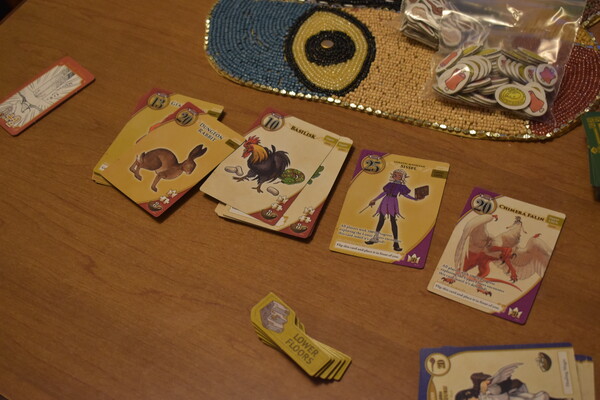
The decision by Arclight to develop a Delicious in Dungeon-themed variation of Monster Maker appears to have been a strategically sound one. The game successfully captures the essence of both its source material and its parent franchise. The dungeon-crawling and monster-cooking mechanics are remarkably faithful to the spirit of Delicious in Dungeon, offering an engaging and thematic experience. Furthermore, the artwork, characterized by its "chibified anime" aesthetic, is consistently described as "adorable." This stylistic choice is deeply rooted in the Monster Maker franchise’s history, which has always featured a cute, stylized visual design. Designer Seiji Kanai is credited with a masterful blending of the visual styles of both Monster Maker and Delicious in Dungeon, achieving a cohesive and appealing aesthetic that respects the distinct identities of both properties without straying too far from their established visual languages.
Analysis of Implications and Broader Impact
The success of Monster Eater: A Delicious in Dungeon Board Game lies in its ability to appeal to both fans of the Delicious in Dungeon anime and manga and board game enthusiasts seeking a unique and engaging experience. By leveraging the established popularity and thematic elements of Delicious in Dungeon, Arclight has tapped into a pre-existing audience eager for merchandise that expands their engagement with the franchise. The game’s mechanics, which blend resource management, strategic card play, and dice-based combat and cooking, offer a good balance of depth and accessibility.
The adaptability of the rules suggests a design that anticipates diverse player groups and playstyles. The option to shorten or lengthen the game, adjust party size, and incorporate optional economic elements allows for a highly customizable experience. This flexibility is crucial for a board game aiming for broad appeal, as it can cater to casual family game nights as well as more dedicated gaming sessions among friends.
The game’s roots in the long-standing Monster Maker franchise also provide a fascinating case study in IP adaptation and evolution. By revisiting and re-imagining its own mechanics through the lens of a highly popular contemporary franchise like Delicious in Dungeon, Arclight has demonstrated a forward-thinking approach to intellectual property management. This strategy not only breathes new life into an older series but also allows it to reach new audiences who might not have been familiar with the original Monster Maker.
The relative obscurity of the Monster Maker franchise in America, contrasted with the widespread popularity of Delicious in Dungeon, highlights the power of cultural trends and international market penetration. While Monster Maker may have been a cult hit in Japan for decades, Delicious in Dungeon‘s global success has provided a significant platform for its associated products. This symbiotic relationship underscores the increasing importance of cross-media franchises in the modern entertainment landscape.
Conclusion: A Worthy Culinary and Combat Endeavor
Despite a few minor points of ambiguity that are common in many tabletop games, Monster Eater: A Delicious in Dungeon Board Game stands out as a thoroughly enjoyable experience. The game’s strength lies in its successful fusion of engaging gameplay mechanics with the beloved themes and characters of Delicious in Dungeon. The blend of dungeon crawling, monster slaying, and the essential element of cooking monsters creates a unique and thematic gameplay loop. The adorable artwork further enhances the overall appeal, making it a visually pleasing as well as strategically rewarding experience. For those seeking a fun, accessible, yet strategically rich board game, Monster Eater offers a compelling adventure that is sure to charm gamers of all levels of experience, proving that the quest for victory points can be as satisfying as a well-prepared monster feast.