Mortal Kombat II serves as the direct sequel to the 2021 reboot, expanding the cinematic universe based on the iconic video game franchise developed by Midway Games and later NetherRealm Studios. Produced by New Line Cinema and distributed by Warner Bros. Pictures, the film continues the narrative established in the previous installment while introducing several of the most recognizable characters from the franchise’s thirty-year history. Directed by Simon McQuoid, who returns to the helm after his work on the 2021 film, and written by Jeremy Slater, the production aims to address the narrative and technical feedback from the first entry, transitioning from an introductory recruitment story to the central tournament that defines the series’ lore.
Narrative Foundations and Plot Development
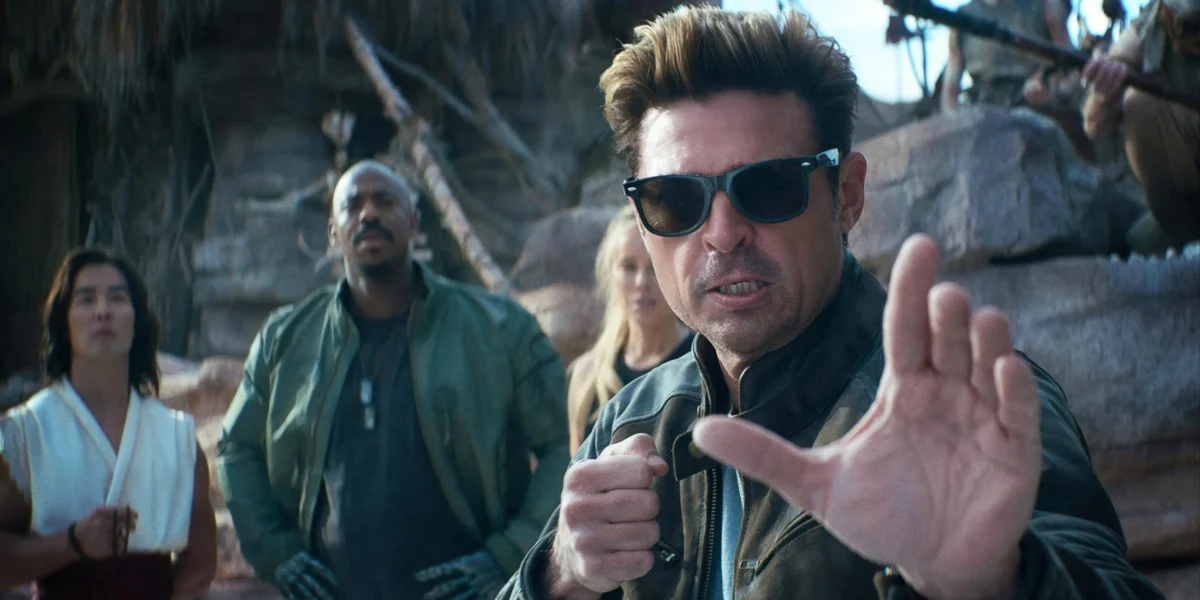
The narrative of Mortal Kombat II picks up immediately following the events of the 2021 film, which concluded with the Earthrealm champions successfully defending themselves against an unsanctioned assault by Outworld forces. In the aftermath of that conflict, the protagonist Cole Young, portrayed by Lewis Tan, leads a search for new defenders to bolster their ranks before the official Mortal Kombat tournament begins. This recruitment drive leads the team to Johnny Cage, played by Karl Urban, a character whose absence in the first film was a significant point of discussion among the fanbase.
The plot centers on the escalating threat posed by Shao Kahn, the tyrannical emperor of Outworld, portrayed by Martyn Ford. Unlike the previous film, which focused on the "Arcana" or internal powers of the warriors, the sequel moves toward the structured combat of the tournament itself. The stakes involve the survival of Earthrealm, as a loss in the tournament would allow Shao Kahn to merge the realms and enslave humanity. The screenplay by Jeremy Slater introduces a dual-narrative structure, balancing the preparation of the Earthrealm warriors with the internal politics of Outworld, specifically focusing on Kitana, played by Adeline Rudolph. Kitana’s arc involves her realization of her true heritage and her complex relationship with her adoptive father, Shao Kahn, providing a more grounded emotional core to the high-fantasy setting.
Chronology of the Mortal Kombat Cinematic Franchise
The development of Mortal Kombat II is part of a broader timeline of adaptations that began in the mid-1990s. To understand the positioning of this sequel, one must look at the history of the property on the big screen:
- 1995: The original Mortal Kombat film, directed by Paul W.S. Anderson, is released. It becomes a commercial success, grossing over $122 million worldwide and setting a standard for video game adaptations of that era.
- 1997: The sequel, Mortal Kombat: Annihilation, is released to critical and commercial disappointment, leading to a long hiatus for the film franchise.
- 2010: Director Kevin Tancharoen releases the short film Mortal Kombat: Rebirth, which leads to the web series Mortal Kombat: Legacy, reigniting interest in a gritty, live-action reboot.
- 2021: The rebooted Mortal Kombat is released during the COVID-19 pandemic. Despite a simultaneous release on HBO Max, it grosses $84.4 million at the global box office and becomes one of the most-streamed titles on the platform, prompting Warner Bros. to greenlight a sequel.
- 2022–2023: Jeremy Slater is hired to write the script, and production begins in Australia. Filming faced delays due to the 2023 SAG-AFTRA and WGA strikes but resumed in late 2023 to complete principal photography.
Cast and Character Dynamics
The casting strategy for Mortal Kombat II combines returning performers with high-profile additions intended to broaden the film’s appeal. Karl Urban’s inclusion as Johnny Cage represents a shift in tone for the sequel. Cage is depicted as a fading action star of the 1990s, providing a meta-commentary on the action genre while serving as a cynical foil to the more stoic characters like Liu Kang (Ludi Lin) and Raiden (Tadanobu Asano).
The ensemble cast includes:
- Lewis Tan as Cole Young: An original character created for the films, serving as the audience’s perspective.
- Adeline Rudolph as Kitana: A fan-favorite princess from Edenia who joins the fight against Outworld.
- Jessica McNamee as Sonya Blade and Josh Lawson as Kano: Returning characters whose antagonistic chemistry was a highlight of the 2021 film.
- Hiroyuki Sanada as Scorpion and Joe Taslim as Bi-Han (Sub-Zero/Noob Saibot): The central rivalry of the franchise, which takes a darker turn in the sequel as Bi-Han undergoes a transformation.
- Martyn Ford as Shao Kahn: A physically imposing actor cast to minimize the need for full CGI for the film’s primary antagonist.
Technical Direction and Visual Execution
A primary focus of the production for Mortal Kombat II was the refinement of action choreography and visual effects. Director Simon McQuoid and the stunt team aimed for a more kinetic and impactful style of combat. While the 2021 film was criticized for occasionally static camera work and a reliance on digital environments, the sequel utilizes more practical sets and elaborate wirework.
The film emphasizes "tactile" violence, a hallmark of the game series. This includes the use of prosthetic effects for character injuries and creature designs. For instance, the character of Baraka and the various monsters of Outworld were developed using a blend of physical makeup and digital enhancement to ensure they interacted realistically with the human actors. The production team also increased the complexity of the "Fatalities"—the cinematic finishing moves synonymous with the brand—ensuring they align with the R-rating that fans of the franchise expect.
Industry Context and Commercial Implications
The release of Mortal Kombat II occurs during a significant era for video game adaptations. Following the success of projects like The Last of Us, The Super Mario Bros. Movie, and Fallout, the industry has seen a shift toward taking gaming intellectual property (IP) more seriously as a source of prestige and high-revenue content.
Data from the 2021 film’s performance indicates a strong appetite for the brand. Despite the challenges of the pandemic-era box office, the film achieved the biggest opening weekend for an R-rated film since the start of the pandemic at that time. Market analysis suggests that the sequel is positioned to capitalize on a more stable theatrical market. By incorporating Johnny Cage and Shao Kahn, the studio is leveraging "nostalgia bait" to draw in older fans of the 1990s games while maintaining the interest of younger audiences who follow the modern NetherRealm Studios titles.
Furthermore, the production’s decision to film in South East Queensland, Australia, was supported by the Australian Government’s Location Incentive and the Queensland Government’s Production Attraction Strategy. This provided significant economic benefits to the local industry, creating hundreds of jobs for Australian cast and crew, which has become a common trend for large-scale Warner Bros. productions.
Official Responses and Creative Vision
While official press releases from New Line Cinema have been carefully managed to avoid spoilers, writer Jeremy Slater has spoken in interviews about the creative direction of the sequel. Slater noted that the goal was to "correct the course" regarding the absence of the tournament in the first film. "The first movie was about the assembly of the team; the second movie is the war," Slater indicated in a summary of the project’s goals.
Director Simon McQuoid has emphasized the importance of the characters’ emotional stakes. In various production notes, the creative team expressed that for the action to matter, the audience must care about the warriors’ personal journeys. This led to the expanded backstories for characters like Kung Lao (Max Huang) and the exploration of the tragedy within the Edenian royal family.
Broader Impact and Future Outlook
Mortal Kombat II is not merely a standalone sequel but a foundational piece for a potential cinematic universe. The film includes several narrative threads—often referred to as "sequel bait"—that hint at the introduction of further realms like Netherrealm and Orderrealm.
The success of this film will likely determine the future of the franchise at Warner Bros. Discovery. If the sequel meets or exceeds the commercial benchmarks of its predecessor, it could lead to spin-off projects or a third installment focused on the "Final Battle" for the realms. From a cultural perspective, the film continues to solidify Mortal Kombat as one of the few video game properties capable of sustaining a multi-generational film franchise, bridging the gap between the campy aesthetic of the 90s and the high-production values of contemporary action cinema.
As the film moves toward its global release, it stands as a testament to the enduring power of the "Earthrealm vs. Outworld" mythos. By balancing the "histrionic carnage" expected by the fanbase with a more structured narrative and improved technical execution, Mortal Kombat II seeks to define the modern era of martial arts fantasy on the big screen.