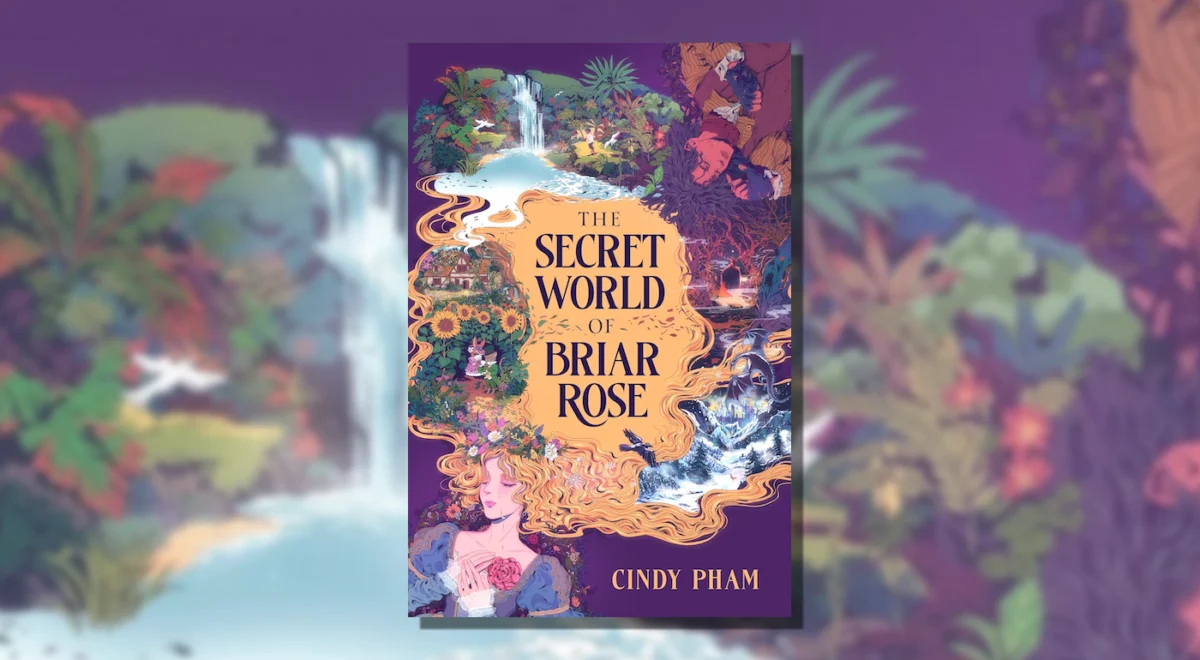
Kokila, an imprint of Penguin Random House, is set to release Cindy Pham’s anticipated novel, "The Secret World of Briar Rose," on June 2nd, promising a fresh, queer retelling of the classic "Sleeping Beauty" fairytale. The publication marks a significant moment for contemporary fantasy literature, offering a narrative that intertwines the beloved elements of a timeless story with modern sensibilities and diverse representation. The book delves into themes of resilience, sisterhood, and the power of dreams in a world ravaged by conflict.
A Kingdom in Decline and a Sister’s Desperate Search
The narrative unfolds a century after Princess Amelia of Gyldan fell into an enchanted slumber, an event that, according to popular legend, plunged the once-thriving kingdom into an era of destitution and vulnerability to external aggression. This backdrop sets the stage for the protagonist, Corin, a hardened thief who navigates the fractured landscape of Gyldan with a profound skepticism towards fables and folklore. Her cynicism is deeply rooted in the harsh realities of her life, characterized by constant displacement and the struggle for survival in a land perpetually scarred by war.
Corin’s immediate concern is the disappearance of her younger sister, Elly. Driven by a desperate hope for a better life, Elly has run away, reportedly seeking the legendary sleeping princess, a quest that Corin views as a dangerous delusion fueled by fairy tales. Corin’s search leads her through the decaying underbelly of Gyldan, into its forgotten underground tunnels. It is here, amidst the ruins of the ancient castle, that her disbelief begins to waver. She encounters enigmatic beings who appear to be custodians of Gyldan’s golden age, guardians of a hidden portal that grants access to Princess Amelia’s subconscious. Driven by the faint sound of Elly’s voice, Corin makes a perilous leap into this dreamscape, sealing the entrance behind her in a decisive act of pursuit and protection.
Entering the Dreamscape: A World of Whimsy and Hidden Truths
Upon entering Princess Amelia’s dream world, Corin finds a landscape of vibrant imagination, a stark contrast to the desolation of her waking reality. Here, she is reunited with Elly, and their journey takes an unexpected turn as they encounter two pivotal figures: Briar Rose, Amelia’s whimsical alter ego, and Malicine, a sharp-witted demon possessing formidable magical abilities. The trio embarks on an exploration of fantastical realms, from glittering ice castles and sprawling sunflower mazes to ethereal oceans teeming with stars.
However, as their adventure progresses, Corin’s inherent wariness resurfaces. She begins to suspect that Briar Rose’s seemingly perfect paradise conceals darker secrets. The illusion of an idyllic world starts to crack, hinting at buried traumas and unspoken truths that the subconscious cannot indefinitely suppress. This foreshadows a deeper exploration of the psychological impact of conflict and loss, both on an individual and a societal level.
The Weight of Sisterhood and the Shadow of War
The narrative further illuminates the complex relationship between Corin and Elly, particularly in the aftermath of their last spoken words: "I hate you." For Corin, this declaration, while seemingly harsh, echoes a familiar sibling dynamic, a "universal language" they have spoken fluently throughout their lives. Their shared history is punctuated by petty squabbles – Corin’s destruction of Elly’s chalk drawings, Elly’s disruptive humming – yet underscored by an unbreakable bond, evidenced by their nightly habit of huddling together for warmth.
Their lives have been irrevocably shaped by the ravages of war. The destruction of their homes by warplanes and the seizure of their family’s possessions by soldiers have left them with little else but each other. Elly’s final "I hate you" carries a weight that Corin recognizes as different, a deeper severance born from the relentless pressures of their existence.
The disappearance of Elly occurs with the swiftness of many disappearances in Gyldan, a city defined by its precarious existence. The long-standing territorial conflict between rival nations has led to constant upheaval. Families are uprooted without warning as their homes are designated strategic points, and residents are treated as mere collateral damage, easily overlooked and discarded. Corin’s grandparents, who sought refuge in Gyldan’s prosperity, found their hopes shattered when the royal family abandoned its people, leading to widespread chaos and the fragmentation of the kingdom.

The Search and the Glimmer of Shared Experience
Corin’s search for Elly is a poignant illustration of the pervasive despair in Gyldan. She distributes posters of her sister throughout the ravaged city, from soup kitchens to deserted marketplaces and even shuttered shops. Her own physical deterioration—gaunt limbs, hollowed cheeks, fresh bruises, and tattered clothing—reflects the harshness of her environment. At eighteen, she bears the weary countenance of someone who has endured far too much.
The charcoal sketch of Elly, meticulously rendered with every freckle and birthmark, is a testament to Corin’s deep love and her agonizing loss. Yet, the drawing feels inadequate, failing to capture the essence of Elly – the feel of her hand, the light in her eyes, the dirt under her nails from her fascination with the earth’s hidden worlds. Elly’s persistent belief in the sleeping princess, a remnant of their childhood surrounded by artisans, contrasts sharply with Corin’s pragmatic survivalist outlook.
During her search, Corin encounters an elderly woman, whose frail voice and worn appearance belie a sharp observation. The woman’s appreciation for Corin’s artistic talent, evident in the poster, opens a door to a shared past. She speaks of the artists who once lived by the river, a community destroyed by the insurrection. This prompts Corin to reveal her own artistic lineage, her mother a painter and her father a sculptor. The shared memories of art and family create a brief but meaningful connection between the two women, both survivors of profound loss.
The woman’s words of encouragement—"You must keep painting, then. Sometimes art can be the only refuge in this world"—resonate deeply with Corin. She recalls the vibrant images of her childhood home, the tactile memories of her parents’ artistic endeavors, and the warmth of their love. However, this reflection is quickly overshadowed by the brutal reality of her past. The insurrection that claimed her friends and her home serves as a stark reminder that dreams and art, while offering solace, cannot erase the violence and loss that have defined her existence.
Survival as the Ultimate Art Form
Corin’s inner monologue reveals a profound shift in perspective. While the elderly woman sees art as a refuge, Corin views it as a luxury she can no longer afford. The memories of her mother’s discarded paintings and her father’s tragic end, culminating in his suicide, have instilled in her a deep-seated belief that sentimentality is a dangerous indulgence. The "raging river that took three bodies" and the image of a baby wailing as the water drowned them become the potent symbols of her trauma, a stark contrast to the artistic beauty the elderly woman cherishes.
Corin’s immediate priority is survival, a relentless pursuit that has overshadowed any capacity for artistic expression. The loss of her friends and the subsequent isolation with Elly, and now her solitary existence, have forged her into a pragmatist. The narrative concludes with the stark realization that Elly has not returned, leaving Corin to face her bleak reality alone.
Thematic Resonance and Literary Significance
"The Secret World of Briar Rose" is poised to offer readers a compelling blend of fantasy, emotional depth, and social commentary. Cindy Pham’s retelling of "Sleeping Beauty" transcends a simple reimagining, delving into the psychological impact of war, the enduring strength of familial bonds, and the complexities of identity within marginalized communities. The introduction of queer themes adds another layer of representation, promising a narrative that resonates with a broader audience and contributes to the ongoing evolution of fairytale retellings in contemporary literature. The story’s emphasis on resilience in the face of overwhelming adversity, coupled with its exploration of the blurred lines between reality and dreams, positions it as a significant literary work in the current fantasy landscape.
The novel’s impending release by Kokila underscores the growing demand for diverse and inclusive storytelling, offering a testament to the power of narratives that reflect the multifaceted nature of human experience. As readers prepare to enter the titular "Secret World of Briar Rose," they can anticipate a journey that is as emotionally resonant as it is imaginatively rendered, a testament to the enduring power of stories to both reflect and shape our understanding of the world.