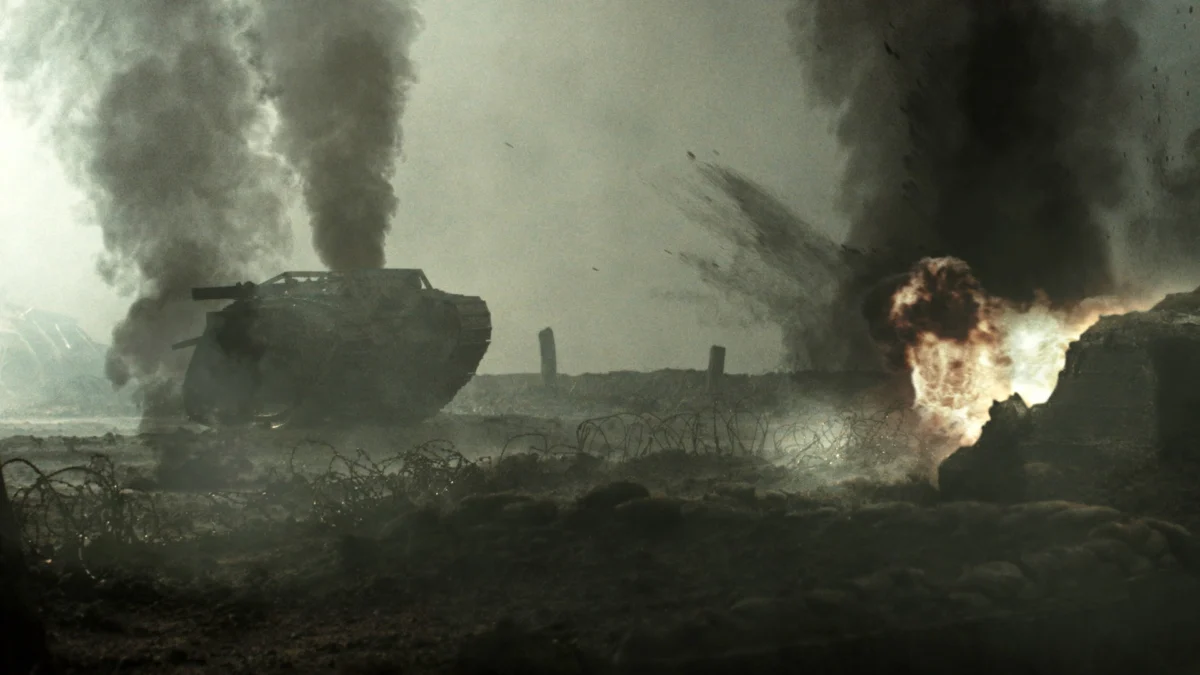
Kaleidoscope Entertainment has officially unveiled the full-length trailer for Landship, an upcoming World War I action feature that shifts the cinematic focus to the mechanical and psychological rigors of early armored warfare. Directed by Callum Burn, the film serves as a spiritual successor to his previous historical aviation dramas, including Lancaster Skies, Spitfire Over Berlin, and Battle Over Britain. Set against the harrowing backdrop of the 1917 Battle of Passchendaele, the narrative follows a nine-man British tank crew as they navigate the treacherous terrain of the Western Front in a Mark IV tank. The production aims to provide a granular, claustrophobic look at the "Great War" through the lens of a specific military unit, emphasizing the transition from traditional infantry tactics to the industrial age of mechanized combat.
Narrative Overview and Production Context
The film centers on a specific mission during a pivotal Allied offensive intended to break the years-long stalemate in the trenches. The crew of the British Mark IV tank is tasked with neutralizing a series of heavily fortified German bunkers that have halted the infantry’s progress. However, the mission takes a catastrophic turn when the massive vehicle becomes immobilized in a water-logged shell crater, leaving the men stranded just yards from the German lines. The story then transitions from a traditional war movie into a survival thriller, as the crew must contend with external threats like relentless enemy gunfire and internal crises including starvation, physical exhaustion, and the psychological phenomenon then known as "shellshock."
The ensemble cast features a range of British talent, including Vin Hawke, David Dobson, Matthew Canny, Jack Sherlock, Micky David, Ricky Oakley, Daniel Cornish, and Sam Dowdy. The screenplay was penned by the father-son filmmaking duo Andrew Burn and Callum Burn, who also produced the project. Their production philosophy has historically leaned toward utilizing practical effects and historical reconstructions to maintain a high degree of authenticity despite working within the constraints of independent British cinema.

The Historical Significance of the Landship and the Mark IV Tank
The title Landship refers to the original designation given to armored vehicles during their secret development by the British Admiralty’s "Landship Committee." Formed in 1915 at the behest of Winston Churchill, the committee sought to adapt naval technology—specifically armor plating and heavy weaponry—to land-based combat to overcome the lethal effectiveness of machine guns and barbed wire.
The Mark IV tank, featured prominently in the film, was the most widely produced British tank of the First World War. Entering service in 1917, it incorporated several improvements over its predecessors, the Mark I through Mark III. Key technical specifications of the Mark IV included:
- Weight: Approximately 28 to 29 tons.
- Armament: The "Male" variant carried two 6-pounder guns and three Lewis machine guns, while the "Female" variant carried five Lewis machine guns.
- Armor: Ranging from 6mm to 12mm, designed to withstand small arms fire and shrapnel, though vulnerable to direct artillery hits.
- Crew: Typically eight or nine men, consisting of a commander, a driver, four gunners, and two gearsmen.
- Speed: A maximum speed of roughly 3.7 mph on flat ground, which often dropped significantly in the mud of the Western Front.
The conditions inside these vehicles were notoriously brutal. Crews were subjected to temperatures reaching 120 degrees Fahrenheit, carbon monoxide fumes from the engine, and the deafening noise of the machinery and incoming fire. Landship appears to prioritize these sensory details to convey the reality of early 20th-century tank warfare.
Strategic Context: The Battle of Passchendaele
The film’s setting, the Battle of Passchendaele (also known as the Third Battle of Ypres), remains one of the most controversial and bloody campaigns of World War I. Fought between July and November 1917, the offensive aimed to seize the ridges south and east of the Belgian city of Ypres as part of a strategy to outflank the German fourth army and reach the coast.

The battle is historically synonymous with the "fetid mud" mentioned in the film’s synopsis. Unusually heavy rainfall combined with the destruction of the region’s intricate drainage systems by constant shelling turned the battlefield into a quagmire. This environmental factor was particularly devastating for the British Tank Corps. In the mud of Passchendaele, many tanks became "ditched" or stuck, rendering them stationary targets for German anti-tank rifles and field artillery. By focusing the plot on a tank trapped in a shell crater, the filmmakers are drawing directly from the historical record of the 1917 offensive, where hundreds of tanks were lost not to enemy action, but to the terrain itself.
Directorial Vision and the Burn Brothers’ Filmography
Callum Burn has carved out a niche within the British film industry by producing period-accurate war films that focus on the technical and human elements of military history. His previous works, such as Lancaster Skies (2019), were noted for their dedication to portraying the lives of Royal Air Force (RAF) bomber crews with a level of detail often missing from larger Hollywood blockbusters.
Industry analysts note that Burn’s films often appeal to a specific demographic interested in military history and heritage. While these productions may lack the astronomical budgets of films like Sam Mendes’s 1917 or Christopher Nolan’s Dunkirk, they utilize focused storytelling to explore the "niche" aspects of war. In the case of Landship, the move from the skies to the trenches represents a shift in perspective but maintains the director’s established interest in the mechanical icons of the British military.
Implications for the British Film Industry
The release of Landship reflects a broader trend in the United Kingdom’s independent film sector: the continued viability of historical dramas. These films often perform well in domestic markets and find success through digital distribution and international sales to territories with shared historical interests. Kaleidoscope Entertainment, the distributor for Landship, has a track record of bringing these types of mid-budget genre films to a wider audience.

The decision to focus on a tank crew also fills a gap in the war film genre. While infantry stories and aerial dogfights are common, tank-centric films are relatively rare. Notable examples include the 2014 film Fury, which focused on a Sherman tank in WWII, and the 1943 film Sahara. By setting Landship in WWI, the filmmakers are exploring the very birth of armored combat, a period characterized by experimental technology and extreme vulnerability.
Technical Execution and Cinematic Style
The trailer for Landship suggests a visual style that emphasizes the contrast between the vast, desolate landscape of No Man’s Land and the cramped, oil-stained interior of the MKIV. The cinematography utilizes a muted color palette—heavy on greys, browns, and deep greens—to reflect the somber atmosphere of the 1917 Western Front. Sound design also appears to play a critical role, with the mechanical grinding of the tank’s tracks and the concussive force of nearby explosions serving as a constant auditory reminder of the characters’ precarious situation.
Furthermore, the film addresses the psychological impact of war through the inclusion of shellshock. In 1917, the medical understanding of what we now call Post-Traumatic Stress Disorder (PTSD) was in its infancy. Soldiers suffering from the condition were often misunderstood or accused of cowardice. By weaving this element into the survival narrative, the film aims to provide a more holistic view of the soldier’s experience beyond the physical combat.
Release Schedule and Availability
Kaleidoscope Entertainment has scheduled the UK theatrical release of Landship for June 26, 2026. This summer release window places the film in a competitive market, though its status as a specialized historical drama may help it stand out to its target audience. As of May 2026, no official release date has been confirmed for the United States or other international markets, though industry insiders expect a digital and VOD (Video on Demand) rollout following the initial UK theatrical run.

As the centenary of the Great War has passed, films like Landship continue to serve as a medium for public engagement with the complexities of 20th-century history. By focusing on the nine men inside the Mark IV, the film attempts to humanize the massive industrial forces that shaped the modern world, offering a narrative of resilience amidst the machinery of destruction.