The Evolution of the Concert Film Medium
The concert film has undergone a dramatic transformation over the last decade, evolving from simple archival recordings to massive theatrical events. While artists such as Miley Cyrus, Justin Bieber, Taylor Swift, and P!nk have successfully utilized the format to reach audiences unable to attend live shows, the Eilish-Cameron collaboration introduces a new level of technical ambition. By integrating 3D technology—a medium James Cameron has championed through the Avatar franchise and the re-release of his earlier works—the production aims to eliminate the "fourth wall" between the screen and the viewer.
This production arrives at a time when concert films are experiencing a commercial renaissance. Following the record-breaking success of Taylor Swift’s The Eras Tour film and Beyoncé’s Renaissance: A Film by Beyoncé, the industry has recognized a sustained demand for high-quality, large-format musical experiences. However, the decision to film in native 3D distinguishes this project from its contemporaries, prioritizing depth and spatial immersion over traditional 2D cinematography.
Career Context: The Rise of Billie Eilish
At 24 years of age, Billie Eilish has established a career trajectory that rivals the industry’s most seasoned veterans. With ten Grammy Awards and two Academy Awards—the latter for her contributions to the Barbie soundtrack ("What Was I Made For?") and the James Bond franchise (No Time to Die)—Eilish has become a definitive voice for Gen Z. Her music, characterized by its genre-blurring production and deeply personal lyricism, is often created in close collaboration with her brother and creative partner, Finneas O’Connell.
The "Hit Me Hard and Soft" tour follows the release of her third studio album of the same name, which received widespread critical acclaim for its sonic experimentation. The album’s themes of vulnerability, fame, and identity are central to the film’s narrative, as the camera tracks Eilish’s transition from a studio-bound prodigy to a commanding arena performer. The tour itself has been noted for its minimalist yet high-impact production design, focusing on the artist’s physical presence rather than traditional pyrotechnics or backup dancers.
The Technical Collaboration with James Cameron
The involvement of James Cameron as a director and technical consultant marks a rare foray into the music industry for the filmmaker. Known for his rigorous standards regarding visual fidelity, Cameron utilized specialized 3D camera rigs to capture the concert. These cameras were positioned to replicate the vantage point of a front-row attendee, providing a level of detail that includes the texture of the stage, the movement of the crowd, and the micro-expressions of the performer.
Cameron’s influence extends beyond the technical specifications. The film includes a series of candid interviews conducted by Cameron himself in the hours leading up to the performances. These segments provide a counter-narrative to the high-energy concert footage, offering insights into Eilish’s creative philosophy. The dialogue between the two directors—one a titan of cinema and the other a titan of music—highlights a mutual interest in pushing the boundaries of how audiences consume art.
Narrative Structure and Behind-the-Scenes Access
The 114-minute runtime is strategically divided between live performance and documentary-style glimpses into the tour’s logistics. Viewers are granted access to Eilish’s pre-show rituals, which involve rigorous physical therapy and vocal coaching sessions. This inclusion serves to humanize the global superstar, illustrating the physical toll of a sold-out world tour and the discipline required to maintain peak performance levels.
Key thematic elements explored in the film include:
- Gender and Identity: Eilish discusses the persistent public scrutiny regarding her fashion choices and the gendered expectations placed upon female artists.
- The Solo Performance: Unlike many pop tours that rely on extensive ensembles, Eilish performs much of her set alone on a large, LED-equipped rectangular stage "in the round." The film explores the psychological impact of being the sole focus of tens of thousands of fans.
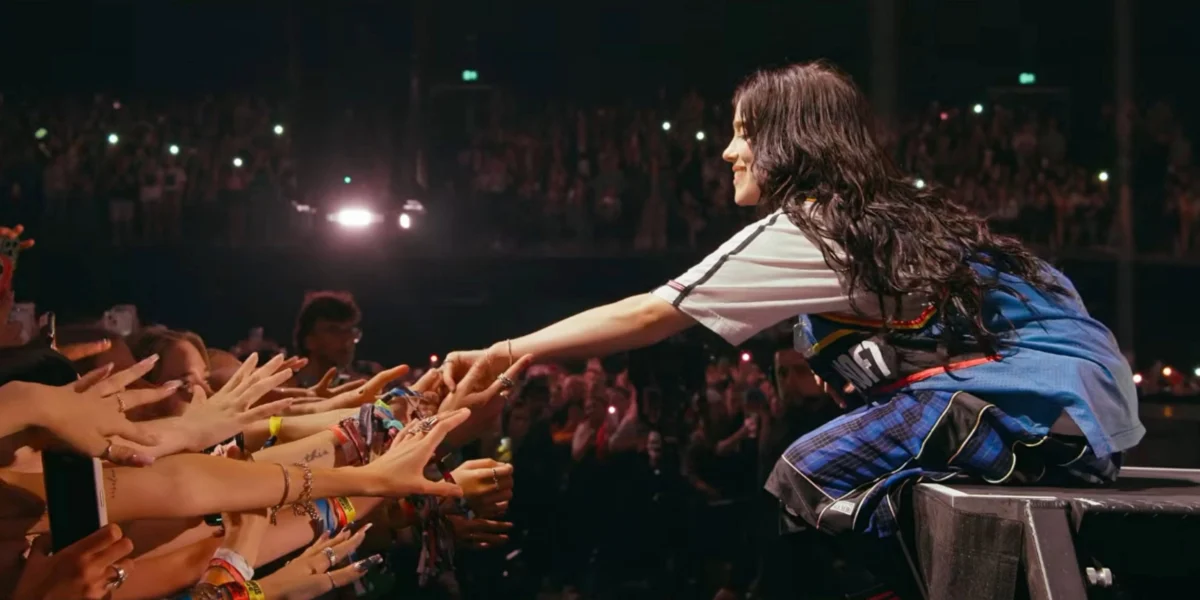
- Fan Synergy: The 3D technology is used to capture the "energy" of the audience, emphasizing the symbiotic relationship between the artist and her fanbase.
Stage Design and Visual Presentation
The visual heart of the film is the "Hit Me Hard and Soft" stage, a minimalist rectangular structure positioned in the center of the arena. This "in the round" configuration allows for a 360-degree viewing experience, which Cameron’s cameras exploit to create a sense of scale. While a small group of musicians and singers are positioned in a sub-stage pit, Eilish dominates the primary LED surface.
The lighting design is choreographed to complement the 3D effects, using shadows and light beams to create a sense of physical volume within the frame. This approach ensures that the "sensory overload" Eilish strives for in her live shows is replicated for theater-goers. The film’s editing maintains a balance between wide-angle shots that showcase the architecture of the arena and extreme close-ups that highlight the intimacy of Eilish’s vocal delivery.
Industry Implications and Market Analysis
The release of Billie Eilish Hit Me Hard and Soft: The Tour Live in 3D is expected to have several implications for the entertainment industry:
- Re-evaluating 3D Technology: After a period of declining interest in 3D cinema outside of major blockbusters, this film could signal a new use case for the technology in the music and documentary sectors.
- Theatrical Longevity: As streaming services continue to dominate home media, "event cinema" like this provides a compelling reason for audiences to return to theaters, offering an experience that cannot be easily replicated on a standard television or smartphone.
- Global Accessibility: The film acts as a democratization of the concert experience. With ticket prices for major tours reaching historic highs, a theatrical release allows a broader demographic to participate in the cultural moment at a fraction of the cost.
Chronology of Production
The development of the film followed a strict timeline coinciding with the "Hit Me Hard and Soft" world tour:
- May 2024: Release of the Hit Me Hard and Soft album, setting the creative foundation for the tour.
- Tour Launch: The world tour commenced with sold-out dates across North America and Europe.
- Filming Phase: Production took place over several key dates, with James Cameron’s team integrating their 3D rigs into the existing tour infrastructure.
- Post-Production: Eilish and Cameron collaborated on the edit, ensuring the 3D effects were optimized for the 114-minute final cut.
- 2026 Release: The film is scheduled for a wide theatrical release, supported by IMAX and 3D-equipped venues globally.
Official Reactions and Critical Outlook
While official reviews remain under embargo until closer to the release date, preliminary reactions from production insiders suggest that the film sets a new standard for the genre. Representatives for Eilish have emphasized her role as a co-director, noting that the film is a direct extension of her artistic vision. Cameron has publicly praised Eilish’s "fearless" approach to performance, comparing her stage presence to the immersive worlds he creates in his fictional films.
For fans, the film offers a definitive record of an artist at the peak of her powers. For the film industry, it serves as a litmus test for the viability of high-tech concert documentaries. By combining the star power of Billie Eilish with the technical mastery of James Cameron, the project stands as a testament to the evolving nature of the 21st-century spectacle.
The film concludes by reinforcing Eilish’s status as a generational talent. Whether she is performing a quiet, acoustic ballad with Finneas or leading a high-octane anthem on a glowing LED stage, the 3D format captures a level of nuance previously unseen in the medium. As the credits roll, the message is clear: the boundary between the stage and the screen has been permanently blurred.