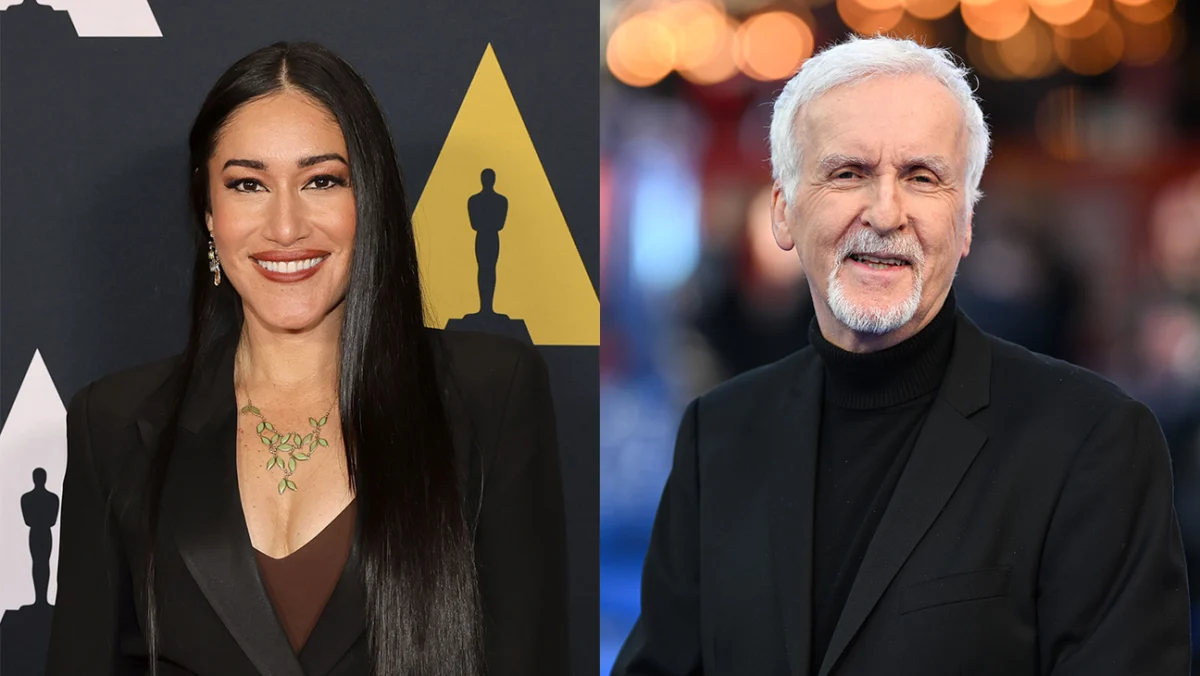
Q’orianka Kilcher, known for her role in the hit series Yellowstone and her acclaimed performance in Terrence Malick’s 2005 film The New World, has initiated a significant legal battle against acclaimed filmmaker James Cameron and The Walt Disney Company. The lawsuit, filed on Tuesday and subsequently reviewed by The Hollywood Reporter, alleges the unauthorized extraction and commercial deployment of her facial likeness without consent, forming the basis for the iconic character of Neytiri in Cameron’s blockbuster Avatar franchise. This action casts a spotlight on evolving legal interpretations of biometric data, artistic inspiration, and the right of publicity in the increasingly digital landscape of Hollywood.
The Genesis of the Allegation: A Director’s Admission
At the heart of Kilcher’s complaint lies a candid admission made by James Cameron himself. The lawsuit specifically references an April 24, 2024, YouTube video featuring Cameron discussing his "Tech Noir" museum exhibit in Paris. In the clip, while recounting the intricate development process behind Avatar, Cameron explicitly details the design inspiration for Neytiri. He recalls noticing Kilcher’s distinctive appearance and performance in The New World, a film she starred in at the tender age of 14, and how her facial features subsequently molded the character’s visual identity. "This is actually her lower face," Cameron reportedly stated in the video, further elaborating on the direct influence Kilcher had on the character portrayed by Zoe Saldaña. This public acknowledgment serves as a critical piece of evidence in Kilcher’s legal filing, directly linking Cameron’s creative process to her personal likeness.
A History of Alleged Misappropriation: From Set to Sketch
The complaint paints a detailed chronology of events, suggesting a pattern of recognition and alleged exploitation. According to Kilcher, the chain of events began with Cameron’s viewing of The New World, where she portrayed Pocahontas, a role that garnered her critical acclaim for its depth and authenticity. It was during the conceptualization and design phase of Avatar, prior to its monumental 2009 release, that Cameron allegedly directed his design team to utilize Kilcher’s facial features as a foundational element for Neytiri. The technological advancements employed in Avatar, particularly its groundbreaking use of motion capture and performance capture, made it feasible to translate real-world human features into highly detailed digital characters.
Kilcher alleges her first in-person encounter with Cameron occurred in March 2010, shortly after Avatar had shattered box office records worldwide. The meeting took place at an environmental charity event, where Cameron reportedly expressed admiration for Kilcher’s activism work and hinted at a "surprise gift" for her, inviting her to his office. Accompanied by her mother, Kilcher subsequently visited Cameron’s office. While the director himself was not present, his assistant presented her with a sketch of Neytiri, personally drawn and signed by Cameron. Accompanying the sketch was a handwritten letter from Cameron, which, as cited in the suit, read: "Your beauty was my early inspiration for Neytiri. Too bad you were shooting another movie. Next time." This letter, coupled with Cameron’s recent public statements, forms the bedrock of Kilcher’s claim, suggesting a clear acknowledgment of her influence on the character’s design.
The Legal and Ethical Arguments: Biometric Identity as Property
The core legal argument presented in Kilcher’s complaint is profound and far-reaching: it posits that Cameron and Disney unlawfully took her "property" – her own face – and used it as a commercial production asset. The filing asserts, "This case exposes how one of Hollywood’s most powerful filmmakers exploited a young Indigenous girl’s biometric identity and cultural heritage to create a record-breaking film franchise — without credit or compensation to her — through a series of deliberate, non-expressive commercial acts."
The complaint meticulously defines Kilcher’s facial likeness as "functional biometric source data," arguing that Cameron "extracted, replicated, and commercially deployed" it within Avatar‘s character design pipeline. This framing moves beyond a mere claim of "inspiration" to one of direct appropriation and commercial use of a personal attribute without consent. Kilcher was only 14 years old when The New World was released, a fact highlighted to underscore her vulnerability as a minor at the time of the alleged initial "extraction." The lawsuit explicitly states that its aim is not to restrict artistic expression or speech but to remedy the unlawful taking of her personal identity for immense commercial gain.
The inclusion of "Indigenous girl’s biometric identity and cultural heritage" adds a significant ethical dimension to the case. Kilcher, a Native Peruvian actress and activist, represents a demographic historically marginalized and often exploited in media representations. The lawsuit implicitly raises questions about power dynamics in Hollywood, particularly when established filmmakers draw upon the features of young, Indigenous actors without proper acknowledgment or compensation.
The Defendants: A Hollywood Titan and a Global Conglomerate
The lawsuit names two formidable defendants: James Cameron, a director synonymous with technological innovation and cinematic blockbusters, and The Walt Disney Company, the current owner of 20th Century Fox (now 20th Century Studios), the original studio behind Avatar. Cameron’s filmography boasts several of the highest-grossing films of all time, including Avatar (2009) and Titanic (1997), solidifying his status as a visionary filmmaker capable of pushing the boundaries of visual effects. Avatar alone grossed over $2.9 billion worldwide, making it the highest-grossing film of all time. Its sequels, Avatar: The Way of Water (2022), have also achieved massive commercial success, further amplifying the financial stakes involved in this litigation. Disney’s involvement stems from its acquisition of 21st Century Fox assets in 2019, making it the legal successor responsible for the Avatar franchise. The combined resources and influence of these defendants underscore the magnitude of the legal challenge Kilcher has undertaken.
Damages Sought and Potential Implications
Kilcher is seeking a broad range of damages and relief. These include compensatory damages, intended to reimburse her for financial losses and emotional distress; punitive damages, designed to punish the defendants for their alleged conduct and deter similar actions in the future; and disgorgement of profits attributable to the use of her likeness, which could amount to a substantial sum given the Avatar franchise’s colossal earnings. Furthermore, she is seeking injunctive relief, which could potentially compel the defendants to alter aspects of the Avatar franchise or its promotional materials, and corrective public disclosure, aiming to publicly acknowledge her contribution to Neytiri’s design.
The implications of this lawsuit could be far-reaching, potentially setting new precedents for character design and intellectual property rights in the entertainment industry. In an era where digital tools allow for the precise replication and manipulation of human features, the line between "inspiration" and "appropriation" becomes increasingly blurred. This case could redefine how filmmakers and studios approach the use of real-world likenesses, especially when developing highly detailed CGI characters. It may prompt a re-evaluation of consent protocols, particularly concerning minors and individuals from specific cultural backgrounds, and could influence future contracts related to biometric data and digital assets.
The Broader Context: Likeness Rights in the Digital Age
The right of publicity, or likeness rights, is a legal concept that protects an individual’s right to control the commercial use of their identity, including their name, image, voice, and other distinctive personal characteristics. While well-established in traditional media, its application to digitally created characters, especially those derived from "biometric source data," presents complex legal challenges. Past cases have often focused on clear appropriations, such as using a celebrity’s photograph without permission. However, Kilcher’s claim delves into the more nuanced territory of facial feature extraction and its use as a foundational design element, particularly when the individual’s "face" is not directly transposed but rather serves as a model for a new, fictional entity.
The rapid advancements in artificial intelligence (AI) and deepfake technology further complicate this landscape. As AI becomes more adept at generating realistic human likenesses, often by drawing from vast databases of existing images and videos, the need for robust legal frameworks to protect individual identity and consent becomes paramount. Kilcher’s lawsuit, by specifically referencing "biometric source data," positions itself at the forefront of this evolving legal discourse, highlighting the potential for individuals to lose control over their digital selves if protections are not adequately enforced.
Official Responses and Industry Watch
As of the time of publication, The Hollywood Reporter stated that requests for comment from James Cameron and The Walt Disney Company had not been returned. This lack of immediate public statement from the defendants is typical in the early stages of high-profile litigation, as legal teams often prefer to address such matters through formal court filings.
The entertainment industry will undoubtedly be closely watching this case. It could lead to increased scrutiny of character design processes, potentially requiring studios to secure explicit consent or licensing agreements when drawing specific features from identifiable individuals, even if those features are then digitally modified or integrated into a new character. For actors, particularly those early in their careers or from underrepresented communities, the outcome could empower them with greater control over their personal likenesses and potentially lead to new avenues for compensation.
Q’orianka Kilcher’s decision to pursue this lawsuit represents a bold step in an increasingly complex legal and technological environment. It not only seeks justice for her personal claims but also challenges the industry to confront fundamental questions about ownership, consent, and ethical practices in the creation of digital art and characters that generate billions in profit. The battle between a young actress and a Hollywood titan, mediated by the complexities of digital identity, promises to be a landmark case with lasting repercussions.