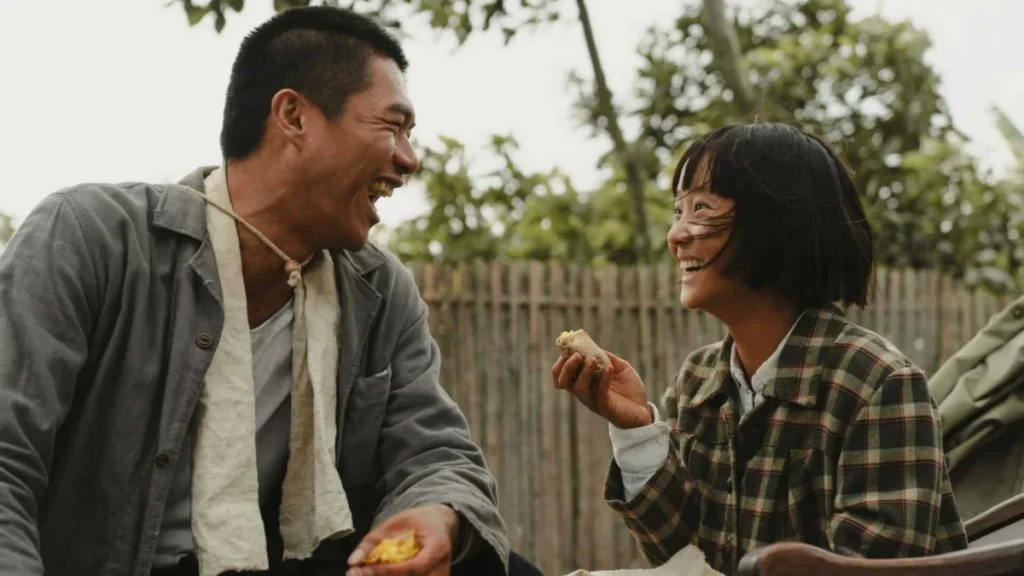
"Ciao UFO," a poignant cinematic exploration of memory, dreams, and the passage of time against the backdrop of Hong Kong’s evolving landscape, emerged as the undisputed champion at the 44th Hong Kong Film Awards. The film, directed by Patrick Leung Pak-kin, swept multiple prestigious categories, including Best Film, Best Director, Best Screenplay, Best Supporting Actress (Michelle Wai), and Best Original Film Song, firmly cementing its status as the night’s most celebrated production. This remarkable success marks a significant milestone for a film that faced a protracted journey to the big screen, navigating a six-year hiatus between its initial premiere and widespread theatrical release, a period shrouded in industry speculation and urban legend. Despite its challenging production history, "Ciao UFO" is now poised for international audiences, with a confirmed theatrical release in UK and Ireland cinemas starting Friday, May 15, 2026, courtesy of Central City Media.
Awards Triumph and Industry Recognition
The sweep at the 44th Hong Kong Film Awards underscores "Ciao UFO"’s profound impact on both critics and industry professionals. The Best Film award, considered the pinnacle of recognition, signifies the movie’s overall excellence in storytelling, direction, performances, and technical execution. Patrick Leung Pak-kin’s win for Best Director acknowledges his visionary leadership in bringing this complex narrative to life, particularly his ability to blend nostalgic charm with a grounded socio-historical commentary. The Best Screenplay accolade highlights the narrative’s intricate construction and compelling dialogue, weaving together individual journeys with broader societal themes. Michelle Wai’s triumph as Best Supporting Actress for her portrayal of Yan further validates the film’s strong character development and the depth of its acting ensemble. Lastly, the Best Original Film Song award speaks to the film’s ability to create an immersive and emotionally resonant atmosphere through its musical score, a critical component in evoking the film’s blend of wonder and melancholy. This comprehensive victory positions "Ciao UFO" not just as a successful film, but as a significant cultural touchstone within contemporary Hong Kong cinema, demonstrating its capacity to resonate deeply with local audiences while garnering critical acclaim.
A Journey to the Big Screen: Production and Release Challenges
The path to widespread recognition for "Ciao UFO" was anything but conventional. The film first graced screens at the Hong Kong Asian Film Festival in 2019, an initial outing that generated positive buzz but did not immediately translate into a broader release. What followed was an unusual six-year gap before its eventual theatrical debut, a delay that sparked considerable discussion within the local film community. While the precise reasons for this prolonged wait remain unconfirmed and have fueled various "urban legends," such extended deferrals in the Hong Kong film industry can often stem from a confluence of factors. These might include challenges in securing distribution deals, financial hurdles post-production, difficulties in navigating evolving censorship landscapes, or strategic decisions by producers to await optimal market conditions. The period between 2019 and its eventual release also encompassed significant global and local shifts, including the COVID-19 pandemic and changing socio-political dynamics in Hong Kong, all of which could have played a role in the film’s delayed rollout. The film’s eventual triumph at the Hong Kong Film Awards, however, effectively overshadows these past struggles, transforming what was once a production anomaly into a narrative of perseverance and ultimate artistic vindication. Its success now stands as a testament to its enduring quality, proving that compelling storytelling can overcome even the most formidable logistical obstacles.
International Reach: UK and Ireland Release
The announcement of "Ciao UFO"’s theatrical release in UK and Ireland cinemas from May 15, 2026, through Central City Media, signifies a crucial step in its international distribution. For Hong Kong cinema, securing international distribution is vital for expanding its audience base and enhancing its global cultural footprint. This move will allow a wider demographic of viewers, particularly those interested in East Asian cinema and stories with universal themes, to experience the film’s unique narrative and artistic merits. Central City Media, known for bringing diverse independent and foreign films to the UK and Irish markets, plays a pivotal role in this expansion. The anticipation surrounding this international release is amplified by the film’s recent awards success, which has undoubtedly heightened its profile and generated significant interest beyond its home territory. This distribution deal not only provides "Ciao UFO" with a new platform but also contributes to the ongoing global appreciation of Hong Kong’s distinctive cinematic voice, known for its blend of genre filmmaking with deep cultural and social commentary.
The Heart of the Story: A Generational Saga Rooted in Myth
At its core, "Ciao UFO" delves into the intricate lives of three childhood friends, their destinies irrevocably shaped by a shared, enigmatic experience. The narrative draws its initial spark from a compelling urban legend: a UFO sighting that occurred approximately forty years ago at Wah Fu Estate, one of Hong Kong’s pioneering public housing complexes.
The Wah Fu Estate Legend
Wah Fu Estate, built in the late 1960s, holds a significant place in Hong Kong’s urban history. Designed with a progressive "self-sufficiency" concept, it aimed to create a holistic community with its own amenities, markets, schools, and recreational facilities, fostering a strong sense of belonging among its residents. This modernist vision represented an optimistic era of public housing development in Hong Kong, offering aspirational living to many working-class families. It was within this vibrant, self-contained world that, on a stormy night in 1984, three children—Chan Chi-kin, Ho Ka-him, and Lam Ho-yee—witnessed a mysterious light piercing through the clouds above the estate. This extraordinary event, quickly becoming part of the city’s unofficial mythology, profoundly marked their childhoods. It instilled in them a sense of wonder, fueled their imaginations, and planted the seed of belief that something extraordinary existed beyond the ordinary confines of their daily lives, shaping their perceptions of possibility and the unknown.
Divergent Paths: Growing Up in a Changing Hong Kong
As the trio transitions into adulthood, their paths diverge, reflecting the turbulent socio-economic shifts that have defined Hong Kong over the past decades. Chi-kin’s journey embodies the struggles of a generation grappling with economic uncertainties. His attempts to rebuild his life are set against a backdrop of fluctuating markets and financial crises, such as the Asian Financial Crisis of 1997-1998, which severely impacted Hong Kong’s economy, and later, the global financial downturns. His involvement with the stock market offers fleeting success before succumbing to inevitable setbacks, a common narrative for many during periods of rapid economic change. During this time, he reconnects with an old classmate, Yan, whose complex persona and evolving relationship with Chi-kin add layers of emotional depth and realism to his arc.
Ka-him, burdened by leukemia since childhood, embodies a different form of generational malaise. His inability to find a clear sense of purpose and his reluctance to embrace adulthood reflect a broader sense of uncertainty and aimlessness experienced by some segments of Hong Kong youth. This character arc subtly critiques societal pressures and the search for identity in a city known for its relentless pace and competitive environment.
Ho-yee, on the surface, appears to follow a more conventional and stable route. She becomes a professional, seemingly achieving societal success and preparing for marriage. However, her outward accomplishments conceal a deeper dissatisfaction and an unfulfilled longing, hinting at the pressures of conformity and the compromises often made in pursuit of perceived stability. Her application for a position in a space program, revealed early in the film, serves as a powerful metaphor for her lingering aspirations and the unfulfilled dreams of her youth.
The Metaphorical UFO
Years later, life events orchestrate a reunion for the three friends, forcing them to confront their present realities and the unresolved fragments of their shared past. The question that has lingered since their youth resurfaces with renewed urgency: what was the mysterious light they saw that night, and what did it truly signify for the lives they have since lived?
The sci-fi elements in "Ciao UFO" are deliberately minimal, serving primarily as a potent metaphor rather than a literal plot device. The UFO represents the boundless dreams and aspirations of Hong Kong youth who grew up in the 1980s—a period of economic boom and optimism. These dreams, however, gradually crumbled under the weight of significant historical events, including the 1997 Handover of Hong Kong to China and subsequent financial crises. The film eloquently uses the lingering mystery of the UFO to symbolize lost innocence, unfulfilled potential, and the complex emotional legacy of a generation that witnessed profound transformations in their city and their own lives. It’s a poignant reflection on how external forces can shape individual destinies and how the past continues to echo in the present.
Cultural Nostalgia and Critical Realism
Patrick Leung Pak-kin’s directorial vision in "Ciao UFO" masterfully balances an intensely nostalgic, almost fairy-tale-like tone with a firm grounding in socio-historical reality. This dual approach allows the film to evoke a deep emotional connection while providing incisive commentary on Hong Kong’s recent past.
Evoking 80s and 90s Hong Kong
The first part of the movie, focusing on the protagonists’ childhood, is a richly textured evocation of 1980s and 1990s Hong Kong. It immerses the audience in an endearing collage of cultural references that resonate deeply with a specific generation of Hong Kong viewers. The fleeting yet memorable appearance of a Tamagotchi, a popular digital pet toy from the era, stands out as a particularly potent symbol of the period’s youth culture. Beyond specific objects, the film meticulously reconstructs communal spaces and everyday rituals, from bustling local markets to vibrant playgrounds, painting a vivid picture of a bygone era. This attention to detail in production design, costumes, hairstyles, and even social behaviors creates an authentic and immersive experience, transporting viewers back in time.
Wah Fu Estate as a Character
Wah Fu Estate itself transcends being merely a setting; it becomes a character in its own right. Its modernist architectural design and abundant open spaces symbolize a sense of community, possibility, and shared aspiration that, in the film’s contemporary context, feels increasingly distant. The estate represents an ideal of collective living and optimism that was prevalent during Hong Kong’s earlier development phases. Through the lens of the protagonists’ childhood, the film celebrates this communal spirit, while their adult lives reflect the erosion of such ideals amidst rapid urbanization and societal changes.
Shifting Tones: From Wonder to Weariness
The narrative deftly transitions in its second half, shifting into a more somber and reflective territory. The adult lives of the protagonists are marked by unfulfilled aspirations, fractured relationships, and a palpable sense of existential fatigue. Their reunion serves as a delayed rite of passage, forcing them to confront the stark contrast between their youthful dreams and the often-harsh realities they have come to inhabit. The film consciously avoids offering simplistic optimism, instead presenting hope as something fragile, contingent, and frequently intertwined with despair. This nuanced approach ensures that nostalgia is consistently mixed with a pervasive sense of pessimism, creating a bittersweet emotional landscape that permeates the entire movie, right up to its somewhat hopeful but not entirely reassuring ending. This blend of longing for the past and a critical view of the present provides "Ciao UFO" with its distinctive emotional depth and intellectual rigor.
Compelling Performances and Character Depth
The high caliber of acting across the ensemble cast is one of "Ciao UFO"’s most significant strengths, contributing immensely to the film’s emotional resonance and narrative complexity. Each actor brings depth and nuance to their respective roles, making the characters feel profoundly real and relatable.
Michelle Wai’s Yan
Of particular interest is the character of Yan, brought to life with compelling enigma by Michelle Wai, whose performance earned her the Best Supporting Actress award. Yan appears to inhabit a high-class life, yet her circumstances are layered with subtle complexities: she sends money abroad to support her brother’s studies, and the narrative subtly hints at her potentially being the mistress of a wealthy man, alongside her evolving relationship with Chi-kin. This combination of apparent success, underlying struggle, and moral ambiguity results in an appealingly enigmatic yet remarkably realistic persona. Wai’s portrayal is both subtle and powerful, conveying a wealth of unspoken emotions and motivations. Her chemistry with Tsui Tin-yau as Kin is a particular highlight, adding a raw, authentic dimension to their interactions and making their unfolding relationship one of the movie’s strongest aspects.
The Core Trio
The central trio of protagonists also delivers standout performances. Tsui Tin-yau convincingly portrays the melancholic, handsome Chi-kin, capturing his internal struggles and the weight of his unfulfilled aspirations with quiet intensity. Wong Yau-nam as Ka-him effectively highlights his perpetual childlike demeanor, embodying the character’s unwillingness to grow up and the generational uncertainty he represents. Charlene Choi, as Ho-yee, eloquently conveys the personal struggles that arise from following a path imposed by society and her family, skillfully revealing the hidden dissatisfaction beneath her outwardly successful facade. Her performance is a poignant commentary on the pressures of conformity in Hong Kong society.
Supporting Cast and Child Actors
The convincing performances extend beyond the main cast to include the child actors, who brilliantly capture the innocence, wonder, and formative experiences of the protagonists’ youth. Their authenticity lays a strong foundation for the adult characters’ journeys. Similarly, those portraying the parents of the protagonists provide essential grounding and context, adding to the film’s realistic depiction of family dynamics and societal expectations. The collective strength of the acting ensemble ensures that the film’s emotional core remains robust and deeply affecting throughout its narrative.
Artistic and Technical Excellence
Beyond its compelling narrative and powerful performances, "Ciao UFO" is a testament to exceptional craftsmanship in its artistic and technical execution. The film’s aesthetic qualities are meticulously designed to enhance its nostalgic atmosphere and socio-historical grounding.
Production Design (Chan Miu-ling)
The work of production designer Chan Miu-ling stands out as one of the movie’s strongest assets. Her attention to detail in depicting past decades is remarkable, with costumes, hairstyles, music, and even social behaviors presented with striking accuracy. This meticulous recreation of 1980s and 1990s Hong Kong is crucial for immersing the audience in the film’s nostalgic world. From the specific cultural references to the broader visual palette, Miu-ling’s design choices are instrumental in establishing the film’s authentic sense of place and time, transforming settings like Wah Fu Estate into living, breathing entities.
Cinematography (Leung Ming-kai)
The excellent cinematography by Leung Ming-kai further enhances this immersive experience. Ming-kai captures the various settings, particularly Wah Fu Estate, in a way that significantly amplifies the nostalgic atmosphere. His camera work often imbues scenes with a dreamlike quality during the childhood sequences, transitioning to a more grounded, sometimes melancholic, aesthetic in the adult timelines. The lighting, composition, and framing choices contribute to the film’s emotional landscape, creating visual poetry that complements the narrative’s themes of memory and loss.
Editing (Derek Hui, To Chun-hin, Yuan Zhou)
The editing, a collaborative effort by Derek Hui, To Chun-hin, and Yuan Zhou, results in a relatively brisk pace that suits the overall aesthetic. The two timelines—childhood and adulthood—are interwoven effectively throughout the narrative, creating a dynamic rhythm that keeps the audience engaged. While some minor imbalance might appear towards the finale, particularly during the wedding sequence, the overall production presents very few flaws in its pacing and structural integrity. This seamless blending of past and present is crucial for the film’s thematic exploration of how childhood experiences shape adult lives.
Sound and Music
The film’s recognition with the Best Original Film Song award underscores the critical role of its sound and music in establishing its emotional landscape. The score and songs are carefully curated to evoke specific moods, from the whimsical wonder of childhood to the poignant reflections of adulthood. They serve not just as background elements but as integral components of the storytelling, enhancing character emotions and reinforcing the film’s overarching themes.
Thematic Depth and Universal Resonance
"Ciao UFO" is characterized by a strong sense of localization, meaning it will likely resonate most strongly with a specific generation of Hong Kong viewers who will recognize many of the cultural references and historical contexts. This deep cultural specificity is part of its charm and authenticity. However, the film’s overall message transcends its local roots, retaining a profound universal appeal.
The film’s exploration of identity, memory, and the impact of societal change on individual lives are themes that resonate globally. The struggles of its protagonists—unfulfilled dreams, economic pressures, the search for purpose, and the reconciliation of past aspirations with present realities—are experiences common to people across cultures and generations. The metaphor of the UFO, representing lost innocence and the fading of youthful dreams, speaks to a universal human condition.
The narrative also subtly integrates additional thematic comments, such as the character of the scorned artist who ultimately helps resolve the situation. This can be interpreted as a commentary on the power of art, creativity, and unconventional perspectives to offer solutions or healing in a world often dominated by pragmatic concerns. The film’s ending, while offering a glimmer of hope, remains deliberately nuanced and not entirely reassuring. This refusal of easy optimism reinforces the film’s commitment to critical realism, suggesting that while healing and reconciliation are possible, the scars of the past and the challenges of the future remain. This blend of specificity and universality allows "Ciao UFO" to be both a deeply personal Hong Kong story and a globally relevant human drama.
Impact and Legacy: A New Benchmark for Hong Kong Cinema
"Ciao UFO" is an excellent mainstream movie, meticulously shot, thoughtfully directed, and powerfully acted, demonstrating a masterful command of its craft. It manages its nostalgic elements with restraint, avoiding sentimentality in favor of a balanced exploration of memory and reality. The result is a work that is both engaging and easy to watch, yet deeply resonant and thought-provoking.
Its success at the 44th Hong Kong Film Awards, particularly in sweeping major categories, positions "Ciao UFO" as a new benchmark for contemporary Hong Kong cinema. It proves that films deeply rooted in local history and culture can achieve both critical acclaim and popular appeal, even after facing significant production delays. The film’s ability to tackle complex social themes—such as generational disillusionment, economic shifts, and the psychological impact of historical events like the Handover—through a popular, accessible narrative framework is particularly noteworthy. It signals a vibrant capacity within the industry to produce works that are artistically ambitious, culturally specific, and globally relevant.
Furthermore, the secured international release in the UK and Ireland highlights the growing global appetite for nuanced, character-driven stories from Hong Kong. "Ciao UFO" contributes to the ongoing dialogue about identity and change in a rapidly evolving world, solidifying its place not just as a triumphant film, but as an important cultural artifact that reflects the enduring spirit and evolving narratives of Hong Kong.