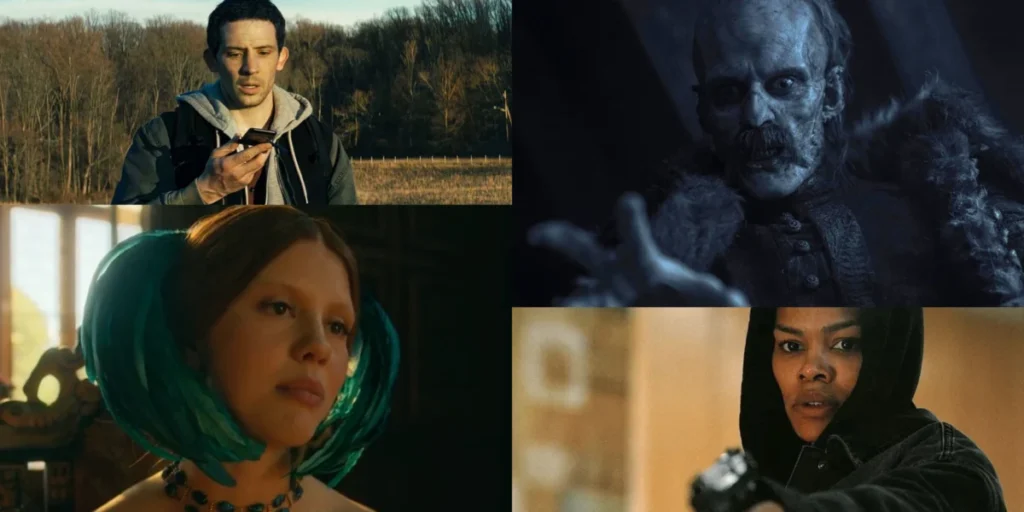
The 79th edition of the Cannes Film Festival, scheduled to take place from May 12 to May 23, 2026, enters its final stages of preparation amidst a narrative of unprecedented institutional dominance. While the festival historically thrives on the unpredictability of its top prize, the Palme d’Or, recent years have seen the race increasingly defined by the strategic acquisitions and production slate of a single American distributor: NEON. Having secured the Palme d’Or for six consecutive festivals—a streak beginning with Bong Joon-ho’s "Parasite" in 2019 and continuing through Sean Baker’s "Anora" in 2024 and Jafar Panahi’s "It Was Just an Accident" in 2025—the industry is questioning whether the 2026 selection offers a genuine opportunity for a shift in power or if the "NEON era" is destined to reach a seventh year.
The Strategic Consolidation of the Croisette
NEON’s success at Cannes is rarely accidental. The distributor has refined a model of "cornering the market" by either boarding high-profile projects during the development phase or securing distribution rights immediately following early screenings. For the 2026 competition, NEON has assembled a roster that includes some of the most decorated names in contemporary world cinema.

The lineup is anchored by "Paper Tiger," a project from James Gray that reunites Scarlett Johansson and Adam Driver. Gray, a perennial Cannes favorite, represents the type of American auteurism that frequently resonates with international juries. Joining this are several high-stakes international productions: "Sheep in a Box" by Hirokazu Kore-eda, a former Palme d’Or winner; "All of a Sudden" by Ryusuke Hamaguchi, whose "Drive My Car" achieved significant critical and awards success; and "The Unknown" by Arthur Harari, who co-wrote the 2023 Palme d’Or winner "Anatomy of a Fall."
Furthermore, NEON holds "Fjord," starring Renate Reinsve and Sebastian Stan, and Na Hong-jin’s "Hope." This volume of high-pedigree content creates a statistical probability that favors NEON, as any jury deliberation is likely to include at least three or four NEON-backed films in the final conversation for the top prize.
MUBI and the Campaign for a New Order
If there is a primary antagonist to NEON’s hegemony in 2026, it is MUBI. The global distributor and streaming platform has aggressively expanded its theatrical presence, seeking to replicate the success of Coralie Fargeat’s "The Substance," which served as a breakout hit during the 2024 festival.

MUBI’s strongest contender for the 2026 Palme d’Or is Pawel Pawlikowski’s "Fatherland." This marks Pawlikowski’s first feature since "Cold War," for which he won Best Director at Cannes in 2018. The film gains additional "Cannes-cachet" by starring Sandra Hüller, who became the face of the festival in 2023 after appearing in both "Anatomy of a Fall" and "The Zone of Interest." On paper, "Fatherland" is the most formidable challenger to the NEON slate, possessing the exact blend of aesthetic rigor and star power that typically attracts the Grand Théâtre Lumière audience.
However, MUBI’s recent track record has been inconsistent. The company’s acquisition of "Die, My Love" following the 2025 festival failed to generate the expected awards-season momentum, making "Fatherland" a critical test of MUBI’s ability to sustain a high-level campaign against more established American distributors.
The Return of the Political Thriller: Andrey Zvyagintsev’s "Minotaur"
Beyond the established rivalry between NEON and MUBI, the 2026 competition features the return of Andrey Zvyagintsev, a director whose work has long served as a barometer for the festival’s political engagement. His new film, "Minotaur," is a political thriller set against the backdrop of provincial Russia in 2022.

Zvyagintsev has a distinguished history at Cannes, having won Best Screenplay for "Leviathan" (2014) and the Jury Prize for "Loveless" (2017). "Minotaur" follows Gleb, a business executive facing professional collapse while discovering personal betrayal. Given the current geopolitical climate, the film’s direct implication of Russian societal structures is expected to be a focal point for the jury, led by South Korean director Park Chan-wook. The festival has a history of rewarding films that demonstrate "political courage," such as recent honors for Mohammad Rasoulof and Jafar Panahi, suggesting that "Minotaur" could be a dark horse for the Palme d’Or if the jury seeks to make a statement beyond pure aesthetics.
American Independents and International Masters
The 2026 competition also highlights a smaller-than-usual American presence outside of the major studio or NEON-backed projects. Ira Sachs returns to the competition with "The Man I Love," starring Academy Award winner Rami Malek. The film, which depicts an actor in the 1980s facing a terminal illness during his final role, is currently seeking a distributor. Sachs, often characterized as an "indie darling," has the potential to follow the trajectory of Sean Baker, whose 2024 win for "Anora" proved that American independent cinema could still claim the festival’s highest honor without a massive studio machine initially behind it.
Meanwhile, veteran masters Asghar Farhadi and Pedro Almodóvar bring new works to the Croisette, though both face unique hurdles. Farhadi’s "Parallel Tales," starring Isabelle Huppert, marks a departure from his usual Iranian settings, having been filmed in France. While Farhadi has won the Grand Prix and Best Screenplay at Cannes, the Palme d’Or has eluded him. Almodóvar’s "Bitter Christmas" arrives with some skepticism, following mixed early reviews from its domestic release in Spain. While Almodóvar’s victory at Venice in 2024 for "The Room Next Door" reaffirmed his status as a living legend, his path to a Palme d’Or in 2026 appears more obstructed than in previous years.

Chronology of NEON’s Cannes Dominance (2019–2025)
To understand the stakes of the 2026 festival, one must examine the timeline of NEON’s unprecedented streak, which has fundamentally altered the economics of the Cannes market:
- 2019: NEON acquires "Parasite" (Bong Joon-ho) prior to its Palme d’Or win; the film goes on to win the Academy Award for Best Picture.
- 2020: Festival canceled due to COVID-19; no Palme d’Or awarded.
- 2021: "Titane" (Julia Ducournau) wins the Palme d’Or; NEON secures North American rights.
- 2022: "Triangle of Sadness" (Ruben Östlund) wins the Palme d’Or; NEON serves as the distributor.
- 2023: "Anatomy of a Fall" (Justine Triet) wins the Palme d’Or; NEON manages the successful awards campaign.
- 2024: "Anora" (Sean Baker) wins the Palme d’Or; NEON maintains its grip on the top prize.
- 2025: "It Was Just an Accident" (Jafar Panahi) wins the Palme d’Or; NEON continues its streak into a sixth year.
This chronology demonstrates that NEON has moved from being a savvy buyer to a dominant force that effectively "curates" the competition’s outcome through its selection of projects.
The Role of the Jury and Potential Outcomes
The 2026 jury, presided over by Park Chan-wook, will be tasked with navigating this landscape of high-profile acquisitions. Park, himself a Grand Prix winner for "Oldboy" and a Best Director winner for "Decision to Leave," is known for his meticulous craftsmanship and appreciation for genre-bending narratives. This may favor films like Na Hong-jin’s "Hope" or James Gray’s "Paper Tiger," both of which promise a high degree of technical sophistication.

Market analysts suggest three primary scenarios for the 2026 closing ceremony:
- The Seventh Seal: NEON secures its seventh consecutive Palme d’Or through one of its high-volume contenders, such as "Paper Tiger" or "Sheep in a Box," cementing a record that may never be broken.
- The MUBI Upset: "Fatherland" or "Minotaur" captures the jury’s favor, breaking the NEON streak and signaling a shift toward MUBI as the new premier distributor of international cinema.
- The Independent Breakthrough: A film without a pre-arranged distributor, such as Ira Sachs’ "The Man I Love" or a late addition to the competition, wins the prize, leading to a massive bidding war on the final night of the festival.
Broader Industry Implications
The concentration of Palme d’Or winners within a single distribution house has sparked debate within the film industry regarding the "homogenization" of the Cannes brand. While NEON’s success has undoubtedly brought international cinema to wider American audiences, some critics argue that the festival’s competitive spirit is diminished when one company holds the rights to a significant percentage of the favorites.
The 2026 festival will be a litmus test for whether the Palme d’Or remains a prize of "discovery" or if it has become a prize of "validation" for the industry’s most powerful curators. As the world’s film elite descends upon the French Riviera this May, the question is no longer just which film is the best, but whether any film can step out from the shadow of the NEON empire.

The festival concludes on May 23, 2026, at which point the jury will announce whether the streak continues or if a new era for the Croisette has finally begun.