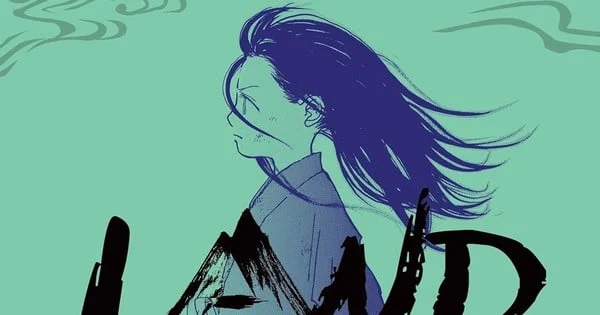
Kazumi Yamashita’s critically acclaimed manga series, Land, continues to weave a complex tapestry of societal control, existential questioning, and the enduring power of human connection. This latest installment, presented in a substantial omnibus format by Yen Press, delves deeper into the enigmatic relationship between the seemingly agrarian Heian-era society known as "The Land" and the technologically advanced, futuristic metropolis referred to as "The Beyond." While the initial volume introduced the shocking revelation of this dual existence, the current collection of chapters unravels a more profound narrative, hinting at a meticulously orchestrated reality and the burgeoning seeds of rebellion against it. The series, which defies easy categorization, skillfully blends elements of historical fiction, science fiction, and profound philosophical inquiry, solidifying its position as a standout work in contemporary manga translation.
The Unveiling of The Beyond: A Controlled Reality
The core mystery of Land revolves around the deliberate separation and manipulation of its inhabitants. The discovery by twin protagonists An and Anne that their insular world is but a facet of a larger, technologically superior civilization—The Beyond—was a pivotal moment. This omnibus confirms that The Beyond is not merely a parallel dimension but a sophisticated entity actively governing and dictating the terms of existence for The Land. The exact nature of this governance remains elusive, shrouded in deliberate ambiguity by Yamashita. However, the narrative provides compelling clues that suggest a long-term, perhaps even ancient, project orchestrated by individuals who appear to have transcended conventional lifespans.
Central to this unfolding mystery are the figures of Kazune and Amane. Flashbacks reveal them as young boys in what resembles contemporary Earth, caught in an unspecified cataclysmic event within an elevator. The temporal leap to the story’s present day reveals a stark contrast: Kazune appears as a teenager, while Amane has aged into a decrepit old man, dependent on Kazune’s advanced technological aids, specifically video-equipped contact lenses, to perceive the outside world. Their presumed role as the architects of The Land suggests a grand design, one that initially led to speculation about their motives concerning declining birthrates in urban centers.
However, the series challenges this simplistic interpretation. If Kazune and Amane are indeed the creators and controllers of The Land, then the brutal cultural practice of sacrificing one twin at birth to ensure societal stability directly contradicts the idea of bolstering population growth. This apparent paradox is further complicated by revelations concerning the guardian of these sacrificed children, hinting at a more intricate, possibly even sinister, purpose woven into the fabric of The Land’s existence. The growing weariness and potential moral awakening of Kazune, as he begins to question the ethics of their creation, introduces a critical dynamic of internal conflict within the ruling duo. This internal struggle is poised to become a significant driver of future plot developments.
The Deceptive Nature of Chimei and Exploitation
The interaction between The Land and The Beyond is characterized by deception, particularly concerning the concept of chimei. In the previous omnibus, An’s friend Heita’s father reached his chimei, the age of fifty, and was reportedly taken to The Beyond. While the inhabitants of The Land interpret this as a spiritual ascension or a peaceful departure, the truth, as revealed in this volume, is far more unsettling. Chimei appears to be a euphemism for forced labor, a mechanism by which The Beyond conscripts individuals from The Land to perform menial, undesirable tasks.
This revelation starkly contrasts with the deeply ingrained cultural reverence for the elderly within The Land. The notion of abandoning the aged in remote locations, a practice sometimes associated with historical agrarian societies, is recontextualized as a sophisticated form of exploitation. The people of The Land are led to believe that The Beyond is a superior, perhaps even utopian, destination. This widespread delusion suggests that they are being cultivated and raised with a naive outlook, much like livestock, to be harvested for their labor when they reach a certain age. This systemic manipulation highlights the profound power imbalance and the ethical chasm separating the two societies.
Seeds of Rebellion and the Significance of Twins
Within this oppressive system, acts of defiance, however subtle, begin to emerge. Kazune’s apparent rebellion against Amane, or more broadly, the entire structure of Land, is characterized by a nuanced approach. While he seemingly possesses Amane’s tacit approval to facilitate Anne’s transition to The Beyond, his actions in teaching An to read and write are presented as a more clandestine act of subversion. This aligns with the series’ recurring motif of twins, a theme that appears to be central to Amane and Kazune’s experimental design.
The existence of at least two sets of twins within the narrative, coupled with The Land’s mandate to sacrifice one twin upon birth, strongly suggests that Amane and Kazune are engaged in a long-term sociological experiment. Their objective appears to be the investigation of nature versus nurture, seeking to understand how identical individuals, separated and raised under vastly different circumstances, develop distinct personalities and life trajectories. This experimental framework underscores the dehumanizing nature of their control, reducing sentient beings to variables in a grand, detached study.
Despite the oppressive societal structure, both An and Anne exhibit an innate curiosity and a drive to transcend their predetermined roles. Anne, more outwardly rebellious and impulsive, actively seeks to circumvent rules and uncover forbidden knowledge. Her journey to The Beyond is a literal escape, facilitated by Kazune. An, conversely, navigates her confinement with a more strategic intellect. While her aunt Mari suffers from mental illness and her friend Heita is overprotective, An diligently accumulates knowledge, metaphorically “preserving” it. While not necessarily the more intelligent sister, her constrained environment necessitates a cautious and problem-solving approach. Anne, even within The Beyond, relies on her physical prowess and quick wit. An, operating under a stricter framework, is forced to exercise greater creativity and ingenuity to achieve her goals.
Yamashita’s Worldbuilding: A Character in Itself
Kazumi Yamashita’s worldbuilding in Land is nothing short of spectacular, serving as a crucial element of the narrative that often feels like a character in its own right. The meticulously crafted setting is inherently unreliable, with each inhabitant perceiving it through their own unique lens. By piecing together these disparate viewpoints, readers are compelled to construct their own understanding of reality, with the unsettling possibility that any or all of these interpretations could be true. Yamashita masterfully presents snippets of reality, forcing readers to engage in profound introspection about the nature of truth and the subjectivity of perception.
The fundamental question of The Land’s authenticity is constantly probed. Is it a false construct? For Heita, who is actively building a life within its confines, it is unequivocally real. Is The Beyond a superior realm? While Anne may find solace or opportunity there, Kazune’s evolving perspective suggests a more complex and perhaps disillusioning reality. This narrative technique challenges the reader’s assumptions and encourages a deeper engagement with the philosophical underpinnings of the series.
Yen Press’s Omnibus: A Comprehensive, Though Demanding, Presentation
Yen Press’s decision to release Land in a "jumbo" omnibus format offers readers a significant amount of story in a single volume. While this provides a comprehensive reading experience, the sheer volume can be somewhat overwhelming. It is arguably best consumed in smaller, digestible sections to allow for proper contemplation of the intricate plot and thematic developments. Physically, the omnibus is well-produced. Despite its size, the book is not excessively heavy, though individuals with conditions such as arthritis may find it challenging to hold for extended periods. The covers are resistant to smudges, and the spine is flexible enough to facilitate comfortable reading without compromising the integrity of the artwork. This flexibility is particularly important given the exquisite quality of Yamashita’s art, which is a significant draw for the series.
Genre-Defying Appeal and Critical Acclaim
Land defies easy categorization, existing in a unique space that transcends traditional genre boundaries. It is neither purely fantasy, science fiction, nor historical fiction, though it borrows elements from all. Instead, it forges its own identity, a compelling fusion of classic shoujo sensibilities, characterized by its focus on emotional depth and character relationships, with modern seinen aesthetics, marked by its mature themes and intricate plotting. This hybridity contributes significantly to its broad appeal. The series has garnered considerable critical attention, lauded for its intellectual depth, artistic merit, and innovative storytelling. It stands as one of the most compelling and thought-provoking series currently being translated into English, offering a reading experience that is both intellectually stimulating and emotionally resonant. Its intricate narrative and philosophical explorations ensure that Land remains a must-read for discerning manga enthusiasts. The series’ continued exploration of control, free will, and the construction of reality promises to keep readers engaged and questioning the nature of their own perceptions.