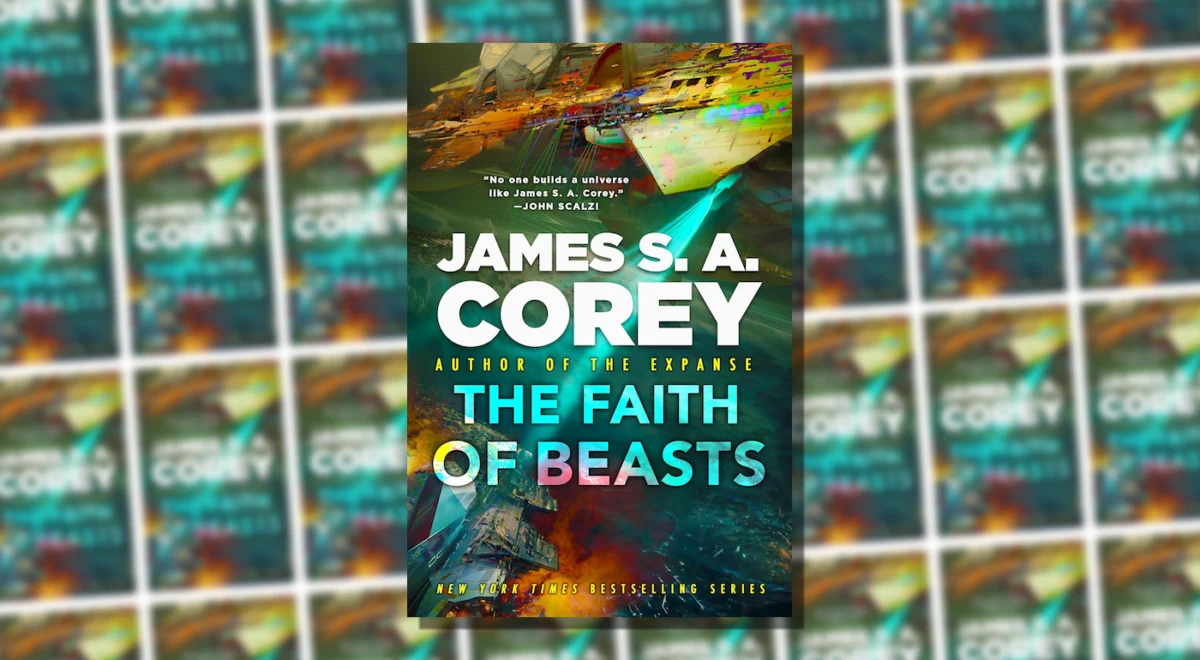
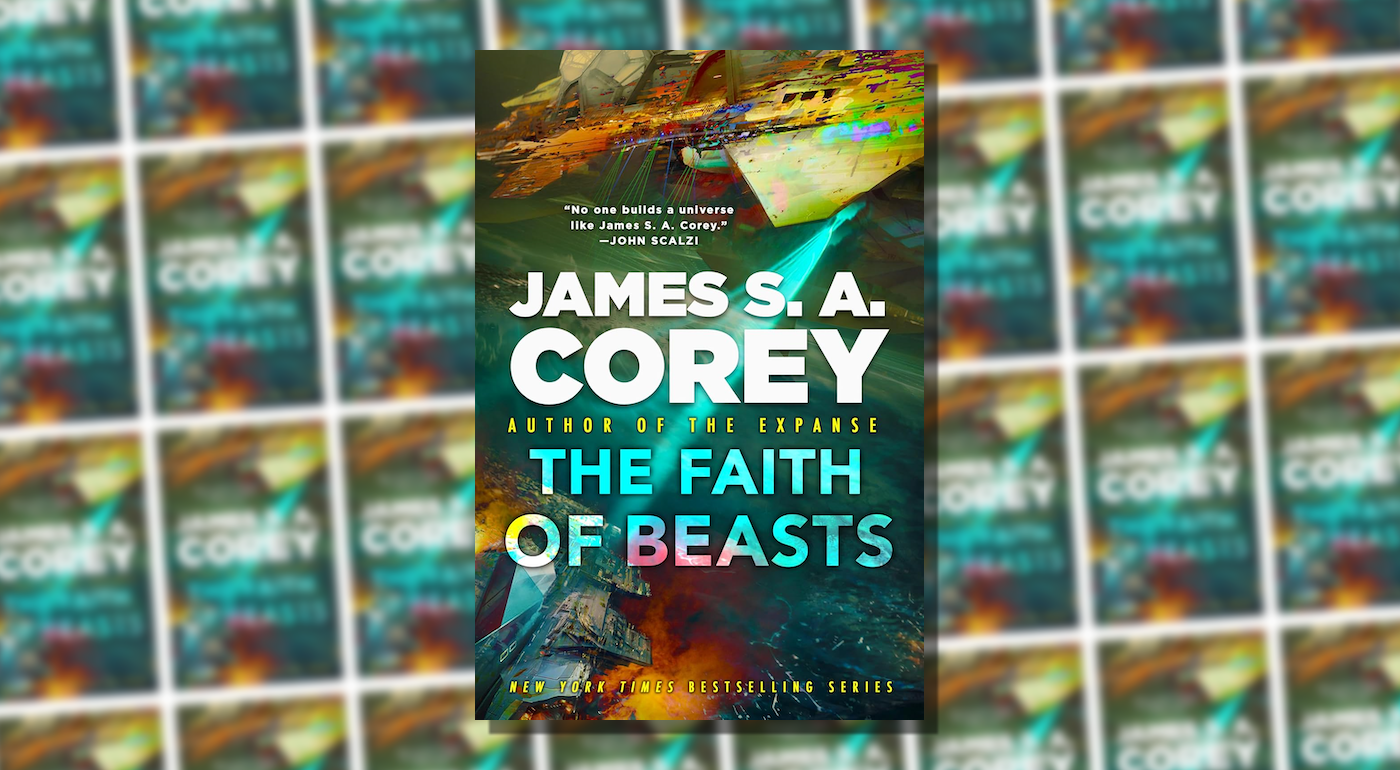
The second installment in James S.A. Corey’s ambitious Captive’s War trilogy, The Faith of Beasts, delves deeper into the complex narrative of humanity’s struggle against the oppressive Carryx empire. Picking up where The Mercy of Gods left off, this novel expands upon the seeds of resistance sown by a diverse ensemble of human captives, showcasing their resilience and ingenuity in the face of overwhelming alien dominance. The series, penned by the renowned authors Daniel Abraham and Ty Franck under the pseudonym James S.A. Corey, known for their critically acclaimed The Expanse series, continues to explore themes of survival, identity, and the enduring human spirit against seemingly insurmountable odds.
The narrative of Captive’s War commenced with an unexpected perspective in The Mercy of Gods. The opening pages introduced readers to Ekur-Tkalal, a "keeper-librarian" among the humans enslaved by the Carryx. Ekur-Tkalal’s final testament serves as a poignant epilogue, reflecting on the twilight of the Carryx species’ reign and a critical miscalculation: "We did not see the adversary for what he was, and we brought him into our home." This "adversary" is Dafyd Alkhor, a character who evolves from a low-level research assistant within a high-achieving scientific cohort to the unlikely leader of the human population forcibly integrated into the Carryx empire. These humans hail from Anjiin, a planet whose own history of arrival remains lost to time, adding a layer of mystery to their origins.
Corey’s storytelling, deeply influenced by his previous work, emphasizes the transformative power of seemingly minor events. The author explicitly guides readers to recognize these pivotal moments, stating, "Small moments, unnoticed at the time, change the fate of empires." The Mercy of Gods meticulously laid the groundwork, transporting select humans from Anjiin to the Carryx homeworld. Confined within a towering structure, they were tasked with a scientific endeavor where success meant survival and failure meant annihilation. However, Corey foreshadowed their eventual triumph, not just in scientific achievement, but in dismantling their oppressors. The central question that lingered was the "how."
The Faith of Beasts does not offer a singular, immediate answer but unfolds with a captivating rhythm, both deliberate and urgent. Corey masterfully builds suspense toward each revelation, employing a restraint that compels readers to clear their schedules and immerse themselves in the narrative. The novel continues to explore the profound depths of human adaptation and resistance within the most dire circumstances, focusing on strategies of indirect confrontation and subversion. The narrative acknowledges the protracted nature of such a struggle, hinting that true liberation may be a generational endeavor.
The Carryx Imperium: A Biological and Societal Framework
The Captive’s War series, at its core, chronicles humanity’s collision with an alien civilization that views subjugured species as mere "animals." The Carryx, driven by their singular devotion to their Sovran, operate with a chilling disregard for individual human success or emotional well-being. Their language itself reflects a unified concept of existence, encompassing "life," "war," and "serving the empire." This monolithic societal structure allows the Carryx to physically transform their bodies and repurpose their functions according to the Sovran’s directives, embodying the essence of a vast, interconnected organism. The Faith of Beasts provides intricate details about the inner workings of the Carryx, illustrating how individual members, while executing specific tasks, are also integral components of this colossal imperial entity. The sheer scale of the Carryx empire renders humanity, with its emphasis on individuality and personal needs, seemingly insignificant.
The Seeds of Rebellion: Beyond Direct Confrontation
Despite the Carryx’s stark decree – "be useful or die" – the human captives are not passive victims. A significant event in The Mercy of Gods involved a failed rebellion, a testament to the immediate, violent impulse some felt when faced with oppression. Dafyd Alkhor, however, advocated for a more strategic, long-term approach focused on understanding the Carryx and devising effective resistance. The violent uprising was predictably crushed, with Dafyd playing a crucial, albeit controversial, role in its suppression. This act led to widespread resentment and blame among the surviving humans, who perceived him as responsible for the deaths of their comrades. Crucially, the survivors were largely those who prioritized observation, learning, invention, caregiving, storytelling, and scientific problem-solving over immediate violence. These humans, characterized by their curiosity, intellect, wisdom, and capacity for love, possess a dangerous ingenuity that operates beneath the surface. Their resistance takes myriad forms, often subtle and indirect.
Narrative Threads and Character Arcs
The Faith of Beasts weaves together multiple compelling narrative threads, each exploring different facets of resistance and adaptation. Uuya Tomos, a writer from Anjiin, is enlisted by Dafyd to create stories and songs for the next generation. This initiative stems from the Carryx’s mandate for the human population to be self-sustaining, a concept fraught with ethical complexities that Corey navigates by focusing on the scientific aspects of reproduction rather than consent issues. Children born on the Carryx planet will have no memory of Anjiin, making Uuya’s role vital in preserving their cultural heritage and fostering a sense of an alternative future. The novel includes an interstitial text, possibly a story by Uuya, detailing the founding of Anjiin. The ambiguity surrounding its creation—whether it is an unearthed myth from humanity’s lost past or a newly crafted narrative for the future—adds a layer of thematic depth.
Other characters forge less overt paths of resistance. Jessyn, who demonstrated a capacity for violence in the first book, embarks on an exploration of a new planet, leading to a significant and unexpected discovery. Readers familiar with the novella Livesuit may find connections, though prior knowledge is not required. On a separate expedition, Campar cultivates a friendship with a peculiar, giant slug-like creature that humorously refers to humans as "meat-on-sticks." This arc also introduces a new romantic interest and a startling revelation. Meanwhile, Tonner, the resident genius, continues to pursue complex scientific endeavors. Each character grapples with their trauma in distinct ways, employing humor, denial, or small acts of defiance. A pervasive sense of exhaustion permeates many of the characters, yet Corey meticulously details their individual responses to trauma and the internal motivations that sustain them.
Adding a unique element to the narrative is "the swarm," an alien sentience that arrived on Anjiin prior to the Carryx invasion and has been gathering intelligence for its own undisclosed masters. At the conclusion of The Mercy of Gods, the swarm expresses an affinity for Dafyd. Its method of existence, by inhabiting human bodies and integrating them into a shared consciousness, raises profound questions about individuality and survival. The swarm’s improvisational nature mirrors the humans’ own struggle to adapt, prompting a reflection on shared existential experiences.
The Long Game of Resistance and Hope
The overarching narrative of The Captive’s War is one of a prolonged struggle for survival under impossible conditions. Resistance, in this context, transcends traditional combat, focusing instead on the delicate and often horrific balance between acceptance and horror. The novel repeatedly highlights the human capacity for adaptation, a theme underscored by characters observing that individuals can grow accustomed to almost anything. This includes navigating alien cathedrals filled with strange species, interacting with colossal insectoids, undergoing artificial gestation, contemplating freedom as a multi-generational fight, and exploring derelict alien vessels. The humans of Anjiin are confronted with a vast and alien reality, yet they exhibit an indomitable persistence.
Even within a system that offers individuals little overt power, choices remain. Characters grapple with whom to blame, whom to trust, and how to react to their circumstances. They can choose denial or confront their reality, seeking ways to navigate it. Some make dangerous choices for potentially greater gains, defying expectations and becoming unlikely heroes. The impact of these small choices is often profound, shaping not only their immediate circumstances but also their very identities and futures.
The Faith of Beasts is replete with significant revelations delivered with a quiet intensity, world-altering events that unfold gradually and often unexpectedly. Like its predecessor, the novel is character-driven, reflecting Corey’s interest in stories where protagonists cannot rely on romanticized, epic, or straightforward heroic actions. Instead, they must discover alternative pathways to enact monumental change. One such pathway involves passing the torch of the struggle to the next generation. The question of fairness arises, as does the acknowledgment that such efforts are rarely about individual completion but about contributing to a larger, ongoing movement. As Uuya Tomos articulates, "It’s never your responsibility to do something that can’t be done. You do your part, and you help the next generation carry it a little farther, and then the one after that."
Two books into The Captive’s War series, the narrative is characterized by its quiet radicalism and profound hope. Corey does not shy away from the inherent bleakness of the story, acknowledging the generations-long enslavement of another species by the Carryx and the palpable fragility of every life. Yet, The Faith of Beasts consistently serves as a powerful reminder that there is no single method for fighting, for preserving one’s self, for caring for others, for forging connections, or simply for existing against overwhelming odds.
The Faith of Beasts is published by Orbit Books.