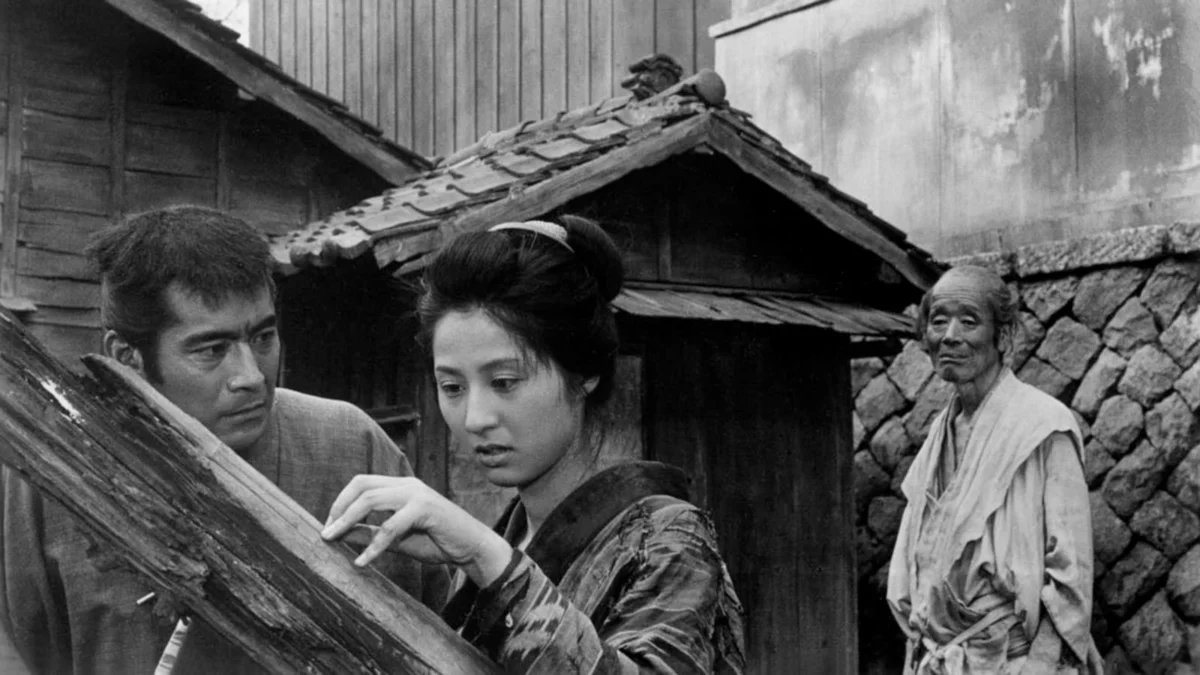
Akira Kurosawa’s 1957 cinematic adaptation of Maxim Gorky’s seminal 1902 play, "The Lower Depths," stands as a significant entry in the illustrious filmography of one of cinema’s undisputed masters. Filmed entirely on a single, meticulously crafted set, this black-and-white drama transcends its theatrical origins to deliver a potent social commentary on human resilience amidst squalor and despair. While often overshadowed by Kurosawa’s more action-oriented epics like "Seven Samurai" or "Rashomon," "The Lower Depths" offers a profound, if sometimes unsettling, exploration of truth, illusion, and the fundamental struggle for dignity, earning it critical accolades including Best Art Direction at the Mainichi Film Concours and a respectable ranking at number 36 on Kinema Junpo magazine’s 2009 list of the greatest Japanese pictures of all time. This film, alongside Kurosawa’s 1951 adaptation of Dostoevsky’s "The Idiot," underscores his profound engagement with Russian literary giants, though "The Lower Depths" is notably characterized by a slightly less pessimistic outlook despite its grim subject matter.
The Literary Foundation: Maxim Gorky’s Vision of Despair
Maxim Gorky’s original play, "Na Dne" (literally "At the Bottom"), premiered in 1902 at the Moscow Art Theatre, directed by Konstantin Stanislavski. The play was a revolutionary work of Russian social realism, depicting a group of destitute individuals living in a cramped, dilapidated lodging house in a provincial Russian town. Gorky, a former tramp and factory worker himself, drew heavily on his own experiences with poverty and marginalization to create a raw, unflinching portrait of society’s outcasts.
The early 20th century in Russia was a period of immense social and political ferment. Rapid industrialization had led to widespread poverty and the growth of an urban proletariat, fostering a breeding ground for revolutionary sentiment. Gorky’s play captured the desperation and moral ambiguity of this era, showcasing characters grappling with their harsh realities, their broken dreams, and the often-debilitating solace of self-deception. Key characters included a former baron, an actor whose glory days are long past, a prostitute, a cynical thief, and a variety of other social rejects, all bound by their shared misery.
Upon its initial showing, "The Lower Depths" was indeed criticized for its bleakness and perceived lack of a clear moral message, challenging the prevailing theatrical conventions that often sought to uplift or provide clear resolutions. However, its uncompromising honesty and psychological depth quickly cemented its status as a landmark work of Russian drama, profoundly influencing subsequent playwrights and artists with its stark depiction of human suffering and its nuanced exploration of the ethical dilemma between a comforting lie and a painful truth. Gorky’s work provided a powerful voice for the dispossessed, serving as both a mirror and a critique of Russian society.
Kurosawa’s Transposition: Edo Japan’s Echoes of Russian Misery
Akira Kurosawa, renowned for his meticulous attention to detail and his ability to universalize specific narratives, chose to transpose Gorky’s narrative from early 20th-century Russia to Edo-period Japan (1603-1868). This creative decision was not merely a superficial change of setting but a profound recontextualization that allowed Kurosawa to explore similar themes of social stratification, poverty, and human resilience within a distinctly Japanese historical and cultural framework. The Edo period, while generally characterized by prolonged peace and relative stability after the turbulent Sengoku (Warring States) period, still harbored deep social inequalities and pockets of extreme poverty, particularly among the lower samurai classes, artisans, and common laborers.
The transition from the chaotic, war-torn Sengoku period to the structured, centralized governance of the Edo shogunate offered a compelling parallel to the backdrop of Gorky’s play, which emerged from a Russia teetering on the brink of revolution. Kurosawa used the Edo setting to reflect the often-stifling hierarchical society where individuals were largely born into their social standing with little opportunity for upward mobility. The grimy tenement where the film unfolds becomes a microcosm of this rigid social structure, a refuge for those who have fallen through the cracks or never had a place within the established order.
The screenplay, co-written by Kurosawa and his frequent collaborator Hideo Oguni, meticulously adapted Gorky’s dialogue and character dynamics while infusing them with Japanese idioms and cultural nuances. Oguni had worked with Kurosawa on several previous films, including "Seven Samurai" and "I Live in Fear," and their collaboration ensured a seamless blend of Gorky’s philosophical underpinnings with Kurosawa’s distinctive narrative style. The result was a film that resonated with both the original play’s timeless humanism and the specific historical consciousness of 1950s Japan.
A Cast of Souls: Characters and Performances
The ensemble cast delivers performances of remarkable depth and expressiveness, highlighting the wit, vitality, and often tragic resilience of the human spirit. The film’s narrative largely unfolds through the interactions, arguments, and occasional moments of camaraderie among the diverse inhabitants of the tenement.
Ganjiro Nakamura portrays the unscrupulous landlord, Rokubei, a man whose avarice is thinly veiled by a veneer of authority. His wife, Osugi, played with chilling intensity by Isuzu Yamada, is a manipulative and cruel figure, whose contempt for her tenants is matched only by her own moral decay. Yamada’s performance, in particular, was lauded for its powerful portrayal of a woman hardened by her circumstances.
Toshiro Mifune, Kurosawa’s frequent leading man, here takes on a role distinct from his typical heroic or rogue figures. As Sutekichi, the thief, Mifune embodies a complex mix of arrogance, vulnerability, and a yearning for something more. His character’s involvement with the landlord’s wife and his subsequent interest in her younger sister, Kayo (Kyoko Kagawa), adds a layer of romantic and moral entanglement to the already fraught atmosphere. Koji Mitsui’s portrayal of the gambler, Toku, is another standout, capturing the character’s erratic nature and his desperate reliance on luck. Mitsui’s performance, alongside Mifune’s and Yamada’s, garnered significant praise, with all three actors receiving awards for their efforts.
Other memorable characters include Minoru Chiaki as the disillusioned samurai, often lost in nostalgic reveries of a more honorable past, and Kamatari Fujiwara as the former actor, clinging desperately to the fading glory of his stage career. Bokuzen Hidari’s performance as Kahei, the pilgrim, is pivotal. Kahei, a figure of serene wisdom and compassionate insight, acts as a catalyst, stirring the social structure of the tenement by offering comfort, hope, and challenging the residents to confront their self-deceptions. His arrival forces the other characters to examine their own "truths" and "lies," ultimately leading to profound shifts in their perspectives and relationships.
Thematic Depth: Truth, Illusion, and Coping with Hardship
At its core, "The Lower Depths" grapples with the timeless philosophical debate between comforting illusions and harsh realities. Kahei, the pilgrim, frequently offers solace and a spiritual perspective, suggesting that people need to believe in something better, even if it is a lie, to endure their suffering. Conversely, other characters cling to cynical pragmatism or succumb to despair. This tension forms the dramatic backbone of the film, as Kurosawa meticulously explores the psychological impact of poverty and the various coping mechanisms individuals employ.
While the setting is undeniably bleak, Kurosawa injects a surprising amount of humor into the narrative, often verging on nihilism and absurdism. Characters joke about their dire situations, mock each other’s misfortunes, and engage in petty squabbles that momentarily alleviate the crushing weight of their existence. This dark humor is not gratuitous; rather, it serves as a powerful testament to the human capacity for resilience and the innate need for connection, even in the most desperate circumstances. It illustrates how, for many, laughter and shared absurdity become vital tools for survival, a way to acknowledge hardship without being entirely consumed by it.
The film, much like Gorky’s play, functions as a powerful piece of social realism. It doesn’t romanticize poverty or offer easy solutions. Instead, it presents a stark, unvarnished look at the lives of the marginalized, compelling the audience to confront uncomfortable truths about societal neglect and the psychological toll of deprivation. Kurosawa’s ability to extract moments of profound humanity and even joy from such grim surroundings underscores his mastery in analyzing society and presenting the multifaceted nature of the human condition.
Cinematic Craftsmanship: A Theatrical Vision
Kurosawa’s directorial choices for "The Lower Depths" are particularly distinctive. In a departure from his more dynamic and expansive visual style seen in films like "Seven Samurai" or "Throne of Blood," Kurosawa deliberately embraced a more theatrical and static approach. Cinematographer Ichio Yamazaki, under Kurosawa’s precise guidance, crafted well-planned, deliberate shots that emphasize the confined nature of the tenement.
Most of the film unfolds within the cramped living quarters, which immediately imparts a pervasive sense of claustrophobia and inescapable confinement. The static camera work forces the audience to focus intently on the characters’ interactions, their dialogue, and the nuanced emotional performances, rather than being distracted by elaborate camera movements or sweeping visuals. This minimalist approach heightens the dramatic tension and draws the viewer deeper into the characters’ psychological spaces. The stark black-and-white cinematography further enhances the grim aesthetic, emphasizing shadows and the grimy textures of the dilapidated set.
The award-winning art direction played a crucial role in creating this immersive environment. Every detail of the tenement – from the peeling paint and makeshift partitions to the sparse, worn-out furnishings – contributed to the authentic portrayal of poverty and neglect. This meticulous set design, combined with the controlled cinematography, effectively traps the audience within the characters’ world, making their struggles feel immediate and palpable. Kurosawa’s decision to embrace these constraints not only paid homage to the play’s stage origins but also ingeniously utilized them to amplify the film’s core themes of entrapment and the yearning for escape.
Historical Resonance and Enduring Impact
Released in 1957, "The Lower Depths" carried a profound contemporary resonance for audiences in post-war Japan. The 1950s was a period of intense reconstruction and societal transformation following the devastation of World War II, the economic hardships of the Great Depression that preceded it, and the subsequent Allied occupation. Many Japanese citizens had experienced immense suffering, loss, and a drastic reordering of their social and economic lives. Housing shortages were rampant, poverty was widespread, and the traditional social fabric had been irrevocably altered.
Kurosawa’s film, set in a historical Edo period tenement, served as a powerful mirror reflecting the anxieties and struggles of 1950s Japan. The parallel between the Edo period’s emergence from the chaos of the Sengoku period and post-war Japan’s own journey from military defeat and occupation to a burgeoning democracy and economic resurgence was stark. After years of military rule and aggressive expansionist politics, Japan was disarmed, its form of government transitioned to a democracy, and its economy and education system underwent radical reorganization. While these changes ultimately laid the groundwork for Japan’s rise as a global economic power, the immediate aftermath was characterized by hardship and uncertainty. The film’s depiction of individuals grappling with profound societal shifts, economic insecurity, and the search for meaning in a changed world spoke directly to the experiences of contemporary Japanese audiences.
"The Lower Depths" thus became more than just an adaptation; it was a deeply insightful social commentary on the enduring human spirit in the face of adversity, a testament to Kurosawa’s ability to aptly analyze society and present the universal aspects of human nature. The film’s initial skepticism, perhaps due to its stark subject matter or its departure from Kurosawa’s more conventional storytelling, eventually gave way to widespread recognition as critics and audiences alike came to appreciate its profound depth and enduring relevance.
Ultimately, "The Lower Depths" leaves the audience with a powerful, albeit complex, message. It is a sad and gloomy narrative, yet unexpectedly funny, showcasing the harshness of life alongside moments of profound personal resilience. After 124 minutes, the film subtly suggests that if reality is cruel, finding moments of laughter and connection, however fleeting, might make existence less terrible. It remains a testament to Kurosawa’s unparalleled skill in translating literary genius to the screen, creating a work that is both historically specific and universally resonant, continually inviting viewers to ponder the nature of truth, compassion, and the indomitable will to survive.