The Kurdistan Film Commission (KFC), initially established as the Kurdistan Film Commission Slemani before a strategic expansion of its mandate, has marked its significant return to the Cannes Film Festival, a pivotal event in the global cinema calendar. Following its initial debut last year, which signaled the semi-autonomous region’s ambitious entry onto the international film stage, the commission made headlines this year with the official launch of the Kurdistan Film Fund, a groundbreaking initiative poised to inject $2 million annually into the burgeoning film sector. This move underscores a profound commitment to fostering local talent, attracting international productions, and reshaping the narrative of Kurdistan on a global scale.
The announcement was made during a high-profile event titled "Owning Our Story" at the Cannes Marché du Film, the festival’s bustling industry marketplace. Deputy Prime Minister H.E. Qubad Talabani, who serves as the president of the Kurdistan Film Commission, led the delegation, joined by Bavi Yassin, the commission’s founder and chair, and her dedicated team. Their presence at Cannes for a second consecutive year signifies not merely a ceremonial appearance but a robust, strategic effort to solidify Kurdistan’s position as a vibrant hub for filmmaking in the Middle East and North Africa (MENA) region.
A Vision for Empowerment and Global Connection
The Kurdistan Film Commission’s overarching mission, headquartered in the culturally rich city of Slemani (affectionately known as "Suli"), is multifaceted. It aims to empower Kurdish creatives through comprehensive training and support programs, actively draw foreign filmmakers to the region, thereby establishing Kurdistan as a premier filming destination, and facilitate the global dissemination of authentic Kurdish stories. This mission is intrinsically linked to a broader vision of transforming Kurdistan from a perceived "battlefield" into a "bridge" of cultural exchange and economic opportunity.

Deputy Prime Minister Talabani eloquently articulated this unifying power of storytelling at the Cannes event. "We want to show the world that despite political differences, despite regional tensions, or war, that cinema can cross those boundaries, that storytelling can unite where politics divides," he stated. The newly launched fund, he emphasized, is more than just financial aid; it’s "a signal to the region that we see the momentum and that we want to be part of it, that we are willing to invest in the relationships, the collaborations, the partnerships that make this region stronger." This statement resonates deeply with Kurdistan’s historical identity as a crossroads of civilizations, a region that has, for centuries, served as a vital link between diverse cultures and worlds.
Talabani further stressed the imperative of reclaiming and redefining Kurdistan’s narrative. "We have decided that today, Kurdistan stories will no longer be told by others on our behalf," he asserted to the Cannes audience. "We will tell them ourselves, on our terms, with the depth and accuracy that only we can provide." This shift is critical for a region often viewed through the lens of conflict and hardship. The film and creative sectors are deemed essential tools in this endeavor, as "how a nation tells its story determines how it is seen, how it is understood, how it attracts investment, talent and partnerships." The commission’s goal is clear: to present Kurdistan not as subjects or victims of history, but as active, engaged participants in the global conversation.
The Kurdistan Film Fund: Catalyzing Local and International Productions
The Kurdistan Film Fund, with its annual allocation of $2 million, represents a pivotal step in the commission’s strategy. Bavi Yassin elaborated on its significance, noting that historically, Kurdish films have often relied on external support due to a lack of robust internal infrastructure. "The fund changes that by placing the Kurdish narrative at the center, wherever it is told in the world," Yassin explained. This initiative is not solely about financing; it is designed to cultivate "ownership, continuity, and visibility for Kurdish stories on an international level." Concurrently, it seeks to open doors for global creators and producers, encouraging meaningful collaborations with Kurdish talent and narratives.
The evaluation criteria for fund applications will prioritize artistic merit but also consider international co-production potential, a project’s ability to circulate globally, and its relevance to the local film ecosystem. The aim is to support films that can connect Kurdistan with international partners while simultaneously contributing to the on-the-ground development of its nascent industry. This dual focus ensures that the fund serves both as a catalyst for global outreach and a bedrock for local growth.

Economic Diversification and Cultural Tourism
The strategic importance of attracting film and television productions extends beyond cultural representation; it encompasses substantial economic benefits, both immediate and long-term. Yassin highlighted that for Kurdistan, this initiative is fundamentally about economic diversification. "The audiovisual sector brings immediate economic activity — jobs, services, infrastructure — but beyond that, it builds long-term value," she stated. The film industry is a powerful engine for job creation, stimulating demand for a wide array of services from catering and logistics to specialized technical expertise. Studies on the economic impact of film production globally consistently show a significant multiplier effect, where every dollar invested in production can generate several dollars in broader economic activity.
Furthermore, a thriving audiovisual sector significantly shapes a region’s global perception and opens avenues for cultural tourism. "When people see a place on screen, they connect with it. That connection creates curiosity, and over time, it translates into real interest in visiting and engaging with that place," Yassin explained. The iconic landscapes featured in blockbuster films often become sought-after tourist destinations, demonstrating cinema’s potent ability to transform perception into tangible economic benefit.
Unlocking Kurdistan’s Unique Filming Potential
Making Kurdistan appealing to international filmmakers involves a strategic blend of authenticity, accessibility, and cost-effectiveness. Yassin emphasized that Kurdistan offers a "treasure trove of stories" and diverse locations that remain largely "unexposed" to global audiences, representing a fresh canvas for filmmakers seeking originality. For European and Asian partners, this presents a unique opportunity to feature settings and narratives that audiences have not repeatedly encountered.

The region’s geographical advantages are particularly compelling. "Kurdistan is in the MENA (Middle East/Northern Africa), very accessible, and yet it has four proper seasons per year, a wide range of diverse locations, from extreme greenery to drylands, waterfalls, mountains and hills, rivers, and urban cities," Yassin elaborated. These varied landscapes, surprisingly, can double for locations across the globe, from Syria, Afghanistan, Pakistan, and Iran to, in one memorable instance, even Ireland. This versatility, coupled with its relatively compact geography, allows productions to access a wide array of settings—urban, rural, mountainous—without the logistical complexities and prohibitive costs often associated with extensive travel in other countries. This efficiency directly impacts production budgets and timelines, making Kurdistan an attractive proposition for cost-conscious filmmakers.
Beyond direct financial incentives, the commission also emphasizes "soft incentives" and production support. While cash rebate percentages often dominate discussions, Yassin notes that "what matters in practice is the total cost of production." In Kurdistan, facilitated permits, flexible coordination, ready access to diverse locations, and overall lower operational costs render it highly competitive, even without solely relying on large rebate schemes. This comprehensive approach aims to streamline the production process and provide a supportive environment for both local and international crews.
Nurturing Local Talent and Building Infrastructure
A critical component of the Kurdistan Film Commission’s strategy is investing in human capital. Over the past year, the commission has actively pursued various training, education, and skills development initiatives for local talent. These programs include a five-day Kurdistan Producers Lab, conducted in collaboration with European Audiovisual Entrepreneurs (EAVE), which covered essential aspects of film budgeting, financing, funding applications, and marketing for producers and directors. Another significant event was a four-day workshop on location management and scouting, led by industry veterans John Rakich, President of the Location Managers Guild International (LMGI), and Andrea Keener, an LMGI board member with an impressive resume spanning productions like Ant-Man and Killers of the Flower Moon.
The commission plans to significantly expand these training opportunities. Future initiatives will include collaborations with top international professionals and established institutions for scriptwriting, documentary filmmaking, and more specialized vocational training for crews, particularly in below-the-line roles. Additionally, the launch of "Suli Screens" programs, offering free film screenings across Slemani, aims to cultivate local film appreciation and engagement.

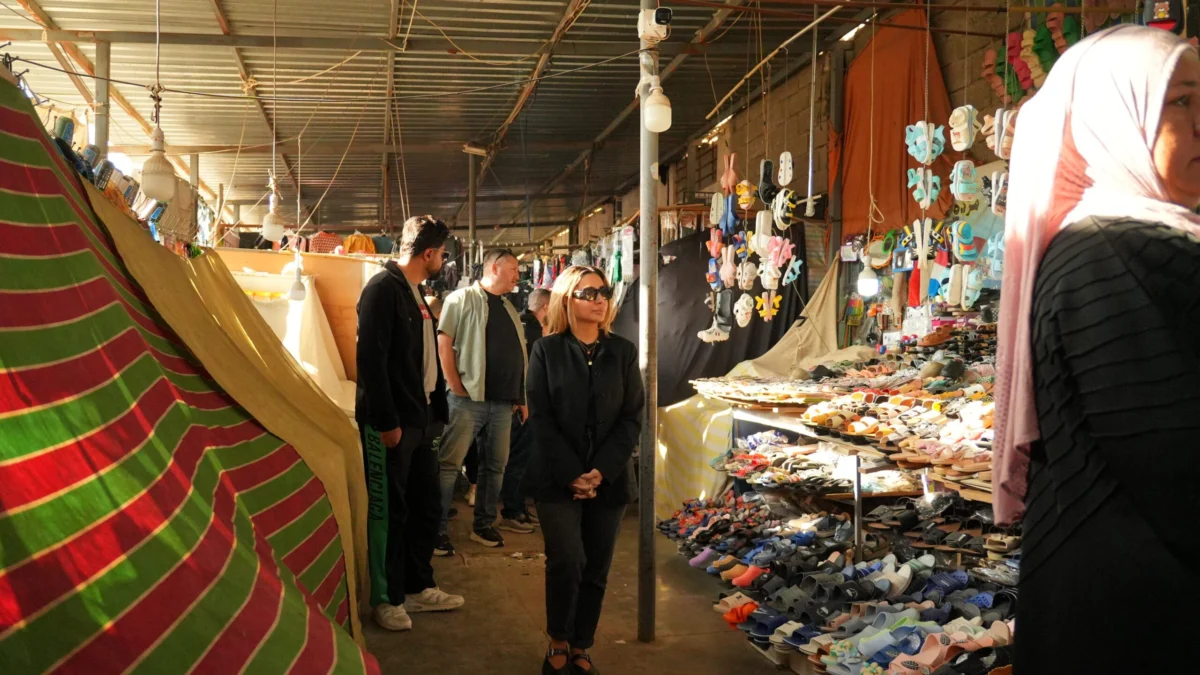
To further support productions, the commission is building a comprehensive database of diverse locations. This includes historical sites like the archaeological remains of Bazyan (an ancient Christian site dating back to the 6th century), poignant landmarks such as the Red Prison Museum (a former site of brutality now a museum), and natural wonders like the Tuni Baba gorge, renowned for its stunning scenery.
Navigating Regional Challenges and Looking Ahead
Despite its ambitious plans, the Kurdistan Film Commission operates within a complex geopolitical landscape. Yassin acknowledged the "unexpected war in the region" and the broader impact of conflicts in Iran and Gaza, which have affected production across the entire MENA region. This reality often creates a "disconnect between perception and reality," as external narratives of instability overshadow the daily life in Kurdistan, which is largely stable, functional, and safe.
Yassin highlighted that being present at Cannes is a powerful statement against these external perceptions. "Our presence is a statement: that we are open, that we are building, and that we are not waiting for perfect conditions to start," she affirmed. In times of conflict, support for the arts becomes not secondary but essential, as "culture is what preserves identity, what sustains people, and what allows a region to define itself rather than be defined by others."
The commission has already seen promising early successes, including an international project, Daudistan, a Canadian film production by writer-director Ariel Nasr. The drama, set on the eve of Kabul’s fall to the Taliban, will utilize Kurdistan’s versatile landscapes to tell a compelling story of resilience and the fight to reclaim shattered dreams. While more projects are in the pipeline, the regional instability has undoubtedly presented challenges.

Beyond attracting external productions, the KFC is actively fostering internal growth and regional collaboration. At Cannes, it organized the first-ever Kurdistan Producers Circle, bringing together 10 selected projects from across the wider MENA region, not just Kurdistan. These filmmakers had the invaluable opportunity to meet with established producers and pitch their work in a focused setting. This deliberate choice to include projects from beyond Kurdistan reflects the commission’s vision of positioning Kurdistan as a platform for broader regional collaboration, building "bridges that did not exist before."
After only a year since its official establishment, the Kurdistan Film Commission is pragmatic about its progress. "I do not expect a mountain of productions coming our way," Yassin admitted, but expressed optimism that being contacted multiple times for production consideration in such a short period is a positive indicator. Her primary objective remains clear: to challenge preconceived notions about Kurdistan. "All they know is stories related to sadness, war and politics. My main objective is to change people’s minds about how they see us. Once they do that, trust me, they won’t be able to resist the beauty and versatile location, and the enormous cost-effectiveness." The Kurdistan Film Commission is not just building an industry; it is building a new narrative, one frame at a time.