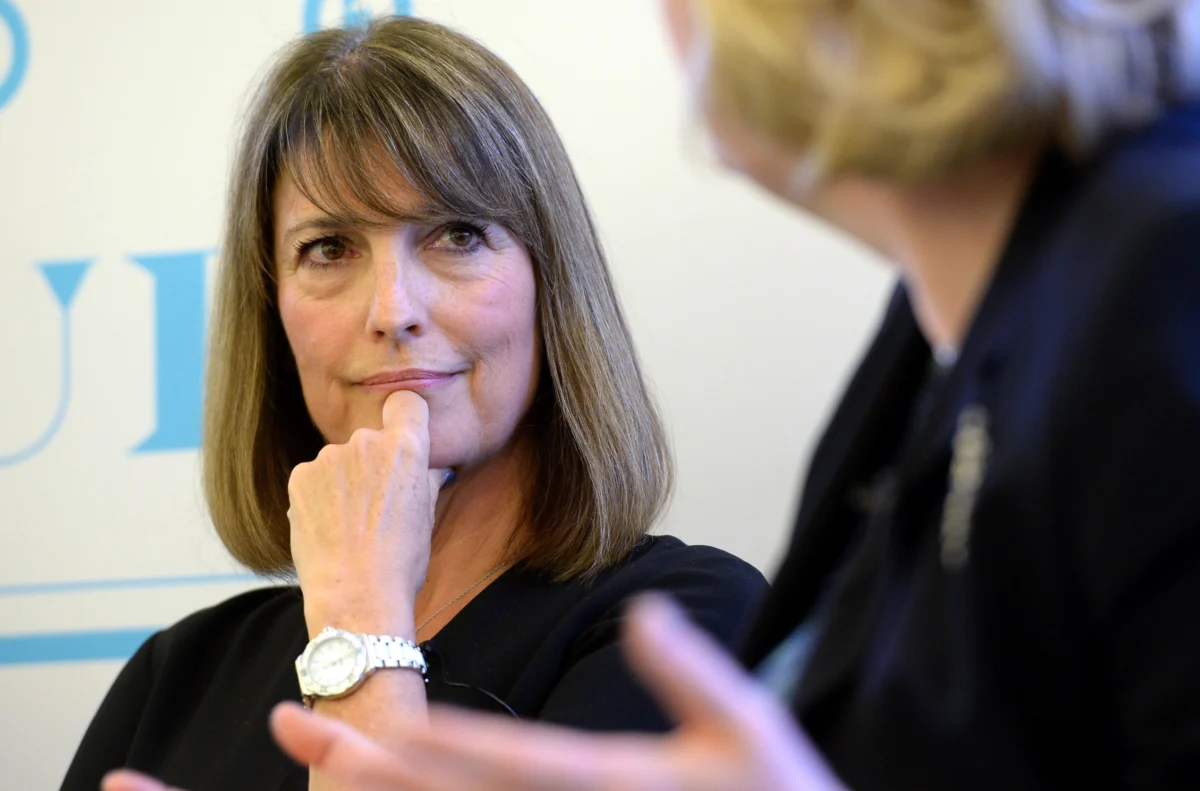
The United Kingdom’s premier commercial broadcaster, ITV, led by Chief Executive Officer Carolyn McCall, has released a comprehensive trading update for the first quarter of 2026, revealing a complex financial landscape characterized by a pivot toward digital growth and the continuation of high-stakes negotiations regarding its structural future. Central to the morning’s announcement was the confirmation that ITV remains in active discussions with Sky—the Comcast-owned telecommunications and media giant—concerning the potential sale of its Media & Entertainment (M&E) division. This potential transaction, first signaled in November 2025, represents a seismic shift in the British broadcasting landscape, as it would effectively decouple ITV’s traditional broadcasting and streaming arms from its globally successful production powerhouse, ITV Studios.
Strategic Realignment and the Sky Negotiations
The ongoing dialogue with Sky marks a definitive moment in ITV’s corporate history. Under the proposed terms of the deal, the M&E business—which encompasses ITV’s portfolio of commercial free-to-air channels (ITV1, ITV2, ITV3, ITV4, and ITVBe) as well as its rapidly expanding digital platform, ITVX—would be offloaded. This would leave ITV Studios to operate as a standalone entity, unburdened by the volatile fluctuations of the linear advertising market. While the company stated it would "update the market in due course," the persistence of these talks suggests a high level of strategic intent from both parties.
Industry analysts suggest that for Sky, the acquisition of ITV’s M&E business would provide a massive influx of domestic content and a dominant share of the U.K.’s terrestrial advertising market. For ITV, the divestiture would allow the company to lean entirely into its role as a global content creator. ITV Studios has long been the "crown jewel" of the organization, producing content for a wide array of international platforms, including competitors like Netflix and Disney+. By separating the production arm from the domestic broadcasting arm, ITV could potentially achieve a higher market valuation, as production companies often command better multiples than traditional broadcasters.
Financial Performance Breakdown: Q1 2026
The Q1 2026 figures illustrate the diverging paths of ITV’s two core segments. Total revenue for ITV Studios rose by 4 percent during the first three months of the year. This growth was primarily fueled by an 8 percent surge in external revenue, which represents content produced for third-party broadcasters and streaming services. Key drivers of this performance included high-profile deliveries such as Skyscraper Live for Netflix, the second season of the critically acclaimed Rivals for Disney+, and the second season of Love Island U.S.: Beyond the Villa for Peacock.
Conversely, internal revenue within the Studios division saw a decline of 7 percent. Management attributed this to a deliberate strategic shift involving the scheduling and production of daytime content and long-running soaps. This move, aimed at optimizing resources and focusing on high-margin scripted drama and international formats, resulted in a lower volume of internal commissions, though the impact was largely expected by shareholders.
In the Media & Entertainment division, total revenue fell by 2 percent. This decline was largely driven by a 1.5 percent drop in Total Advertising Revenue (TAR). Despite the dip in traditional linear advertising, the division found a significant silver lining in its digital performance. Digital revenue grew by 12 percent, bolstered by a 14 percent increase in digital advertising revenue. This growth was anchored by a record-breaking quarter for ITVX, the broadcaster’s flagship streaming service.
The Digital Pivot: ITVX and Streaming Metrics
The success of ITVX remains a central pillar of Carolyn McCall’s "supercharging" strategy. During the first quarter of 2026, total streaming hours on the platform increased by 13 percent year-over-year. The surge in engagement was attributed to a diverse content slate that balanced high-stakes drama with reality television and live sports. The drama Gone and the reality juggernaut Love Island: All Stars were cited as primary drivers of viewership, alongside the broad appeal of the Six Nations rugby championship.
The transition to a digital-first model is essential for ITV as it contends with the long-term decline of linear television viewership. While linear advertising remains a significant portion of the company’s income, the 14 percent growth in digital ad revenue indicates that advertisers are increasingly following audiences to the ITVX platform. Non-advertising revenue within the M&E segment dropped by 8 percent, a figure that ITV officials stated was in line with internal projections and reflects the broader challenges facing subscription-based models and secondary rights markets in the current economic climate.
Future Outlook: The World Cup and Advertising Projections
Looking ahead to the remainder of 2026, ITV’s guidance remains optimistic, particularly for the second quarter and the summer months. The company has projected that Total Advertising Revenue will rise by approximately 10 percent in Q2. This anticipated spike is almost entirely driven by the Men’s Soccer World Cup, an event that traditionally generates massive demand from blue-chip advertisers.
"We expect a strong July, driven by significant demand from advertisers around the men’s World Cup," the company noted in its outlook. Major sporting events provide a rare opportunity for commercial broadcasters to capture mass audiences in real-time, offering a premium environment for brands that digital platforms struggle to replicate.
However, the company remains cautious regarding the broader macroeconomic environment. ITV acknowledged the "ongoing difficult geopolitical environment," which continues to exert pressure on consumer confidence and corporate marketing budgets. Despite these headwinds, the firm maintains that it is on track to deliver its full-year guidance, which anticipates continued revenue growth for ITV Studios and "strong profitable digital revenue growth" for the M&E division.
Chronology of ITV’s Strategic Evolution
To understand the significance of the Q1 2026 update, it is necessary to look at the timeline of ITV’s recent corporate maneuvers:
- Early 2023–2024: ITV navigates the aftermath of the Hollywood writers’ and actors’ strikes, which delayed scripted deliveries and impacted the global production pipeline.
- Late 2024: The launch of "ITVX 2.0" focuses on enhanced personalization and a deeper library of licensed international content.
- November 2025: ITV officially confirms it is in early-stage talks with Sky regarding the sale of its M&E business.
- January 2026: ITV provides annual guidance, warning that revenue and profits would be "weighted to the second half" of the year due to the phasing of scripted deliveries and high-margin licensing deals.
- May 2026: The Q1 trading update confirms the resilience of ITV Studios and the continued momentum of ITVX, while maintaining the possibility of a major structural sale.
Industry Implications and Market Reaction
The potential sale of ITV’s M&E arm to Sky would be one of the most significant deals in the history of British media. It would represent the end of ITV as a "vertically integrated" broadcaster—a model where a company produces content primarily for its own channels. Instead, ITV would become a pure-play production house, similar in structure to independent giants like Banijay or All3Media (the latter of which was itself a subject of acquisition interest in previous years).
For the U.K. market, a Sky-owned ITV M&E division would raise significant questions for media regulators, particularly Ofcom. The consolidation of the country’s largest pay-TV provider (Sky) with the largest commercial terrestrial broadcaster (ITV) would create a dominant force in the advertising market. This could lead to concerns regarding market competition and the pricing of advertising slots.
From a content perspective, a standalone ITV Studios would be free to prioritize the highest bidder for its programming without the obligation to support its domestic sister channels. This could lead to even more ITV-produced content appearing on platforms like Netflix, Amazon Prime Video, and Apple TV+.
Conclusion: A Focused Strategy Under Carolyn McCall
In her concluding remarks on the trading update, CEO Carolyn McCall emphasized that the company’s dual-track strategy is yielding results. "Our strategic priorities of expanding ITV Studios and supercharging our digital media & entertainment business continue to deliver clear and positive results," McCall stated.
The Q1 2026 results suggest that ITV is successfully managing a difficult transition. While the traditional broadcasting side faces structural headwinds, the production arm is thriving on the global stage, and the digital platform is proving its ability to offset linear declines. Whether ITV ends the year as a unified company or as a streamlined production entity remains to be seen, but the Q1 data provides a solid foundation for whichever path the board chooses to take. Investors will be watching closely for the next update on the Sky negotiations, which will ultimately define the future of one of Britain’s most iconic media brands.