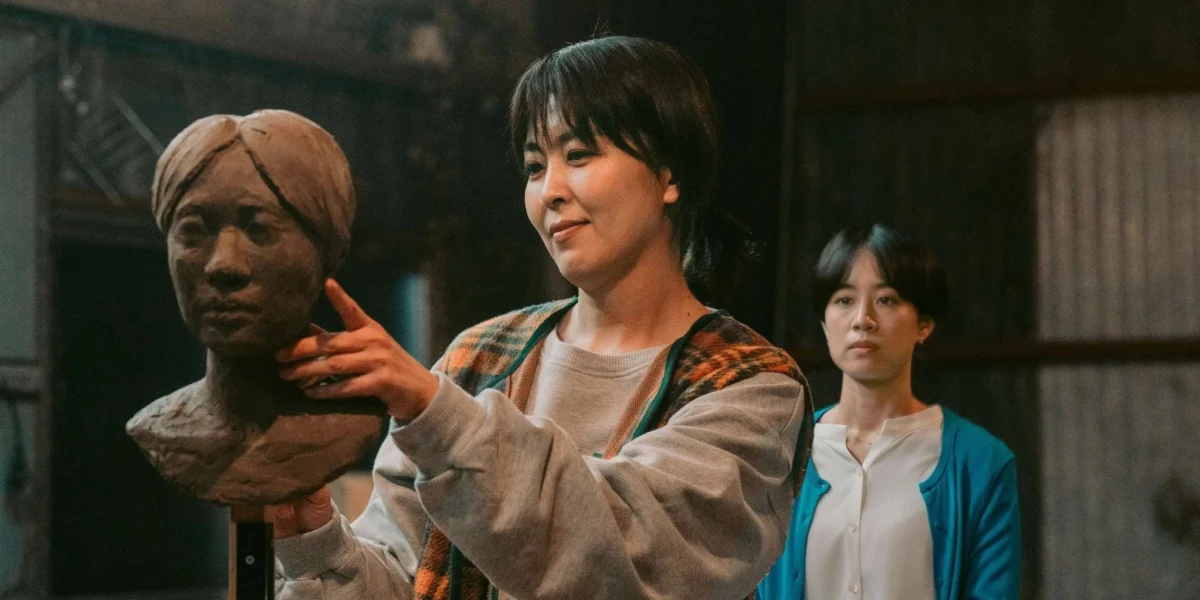
Nagi Notes marks the latest cinematic endeavor from acclaimed Japanese filmmaker Koji Fukada, serving as a contemplative exploration of human connection, the distinction between solitude and loneliness, and the evolving nature of interpersonal bonds. Adapted from the seminal 1994 play Tokyo Notes by playwright Oriza Hirata, the film relocates the original narrative’s urban setting to the rural town of Nagi in the Okayama Prefecture. This shift in locale provides a pastoral backdrop that contrasts with the internal complexities of its protagonists, Yoriko and Yuri, whose reunion forms the emotional core of the story. Directed and written by Fukada, the production features a high-profile cast including Takako Matsu and Shizuka Ishibashi, delivering a narrative that is as much about the silence between words as it is about the conversations themselves.
Production Background and Artistic Context
The collaboration between Koji Fukada and Oriza Hirata is rooted in a long-standing professional history. Fukada was a member of Hirata’s theater company, Seinendan, where he honed a style characterized by naturalistic dialogue and "quiet" drama. Tokyo Notes, the source material for this film, is widely considered a masterpiece of contemporary Japanese theater, known for its "colloquial theater theory" which emphasizes the mundane aspects of life to reveal deeper existential truths.
In adapting the play for the screen, Fukada chose the town of Nagi, a real-world location known for its scenic beauty and its unique demographic profile. By moving the story from a city museum—the setting of the original play—to a rural farm and sculptor’s studio, Fukada introduces a tactile, elemental quality to the narrative. The film’s 110-minute running time is utilized to establish a slow, rhythmic pace that mirrors the unhurried life of the countryside, allowing the audience to inhabit the space alongside the characters.
Narrative Framework and Character Dynamics
The story centers on Yoriko, portrayed by Takako Matsu, a sculptor who has found a sense of equilibrium living on a farm in Nagi. Her daily routine involves a combination of agricultural labor, tending to cattle, and the solitary pursuit of carving wooden sculptures in her barn. Her life of chosen isolation is interrupted by the arrival of Yuri, played by Shizuka Ishibashi, her former sister-in-law. Despite Yuri’s divorce from Yoriko’s brother, the two women have maintained a profound emotional connection that transcends formal familial structures.
Yuri’s visit is ostensibly professional; she has agreed to serve as a model for one of Yoriko’s upcoming sculptures. However, as the narrative unfolds, it becomes evident that the visit is motivated by a deeper, perhaps subconscious, need for reconnection. The dialogue between the two women is characterized by a rare level of intimacy—a "long-form" friendship that allows them to bypass pleasantries and engage in substantive discussions about their lives, their pasts, and the nature of their current existences.
The film introduces a secondary narrative thread involving two young men, Keita (Kiyora Fujiwara) and Haruki (Waku Kawaguchi). Their presence serves as a generational counterpoint to Yoriko and Yuri. While the older women navigate the complexities of past relationships and established identities, the younger men represent the fluid, often uncertain process of forming new bonds. Their interactions eventually bring themes of queer identity to the forefront, providing a modern lens through which the film examines the spectrum of human relationships.
Chronology of the Reunion
The film’s progression is marked by a series of subtle shifts in the emotional weather between the characters:
- The Arrival: Yuri arrives in Nagi, bringing with her the frantic energy of the city. The initial interactions establish the easy rapport between her and Yoriko, despite the time that has passed since their last meeting.
- The Artistic Process: As Yuri begins modeling for Yoriko, the act of observation becomes a catalyst for introspection. The stillness required for the sculpture forces both women to confront the realities of their lives.
- The Extension of Stay: Yuri repeatedly delays her departure, signaling a growing reluctance to return to her metropolitan life. This period is marked by "Nagi’s quiet," where the only interruptions are the town’s daily radio bulletins announcing local events or deaths.
- The Confrontation: Tensions that have been simmering beneath the surface eventually lead to a confrontation. This is not a "fiery" or melodramatic explosion, but rather a blunt, honest exchange regarding their mutual expectations and the reality of their bond.
- The Realization: Through their interactions and the observation of the younger couple, Yuri and Yoriko reach a state of mutual understanding. The film concludes with a simple but emotionally resonant acknowledgement of their individual paths.
Themes of Solitude versus Loneliness
A central philosophical inquiry in Nagi Notes is the distinction between being alone and being lonely. Yoriko serves as the embodiment of productive solitude. Her choice to live in Nagi is not a retreat from the world out of bitterness, but a conscious decision to create a space where her art can flourish. She expresses a profound contentment with the "temporary" nature of her work, noting that her wooden sculptures will eventually rot and return to the earth. This acceptance of transience is a key component of her psychological stability.
Conversely, Yuri represents the "loneliness" that can exist even in a crowded city. As an architect, she is involved in the creation of permanent, massive structures designed for public use. Yet, she feels a sense of disconnection and existential dissatisfaction. Her journey to Nagi is an attempt to find the groundedness that Yoriko possesses. The film suggests that while environment plays a role, the resolution of loneliness is an internal process. As the narrative posits, "Wherever you go, there you are."
Setting and Cinematography as Narrative Tools
The town of Nagi is treated as a character in its own right. The cinematography captures the lush landscapes and the specific light of the Okayama Prefecture, creating a sensory experience that justifies the film’s deliberate pacing. The "pastoral energy" mentioned in critical assessments is not merely aesthetic; it serves as a vacuum that draws out the characters’ inner thoughts.
The use of the daily radio bulletin is a significant narrative device. In a small village, the announcement of a single death is a community event, contrasting with the anonymity of city life where such occurrences often go unnoticed. This detail reinforces the film’s exploration of how human interactions are scaled differently depending on one’s environment.
Critical Analysis and Industry Implications
Nagi Notes arrives at a time when "slow cinema" continues to be a vital part of the international film festival circuit, offering a counter-narrative to the fast-paced, high-stakes storytelling prevalent in mainstream global media. Koji Fukada’s work has consistently been recognized for its ability to find the extraordinary within the ordinary, as seen in his previous films like Harmonium (2016), which won the Un Certain Regard Jury Prize at Cannes, and Love Life (2022).
The film’s handling of queer subtext is also noteworthy. By allowing the possibility of a romantic connection between Yoriko and Yuri to be raised and discussed openly by other characters, Fukada avoids the tropes of "buried" or "tragic" queer narratives. Instead, he treats it as one of many possible layers in the complex tapestry of human affection. The inclusion of the younger male couple further explores how different generations navigate these identities with varying degrees of openness and self-reflection.
Institutional and Cultural Responses
While specific box office data for independent releases like Nagi Notes often takes time to consolidate, the film’s selection for major international platforms indicates a strong institutional belief in its cultural value. Critics have praised the performances of Takako Matsu and Shizuka Ishibashi for their restraint. Matsu, a veteran of both stage and screen, brings a grounded authority to the role of Yoriko, while Ishibashi captures the restless yearning of Yuri with subtle precision.
The film also serves as a cultural bridge, bringing the theatrical techniques of Oriza Hirata to a wider cinematic audience. By maintaining the "quietness" of the original play while utilizing the visual advantages of the film medium, Fukada has created a work that honors its roots while standing as a distinct piece of art.
Conclusion and Broader Impact
Nagi Notes is a testament to the power of understated storytelling. It does not rely on grand plot twists or heightened drama to hold the viewer’s attention; instead, it invites the audience to observe the slow, meaningful shifts in the human psyche. The film’s conclusion—simple, moving, and wistful—leaves the audience with a reflection on the importance of accepting one’s reality.
In a broader sense, the film contributes to the ongoing dialogue in contemporary cinema about the nature of modern isolation and the enduring necessity of human connection. By portraying a relationship that is neither strictly familial nor purely romantic, but something more fluid and enduring, Nagi Notes challenges conventional definitions of "bonds." It suggests that the most powerful interactions are those that allow individuals the space to be themselves while remaining tethered to another. As a study of art, environment, and the human heart, Nagi Notes remains a significant entry in Koji Fukada’s filmography and a poignant reflection on the quiet complexities of life.