Toe Yuen’s Illustrious Return to the Director’s Chair
The premiere of "A Mighty Adventure" at the Udine Far East Film Festival represents a highly anticipated moment for fans of animation and admirers of Hong Kong cinema. Director Toe Yuen’s career has been marked by a distinctive style and a profound impact on the animation landscape, particularly with his 2001 masterpiece, "My Life as McDull." This film, a poignant and humorous exploration of childhood in Hong Kong, not only garnered critical acclaim but also achieved a rare feat for Asian animation by winning the coveted Grand Prix for Best Feature Film at the Annecy International Animation Film Festival. Annecy, often considered the "Cannes of animation," is the most prestigious animation festival globally, and Yuen’s victory elevated Hong Kong animation onto the international stage, demonstrating its unique storytelling capabilities and artistic merit.
"My Life as McDull" transcended mere entertainment, becoming a cultural touchstone that resonated deeply with Hong Kong audiences due to its authentic portrayal of local life, its subtle social commentary, and its endearing characters. Its success paved the way for greater recognition of Hong Kong’s animation industry and inspired a new generation of animators. Yuen’s subsequent work, while perhaps not reaching the same international festival heights, continued to explore themes of identity, family, and the everyday struggles and joys of ordinary people, often through the lens of anthropomorphic characters. His hiatus from feature film directing has been keenly felt by the industry, making "A Mighty Adventure" a much-anticipated comeback that promises to reassert his unique vision and technical prowess.
Unveiling the Narrative: A Miniature World in a Concrete Jungle
"A Mighty Adventure" embarks on its journey in what initially appears to be an idyllic natural setting—a lush, verdant forest teeming with life. This picturesque environment is soon revealed to be the suburban greenery bordering a bustling metropolis, unmistakably resembling Hong Kong. Within this meticulously crafted miniature ecosystem, various insect families coexist, each playing their part in the intricate web of life. The narrative primarily focuses on a community of crickets, characterized by their strict, albeit well-meaning, parents and their young offspring diligently learning the essential skill of leaping.
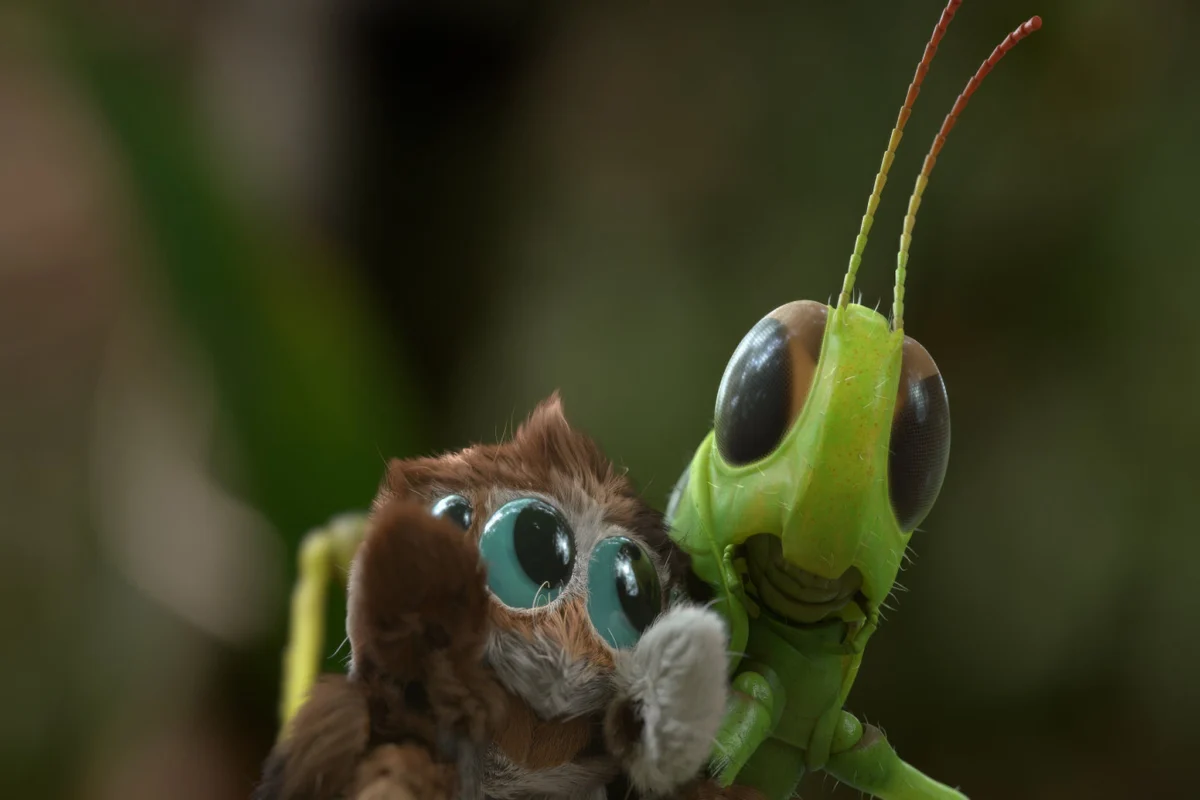
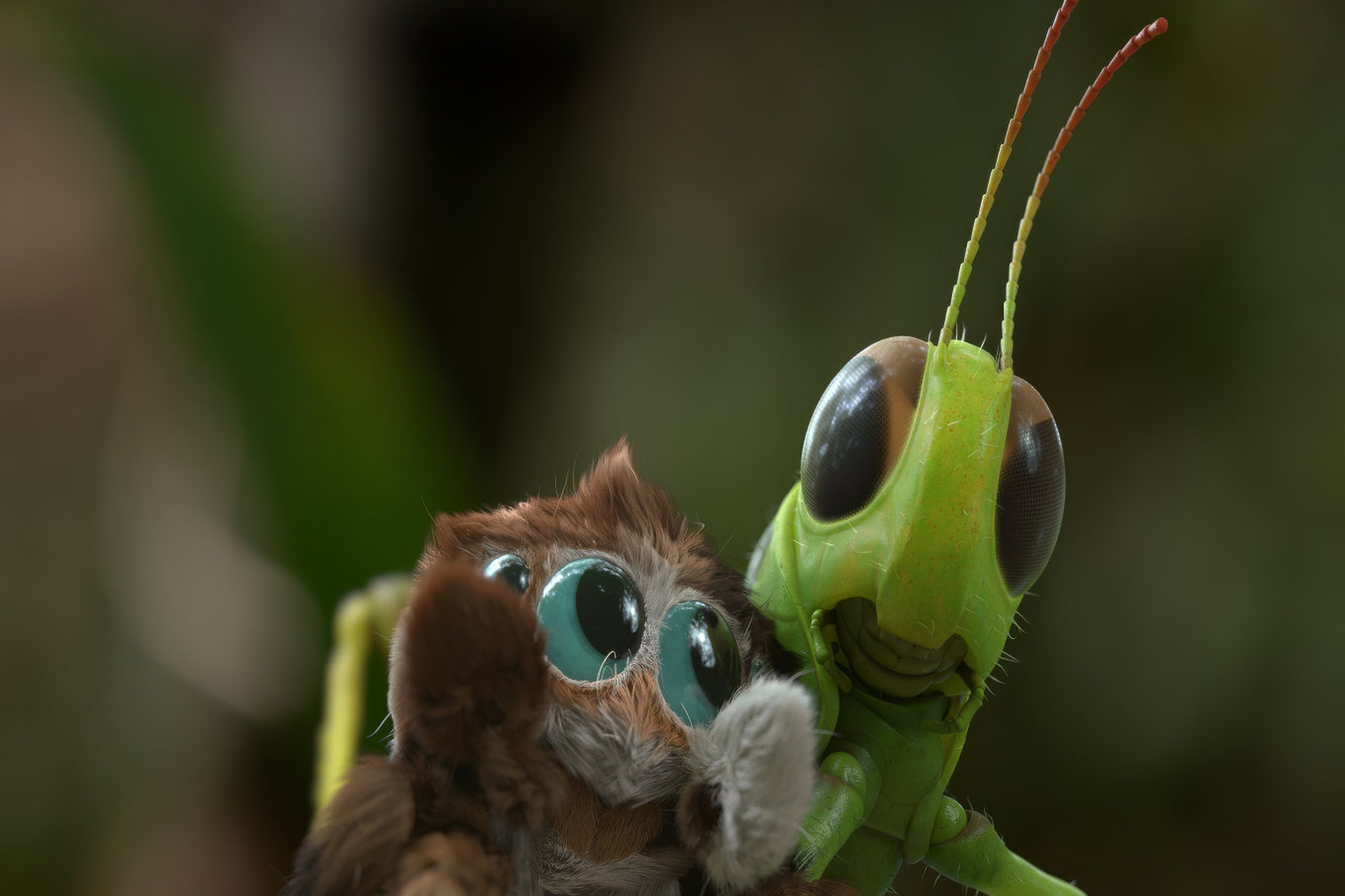
Among these young crickets, one stands apart. He is depicted as more curious and restless than his peers, possessing an adventurous spirit that resists the confines of rigid rules and expectations. Driven by an insatiable imagination, he ventures beyond the familiar boundaries of his family, embarking on a solo exploration. His journey takes him leaping from leaf to leaf, a perilous yet exhilarating trek that leads him to a captivating encounter with a magnificent butterfly, whose beauty ignites his sense of wonder. Along his path, he soon encounters a small spider, a vivacious and resourceful companion who, drawn by the cricket’s daring, decides to join him in exploring this vast, uncharted world.
Their burgeoning adventure, however, is abruptly interrupted by the intrusion of the human world. A father and son, equipped with nets, capture the cricket and the butterfly, bringing them back to their home. The resourceful spider, demonstrating remarkable tenacity, manages to follow, ensuring the trio remains connected. The cricket soon finds himself disoriented and confined within a glass jar, trapped in an alien, unfamiliar environment where the scale of everything is overwhelmingly magnified.
This initial confinement sets the stage for the film’s central conflict. The small band of insects must first orchestrate their escape from the human residence, a challenge that requires ingenuity and teamwork. Yet, breaking free from the house is merely the prelude to a far greater ordeal. Once outside, they confront the daunting reality of navigating the overwhelming human world of the city. The concrete jungle, with its towering structures, ceaseless traffic, and indifferent giants, presents an existential threat to these tiny protagonists. Their ultimate goal: to traverse this perilous urban landscape and find their way back to the relative safety and familiarity of their green sanctuary. This epic journey, seen through the eyes of creatures barely visible to humans, transforms everyday obstacles into monumental trials, highlighting the fragility and resilience of life on a smaller scale.
Technical Innovation and Visual Spectacle: A Hybrid Masterpiece
At its core, "A Mighty Adventure" is crafted as a family-oriented animated film—sweet, playful, and frequently humorous, yet simultaneously rich enough to engage adult viewers. While its initial premise and character archetypes might evoke comparisons to the storytelling sensibilities of studios like Pixar, the film swiftly distinguishes itself through its exceptional execution and innovative visual approach. The visuals are undeniably striking, showcasing a seamless and sophisticated blend of computer-generated animation for the characters and meticulously captured live-action backgrounds. This hybrid technique renders the environments with remarkable detail and authenticity, blurring the lines between the animated and real worlds.
The attention to detail in the film’s visual design is paramount. Elements such as dust motes dancing in sunlight, the texture of soil beneath a tiny foot, and the minute imperfections of everyday objects are brought to life with astonishing realism. These granular details imbue the miniature world with a palpable weight and presence, making every surface and every speck of dirt feel alive. Inside the human house, ordinary objects are ingeniously transformed into vast, imposing landscapes. Toys become monumental obstacles, kitchen utensils loom like ancient monoliths, and furniture takes on the grandeur of towering cliffs. This imaginative reinterpretation of scale, while echoing the spirit of films like "Toy Story" in its playful anthropomorphism of inanimate objects, allows "A Mighty Adventure" to forge its own distinct visual identity.
A particularly memorable sequence unfolds in the kitchen, where a seemingly innocuous boiling pot of soup overflows, transforming into a dramatic, volcanic eruption from the insects’ perspective. This striking and highly inventive image is a testament to the film’s ability to blend playful surrealism with breathtaking visual effects, creating moments that are both awe-inspiring and tinged with danger. The careful integration of CGI characters into live-action plates demands immense technical skill, requiring precise lighting, shadow matching, and perspective alignment to ensure the animated elements feel organically part of the real-world environment. This dedication to visual fidelity not only enhances immersion but also underscores the film’s ambitious artistic vision, pushing the boundaries of what hybrid animation can achieve.
A Symphony Without Words: Sound Design and Emotional Depth
Beyond its visual grandeur, "A Mighty Adventure" distinguishes itself through its masterful use of sound and its largely dialogue-free narrative. Moments of suspense are artfully woven into the fabric of the story, particularly when the protagonists face imminent danger or when the fate of the beautiful butterfly is left tantalizingly uncertain. Despite these thrilling sequences, the film maintains a gentle and accessible tone throughout, suitable for all ages. The absence of spoken dialogue, save for occasional muffled human voices that serve as ambient background noise, forces the audience to engage with the story on a deeper, more visceral level.
Instead of relying on conventional verbal exposition, the film employs an exquisitely precise sound design that amplifies every tiny movement within the insect world. The delicate tapping of tiny legs, the rustling of leaves, the subtle vibrations transmitted through the ground, and the distinct buzz of wings are all meticulously crafted and exaggerated to immerse the viewer in the hyper-sensory experience of the miniature protagonists. This heightened auditory landscape not only provides crucial environmental information but also serves to externalize the characters’ emotions and intentions. A rapid series of taps might convey fear, while a gentle rustle could signify curiosity.
Complementing this intricate soundscape is an evocative orchestral score that underpins the emotional rhythm of the narrative. The music swells during moments of triumph, builds tension during perilous encounters, and softens during scenes of reflection or camaraderie. The interplay between the detailed sound design and the expressive musical score creates a rich, immersive experience that transcends the need for verbal communication, allowing the film to resonate universally, irrespective of language barriers. This reliance on non-verbal storytelling is a bold artistic choice that harks back to the golden age of silent cinema, demonstrating a profound confidence in visual storytelling and the power of sound to convey complex emotions and narrative beats.
The Heart of the Adventure: Character Dynamics and Underlying Themes
At the emotional core of "A Mighty Adventure" lies the dynamic and evolving relationship between the adventurous cricket and the vivacious spider. This unlikely pairing gradually becomes the film’s beating heart, anchoring the narrative with their playful banter and expressive interactions. Their contrasting physicalities—the cricket’s agile leaps versus the spider’s more deliberate, web-spinning movements—are expertly utilized to enhance both the humor and charm of their companionship. Their interactions recall the timeless tradition of comedic duos, such as Stan Laurel and Oliver Hardy, where divergent personalities and physical traits generate both laughter and genuine affection. The cricket’s impulsive curiosity is balanced by the spider’s cunning resourcefulness, creating a symbiotic partnership essential for their survival in the perilous human world.
Beyond the immediate adventure, the film subtly weaves in an environmental undertone, though it remains understated and avoids heavy-handed didacticism. Rather than explicitly delivering a preachy message about conservation or ecological responsibility, "A Mighty Adventure" invites viewers to simply reconsider their relationship with nature and the myriad small creatures often overlooked, dismissed, or even feared in everyday life. The film encourages a shift in perspective, fostering a sense of wonder and empathy towards the unseen world beneath our feet. It is less about instruction and more about cultivating attention—an invitation to observe, appreciate, and marvel at the intricate beauty and resilience of the natural world, even in the most urbanized environments. This gentle approach allows the environmental message to seep in organically, fostering a deeper appreciation for biodiversity without resorting to overt advocacy. The film implicitly suggests that even the smallest lives hold immense value and contribute to the larger tapestry of existence, urging a more mindful coexistence between humans and nature.
The Udine Far East Film Festival: A Platform for Asian Cinema
The selection of "A Mighty Adventure" for the Udine Far East Film Festival (FEFF) underscores its significance within the broader context of Asian cinema. Established in 1999, FEFF has grown to become one of the most important European showcases for popular films from Asia, playing a crucial role in introducing diverse cinematic voices and narratives from the region to Western audiences. The festival is renowned for its eclectic programming, spanning various genres from martial arts epics and gripping thrillers to heartwarming comedies and cutting-edge animation. Its mission extends beyond mere exhibition; FEFF actively champions cultural exchange, fosters dialogue between filmmakers and audiences, and promotes a deeper understanding of Asian cultures through the universal language of cinema.
For a film like "A Mighty Adventure," a screening at Udine provides an invaluable platform for international exposure. The festival attracts a dedicated following of cinephiles, industry professionals, and critics, all eager to discover the latest and most compelling works from East Asia, Southeast Asia, and beyond. Its presence at FEFF positions the film not only as a significant work by a returning master but also as a representative piece of contemporary Hong Kong animation, a sector that continues to evolve and innovate. The festival’s reputation for curating high-quality, thought-provoking, and entertaining Asian films makes it an ideal venue for a featurette that blends artistic ambition with broad appeal. The enthusiasm surrounding its inclusion highlights the festival’s ongoing commitment to showcasing animation as a vital and sophisticated art form capable of addressing complex themes while captivating diverse audiences.
The Broader Implications: A Renewal for Hong Kong Animation
"A Mighty Adventure" is more than just a warm and imaginative return for Toe Yuen; it is part of a broader, encouraging sense of renewal for Hong Kong animation. For many years, the Hong Kong animation industry faced significant challenges, including stiff competition from larger international studios, limited funding, and a fluctuating local market. However, in recent years, there has been a resurgence of creative energy and technical expertise, leading to a new wave of compelling animated works. Films like "Another World," mentioned in conjunction with Yuen’s latest, exemplify this renewed vigor, demonstrating a commitment to unique storytelling, artistic experimentation, and technical excellence.
This period of renewal is characterized by a greater willingness to explore diverse genres, embrace innovative animation techniques, and tackle themes that resonate with both local and international audiences. The success of "My Life as McDull" in 2001 proved the potential for Hong Kong animation to achieve global recognition, and now, over two decades later, a new generation of animators, alongside seasoned veterans like Yuen, are building upon that legacy. The industry is increasingly leveraging advancements in digital animation technology, while also maintaining a distinct cultural identity in its narratives and visual aesthetics.
The implications of films like "A Mighty Adventure" and "Another World" are far-reaching. They signal to international distributors and festival programmers that Hong Kong remains a vibrant hub for animation talent. Domestically, they inspire local animators, providing role models and demonstrating the viability of pursuing careers in the field. Furthermore, these films contribute to Hong Kong’s cultural soft power, offering unique perspectives and narratives that enrich the global cinematic landscape. They stand as testaments to the resilience and enduring creativity of Hong Kong’s artists, capable of producing works that are both deeply personal and universally appealing. "A Mighty Adventure," with its simple yet carefully crafted narrative, its strength found in intricate detail, rich texture, and a gentle sense of discovery, is poised to be a significant milestone in this ongoing renaissance, further cementing Hong Kong’s place on the world animation map.