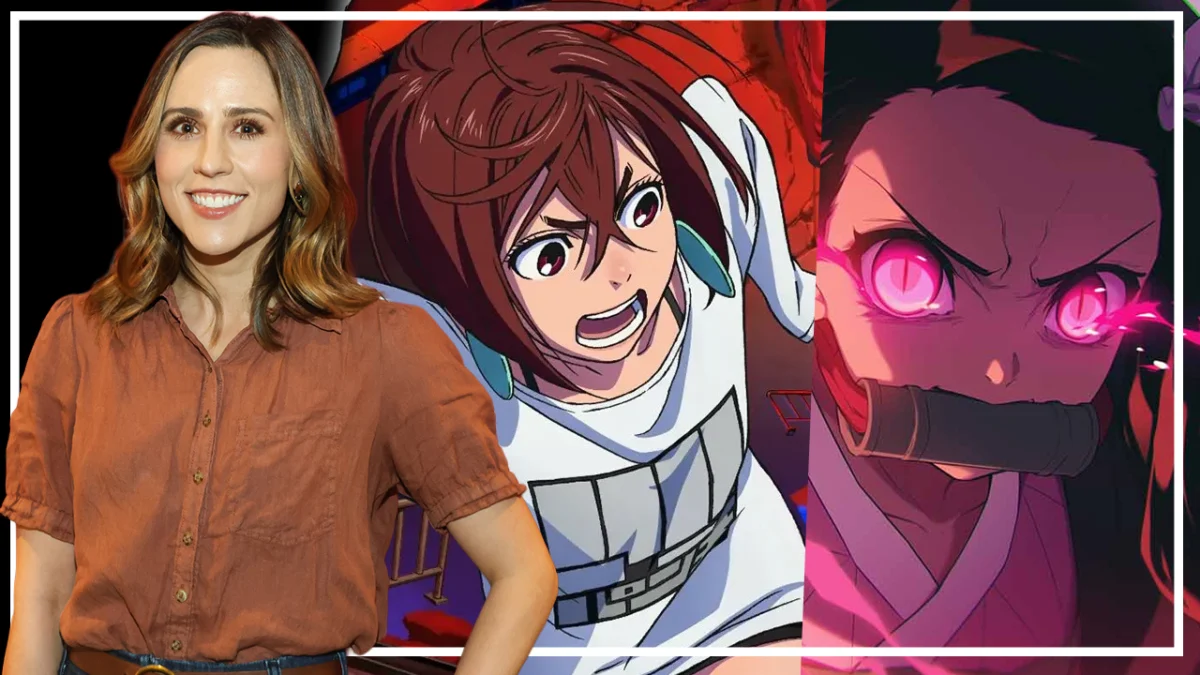
If you’ve tuned into some of the biggest anime hits of the last few years, chances are you’ve heard Abby Trott. Best known for her work as the fiercely protective but largely non-verbal Nezuko Kamado in the global phenomenon Demon Slayer: Kimetsu no Yaiba, Trott is now stepping into a drastically different leading role: the brash, high-energy gyaru Momo Ayase in Science SARU’s breakout supernatural hit, DanDaDan. This transition from demonic grunts and subtle expressions to fast-paced, hilarious banter represents a massive creative shift, one she has embraced with open arms. Her journey into these iconic roles is uniquely shaped by a foundational experience living and working in Japan, providing her with invaluable cultural and linguistic insights that inform her nuanced performances.
Long before she was booking leading roles in massive anime franchises, Trott’s journey actually began in Akita, Japan, where she spent two years teaching English through the JET program. This formative period deeply influenced her approach to voice acting and localization. In a recent interview, the talented voice actor discussed how that life-changing experience shaped her craft, her reaction to Nezuko finally speaking again, and what it was like stepping into the wildly unpredictable world of DanDaDan. Her dual roles in these highly acclaimed series underscore the evolving landscape of anime dubbing and the critical role of skilled voice actors in bringing these complex characters to a global audience.
Securing the Role of Momo Ayase in DanDaDan
The casting process for a highly anticipated series like DanDaDan is often rigorous, and for Abby Trott, it began with an unexpected audition. "For Momo, I received an audition for this anime, DanDaDan," Trott recounted. "I hadn’t heard of it at the time, but apparently, it had already been gaining a lot of traction amongst manga readers. It was the first time I had heard of it when I got the audition, and I just immediately fell in love with the animation style." The manga, created by Yukinobu Tatsu, quickly garnered a dedicated following for its unique blend of sci-fi, horror, comedy, and romance, making the anime adaptation one of the most eagerly awaited releases.
Trott’s immediate connection was largely driven by the distinctive visual style of Science SARU, the animation studio behind the series. Known for their experimental and fluid animation in critically acclaimed works like Devilman Crybaby and Keep Your Hands Off Eizouken!, Science SARU brought a dynamic and expressive quality to DanDaDan. "The way that Science SARU animated Momo, like her doing extreme movements, the back bend, the shark teeth, the facial expressions, I just loved the animation," she explained. This visual richness provided a compelling foundation for her to build her vocal performance upon, offering a character whose physicality was as bold as her personality.
Beyond the animation, Trott found significant inspiration in the original Japanese performance. "Secondly, I fell in love with Shion Wakayama’s portrayal of Momo in the Japanese dub. She is phenomenal at kind of nailing the gyaru archetype of Momo, or at least that part of her," Trott noted. The "gyaru" archetype, a Japanese fashion subculture characterized by tanned skin, bleached hair, and bold makeup, often translates into a confident, outspoken personality. Wakayama’s performance resonated deeply with Trott. "Her performance just sounded so real and raw, like it was unrehearsed. It didn’t feel like she was reading a script. She felt real, and so I wanted to try to do that too." This dedication to capturing the authentic, unbridled energy of Momo was a key factor in her audition. "I was like, this is incredible. I would love to be a part of whatever this is. So I just shot my shot, and I couldn’t believe it when I booked it. I was just in shock and so excited."
While Trott has accumulated a fair amount of leading anime roles throughout her career, DanDaDan represents a significant milestone due to its immense public profile. "I’ve been the lead of a fair amount of anime, but I think for DanDaDan, you know, a certain anime hits a broader range of fans. And I think Demon Slayer and DanDaDan are examples of fandoms that are just crazy big. I’m still overwhelmed by that aspect of it," she admitted. The global reach of anime has expanded dramatically in recent years, with platforms like Netflix and Crunchyroll making Japanese animation accessible to millions worldwide, creating fervent and massive fan bases for breakout hits.
The Energetic Contrast: Voicing Momo Ayase
The transition from Nezuko Kamado to Momo Ayase presented Abby Trott with an exciting challenge, demanding a complete shift in vocal approach and character embodiment. "Momo is so much more brash and energetic compared to Nezuko," noted the interviewer, highlighting the stark difference. Trott embraced this contrast wholeheartedly. "I love voicing Momo because she says all the things that I could never say in real life."
Momo’s character is defined by her explosive personality and unfiltered reactions, providing Trott with a vast canvas for vocal expression. "She has such a range of expression, and she is such an interesting character because you never know what she’s going to say next," Trott elaborated. This unpredictability is a core element of DanDaDan‘s comedic and chaotic charm. Moreover, Momo is not static; her character undergoes significant development. "I love that, even through seasons one and two, we can already see her character changing and evolving, in part due to her relationship with Okarun and her newfound friends." This evolution adds layers of complexity to her brash exterior, revealing vulnerability and growth.
A significant aspect of DanDaDan‘s appeal is its unique brand of humor, a blend of situational comedy, rapid-fire dialogue, and character reactions. Trott credits the creative team for maintaining this balance. "She’s just so funny, which is the main thing that I love about her. I think a lot of the voice lines are hilarious, largely in part thanks to our writer-director Alex von David, who makes sure that we get that humor, which is a huge part of the show." The collaborative effort in localization ensures that the comedic timing and cultural nuances translate effectively for English-speaking audiences, a testament to the skill involved in anime dubbing. "And yeah, I just adore Momo, she’s so much fun."
When asked about her favorite moments playing Momo, Trott found it difficult to choose, given the character’s dynamic nature. "Ooh, there are a few! It’s so hard to choose." She highlighted three pivotal scenes that encapsulate Momo’s journey and her dynamic with other characters:
- The Hallway Argument: "I do love the first time that Momo and Okarun have a conversation in the hallway, fighting about ghosts and aliens. There’s something that makes Momo apologize. She decides to say, ‘I’m sorry,’ and then that’s it. They become friends, and I think it’s just such a key moment." This initial interaction establishes the core relationship of the series, built on contrasting beliefs and an unexpected mutual respect.
- The Nessie Episode: "There’s another moment when, I think it’s in the Nessie episode, when they’re in the water, and they’re arguing, and Momo is yelling at Okarun, and he talks back to her. It’s not just one-sided Momo fighting. He talks some sense into her, saying, ‘You have to listen.’ And that’s a moment where she, I think, realizes and learns something." This scene is crucial for Momo’s character development, showcasing her capacity for introspection and growth through conflict.
- The Acrobatic Silky Episode: "There’s also just the Acrobatic Silky episode, where it’s so devastating conceptually, and Momo has a moment where she realizes, she asks, ‘What’s going to happen to her?’ And that moment for me was one of the most powerful of the whole series so far." This moment reveals a deep well of empathy beneath Momo’s tough exterior, underscoring the emotional depth of the series.
The interplay between Momo’s brashness and her moments of vulnerability, often brought out by Okarun, is a central theme of DanDaDan. "For a character who is so brash, it must be quite fun when there are those moments of vulnerability that come out in her, especially with Okarun, who kind of brings out that vulnerability in her, and then she brings out that brashness in him," the interviewer observed. "Yes, definitely. They’re good for each other. I think they’re learning from each other, and I can’t wait to see where that goes," Trott affirmed. Her engagement with the story extends beyond her recording sessions, as she’s also an avid reader of the source material. "I’m also reading the manga now, so I’m a little bit ahead of the anime, but I’m not all the way caught up to the Shonen Jump app, which I know is way, way ahead. But it’s such a great story."
Regarding future scenes and potential spoilers, Trott maintains a professional distance, acknowledging the adaptive nature of anime production. "Well, as far as spoilers go, I can’t say anything, but that’s because I don’t know anything. Oftentimes, when they are animating, and it seems the case with DanDaDan, that they are largely basing it on the manga, but you never know. Things can change. There can be differences, so I don’t know anything. I’m just excited to see." Her excitement is primarily for the visual spectacle that Science SARU brings to the table. "What I love to see the most is at the end of season two, those epic battles when you animate that. It takes it off the page. You can’t do that with manga. As beautifully drawn as this manga is, the action is next level when it’s animated, especially by Science SARU." This highlights the collaborative synergy between the source material, the animation studio, and the voice actors in creating a compelling final product.
Nezuko’s Evolving Voice and the Power of Silence
After years of providing primarily non-verbal sounds for Nezuko Kamado, the transition back to hearing her voice in Demon Slayer marked a significant moment for both Abby Trott and the global fandom. Nezuko’s vocal journey is a narrative in itself, reflecting her harrowing transformation and gradual return to humanity.
"So, Nezuko does speak in episode one, so coming from that, she has such a journey where we do hear her calling out to Tanjiro, taking care of her siblings, and this is before, of course, her entire family is destroyed," Trott explained, setting the chronological context. This initial human voice is a poignant reminder of what was lost. "And as you said, there’s a lot of non-verbal growling, attacking, and grunting as she is turned into a demon. But throughout the series, we do get occasional flashbacks or visions in Tanjiro’s mind of Nezuko speaking as a human." These fleeting vocalizations serve as anchors, reminding viewers of her past humanity and the hope for her full recovery.
The pivotal moment arrived when Nezuko defied her demonic nature and stepped into the sun, an act that propelled her character into a new phase. "Now in the series where we are, I don’t want to spoil this for anyone, so if you haven’t seen it, yeah, Nezuko steps out into the sun. And this is kind of like a new evolution of Nezuko, as she is not quite all the way able to express herself as she is in episode one. She’s not fully aware of her humanity, but she’s kind of halfway there," Trott elaborated. This "halfway there" state manifests in a distinct vocal quality. "And it’s this interesting, naive, almost babyish way of expressing herself as she is kind of figuring out the world. And it’s been really fun for me." The challenge for Trott was to convey this unique stage of development, balancing Nezuko’s restored vocal ability with her incomplete understanding of language and social interactions.
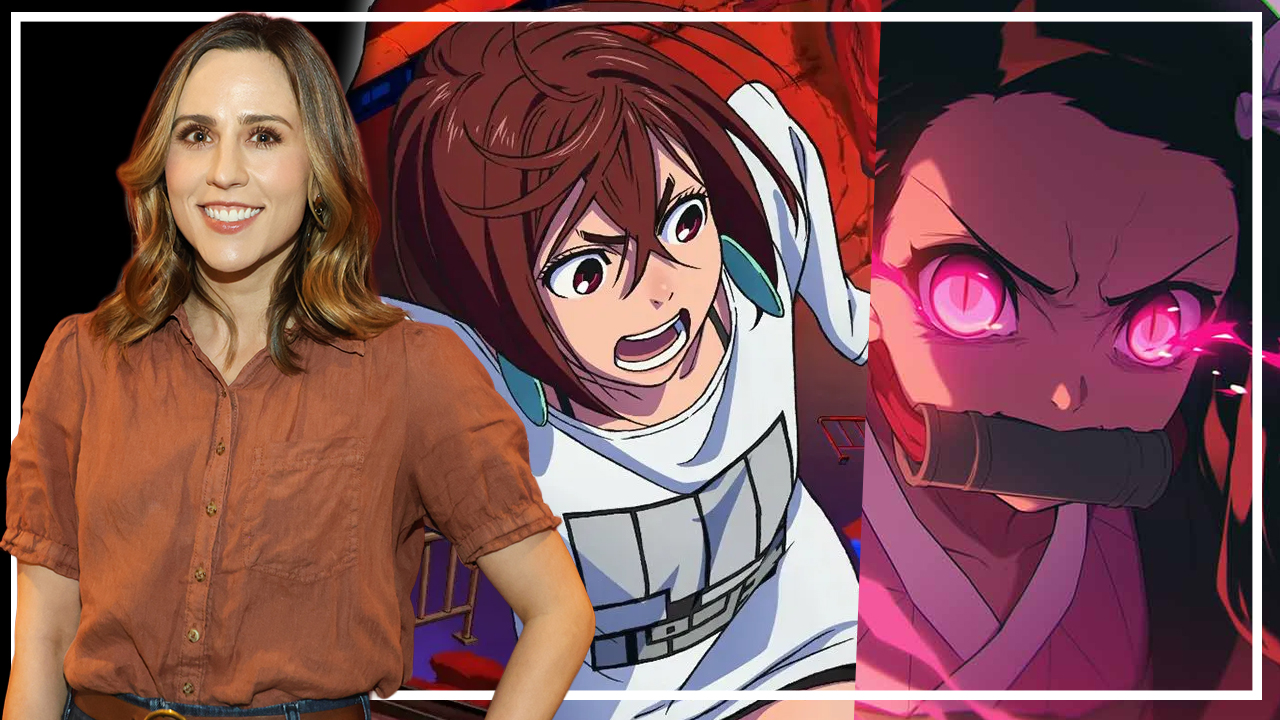
One particular scene stands out as Trott’s favorite, primarily for its comedic relief in an otherwise intense series. "I think one of my favorite lines, probably my favorite line from the series, stems from this kind of babyish Nezuko—I don’t want to say baby because she’s not a baby, but her way of speaking is very simplistic. And there’s a scene where Zenitsu returns to the village after being sent on a mission. And he sees Nezuko in the sun, and he’s so excited about it because he’s obsessed with her. And she sees him, but the way she greets him is, ‘Welcome home, Inosuke,’ [delivered in Nezuko’s simplistic voice], and he’s just absolutely devastated."
This moment brilliantly utilizes Nezuko’s developing speech for comedic effect, highlighting her endearing innocence. "And it’s one of the lighter moments of the series, which is pretty heavy. There’s some comedy here and there. And it’s just such a funny moment." The joke is further extended, creating a running gag. "And then the joke is hammered home later with Inosuke, when he’s trying to get Nezuko to say his name, and she just can’t say it anymore. It’s just so silly." For Trott, this scene was a joy to perform. "But it’s really fun because until that point of the series, it’s mostly been pretty serious for Nezuko, aside from the cute little bits and pieces here. There are little jokes and Taisho-era secrets at the end of each episode. But fairly serious. So I think that’s one of my favorite moments, just because it’s a comedic moment of levity. And it was really fun to perform." This segment underscores the importance of comedic timing and emotional range even within a character whose primary vocalizations were previously non-verbal.
Japan Experience: A Foundation for Localization
Abby Trott’s unique path into voice acting began not in a recording studio, but in a classroom in Japan. "I did, yeah, I did. I taught English for 2 years, then moved to Tokyo to pursue acting and music because that’s what I inevitably wanted to do," she confirmed. Her initial foray into Japan was through the Japan Exchange and Teaching (JET) program, a government initiative that brings young, college-educated individuals to Japan to work as Assistant Language Teachers (ALTs) in public schools. "I did the JET program, a teaching exchange program, and was sent to Akita, Japan." Akita Prefecture, located in the northern Tohoku region of Honshu, offered a vastly different experience from the bustling metropolises typically associated with Japan, immersing her in a more traditional and rural setting.
Her motivation for embarking on this journey was deeply personal. "It was kind of an excuse for me to travel, because I hadn’t really done that much in my life. My first time on an airplane was when I was moving to Japan." What started as an exploratory trip turned into a significant period of growth. "And then I had such a great time, I stayed on the JET program for two years instead of one. And then I realized I can’t do this forever, even though I’m having a great time. That’s when I moved to Tokyo." This transition from rural Akita to the vibrant cultural hub of Tokyo further broadened her understanding of Japanese society and its diverse facets.
This extensive immersion in Japan profoundly shaped her career, particularly in the realm of localization. "I think the language can help, you know, sometimes with dubbing. I have just experienced a lot of Japanese culture through the arts and just living there," Trott explained. This firsthand knowledge is invaluable for the nuanced process of dubbing, which goes beyond mere translation. "And so when it comes to localization, if something is coming from Japan, it can help interpret things, not just with language, but also interpret the culture."
Localization in anime dubbing involves adapting dialogue and performances to resonate with a target audience while remaining faithful to the original intent and cultural context. "When you’re localizing something, you’re trying to make it make sense within this language’s cultural context. But also, you know, honoring and preserving the source material as much as possible. It can be tricky, and I think that my experience living there definitely helps sometimes." This intricate balance is where Trott’s background provides a distinct advantage, allowing her to make informed choices that respect both the original Japanese work and the expectations of English-speaking viewers.
Beyond the technical aspects of language and culture, her time in Japan fostered significant personal growth. "Yeah, I learned so much living there. And it’s one of those things where I was a fan of anime, animation, and video games growing up. And I probably would have eventually found my way into pursuing voiceover, even if I hadn’t lived in Japan." However, the roundabout path proved crucial for her development as an artist and an individual. "But by taking that kind of roundabout way, you know, having that experience, I think I grew a lot as a person. And I’m so glad that I did do that."
Trott reflected on how her younger self would have fared without this foundational experience. "I think of, like, a young Abby straight out of college. And if I had moved to L.A. to pursue voiceover or even just acting, I don’t think I would have done very well. I don’t think I was ready. I don’t think I could have handled it." The challenges of living abroad provided her with essential life skills. "But after living in a foreign country by myself and learning, you know, a language, adapting, and becoming more resilient, I was ready to kind of take that on. So I’m really grateful for that experience." This resilience and cultural understanding are evident in her adaptable and authentic performances across diverse roles.
Bridging Cultures: Meeting Japanese Counterparts
The opportunity to meet and interact with their Japanese counterparts is a special experience for English dub voice actors, fostering a unique cultural and professional exchange. Abby Trott had such an opportunity, attending a major Demon Slayer event in Japan. "Yes! Alex Lee, who voices Zenitsu, and I went to Kimetsu Sai, the fifth-anniversary event for Demon Slayer," she recounted. "It’s like a convention that’s just for Demon Slayer. It was so much fun. We got to meet a lot of the cast there."
These events, dedicated solely to a single franchise, are massive undertakings in Japan, often featuring live performances, exclusive merchandise, and interactive exhibits. Trott also highlighted a recurring connection with a prominent Japanese voice actor. "And I’ve actually met Natsuki Hanae many times now because he comes over to the United States to do convention panels every once in a while. We’ve been on some together, and he is also the voice of Okarun in DanDaDan. So I ran into him when we did a DanDaDan panel as well." These cross-cultural and cross-franchise interactions underscore the tight-knit global community of anime professionals.
Trott also offered insightful observations on the differences between Japanese and Western conventions. "But, yeah, that experience was just so much fun. It was interesting to see a Japanese convention because I hadn’t really been other than like Tokyo Design Fest. I hadn’t really been to an anime convention over there, and it was just so well organized. Everyone was so polite. I think of conventions like with the crowds here, and it’s just very overwhelming. But I feel like on the Japanese side of things, everything felt very like, you know, calm in comparison. They had some really cool games and prizes you could win. It was just it was really fun." Her observations point to distinct cultural approaches to public gatherings and fan engagement, both offering unique experiences.
Broader Impact and Implications
Abby Trott’s journey, from teaching English in Akita to becoming a leading voice in two of anime’s biggest global phenomena, exemplifies the dynamic evolution of the anime industry. Her ability to seamlessly transition between roles as vastly different as Nezuko Kamado and Momo Ayase speaks volumes about her talent and dedication, but also highlights broader trends in media localization.
The increasing demand for high-quality English dubs is a direct result of the global expansion of streaming platforms. Services like Netflix and Crunchyroll have made anime more accessible than ever, driving a need for skilled voice actors who can bridge linguistic and cultural divides. The success of Demon Slayer and the anticipated triumph of DanDaDan on these platforms are testament to the effectiveness of thoughtful localization. Voice actors like Trott are not merely translating words; they are interpreting cultural nuances, comedic timing, and emotional depth to ensure that the essence of the original Japanese work resonates with an international audience.
Furthermore, Trott’s personal experience living in Japan provides a powerful model for aspiring voice actors and localization professionals. Her understanding of Japanese culture, honed through years of immersion, allows for a more authentic and respectful adaptation of content. This deep cultural literacy is becoming increasingly vital as global audiences become more discerning and appreciative of the source material.
The interactions between Japanese and English voice actors, as described by Trott, also signify a growing sense of global community within the anime industry. These exchanges foster mutual respect and collaboration, enhancing the overall quality and reach of anime worldwide. As anime continues to grow as a dominant force in global entertainment, the roles of talented individuals like Abby Trott will remain central to its continued success, ensuring that captivating stories and characters transcend borders and languages.
DanDaDan and Demon Slayer are streaming on Netflix globally, allowing audiences worldwide to experience Abby Trott’s remarkable vocal range and her contributions to these beloved animated series.