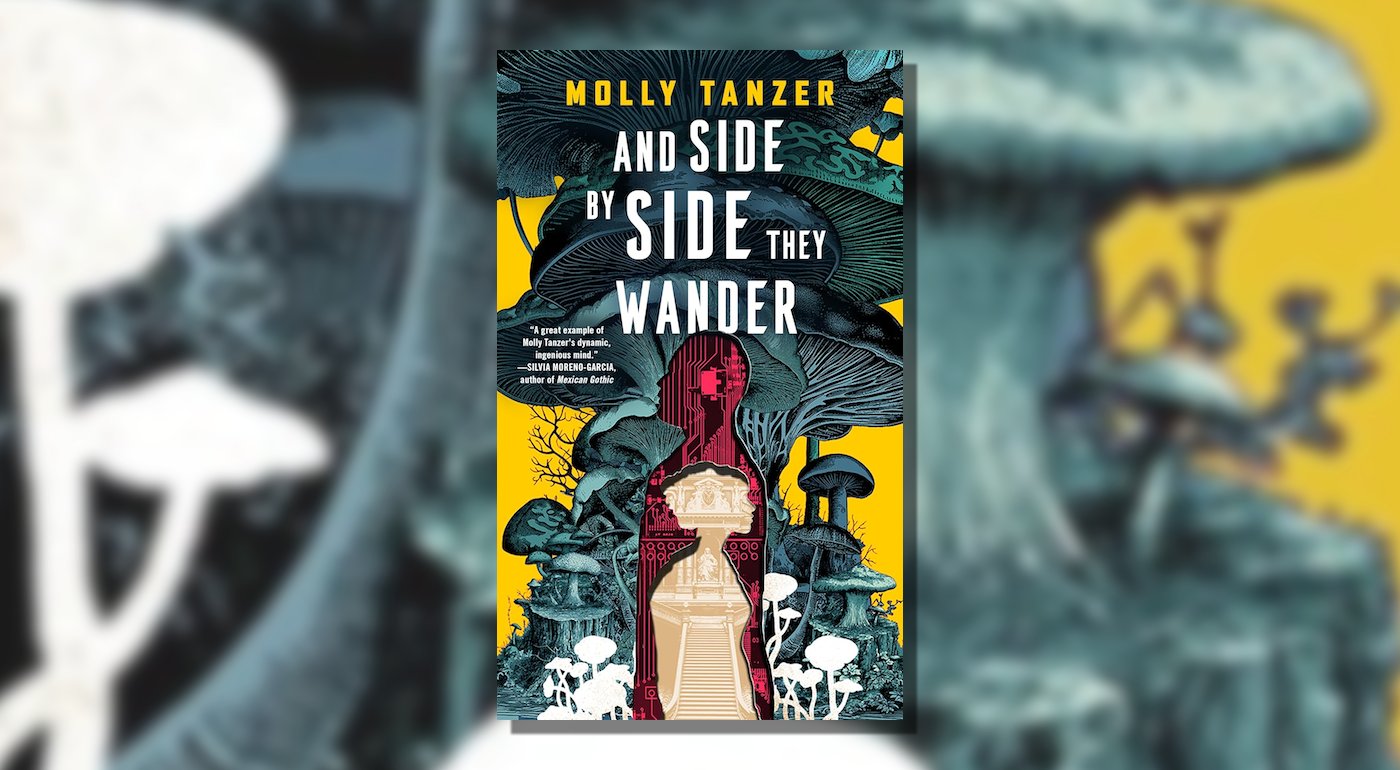
In a narrative that blurs the lines between art, diplomacy, and daring, a clandestine mission is underway to reclaim humanity’s most cherished artistic treasures from the enigmatic Celerians. The excerpt, pulled from Molly Tanzer’s forthcoming space opera, And Side by Side They Wander, published by Tordotcom Publishing on May 19th, unveils a galaxy-spanning heist orchestrated by a motley crew with a singular objective: to bring home art that has been on "loan" for three centuries.
The story centers on Fennel Tycho, an art historian whose personal connection to the sentient synthetic being Jack Kirby is the linchpin of the operation. The mission’s genesis lies in humanity’s agreement, made centuries ago, to entrust its artistic legacy to the Celerians, a highly advanced alien species. In exchange for the stewardship of Earth’s greatest works, the Celerians offered solutions to pressing global crises, including a universal vaccine, translation implants, ocean-cleaning algae, and transformative "genesis trees" – bio-engineered organisms capable of providing clean energy, manufacturing complex devices, and even regenerating biological tissues. This symbiotic arrangement, initially hailed as a salvation, has evolved into a cosmic custody dispute.
A Fragile Peace and a Stolen Legacy
The Celerians, who arrived in the 21st century aboard ships described as both familiar and alien, presented themselves as preservers of culture. They argued that art, particularly visual art, was a fragile impulse vulnerable to the recklessness of emerging civilizations. By safeguarding these artifacts, they claimed, they were ensuring their survival for the benefit of the universe, protecting them from potential self-destruction by their creators. The Celerians’ own ancient origins, predating Earth’s Cambrian Explosion, lent weight to their assertion of longevity and preservation.
The agreement included the provision of synthetic reproductions, compositionally identical to the originals, to be disseminated across Earth. This offer, alongside the Celerians’ technological aid that helped humanity avert ecological collapse and societal breakdown, was ultimately accepted by Earth’s leadership. The promise was that the art would be returned once Earth was deemed a "safer place" for its cultural heritage.
However, after centuries of progress – a stabilized climate, eradication of poverty, and a generally secure planet – humanity’s request for the return of its art was met with a curt refusal. The Celerians stated they had "no immediate plans to visit our part of the galaxy anytime soon," a thinly veiled indication that the art was unlikely to be returned. This rebuff prompted the formation of the clandestine mission detailed in Tanzer’s excerpt.
The Crew: A Symphony of Skills and Quirks
The mission’s unlikely leader is Tarquin Lennox, a figure of aristocratic bearing, though his current financial backing for the operation appears to be significantly diminished, forcing compromises on the scale of the retrieval. The captain of their vessel is Tchik-tchik, an insectoid being whose name may refer to both the individual and their species. Communication with Tchik-tchik is challenging, with human translators struggling to decipher their "clacking, clicking language." The ship itself, a starkly functional and organically designed vessel, reflects the Tchik-tchik’s unique physiology and spatial orientation, presenting an alien environment that requires specialized equipment for human navigation.
Providing the mission’s muscle is Arakachi Misora, an "ori-jin" – a sextuplet folded into a single, formidable body through highly illegal biotech. A master of Goju-Ryu karate, Misora is described as deceptively charming and physically imposing, capable of "ripping any of us apart."

The technical expertise for bypassing the Greenwood Museum’s security falls to Jack Kirby, a "sensynth." As a sentient synthetic being created in the 21st century, Jack possesses unparalleled machine intelligence, uncorrupted by alien technology. This makes him a crucial asset, immune to potential Celerian interference. His past association with Fennel Tycho, marked by a "scandal" that led to Fennel’s dismissal as his handler, adds a layer of personal history and potential friction to the mission.
Fennel Tycho, the narrator, confesses to being present not for her art history expertise, though that is her field of study, but to ensure Jack’s participation. Her academic aspirations in European portraiture, particularly the study of the expressive power of mouths, were tragically derailed by the death of her adventurous younger brother, Burnet. This personal tragedy led her to a period of profound grief and disengagement, from which Tarquin Lennox’s offer of employment provided a potential, albeit complicated, escape.
The Mission’s Objective: More Than Just Art
The excerpt reveals that the mission’s scope has been significantly reduced due to financial constraints. Originally envisioned as a large-scale repatriation, the team now focuses on acquiring only six specific works: the Ife Head, Van Gogh’s The Starry Night, Banksy’s Love Is in the Bin, Exekias’s black-figure amphora depicting Achilles slaying Penthesilea, Kahlo’s The Two Fridas, and the Flying Horse of Gansu. Tarquin attributes the reduced scope and resources to "reduced cash flow," a statement met with skepticism from Jack and a grim assessment from Misora, who declares, "We are so fucked."
The Celerian museum, the Greenwood, is described as a massive genesis tree, with architectural marvels housed on its branches and smaller artifacts within its trunk. The lack of a comprehensive map, with Tarquin providing only a partial, low-resolution blueprint, further complicates the heist, suggesting a desperate improvisation rather than a meticulously planned operation.
The "Culture of the Copy" and its Implications
Tanzer’s narrative delves into the philosophical implications of the Celerians’ actions, particularly their emphasis on the "culture of the copy." By offering indistinguishable replicas, they challenged the very notion of artistic authenticity and value. This raises questions about what constitutes "real" art and whether its significance lies solely in its physical original or in its ability to evoke emotion and inspire thought, regardless of its origin.
The Celerians’ rationale for retaining the originals—that humanity was too reckless to be trusted with its own heritage—reflects a patronizing, albeit technologically superior, perspective. Their actions can be interpreted as a form of cultural colonialism, where a more advanced civilization dictates the terms of cultural preservation, effectively dispossessing the original creators.
The mission’s success or failure will have profound implications for humanity’s relationship with its past and its standing in the galactic community. It represents not just an art heist, but a bold assertion of cultural sovereignty against an overwhelming power. The story also hints at Fennel Tycho’s personal quest for redemption and to tell her side of a story that has been silenced by non-disclosure agreements. Her role, seemingly minor in the grand scheme of galactic art retrieval, may prove pivotal, especially given her complex history with Jack Kirby, the mission’s indispensable hacker.
The excerpt concludes with Tarquin revealing that the true objective extends beyond mere art retrieval. He hints at a larger, more mysterious endeavor: a journey to the "Great Mycelium," which "can talk." This suggests that the art itself may be a means to an end, a key to unlocking further secrets or engaging with entities far beyond the immediate scope of the museum heist. The narrative promises a journey that is not only about reclaiming tangible heritage but also about uncovering deeper cosmic truths.